

By Backpacker Wildlife Desk
Published: September 28, 2026
Main Facts
For hikers hitting North American trails during the crisp transition from late summer to early autumn, a subtle yet unmistakable shift occurs in the underbrush and canopy. If it feels like you are suddenly sharing your favorite footpath with an unprecedented population of eight-legged commuters, your instincts are entirely correct.
Fall is officially peak spider season across the Northern Hemisphere. From the sprawling, intricate orb webs festooning the forest undergrowth of Wisconsin’s Ice Age Trail to the bustling wolf spider activity in the leaf litter of the Appalachian foothills, arachnids become a ubiquitous feature of the outdoor landscape.
However, this seasonal surge—often causing nervous hikers to reconsider their backcountry itineraries—is largely a natural optical illusion and biological necessity rather than an invasion. According to entomologists and arachnid specialists, the sudden visibility of spiders boils down to two primary factors: exceptional growth achieved over the spring and summer months, and the urgent, mobile imperative of the autumn mating season.
While arachnophobia remains one of the most common specific phobias globally, outdoor experts emphasize that the vast majority of these trail-dwelling creatures are entirely harmless to humans. Far from being a reason to hang up your hiking boots for the season, the autumnal appearance of spiders is as fundamental to the spirit of "spooky season" as changing foliage, pumpkin spice, and plummeting temperatures.
Chronology: The Lifecycle of the Autumn Arachnid
To truly understand why September and October mark the zenith of spider encounters, one must look backward through the calendar year to trace the life cycle of these remarkable invertebrates.
Spring: Emergence and Micro-Growth
The story begins months earlier, typically in the late winter or early spring. Following the winter diapause—a period of suspended development—spiderlings hatch from egg sacs (othecae) deposited the previous autumn. In these early months, millions of microscopic spiders disperse via a remarkable behavior known as "ballooning," releasing silk threads to catch thermal updrafts and travel across vast distances.
Throughout April, May, and June, these tiny survivors focus almost exclusively on survival and micro-predation. Feeding on abundant populations of gnats, mosquitoes, and other early-season insects, they remain largely unnoticed by the casual hiker due to their diminutive size and secretive habits.
Summer: The Great Feeding Frenzy
As summer unfolds, North America experiences an explosion of insect biomass. Spiders take full advantage of this ecological bounty. Operating as nature’s primary pest control mechanism, they consume staggering quantities of flies, beetles, and agricultural pests.
During this prolonged period of sustained feeding, spiders undergo multiple molting cycles, shedding their rigid exoskeletons to accommodate rapid physical growth. By late August, individuals that began the season as pinhead-sized hatchlings have matured into substantial, robust adults.
Autumn: The Climax of Visibility
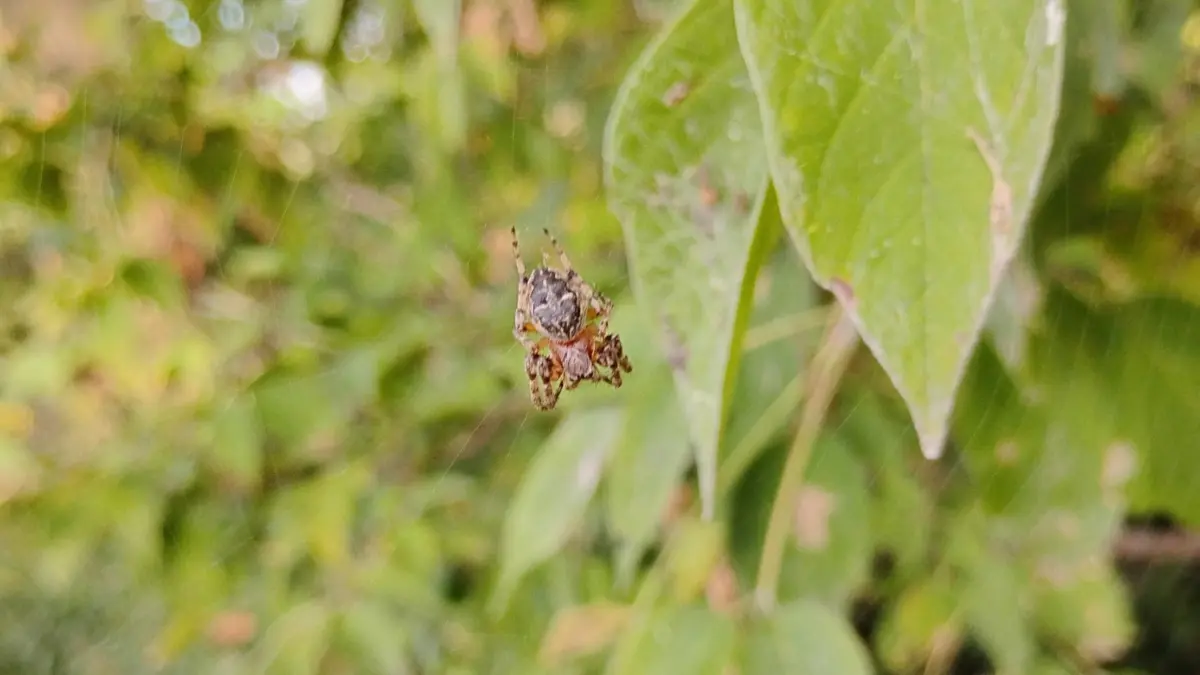
By the time September arrives, the convergence of maximum physical size and hormonal shifts triggers a massive spike in visibility. Orb-weavers have built their largest, most complex webs of the year across trail corridors to catch heavy, late-season prey. Meanwhile, wandering hunters like wolf spiders and grass spiders abandon their concealed retreats to roam the forest floor in search of mates.
This intersection of maximized population mass and high-mobility courtship behavior is what creates the definitive "spider season" experienced by hikers today.
Supporting Data: Understanding Arachnid Biology and Behavior
To demystify the autumnal influx of spiders, Backpacker consulted resident arachnophiles and experts from institutions such as the Butterfly Pavilion in Westminster, Colorado. Their insights illuminate the biological drivers behind what hikers observe on the ground.
1. The Scaling Factor (Size Matters)
A common misconception is that populations of spiders multiply exponentially in the fall. In reality, the total number of spiders may actually be declining due to predation and natural mortality. The perception of a population explosion is primarily a factor of scale.
An adult orb-weaver can measure several centimeters across, and its web can span three to four feet of trail clearance. In contrast, a juvenile spider from June might be a mere 3 millimeters wide. As experts note, you are simply noticing creatures that were already there all along, now fully grown and impossible to miss.
2. The Mating Imperative
For many terrestrial wandering spiders—such as wolf spiders (Lycosidae)—autumn is strictly mating season. While female spiders often remain sedentary in burrows or protected micro-habitats, mature males undergo a physiological shift, abandoning their solitary lifestyles to actively roam in search of receptive females.
This wandering behavior frequently brings them into direct contact with human infrastructure, campsites, and hiking trails. When hikers spot a large, hairy spider scurrying across a rocky outcrop or wooden boardwalk, it is almost invariably an adult male on a mission of romance.
3. Species Breakdown on the Trail
North America boasts thousands of unique spider species, but hikers typically encounter only a select few families:
- Orb-Weavers (Araneidae): Masters of geometry, building wheel-shaped webs across forest gaps. They are docile, sedentary, and completely non-aggressive.
- Wolf Spiders (Lycosidae): Ground-dwellers that do not spin webs to catch prey; instead, they hunt by chasing down insects. Known for their characteristic reflective eye-shine when illuminated by a headlamp at night.
- Nursery Web and Grass Spiders (Pisauridae / Agelenidae): Frequently seen racing through grass or resting on funnel-shaped webs near trail edges.
Official Responses and Safety Protocols
While the aesthetic of walking through a web face-first can induce momentary panic, medical and wildlife authorities stress that the health risks associated with trail-side spiders are vastly exaggerated.
The Low Risk of Venomous Encounters
In the United States and Canada, the overwhelming majority of spiders pose zero medical threat to humans. According to public health data, only two groups of spiders possess venom potent enough to potentially require medical intervention:
- The Brown Recluse (Loxosceles reclusa): Famed for its necrotic venom, the brown recluse is heavily localized to the American Midwest and South. Crucially, as their name implies, they are exceptionally reclusive. They strongly prefer dark, undisturbed indoor environments—such as attics, woodpiles, basements, and old clothing. The likelihood of encountering a brown recluse wandering openly on an outdoor hiking trail is practically zero.
- The Black Widow (Latrodectus species): Including the Northern and Western black widows, these iconic arachnids are recognized by their glossy black bodies and distinctive red hourglass markings.
Where to Find (and Avoid) Black Widows
Contrary to popular belief in backcountry lore, black widows do not typically lurk under random leaves in the middle of a dense forest. They thrive in micro-habitats that mimic protected crevices: human-built structures.
Hikers are far more likely to encounter a black widow not out in the open brush, but inside trail infrastructure. Privy buildings (outhouses), backcountry shelter corners, picnic pavilions, and the underside of concrete culverts and bridges provide ideal, predator-free environments for widow spiders to spin their erratic, strong webs.
Editor-in-Chief Adam Roy notes from personal field experience:
"When I went to capture an adult female Western black widow [Jolene] near a local trail underpass for observation, she didn’t aggressively attack—she tried to book it. I had to quickly maneuver her into an empty container. Like nearly all spiders, they view humans as a colossal, terrifying threat to be avoided, not prey to be hunted."
Best Practices for Trail Safety
- Use a Trail Blazer: If you are the first person hiking a trail in the early morning, use a trekking pole or a light stick waved gently in front of you to catch low-hanging orb webs before they hit your face.
- Check Rest Stops: When utilizing backcountry privies or shelters, briefly sweep your flashlight or eyes into dark corners and under seats before sitting or leaning.
- Shake Out Gear: If you leave camping gear or boots outside overnight during the fall, give them a thorough shake and inspection before sliding your feet inside.
Implications for Ecosystems and Outdoor Recreation
The seasonal surge of autumn spiders carries profound ecological implications that far outweigh the minor inconveniences faced by hikers.
Ecological Balance
Spiders represent the foundational apex predators of the invertebrate world. By consuming vast quantities of agricultural pests, forest-damaging insects, and disease-vectoring mosquitoes, they act as an indispensable biological control agent. Without robust spider populations, forest ecosystems would experience unchecked insect herbivory and population booms of potentially destructive organisms. Furthermore, spiders serve as a vital protein-rich food source for migratory birds, small mammals, and reptiles preparing for the lean winter months ahead.
Shifting Human Perspectives
For the outdoor recreation community, the autumn spider season offers an opportunity for psychological reframing. Societal conditioning often frames insects and arachnids through a lens of fear or disgust. However, environmental educators argue that embracing the totality of the natural world—including its eight-legged residents—enhances the backcountry experience.
As fall progresses, these creatures will naturally decline in visibility as temperatures drop, with many species dying off after laying overwintering egg sacs, while others seek deep subterranean or structural shelter to brumate.
Until then, hikers are encouraged to look past the initial startled reaction. The next time a shimmering web catches the morning dew or a wolf spider darts across a granite slab, take a moment to pause, observe, and appreciate one of nature’s most successful evolutionary designs. Far from a reason to stay indoors, witnessing the autumnal peak of spider activity is an invitation to engage more deeply with the complex, living tapestry of the wilderness.
