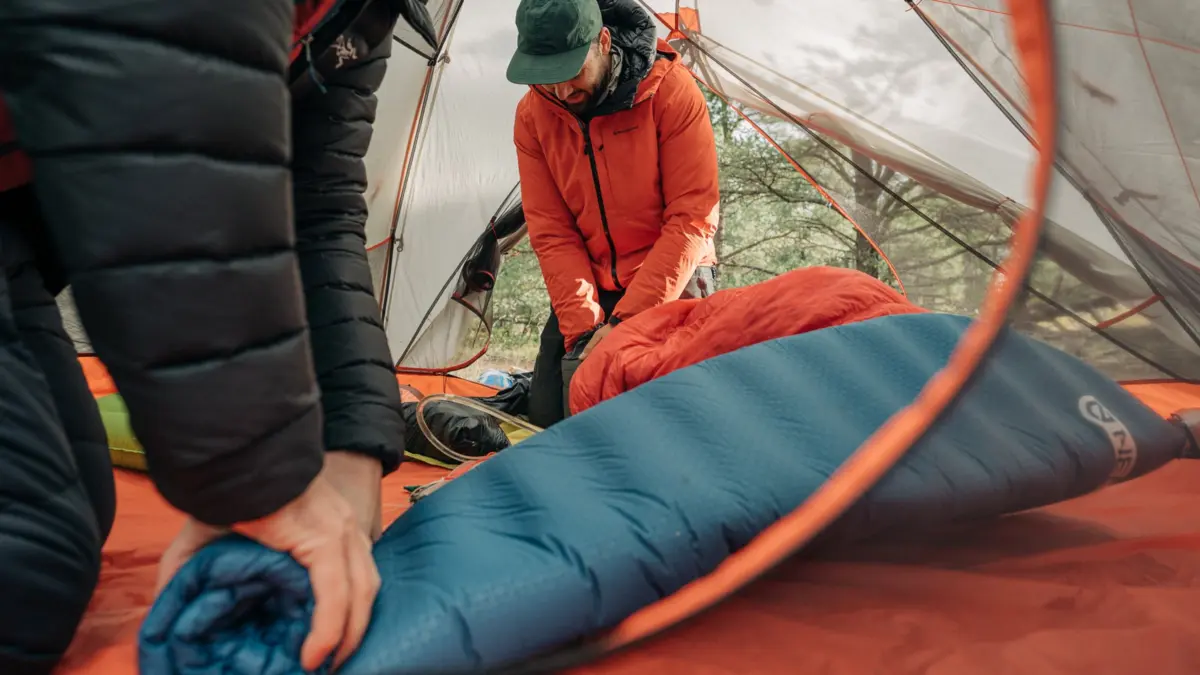
October 5, 2026 — Long gone are the days when a backcountry sleeping pad was little more than a glorified, crinkly pool toy designed to separate your aching bones from freezing soil. Modern sleep systems for backpackers have evolved into hyper-engineered marvels of thermal physics and material science. Integrating hollowed-out cores, highly reflective mylar films, and graduated baffles that function as safety guardrails, today’s top-tier pads are practically guaranteed to win the eternal war on backcountry insomnia.
This October, the gear-testing editors at Backpacker released their definitive 2026 roundup of the best backpacking sleeping pads on the market. Following months of punishing field tests across the rugged terrain of the Canadian Rockies, the sharp cactus-riddled washes of Arizona’s Superstition Mountains, and a grueling 920-mile stretch of the Pacific Crest Trail, the consensus is clear: the race for the ultimate backcountry bed is tighter, faster, and more innovative than ever before.
Main Facts: The 2026 Gear Landscape
The 2026 market is defined by a fierce three-way battle for the crown of best ultralight pad, waged between the Exped Ultra 6.5R, the Therm-a-Rest NeoAir XLite NXT, and the NEMO Tensor All-Season.
Best Overall: The newly redesigned Exped Ultra 6.5R takes top honors for its category-leading warmth-to-weight ratio and exceptional comfort, debuting an innovative shift toward bonded mylar and synthetic microfiber layers.
Best Value: The NEMO Eclipse All-Season delivers plush, 4-inch-thick comfort and a high R-value at a price point roughly $50 lower than its closest competitors.
Most Packable: The newly added Rab Ultrasphere 5 squeezes down to the size of a 4-by-5-inch burrito while offering robust three-season warmth.
The Ultralight Extremes: For weight-obsessed backpackers, the NEMO Tensor Elite shatters boundaries as the lightest pad on the market at a scant 8.3 ounces.
Chronology of Innovation: How We Got Here
To understand the current crop of sleeping pads, one must look at how manufacturers have systematically solved the historical trade-offs between weight, packability, and warmth.
For decades, closed-cell foam pads—such as the classic blue Walmart mats or the Therm-a-Rest Z Lite—were the undisputed backbone of ultralight backpacking. They were indestructible, cheap, and virtually weightless. However, they lacked thickness, offered abysmal R-values, and forced campers to feel every rock and root beneath them.
The introduction of inflatable air pads revolutionized comfort, but early models were plagued by convective heat loss. Cold air circulating inside the pad sucked body heat away rapidly, leading to sleepless, freezing nights. Brands countered by stuffing pads with synthetic insulation or installing reflective mylar sheets.
By the early 2020s, Therm-a-Rest’s NeoAir XLite dominated the landscape, introducing triangular core matrices to trap air and reflect body heat. However, these early masterpieces came with a notorious drawback: the infamous "potato chip crinkle" noise that woke up camp every time a sleeper shifted.
By 2026, manufacturers have effectively eliminated the crinkle while pushing R-values higher than ever into remarkably lightweight packages. The introduction of the Exped Ultra 6.5R marks a milestone in this timeline, proving that synthetic insulation can be successfully bonded directly to reflective mylar sheets to create a quieter, warmer, and structurally simpler mattress.
Supporting Data: Head-to-Head Product Breakdown
1. Best Overall: Exped Ultra 6.5R
Weight: 12.5 oz (medium mummy)
R-Value: 6.9 (Stated) / Field tested closer to ~4.5–5.0
Pros: Best-in-class warmth-to-weight ratio, very quiet face fabric, diverse size range.
Cons: Vertical baffles can feel a bit like a waterbed; lab-tested R-value is slightly overblown in real-world sub-freezing conditions.
Exped’s Ultra line has long been a trusted staple, but it has never claimed the top spot until now. The Ultra 6.5R leaps past the Therm-a-Rest NeoAir XLite NXT and NEMO Tensor All-Season by incorporating synthetic microfiber bonded between the face fabric and a single mylar layer. While lab tests assign it an impressive 6.9 R-value, field testers note that its actual warmth tracks closer to an R-4.5 pad during genuine winter conditions. It bridges the gap between three-season and shoulder-season use brilliantly while remaining the quietest ultralight pad on the market.
2. Best Ultralight Runner-Up: Therm-a-Rest NeoAir XLite NXT
Cons: Horizontal baffling lacks edge stability for some sleepers; expensive.
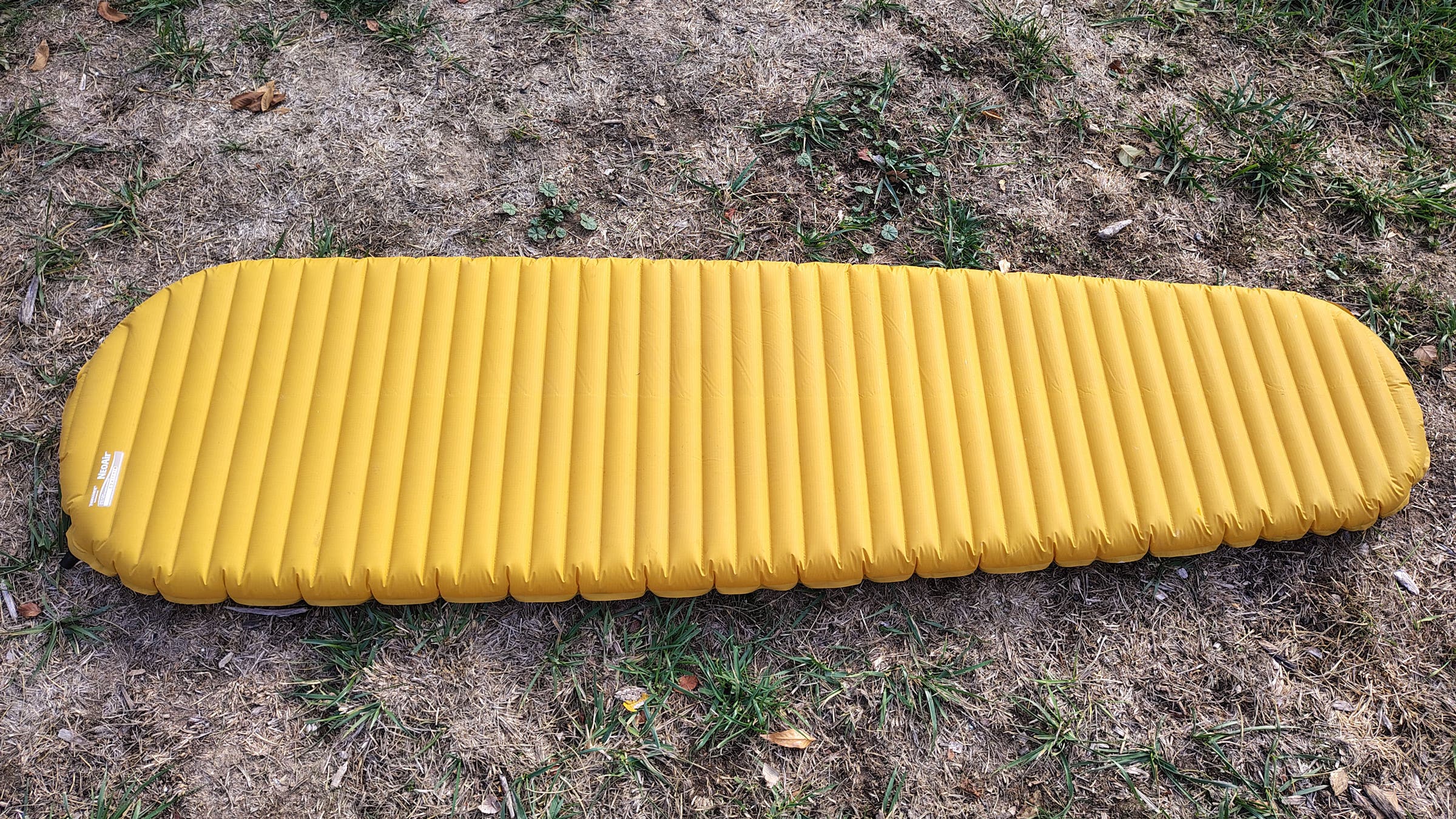
Though no longer the undisputed king of the category, the XLite NXT remains a masterpiece of engineering. Utilizing a triangular core matrix of stacked, edge-bonded baffling cells, it packs down to the size of an overstuffed Chipotle burrito. It remains the absolute lightest option when purchased in its "short" size (11.5 oz) and boasts a lifetime warranty with field-replaceable Winglock valves.
3. Most Durable Ultralight: NEMO Tensor All-Season
Cons: Slightly heavier than competitors; expensive.
The Tensor All-Season captures the durability crown through intelligent material selection: an ultralight 20-denier ripstop nylon top paired with a burly 40-denier bottom. Furthermore, its gridded baffle design provides superior stability compared to the horizontal rolls of Therm-a-Rest or the vertical waterbed feel of Exped, making it the favorite for restless side sleepers.
4. Best Superlight: NEMO Tensor Elite
Weight: 8.3 oz (regular) / 7.2 oz (short)
R-Value: 2.4
Pros: The absolute lightest pad on the market; surprisingly plush.
Shedding weight down to a mere 8.3 ounces, the Tensor Elite survived a brutal 920-mile test on the Pacific Crest Trail. While its 10-denier nylon demands caution against sharp rocks and brush, it offers astonishing comfort and packs down to the size of a fist.
5. Most Packable: Rab Ultrasphere 5
Weight: 12.2 oz
R-Value: 5.5
Pros: Incredible warmth-to-weight ratio, packs down to a tiny 4×5-inch burrito.
Cons: Expensive, aggressively tapered mummy shape makes it feel narrow.
Rab enters the ring with the Ultrasphere 5, a pad that achieves a packed size second only to the summer-only NEMO Tensor Elite. Featuring flat-lying internal mylar layers and a thin 20-denier shell, it handles temperatures down to 20°F while maintaining a featherlight profile.
Cons: Lower warmth-to-weight ratio than ultralight rivals; top-tier pricing.
For those willing to carry an extra couple of ounces, the Ether Light XR utilizes a diagonal grid of welded air-sprung cells that mimic a traditional home mattress. It eliminates pressure points entirely and features tall outer "rail" baffles to keep you centered throughout the night.
7. Best Value: NEMO Eclipse All-Season
Weight: 16 oz (regular)
R-Value: 6.2
Pros: Highly affordable ($160), 4 inches thick, high R-value.
Cons: Uninsulated outer rails can feel cold; price increases on larger sizes.
The Eclipse proves that you don’t need to spend over $200 for elite insulation. Though its suspended mylar layers do not extend all the way into the outer side rails, its overall plushness, thickness, and performance-to-price ratio make it the premier value pick for budget-conscious backpackers.
Official Industry Responses & Testing Insights
The methodology behind these evaluations is rigorous. Category manager and ultralight columnist Nathan Pipenberg emphasizes that field testing is non-negotiable.
"Every year, our team tests the newest pads against trusted favorites across Alaska, New Hampshire, and Colorado. We take them into national parks and remote wilderness areas to gather granular feedback on comfort, warmth, and durability under duress," Pipenberg notes.
Industry experts also point out a growing discrepancy between laboratory-calculated R-values and real-world thermal performance. Testers operating in sub-freezing conditions have observed that newer high-R-value pads occasionally underperform their numerical ratings when subjected to biting winds and frozen ground. Consequently, experts advise consumers to prioritize overall comfort, packed size, and intended environment over minor numerical variations in R-value.
Implications for the Consumer
The 2026 gear market presents backpackers with a paradox of choice. Premium pads now command prices north of $200, turning a sleeping pad into a serious financial investment.
To protect this investment, companion products like the Outdoor Vitals 1/8-Inch Closed Cell Foam Pad ($25, 2.5 oz) have surged in popularity. Used primarily as a protective ground shield beneath inflatable pads, these thin foam sheets prevent punctures from sharp roots and thorns while doubling as emergency sit-pads or pack frames.
Ultimately, whether you are an ultralight thru-hiker counting every single gram, a weekend warrior seeking plush comfort, or a budget-conscious camper looking for maximum value, the 2026 sleeping pad market ensures that a good night’s sleep in the backcountry is no longer an impossible dream.