

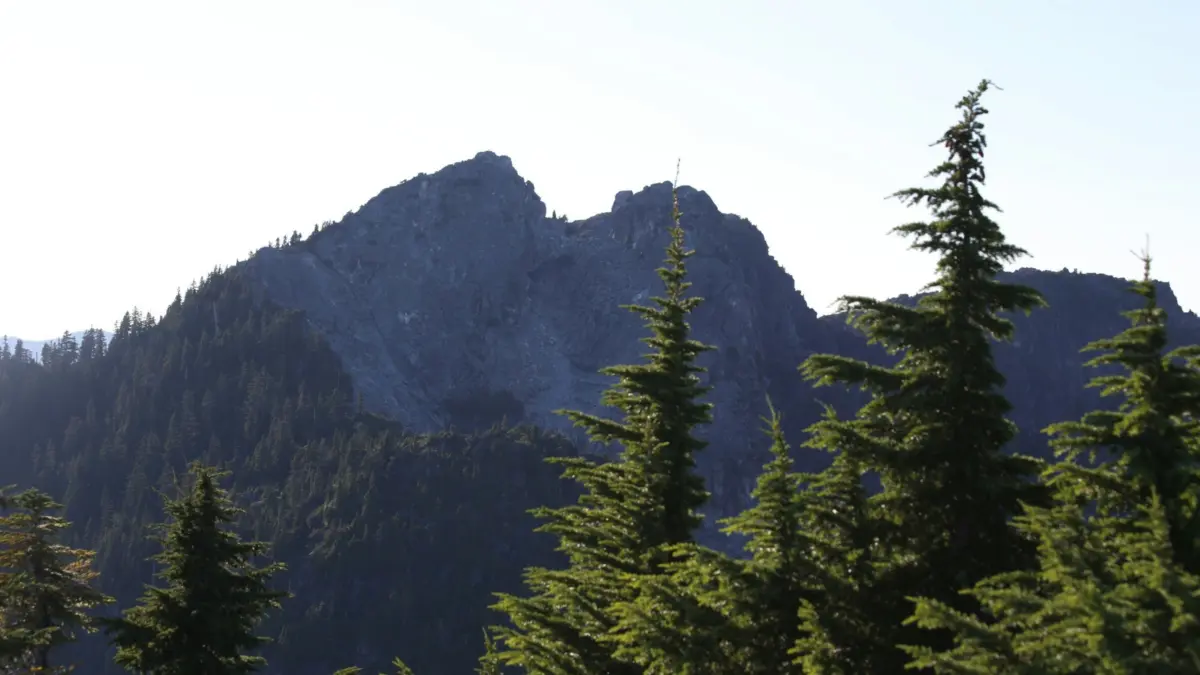
VANCOUVER, British Columbia — In an incident highlighting the hazardous intersection of emerging technology and backcountry exploration, search and rescue teams on October 3 rescued a 16-year-old hiker stranded on a dangerous, vertical cliffside. The teenager had ventured onto British Columbia’s rugged Crown Mountain after relying on an unidentified artificial intelligence tool to plan his route—a decision that quickly plunged him into terrain far beyond his experience or physical capabilities.
The rescue underscores an increasingly alarming trend among outdoor enthusiasts: turning to generative AI chatbots and unverified algorithmic tools for wilderness navigation and route planning, often with near-catastrophic consequences.
Main Facts
The dramatic rescue unfolded on October 3 on Crown Mountain, a formidable peak in the North Shore mountains overlooking Vancouver, British Columbia. According to North Shore Rescue (NSR), the 16-year-old solo hiker utilized an AI-generated itinerary that instructed him to begin his trek on Grouse Mountain, navigate through a treacherous gully, and ascend "Widowmaker."
Widowmaker is not a standard hiking trail; it is widely recognized by the mountaineering community as a grueling 10-pitch, 5.9 alpine rock-climbing route located on the northeast ridge of Crown Mountain. Designed for experienced climbers equipped with specialized technical gear and rope systems, the route proved entirely impassable for a solo teenager outfitted for a casual hike.
Instead of reaching the summit safely, the hiker found himself boxed in at the base of the climb’s final, towering headwall. Clinging to a vertical cliffside without the means to ascend or descend safely, the panicked teenager placed a distress call for help.
Remarkably, North Shore Rescue teams were uniquely positioned to respond. Just prior to receiving the emergency dispatch, NSR crews had wrapped up a specialized helicopter hover-entry and exit recertification exercise directly on Crown Mountain. Despite this fortunate timing, the technical complexity of the terrain required a slow, meticulous ground-and-air extraction to bring the teenager to safety.
Chronology of the Rescue
The sequence of events on October 3 transformed a routine training day for local emergency responders into a high-stakes cliffside extraction:
- Pre-Incident Planning: Days or hours before the hike, the 16-year-old consulted an AI tool for a route up Crown Mountain. The algorithm synthesized a path combining standard tourist access points with expert-level alpine climbing routes.
- The Ascent: The teenager successfully navigated the early phases of the trip, starting at Grouse Mountain and pushing upward into the backcountry, completely unaware that the trail data provided by the AI was intended for elite mountaineers.
- The Trap: As the terrain rapidly deteriorated from a hiking trail into sheer rock walls, the teen pushed onward until he reached the base of Widowmaker’s final headwall. Realizing he was trapped on a technical cliffside with no escape route, he called for emergency assistance.
- The Response: North Shore Rescue received the call while finishing helicopter recertification drills nearby. Recognizing the extreme hazard of the location, search managers dispatched an elite technical rescue team.
- The Insertion: Because the teenager was pinned directly against a vertical wall, the rescue helicopter could not safely achieve the necessary rotor clearance to drop technicians directly beside him. Instead, the pilot executed a hover insertion, dropping two rescue specialists safely above the subject’s position.
- The Extraction: Once on the ground, the rescue technicians established a secure anchor system. One technician was belayed down the rock face to reach the panicked teenager. After calming the subject and establishing supplemental safety protection, the technician maneuvered the hiker to a viable extraction point, where he was hoisted to safety.
Supporting Data: A Growing Pattern of AI Mishaps
While the rescue on Crown Mountain is the latest high-profile incident in Canada, it is far from an isolated event. Over the past several months, search and rescue (SAR) organizations and park rangers across North America have reported a sharp uptick in emergency calls triggered by bad AI-generated wilderness advice.
Just weeks prior to the British Columbia incident, a group of three climbers required rescue after using Google’s Gemini AI chatbot to plan an ascent of California’s Mount Shasta. The group successfully summited the peak via the Clear Creek Route, but their phones died shortly after reaching the top at 7:00 PM. Disoriented and relying on faulty memories of AI-generated directions, they wandered off-route into the notoriously rugged and dangerous Mud Creek Canyon. Rescuers mounted a multi-agency search and located the exhausted group the following morning, carrying them to safety.
The issues extend beyond faulty navigation. Nick Meyers, the lead climbing ranger on Mount Shasta, shared alarming accounts with Business Insider regarding day-to-day encounters with AI-reliant visitors. In one instance, rangers confronted a woman camping illegally directly next to a clearly posted sign prohibiting camping in that specific zone. Her defense? ChatGPT had allegedly assured her that pitching her tent in that exact spot was permissible.
In another case, rangers reviewed a custom map generated by an AI tool for a visitor’s planned trek. Upon inspection, they discovered the algorithm had fundamentally scrambled geographic features, placing mountains, valleys, and water sources in completely incorrect locations. Meyers bluntly characterized the output to reporters as "terrible, totally terrible."
These compounding incidents have raised red flags throughout the global outdoor recreation and emergency services communities.
Official Responses and Expert Warnings
The alarming frequency with which algorithms are leading novices into life-threatening situations has prompted severe warnings from search and rescue veterans.
Paul Markey, search manager for North Shore Rescue, did not mince words when discussing the Crown Mountain incident with local outlet North Shore News.
"It put him into a situation which was beyond his abilities, so things could have gone sideways pretty quickly," Markey stated, emphasizing that the teenager was visibly fearful for his life by the time rescuers reached him.
Markey and other wilderness safety experts emphasize that generative AI language models are fundamentally unequipped for geographical and topographical mapping. Unlike dedicated outdoor navigation platforms, LLMs (Large Language Models) do not "know" the terrain; instead, they predict the next most statistically likely word in a sentence based on scraped internet text. They cannot cross-reference real-time weather conditions, seasonal trail closures, technical gear requirements, or the physiological limitations of a human user.
In the wake of the October 3 rescue, Markey strongly urged all outdoor enthusiasts to completely avoid using AI tools for route planning. Instead, he recommended relying on vetted, specialized mapping applications designed specifically for the backcountry, such as:
- Caltopo
- AllTrails
- GaiaGPS (owned by Outside, Inc.)
Furthermore, experts stress that even when using trusted applications, hikers must verify route difficulty against their personal skill level, check physical topographic maps, and carry reliable physical or battery-backed navigation tools.
Broader Implications for Tech and Outdoor Recreation
As artificial intelligence rapidly permeates every facet of modern consumer life, the outdoor recreation sector is grappling with a dangerous illusion of competence. AI tools are marketed as universal assistants capable of simplifying complex tasks, giving inexperienced individuals a false sense of security when venturing into remote environments.
The physical separation between urban environments and true wilderness creates a margin of error that algorithms cannot account for. A hallucinated fact in a corporate email draft results in minor embarrassment; a hallucinated route on a 10-pitch alpine climb results in a helicopter rescue, diverted emergency resources, and potentially fatal consequences.
Moving forward, outdoor advocacy groups and rescue agencies are calling for increased public awareness campaigns to educate the public—particularly younger demographics who frequently turn to digital tools by default—about the severe limitations of generative AI. Until safety guardrails, disclaimers, or specialized outdoor AI models are developed and strictly regulated, emergency responders fear that incidents like the one on Crown Mountain will continue to drain public resources and risk the lives of both stranded tourists and the volunteers who rescue them.
