

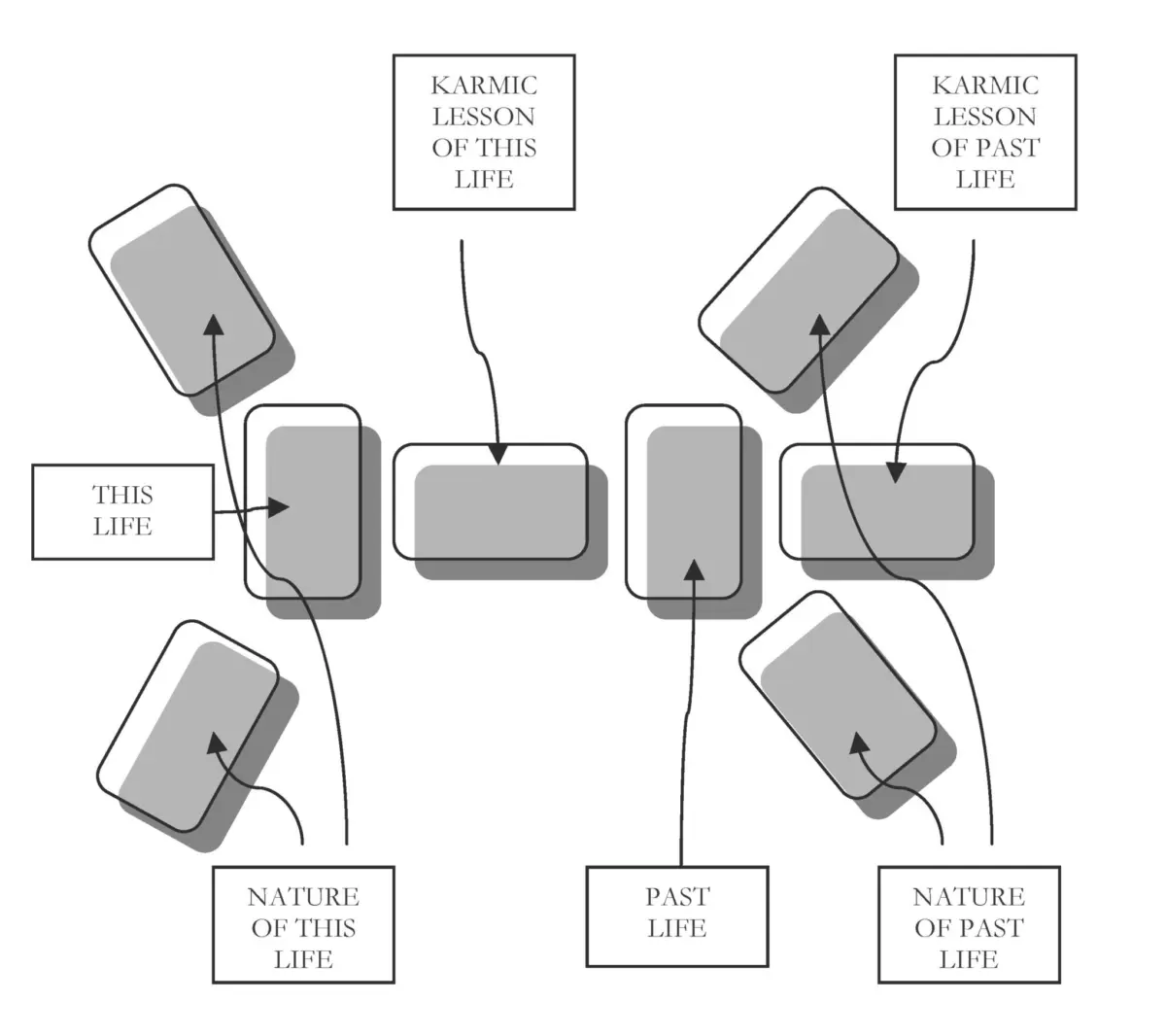
LONDON — In the ever-evolving landscape of esoteric practices and modern divination, a novel methodology has emerged that bridges the gap between historical introspection and contemporary psychological storytelling. Known as "Ancient Echoes," this innovative Tarot technique utilizes a specialized "split-deck" framework to help practitioners explore the concept of past lives and understand their direct bearing on the present.
Developed within the progressive traditions of Tarosophy—an approach that emphasizes wisdom, play, and practical philosophy over rigid dogma—Ancient Echoes has rapidly gained traction among seasoned readers, esoteric historians, and individuals seeking alternative pathways to self-discovery.
This comprehensive report examines the main facts surrounding the spread, chronicles its step-by-step methodology, explores supporting data regarding the psychology of card-based introspection, outlines professional perspectives from esoteric practitioners, and analyzes the broader implications of utilizing cartomancy for ancestral and past-life exploration.
1. Main Facts: What is "Ancient Echoes"?
At its core, Ancient Echoes is a structured, multi-layered Tarot spread designed to map out the continuum of a person’s soul journey. Unlike traditional spreads that focus strictly on future forecasts or immediate emotional states, Ancient Echoes operates on the metaphysical premise that human consciousness carries resonances from previous incarnations.
The primary components of the Ancient Echoes framework include:
- The Split-Deck Method: The practice requires the standard 78-card Tarot deck to be physically separated into three distinct stacks: the Court Cards, the Major Arcana, and the Minor Arcana.
- The Present-Time Anchor: The layout begins by anchoring the reading in the "here and now," establishing the baseline nature of the seeker’s current soul expression and daily reality.
- The Karmic Bridge: Major Arcana cards are systematically integrated to represent overarching spiritual lessons that transcend a single lifetime.
- The Echo Generation: Minor and Court cards are paired together in subsequent layers to construct narrative profiles of previous incarnations, allowing readers to weave historical, narrative-driven biographies of past selves.
- Infinite Expansion: The system is inherently scalable. Practitioners can repeat the cyclical process outward, effectively mapping a chain of multiple past lives connected by a thread of evolving karmic lessons.
2. Chronology: The Evolution of Tarosophy and the Birth of Ancient Echoes
To understand the genesis of Ancient Echoes, one must trace the timeline of modern Tarot innovation, particularly the philosophical shift known as Tarosophy.
- Late 20th Century — The Rise of Intuitive Reading: For decades, Tarot was predominantly viewed through the lens of fortune-telling or strictly structured historical systems like the Rider-Waite-Smith tradition. Spreads were linear, focusing heavily on past-present-future timelines within a single lifetime.
- The Advent of Tarosophy: In the early 2000s, modern esoteric thinkers began championing "Tarosophy" (Tarot wisdom). This movement encouraged practitioners to treat the cards not as immutable oracular devices, but as a language of archetypes, a mirror of the subconscious, and a toolkit for creative problem-solving and philosophical inquiry.
- Development of Split-Deck Techniques: As experimental spreads gained popularity, teachers began experimenting with "split-deck" methodologies—sorting cards by their categorical elemental or structural natures (such as separating Minor and Major Arcana) to isolate specific energetic frequencies within a reading.
- Introduction of Ancient Echoes: Building upon these modular techniques, the Ancient Echoes spread was formalized as a definitive method for past-life exploration. By organizing cards into specific zones representing current identity, current lifetime conditions, past-life echoes, and karmic lessons, the method provided a reliable blueprint for what was previously an unstructured, highly intimidating style of intuitive reading.
- Present Day — Digital and Global Adoption: Through online esoteric forums, masterclasses, and instructional guides, Ancient Echoes has transitioned from a niche experimental spread into a globally recognized technique utilized by holistic practitioners, creative writers seeking character backstories, and individuals engaged in deep inner work.
3. Supporting Data and Step-by-Step Methodology
Executing the Ancient Echoes spread requires precision, patience, and a nuanced understanding of how different sections of the Tarot interact with one another. Below is the exact operational framework utilized in the practice, accompanied by analytical insights into why each step is structured in this manner.
Phase 1: Preparation and the Present Soul
- Deck Separation: Separate your standard Tarot deck into three distinct piles: the Court Cards (Pages, Knights, Queens, Kings), the Major Arcana (the 22 archetypal trump cards), and the Minor Arcana (numbered Aces through Tens across the four suits).
- The Soul Card: Take the stack of Court Cards, shuffle thoroughly, and draw one card. Place it face up in the centre of the reading space.
- The Mantra: "This is the nature of my Soul in present-time."
- Analytical Value: Court cards traditionally represent personalities, behavioral archetypes, and developmental stages. By designating this card as the core soul-state, the practitioner establishes a psychological anchor representing who they are fundamentally embodying right now.
Phase 2: Defining the Current Lifetime
- The Environment: Take the Minor Arcana stack, shuffle, and draw two cards. Place them surrounding the central Soul card.
- The Mantra: "This is the nature of my lifetime in this life."
- Analytical Value: The Minor cards reflect the mundane, daily experiences, emotional undercurrents, and circumstantial realities of the seeker’s current incarnation, providing context to how their core soul archetype is currently manifesting in the physical world.
Phase 3: The First Previous Life Echo
- The Previous Self: Return to the shuffled Court Card stack, review the two active Minor cards representing your current life, and intuitively select one Court Card. Place it to the side (top, bottom, left, or right) of the Minor cards.
- The Mantra: "This is an echo of my previous lifetime self."
- Analytical Value: This step bridges current lived experience with historical archetype, suggesting that aspects of our past behavior or character expressions linger as psychological echoes.
- The Karmic Lesson: Take the Major Arcana stack and shuffle. Select one card and place it directly between the current-time Court Card and the previous-life Court Card.
- The Mantra: "This is the Karmic lesson I must learn in this lifetime."
- Analytical Value: The Major Arcana represents grand spiritual themes, soul evolution, and universal archetypes. Placing it as a bridge indicates that the friction or lessons experienced today are direct spiritual descendants of unfinished business from the past.
- The Historical Context: Take the Minor Arcana stack once more, shuffle while meditating on the Karmic Lesson Major card, and draw two cards. Place these cards directly against the previous-life Court Card.
- The Mantra: "This was the nature of that previous life."
- Narrative Construction: The practitioner must then "weave a story" from these specific cards, combining the court archetype with the minor card circumstances to reconstruct a cohesive narrative of who that past self was and what environment they inhabited.
Phase 4: Expansion and Pattern Recognition
- Infinite Echoes: The spread does not have to stop at one previous lifetime. Practitioners can continue the chain outward by laying down a new Karmic Lesson Major Card connected to the previous-life Court Card, subsequently drawing new Minor cards to step further back into antiquity.
- Demographic and Suit Analysis: Readers are encouraged to analyze patterns within the past-life Minor cards. For instance, a predominance of male or female energy (often interpreted through traditional court assignments or intuitive gender weighting), or specific suits dominating a past life (e.g., Pentacles denoting agrarian or mercantile labor, Swords indicating military or intellectual conflict), can provide vivid historical texture.
- Karmic Line Alignment: By lining up all the Karmic Lesson Major Cards in a sequential row, the practitioner can look for macro-patterns—such as a progression from the Fool through the World—to observe how their soul has systematically graduated through spiritual challenges across the ages.
4. Official Responses and Professional Perspectives
The introduction of structured, past-life cartomancy systems like Ancient Echoes has elicited a wide range of responses from the broader esoteric, psychological, and academic communities.
Esoteric Practitioners and Tarot Instructors
Among professional readers, the reception has been overwhelmingly positive, particularly due to the method’s emphasis on narrative therapy.
"Ancient Echoes brilliantly circumvents the problem of vague past-life readings," notes Elena Vance, a London-based esoteric historian and Tarot educator. "By forcing the reader to categorize the deck, you eliminate random noise. The use of Court cards as personalities and Major Arcana as evolutionary turning points creates a rock-solid logical structure that allows the imagination to safely construct meaningful inner narratives."
Many practitioners emphasize that whether one literally believes in reincarnation is secondary to the psychological utility of the spread. By externalizing personal trauma, behavioral loops, and existential questions into a historical narrative, clients often find profound emotional release and clarity.
Skeptics and Psychological Analysts
From a psychological perspective, critics and mental health professionals view methods like Ancient Echoes through the lens of narrative psychology and projective testing, comparing its mechanics to tools like the Rorschach inkblot test or Jungian active imagination.
"Human beings are storytelling animals," explains Dr. Marcus Thorne, a cognitive behavioral therapist specializing in narrative reframing. "When individuals use structured frameworks like Tarot to invent stories about past lives, they are often unconsciously projecting their present-day anxieties, unhealed wounds, and core beliefs onto historical ciphers. If a person uses the ‘Ancient Echoes’ method to process guilt or understand a behavioral pattern, and it helps them resolve internal conflict, the narrative serves a deeply therapeutic purpose—regardless of its metaphysical validity."
5. Implications: The Future of Modular Divination and Self-Reflection
As holistic self-care and alternative modalities continue to surge in popularity, the implications of spreads like Ancient Echoes extend far beyond traditional divination circles.
1. The Shift Toward Modular Cartomancy
The success of the split-deck approach in Ancient Echoes highlights a growing trend away from simple, randomized card pulls and toward modular, highly engineered divination systems. By treating the Tarot deck as a modular database of human experiences rather than a static book of prophecies, contemporary teachers are unlocking new dimensions of psychological and spiritual utility.
2. Integration with Creative Writing and Depth Psychology
Interestingly, Ancient Echoes has found an unexpected secondary audience among fiction writers, screenwriters, and role-playing game designers. Authors utilize the split-deck method to generate complex backstories, generational curses, and multi-generational character arcs, proving that the archetypal language of Tarot is equally potent as a tool for artistic creation.
3. Re-enchantment and Inner Healing
In an era marked by rapid technological advancement and psychological fragmentation, practices that offer a sense of deep, cosmological continuity—such as tracing a thread of karma across imaginary or felt past lifetimes—provide individuals with a renewed sense of meaning and personal agency. Whether viewed as literal metaphysical travel or profound symbolic introspection, Ancient Echoes stands as a testament to the enduring power of the human imagination when paired with the structured wisdom of the cards.
For more information on Tarosophy methodologies, split-deck techniques, and upcoming instructional workshops, visit the official Tarot Association archives.
