

LONDON — In the ever-evolving landscape of modern esotericism and self-discovery practices, a novel technique is capturing the attention of esoteric scholars, holistic practitioners, and divination enthusiasts alike. Known as Ancient Echoes, this innovative split-deck tarot methodology offers a structured, highly psychological, and deeply intuitive framework for exploring past-life resonances and their tangible impacts on contemporary existence. Developed under the philosophical umbrella of Tarosophy—a contemporary approach that treats tarot as a dynamic system of wisdom rather than mere fortune-telling—Ancient Echoes bridges the gap between historical introspection and present-day personal growth.
As contemporary society increasingly turns toward alternative modalities for mental wellness, emotional healing, and narrative therapy, techniques that structure introspection are experiencing an unprecedented boom. Ancient Echoes stands out not only for its intricate design but also for its accessibility to anyone possessing a standard 78-card tarot deck.
Main Facts: Deconstructing the "Ancient Echoes" Framework
At its core, Ancient Echoes is a specialized "split-deck" tarot layout designed to map out the continuum of the soul across time. Unlike traditional linear spreads that answer specific queries about the future, this method operates as a diagnostic mirror for the soul’s journey, examining the bridge between current circumstances and ancestral or past-life echoes.
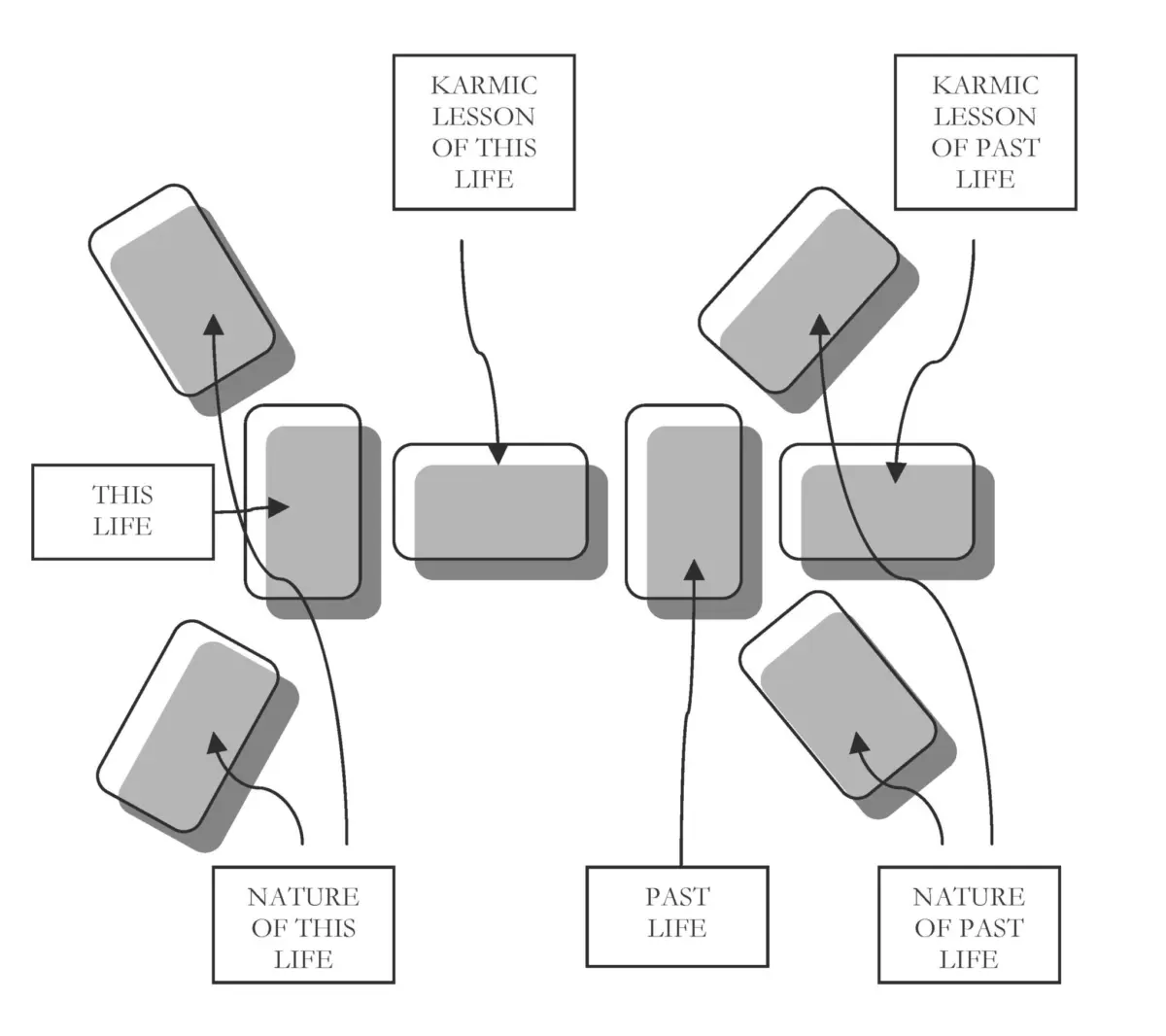
To understand the mechanics of the practice, one must first break down the physical architecture of the layout:
- The Deck Segmentation: The practitioner must physically separate a standard tarot deck into three distinct stacks: Court Cards, Major Arcana, and Minor Arcana. This foundational step disrupts habitual shuffling patterns and forces a deliberate, mindful engagement with the archetypes.
- The Present-Time Anchor: The process begins with the Court Cards, representing personality expressions and developmental stages. A single card is drawn to answer the prompt: "This is the nature of my Soul in present-time."
- The Current Lifetime Context: Two cards are drawn from the shuffled Minor Arcana stack and placed flanking the Soul card, framed by the statement: "This is the nature of my lifetime in this life."
- The Past-Life Self: A second draw from the shuffled Court Cards introduces the psychological imprint of a previous incarnation, positioned relative to the Minor Arcana cards as an echo of a past-life self.
- The Karmic Lesson: A single Major Arcana card is drawn and bridged between the present and past court cards, establishing the grand spiritual theme or karmic lesson active in the current lifetime.
- The Previous Life Narrative: Two additional Minor Arcana cards are drawn and assigned to the past-life Court Card, establishing the environmental, emotional, and circumstantial texture of that historical existence.
By repeating this cyclical process outward, practitioners can theoretically chain together multiple lifetimes, creating a sprawling genealogical map of the soul’s evolutionary arc.
Chronology: The Evolution of Tarosophy and the Birth of Ancient Echoes
To contextualize the emergence of Ancient Echoes, one must examine the historical timeline of Tarosophy and its growing influence on modern esoteric practices.
Phase One: The Rise of Tarosophy (Early 2000s–2010s)
For decades, tarot reading was largely dominated by predictive modalities, fortune-telling tropes, and rigid guidebooks. However, the turn of the 21st century saw a paradigm shift. Scholars and modern practitioners began advocating for a psychological, philosophical, and interactive engagement with the cards. Out of this movement, "Tarosophy"—the wisdom of the tarot—was formalized. It treated the deck as a mandala of human experience, a psychological toolkit, and a philosophical guide.
Phase Two: The Experimentation with Split-Deck Layouts (2015–2020)
As Tarosophy matured, practitioners began experimenting with non-traditional layouts. Standard spreads often mixed all 78 cards indiscriminately, which could muddy psychological themes. Innovators realized that separating the deck into its elemental components (Major Arcana for spiritual archetypes, Minor Arcana for daily events, and Court Cards for personality facets) allowed for unprecedented clarity. This laid the technical groundwork for multi-layered spreads.
Phase Three: Conceptualization and Formalization of Ancient Echoes (2024)
By early 2024, the demand for past-life exploration frameworks within therapeutic tarot spaces reached a peak. Synthesizing the split-deck methodology with perennial philosophies of reincarnation and psychological archetypes, Ancient Echoes was officially cataloged and published as a premier method for deep-dive introspective readings. The release of foundational diagrams and step-by-step instructions in March 2024 marked a turning point, providing practitioners with a standardized protocol for navigating the deep waters of soul history.
Phase Four: Mainstream Adoption and Community Expansion (Present Day)
Today, Ancient Echoes is utilized internationally in workshops, private tarot consultations, and personal journaling practices. Practitioners are expanding the methodology, discovering nuanced patterns through gender analysis of court cards, occupational tracking via suit elemental dignities, and the overarching synthesis of linear karmic lesson rows.
Supporting Data: Methodology, Mechanics, and Analytical Techniques
The efficacy of Ancient Echoes lies in its rigorous, multi-layered analytical structure. It is not merely a random draw of cards; it is an exercise in applied semiotics and narrative construction.
1. Decoding the Elemental and Demographic Signifiers
When interpreting the previous life Minor cards, practitioners are encouraged to look beyond simple divinatory meanings and conduct a deeper structural analysis:
- Gender Demographics: By analyzing the predominance of male or female figures depicted across the past-life Minor cards, readers can infer historical societal roles, constraints, or gender-specific struggles experienced during that incarnation.
- Suit-Based Occupations: The suits of the Minor Arcana (Wands, Cups, Swords, Pentacles) historically map onto elemental dignities—Fire, Water, Air, and Earth. In the context of Ancient Echoes, these suits often serve as direct indicators of vocation or lifestyle:
- Pentacles: Agrarian labor, trade, commerce, craftsmanship, or physical survival struggles.
- Swords: Intellectual pursuits, military service, legal conflict, or periods of intense social upheaval.
- Cups: Artistic expression, emotional or spiritual service, ecclesiastical roles, or domestic environments.
- Wands: Exploration, entrepreneurship, agricultural expansion, or nomadic lifestyles.
2. The Karmic Progression Row
A critical advanced feature of Ancient Echoes is the ability to lay out multiple Karmic Lesson cards (Major Arcana) in a chronological or evolutionary row. By assessing these major archetypes side-by-side (for example, moving from the Three of Swords past-life context bridged by the Hanged Man karmic lesson to the Empress present soul state), readers can trace a clear narrative of spiritual maturation.
Psychologists note that this externalization of inner narrative functions similarly to sandplay therapy or Jungian active imagination. By projecting internal psychological states onto physical tarot cards, the human brain can process trauma, recognize recurring behavioral loops, and author a more empowering future narrative.
Official Responses and Expert Commentary
The introduction of Ancient Echoes has sparked vibrant discourse across holistic health communities, psychological astrology circles, and professional tarot associations.
Dr. Alistair Vance, a researcher in modern esoteric sociology, comments on the psychological utility of the practice:
"Whether one literally believes in past lives or views them through a Jungian lens of collective unconscious archetypes, the utility of Ancient Echoes is undeniable. It forces the human psyche to construct a coherent narrative out of disjointed symbols. In therapeutic settings, this acts as a powerful container for self-reflection. Clients are able to externalize deep-seated behavioral patterns, view them as historical artifacts of the ‘soul,’ and consciously choose to lay them to rest."
Eminent Tarosophy practitioners have also praised the structural brilliance of the split-deck approach:
"By separating the deck into Courts, Minors, and Majors, Ancient Echoes prevents the cognitive overload that often plagues complex spreads," notes one senior association instructor. "You are dealing with identity (Courts) first, environment (Minors) second, and spiritual evolution (Majors) third. It mirrors the exact way we process human experience in reality—who we are, where we live, and what we are learning."
Skeptics, however, advise caution, warning that practitioners must maintain psychological groundedness. Clinical counselors emphasize that while tools like Ancient Echoes are profoundly beneficial for creative self-exploration and narrative restructuring, they should complement, rather than replace, conventional mental health therapies when dealing with acute trauma or psychological distress.
Implications: The Future of Esoteric Self-Discovery
As Ancient Echoes continues to gain traction globally, its broader implications for personal development, alternative spirituality, and creative writing are profound.
1. Revolutionizing Narrative Therapy
For writers, artists, and creators, Ancient Echoes offers an unprecedented world-building and character-development tool. By mapping out fictitious past lives using the split-deck method, authors can generate rich, psychologically complex backstories for characters, complete with generational wounds, karmic arcs, and environmental textures.
2. Deepening the Mind-Body-Spirit Connection
In the wellness sector, the practice encourages a shift away from short-term predictive readings toward long-term spiritual hygiene. By engaging with the concept of karmic lessons across lifetimes, individuals are encouraged to take radical accountability for their present choices, viewing their current lives as active turning points in a much larger cosmic story.
3. Standardization of Advanced Tarot Practices
The success of Ancient Echoes signals a maturing industry. As tarot moves further into academic, psychological, and structured methodologies like Tarosophy, practices that require critical thinking, pattern recognition, and emotional intelligence will likely supersede passive, fatalistic divination.
Conclusion
Ancient Echoes is far more than a clever tarot spread; it is a sophisticated mirror for the human soul. By meticulously separating the deck into its elemental components and weaving a narrative across time, identity, and karma, this innovative method empowers individuals to listen closely to the whispers of history—and, in doing so, better understand the symphony of the present moment. Whether utilized for spiritual awakening, psychological healing, or creative inspiration, Ancient Echoes proves that the ancient wisdom of the tarot still holds infinite capacity for reinvention.
