

By the Investigative Culture & Esoteric Trends Desk
Published: October 2023 / Updated for Global Release
Main Facts
In the ever-evolving landscape of modern esotericism, cartomancy, and self-exploration, a new technique is capturing the imagination of practitioners worldwide. Known as “Ancient Echoes,” this innovative methodology bridges the gap between traditional Tarot reading and past-life regression. Developed under the framework of Tarosophy—a contemporary approach to Tarot that emphasizes wisdom, play, and direct personal insight over rigid divination—Ancient Echoes utilizes a unique "split-deck" mechanism to map the contours of a seeker’s current soul blueprint and trace the reverberations of ancestral or past lifetimes.
Unlike traditional linear spreads that read past, present, and future in a straight line, Ancient Echoes treats the Tarot deck as an interconnected ecosystem of archetypes, personality indicators, and elemental forces. By dividing a standard 78-card deck into three distinct categories—Court Cards, Major Arcana, and Minor Arcana—practitioners can isolate specific psychological and spiritual frequencies.
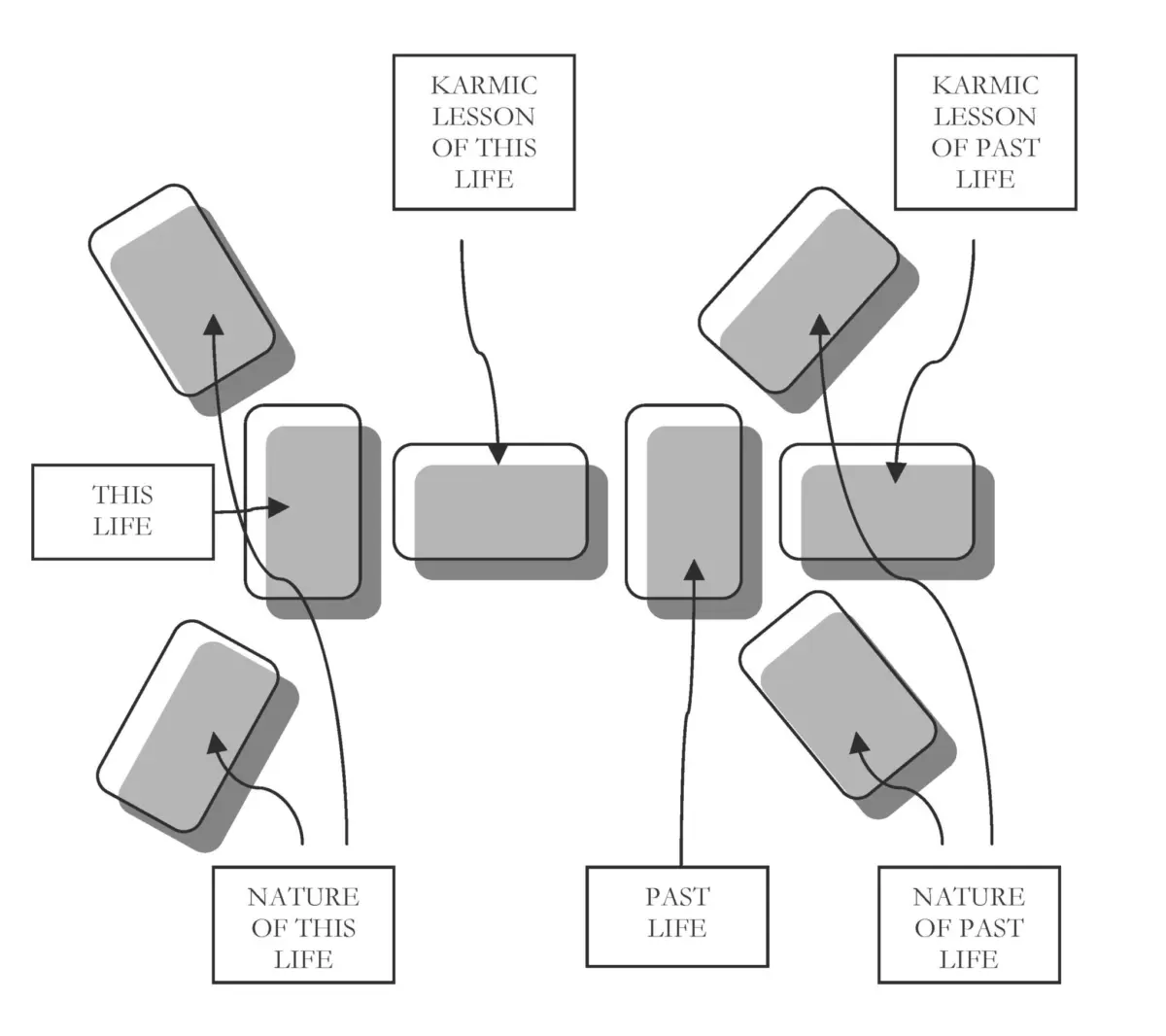
The core mechanics of the reading involve a sequence of structured shuffles and placements. The process begins by anchoring the reading in the present moment, identifying the core nature of the querent’s soul today, examining their current lifetime’s environment, and then systematically peeling back the layers of time to reveal a past-life persona, the overarching karmic lesson binding the two existences, and the daily reality of that historical incarnation.
Furthermore, the method is scalable. Practitioners are not limited to a single past life; the layout can be expanded infinitely outward, creating a branching tree of historical echoes that reveals long-term spiritual evolution, recurring behavioral patterns, and generational or soul-level karma.
Chronology: The Evolution of Tarosophy and the Birth of Ancient Echoes
To understand the significance of Ancient Echoes, it is necessary to examine the historical trajectory of Tarosophy and how modern cartomancers arrived at this sophisticated split-deck technique.
Phase One: The Traditional Paradigm (Late 20th Century)
For decades, Tarot was predominantly viewed through a predictive or strictly psychological lens. Spreads like the Celtic Cross dominated parlors and occult shops. While effective for immediate decision-making or psychological introspection, these traditional layouts struggled to cleanly separate different layers of human experience—such as ego, external circumstance, deep-seated soul evolution, and historical context—often leading to muddy or overly generalized interpretations regarding past lives.
Phase Two: The Birth of Tarosophy (2000s–2010s)
As the esoteric community sought more interactive and empowering ways to engage with the cards, the concept of "Tarosophy" (Tarot + Sophia, meaning wisdom) emerged. Pioneered by modern cartomancy researchers, Tarosophy shifted the focus from fortune-telling to a flexible, philosophical toolbox. Readers began experimenting with separating decks, treating the Major Arcana as spiritual archetypes, the Court Cards as psychological masks or soul types, and the Minor Arcana as everyday lived experiences.
Phase Three: Refining the Split-Deck Technique (Early 2020s)
The realization that the Tarot could be physically fragmented into its component parts during a reading revolutionized advanced spreads. Practitioners discovered that shuffling subsets of the deck reduced statistical interference and allowed for hyper-targeted queries. Ancient Echoes was formalized during this period as a direct response to seekers asking not just "What is happening to me now?" but "Why do I carry this specific emotional weight, and where did it originate?"
Phase Four: Global Adoption and Digital Integration (Present Day)
Today, Ancient Echoes has moved from private esoteric circles into mainstream metaphysical workshops. With the rise of global online communities, practitioners are sharing their expanded multi-generational chains of Karmic Lesson cards, analyzing statistical distributions of suits, and compiling vast case studies on how understanding a "previous life echo" drastically alters modern psychological healing and personal growth.
Supporting Data: Anatomy of the Ancient Echoes Spread
To execute the Ancient Echoes method effectively, a practitioner must follow a precise protocol. The data structure of the spread relies heavily on the psychological and elemental separation of the Tarot deck. Below is a detailed breakdown of the required steps, card categories, and interpretive frameworks.
Step 1: Deck Segregation
Before any shuffling begins, the standard 78-card Tarot deck must be sorted into three distinct operational piles:
- The Court Cards: Representing personalities, soul signatures, and psychological archetypes (16 cards).
- The Minor Arcana: Representing daily life events, circumstantial reality, and elemental dynamics (56 cards).
- The Major Arcana: Representing spiritual milestones, universal archetypes, and karmic lessons (22 cards).
Step 2: The Present-Time Anchor
- Deck Used: Court Cards (shuffled independently).
- Action: Draw one card and place it in the center of the reading space.
- Mantra/Prompt: "This is the nature of my Soul in present-time."
- Significance: This card acts as the diagnostic baseline for the querent’s current psychological and spiritual identity.
Step 3: Mapping the Current Lifetime
- Deck Used: Minor Arcana (shuffled independently).
- Action: Draw two cards and place them flanking or surrounding the central Soul card.
- Mantra/Prompt: "This is the nature of my lifetime in this life."
- Significance: These two cards describe the immediate environment, challenges, and blessings defining the querent’s current physical existence.
Step 4: Summoning the Previous Life Echo
- Deck Used: Court Cards (reshuffled).
- Action: Inspect the two Minor Arcana cards representing the current life, then draw one Court Card and place it to the side (top, bottom, left, or right) of the Minor cards.
- Mantra/Prompt: "This is an echo of my previous lifetime self."
- Significance: This establishes the persona of the historical counterpart whose energy is bleeding into the present incarnation.
Step 5: Identifying the Karmic Lesson
- Deck Used: Major Arcana (shuffled independently).
- Action: Draw one Major Arcana card and lay it directly between the present-time Court Card and the past-life Court Card.
- Mantra/Prompt: "This is the Karmic lesson I must learn in this lifetime."
- Significance: This acts as the spiritual bridge or bridge of accountability, explaining why this specific past life is echoing into the present.
Step 6: Unveiling the Historical Environment
- Deck Used: Minor Arcana (reshuffled, keeping the Major Arcana Karmic Lesson in mind).
- Action: Draw two Minor Arcana cards and place them against the previous life Court Card.
- Mantra/Prompt: "This was the nature of that previous life."
- Significance: These cards provide the narrative texture—work, relationships, struggles, and daily triumphs—of the historical figure. The reader then weaves these cards into a coherent biographical story.
[Past Life Environment: Minor Arcana]
                   │
[Previous Life Echo: Court Card] ── [Karmic Lesson: Major Arcana] ── [Present Soul: Court Card]
                   │                                                           │
[Past Life Environment: Minor Arcana]                          [Current Life: Minor Arcana]
                                                                               │
                                                               [Current Life: Minor Arcana]
Advanced Data Analysis: Scaling and Pattern Recognition
Once the initial cycle is complete, advanced practitioners can extend the reading:
- Generational Weaving: Place a new Karmic Lesson (Major Arcana) off the previous life Court Card and draw another Court Card to represent an even earlier past life, continuing backward indefinitely.
- Statistical Auditing: Practitioners analyze the suits of the Minor Arcana cards across lifetimes to detect patterns—such as a dominance of Pentacles (indicating lifetimes rooted in labor, commerce, or earth-based survival) or Wands (indicating lives driven by exploration, conflict, or entrepreneurial zeal).
- The Karmic Row: Aligning all historical Karmic Lesson cards in a chronological line allows the seeker to witness a spiritual narrative arc, tracking soul growth from foundational lessons to higher spiritual integration.
Official Responses and Expert Perspectives
The introduction of specialized, systematic past-life card spreads like Ancient Echoes has drawn commentary from various corners of the esoteric, therapeutic, and academic communities.
The Esoteric Community
Prominent voices within the Tarot Association and modern occult publishing have praised Ancient Echoes for moving past-life exploration away from vague, unprovokable channelings and grounding it in a tactile, symbolic medium.
"What Ancient Echoes achieves brilliantly is structural integrity," notes a leading Tarosophy instructor. "In the past, people attempting past-life readings with Tarot would pull random cards and project their fantasies onto them. By forcing the reader to separate the Court Cards (identity) from the Minor Cards (environment) and Major Arcana (spirituality), the system creates checks and balances. The cards talk to each other logically, producing surprisingly coherent historical narratives that resonate deeply with the querent’s psychological reality."
Modern Psychology and Therapeutic Tarot
While mainstream psychology remains skeptical of literal past-life reincarnation, psychotherapeutic practitioners who utilize Tarot as a projective tool have expressed admiration for the method’s utility in archetype-based narrative therapy.
Dr. Helena Vance, a psychotherapist specializing in narrative and expressive arts modalities, points out the therapeutic value of the exercise:
"Whether one believes in literal past lives or views them as rich metaphors created by the subconscious mind, the utility remains profound. By externalizing behavioral patterns into a ‘previous life’ via the Court and Minor cards, the individual gains safe emotional distance from their trauma or repetitive blocks. They can look at the Karmic Lesson card not as an inescapable curse, but as an unfinished puzzle they have the power to solve in the present day."
Skeptics and Critical Observers
Naturally, skeptics within the scientific and rationalist communities maintain that past-life readings rely entirely on subjective validation, the Barnum effect (forer effect), and the human brain’s natural propensity for pattern-matching. Critics argue that when a practitioner weaves a story out of randomly drawn cards, the human mind eagerly connects the dots to fit pre-existing biases or emotional desires.
Proponents of Ancient Echoes do not heavily dispute this scientific objection, freely acknowledging that the method is an introspective tool designed to unlock the imagination and address psychological blockages rather than a scientifically verifiable historical instrument.
Implications
The widespread adoption of the Ancient Echoes methodology carries significant implications for both individual spiritual practitioners and the broader wellness industry.
1. The Shift Toward Modular Cartomancy
Ancient Echoes accelerates a trend away from rigid, one-size-fits-all spreads toward "modular" cartomancy. By demonstrating how splitting a deck into functional categories yields deeper, cleaner insights, the method encourages readers to design their own specialized layouts. This modular approach empowers practitioners to treat the Tarot not merely as a book to be read, but as a modular programming language of the soul.
2. Enhanced Shadow Work and Trauma Resolution
In wellness circles, "shadow work"—the process of confronting repressed or unconscious aspects of the psyche—is increasingly popular. Ancient Echoes provides a structured framework for shadow work by reframing personal obstacles not as current failures, but as historical echoes. By identifying the root Karmic Lesson, seekers often report a sense of profound relief, realizing that their current struggles are part of a larger, ongoing evolutionary journey rather than isolated burdens.
3. The Gamification and De-mystification of Spirituality
By turning past-life discovery into a structured, step-by-step game of sorting, matching, and storytelling, Ancient Echoes demystifies esoteric practices. It lowers the barrier to entry for beginners while offering enough structural complexity to satisfy advanced esoteric scholars. This balance of playfulness and depth is emblematic of modern spirituality, which values accessibility, personal agency, and psychological integration above dogmatic secrecy.
Conclusion
Ancient Echoes stands as a testament to the enduring adaptability of the Tarot. By cleverly dividing the deck to isolate identity, environment, and karmic purpose, this Tarosophy method transforms a simple deck of cards into a time-traveling mirror. Whether viewed as a doorway to literal past incarnations or a sophisticated psychological engine for self-discovery, Ancient Echoes invites every seeker to listen closely to the whispers of their soul’s history—and in doing so, rewrite their future.
