

Main Facts: The Intersection of Cartomancy and Past-Life Regression
In the ever-evolving landscape of esoteric practices, contemporary divination has found a compelling new frontier that bridges the gap between psychological introspection and metaphysical exploration. Enter Ancient Echoes, a groundbreaking "split-deck" methodology developed within the framework of Tarosophy. Designed to uncover past lives and examine their direct, tangible bearings on the present incarnation, this ritualistic spread offers both seasoned cartomancers and spiritual seekers a structured, highly articulate pathway into ancestral and past-life memory.
Unlike traditional tarot spreads that focus strictly on immediate futures, relational dynamics, or general guidance, Ancient Echoes operates on a multi-tiered structural system. By separating a standard tarot deck into three distinct categories—Court Cards, Major Arcana, and Minor Arcana—practitioners can meticulously isolate different layers of the human psyche. The method does not merely ask the cards to tell a fortune; it constructs a narrative bridge between the current soul expression and the reverberations of historical or past-life existences.
At its core, the practice relies on a specific sequence of shuffling, intentional placement, and spoken affirmations. The foundational layout establishes the querent’s present-day soul archetype, maps out the architecture of their current lifetime, pulls back the veil to reveal a past-life persona, and identifies the overarching karmic lessons linking the two eras. Furthermore, the system is infinitely scalable, allowing practitioners to travel backward through an endless corridor of successive past lives, utilizing Major Arcana cards as karmic stepping stones.
As interest in alternative spiritual modalities continues to surge in mainstream wellness circles, Ancient Echoes has emerged as a premier technique for those seeking deeper self-awareness, existential healing, and a structured narrative framework to make sense of recurring life patterns.
Chronology: The Evolution and Implementation of the "Split-Deck" Method
To fully understand the mechanics of Ancient Echoes, one must examine the chronological step-by-step protocol required to execute the spread. Developed as an advanced Tarosophy technique, the layout demands patience, mindfulness, and a methodical approach to card handling.
Phase 1: Preparation and the Present Soul
The process begins by sorting a complete tarot deck into three distinct piles: the Court Cards, the Major Arcana, and the Minor Arcana.
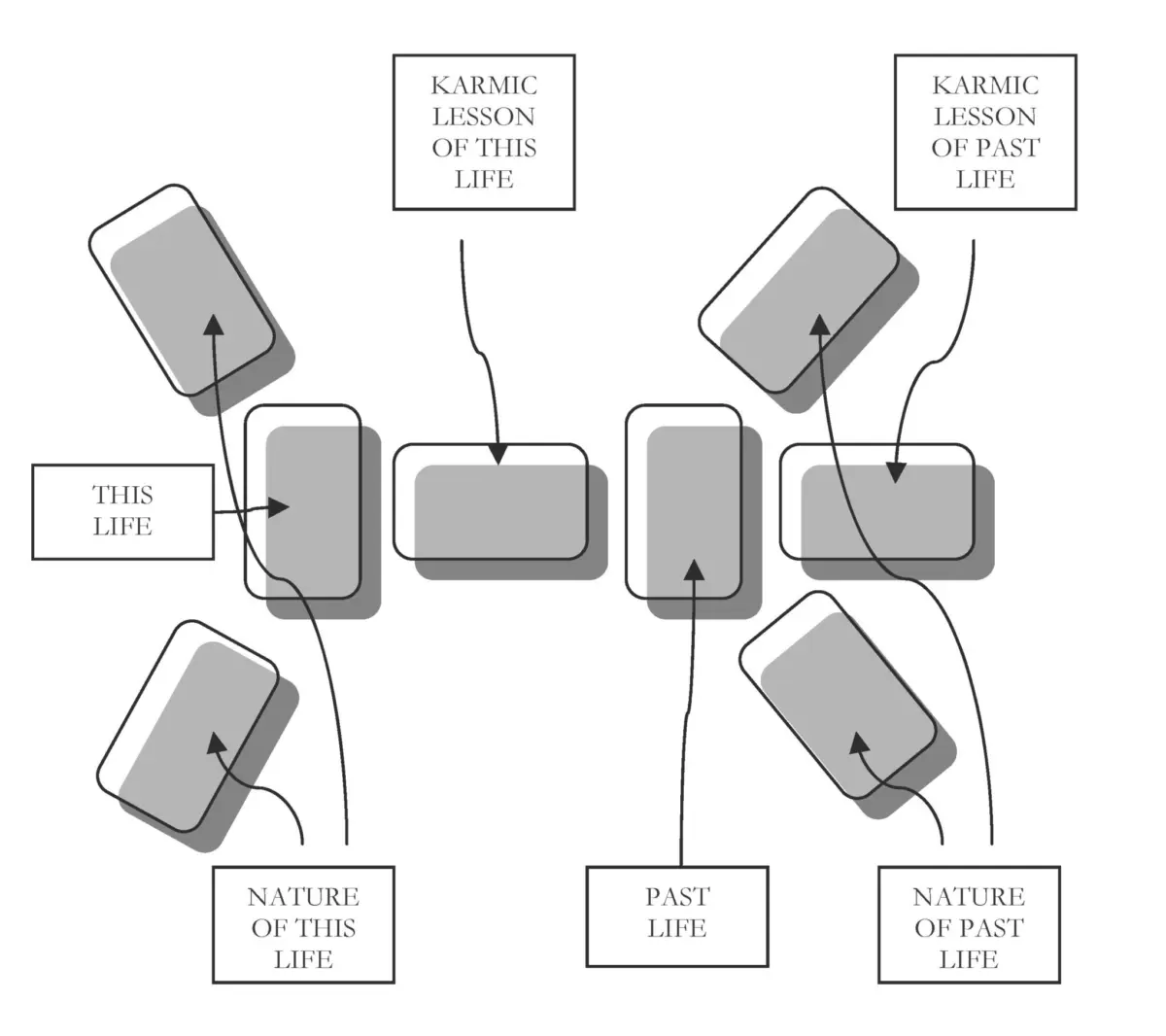
- The Present Soul Card: The practitioner takes the stack of Court Cards, shuffles them thoroughly, and draws a single card. This card is placed centrally on the table with the accompanying affirmation: "This is the nature of my Soul in present-time." This establishes the psychological and energetic baseline of the querent in the here and now.
- The Current Lifetime Framework: Next, the practitioner takes the stack of Minor Arcana cards, shuffles them, and draws two cards. These are placed adjacent to the central Soul card, accompanied by the declaration: "This is the nature of my lifetime in this life." These cards outline the immediate environment, challenges, and daily experiences defining the querent’s current incarnation.
Phase 2: Uncovering the Previous Lifetime
Once the present is firmly established, the practitioner reaches back across the veil of time to identify the echo of a former existence.
- The Previous Life Persona: Returning to the Court Card stack, the practitioner shuffles once more while meditating on the two Minor Arcana cards representing the current life. One card is drawn and positioned to the side (top, bottom, left, or right) of the current life cards. The practitioner states: "This is an echo of my previous lifetime self."
- The Karmic Lesson: The practitioner then turns to the Major Arcana stack. After shuffling, a single card is selected and placed directly between the present-day Court Card and the previous-life Court Card. The spoken prompt is: "This is the Karmic lesson I must learn in this lifetime."
- The Texture of the Past: To flesh out the historical context, the practitioner takes the Minor Arcana cards, shuffles them while contemplating the Karmic Lesson Major Arcana card, and selects two new cards. These are placed against the previous-life Court Card with the affirmation: "This was the nature of that previous life." The reader must then weave a cohesive narrative connecting these symbols into a story.
Phase 3: Recursive Expansion and Deepening the Narrative
The chronology of the reading does not stop at a single past life. The true innovation of Ancient Echoes lies in its recursive potential:
- Practitioners can treat the previous-life Court Card as a new focal point, drawing a subsequent Major Arcana card to represent the karmic bridge to an even earlier lifetime.
- By working systematically outward, readers can construct a sprawling genealogical tree of the soul, tracing echoes across multiple historical epochs.
Supporting Data: Analytical Frameworks and Diagnostic Indicators
While cartomancy is traditionally evaluated through qualitative rather than quantitative metrics, the Ancient Echoes method introduces systematic diagnostic tools that allow readers to extract concrete data patterns from their spreads. These analytical indicators transform a purely intuitive reading into a structured psychological and symbolic assessment.
1. Elemental and Suit Demographics in Minor Arcana
When analyzing the past-life Minor Arcana cards (drawn to define the nature of the previous lifetime), practitioners are encouraged to catalog objective data points:
- Gender Ratios: Are the paired Minor Arcana cards associated with traditional elemental polarities often mapped to masculine or feminine attributes (e.g., Swords and Wands as active/masculine; Cups and Pentacles as receptive/feminine)? Assessing the predominance of these energies offers insight into the societal roles or perceived gender expressions of the past-life persona.
- Occupational and Lifestyle Indicators: Specific suits carry distinct thematic weights that serve as historical or vocational markers. Pentacles frequently point toward agrarian, mercantile, or craft-based existences; Swords may denote military, intellectual, legal, or conflict-driven environments; Cups often reflect domestic, artistic, spiritual, or emotionally turbulent lives; and Wands highlight exploratory, entrepreneurial, pioneering, or nomadic callings.
2. Major Arcana Progression Analysis
By laying out multiple Karmic Lesson cards in a chronological row—representing a chain of successive past lives—practitioners can analyze numerical and archetypal sequences:
- The Fool’s Journey in Reverse or Progression: Observing whether the Karmic Lessons ascend or descend numerically (e.g., moving from The Tower down to The Hermit, or vice versa) reveals the directional evolution of the soul’s lessons over centuries.
- Recurring Archetypes: If specific archetypal themes (such as justice-oriented cards like Justice and Judgment, or transformative cards like Death and The Hanged Man) appear repeatedly across different historical echoes, the data indicates a persistent, un-integrated core lesson that the soul has attempted to master across multiple incarnations.
Official Responses: Practitioner Perspectives and Esoteric Reception
Since its introduction to the broader esoteric community, the Ancient Echoes methodology has generated significant discourse among professional tarot readers, esoteric historians, and spiritual counselors.
Prominent voices within the Tarosophy community have praised the system for its structural rigor. Unlike spontaneous past-life spreads—which often suffer from vague interpretations or projection—Ancient Echoes enforces a strict boundary between the psychological present and the historical past through its deliberate separation of deck categories.
A senior instructor within the international tarot community noted: "The genius of Ancient Echoes lies in its compartmentalization. By restricting Court Cards to identity, Major Arcana to universal lessons, and Minor Arcana to daily reality and environmental texture, the method prevents the reader from muddying the waters. It provides a scaffolding that supports deep imaginative synthesis without losing logical coherence."
Conversely, some traditionalists initially expressed skepticism regarding the complexity of the split-deck approach, warning that novices might find the constant re-shuffling and multi-layered prompts cumbersome. However, feedback from workshops indicates that once practitioners master the foundational grammar of the spread, the process becomes fluid and deeply intuitive. Psychologically oriented tarot readers have also embraced the technique, framing the "past lives" not strictly as literal historical incarnations, but as powerful ancestral metaphors and archetypal sub-personalities residing within the collective and personal unconscious.
Implications: Psychological Healing, Karmic Resolution, and Future Horizons
The implications of the Ancient Echoes spread extend far beyond the immediate novelty of past-life exploration. By offering a structured methodology for examining how historical or ancestral echoes impact modern behavior, the practice touches upon several critical areas of personal development, therapeutic cartomancy, and spiritual evolution.
1. Bridging Modern Trauma with Historical Metaphor
In modern therapeutic and coaching contexts, clients frequently struggle with irrational phobias, persistent emotional blocks, or repeating relational loops that defy rational explanation within their current life circumstances. Whether viewed through a literal metaphysical lens or a psychological framework of transgenerational epigenetic memory, the Ancient Echoes spread provides a safe, symbolic container to externalize these blocks. By assigning a narrative to a "previous lifetime," the querent can safely examine core wounds—such as betrayal, abandonment, or loss of autonomy—without triggering acute modern defense mechanisms. The integration facilitated by the Karmic Lesson card offers an actionable roadmap for resolving these lingering patterns in the present.
2. The Evolution of Tarosophy
Ancient Echoes represents a significant milestone in the evolution of Tarosophy—the philosophy and practice of wisdom through tarot. By moving beyond predictive fortune-telling, methods like Ancient Echoes reposition the tarot deck as a sophisticated diagnostic instrument for self-actualization. As practitioners increasingly demand tools that foster deep psychological insight alongside spiritual exploration, structured split-deck methodologies are likely to become standard components of advanced esoteric curricula.
3. Future Directions in Esoteric Research
Looking ahead, developers of the Ancient Echoes framework anticipate further expansions of the technique. Collaborations between cartomancers, somatic therapists, and historians are currently exploring how localized historical data can be cross-referenced with card combinations to add an even greater layer of verisimilitude to readings. As the practice continues to gain traction globally, Ancient Echoes stands as a testament to the enduring adaptability of the tarot—proving that 78 paper cards can still unlock the deepest, oldest mysteries of the human soul.
