

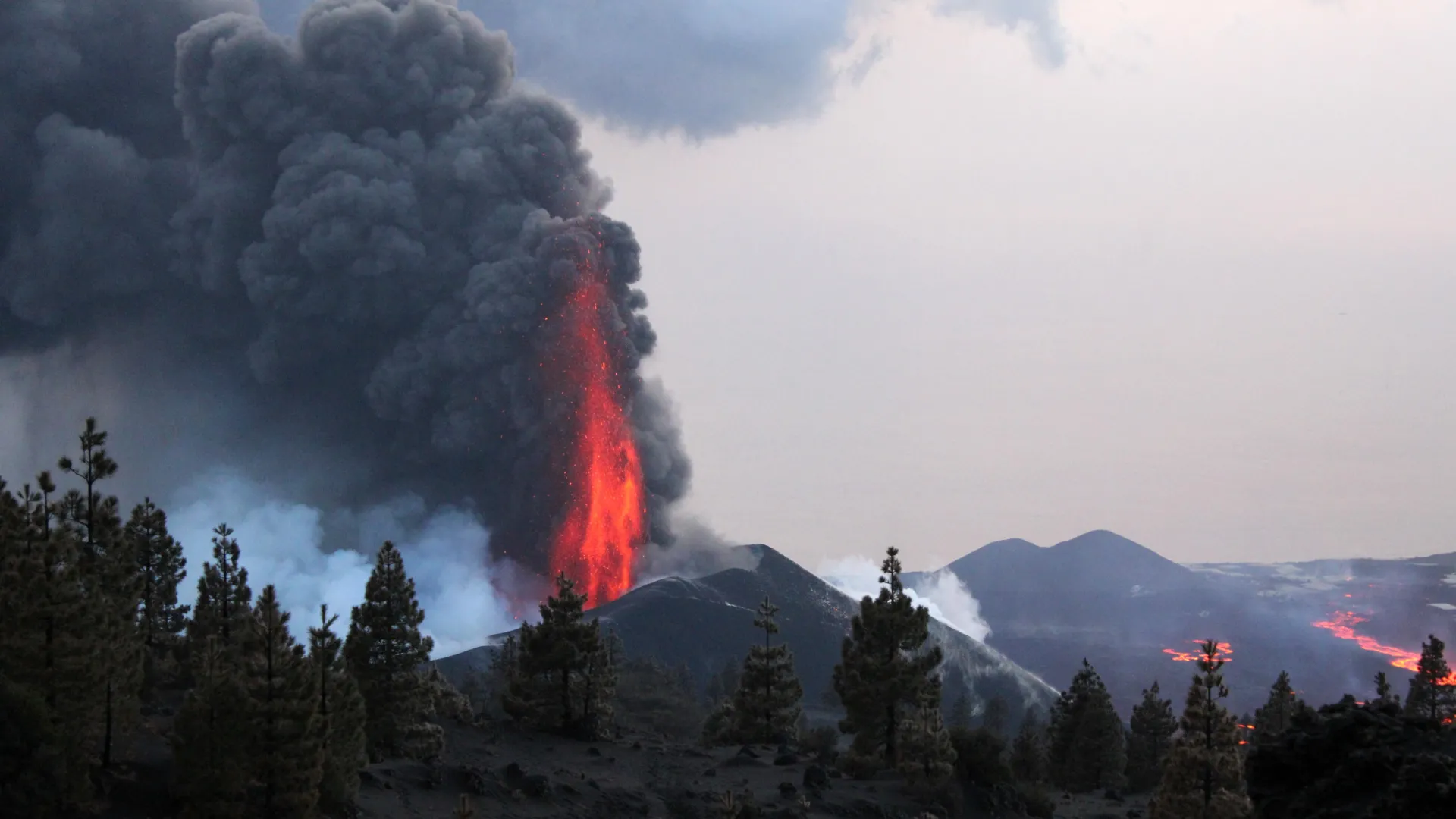
MANCHESTER, UK — For centuries, volcanologists have faced a confounding geological puzzle: why do volcanoes with nearly identical chemical compositions, sourced from similar depths and operating under comparable tectonic pressures, exhibit vastly divergent personalities? While one vent might roar to life with spectacular, hundreds-of-meter-high lava fountains that terrorize the landscape, another fed by seemingly identical molten rock may ooze sluggishly, producing a slow, effusive flow that allows for orderly evacuations.
Now, an international team of researchers led by The University of Manchester has uncovered a critical, previously underestimated piece of this geological puzzle. By peering deep into the fiery heart of active magma using cutting-edge synchrotron technology, scientists have identified a heat-driven mechanism known as "superheating." This process can fundamentally alter the microscopic structure of rising magma, delaying crystal formation by hours and dramatically dictating whether an eruption explodes with breathtaking violence or unfolds as a slow-flowing spectacle.
Published in the prestigious journal Nature Communications, the study draws on direct analysis of magma samples from the dramatic 2021 Tajogaite eruption on La Palma in the Canary Islands. By bridging the gap between high-temperature geochemistry and real-time imaging, the researchers have opened a new frontier in volcanic hazard assessment, offering a paradigm shift that could eventually refine eruption forecasts and save lives.
The Anatomy of an Eruption: Main Facts
At the core of the new discovery is the complex relationship between temperature, crystallization, and magma viscosity. When molten rock sits deep within the Earth’s crust, it is a turbulent, multi-phase mixture of liquid silicate melt, dissolved gases, and suspended mineral crystals.
Traditionally, volcanic hazard models have prioritized three main variables when attempting to forecast how an eruption will unfold:
- Magma chemistry: The overall elemental makeup of the melt, particularly its silica content.
- Gas content: The volume and species of volatiles (such as water vapor, carbon dioxide, and sulfur dioxide) dissolved within the liquid.
- Pressure changes: The drop in ambient pressure as magma ascends from deep reservoirs toward the surface, which causes gases to exsolve and expand.
However, this new research demonstrates that a fourth factor—pre-eruptive thermal history and crystallization kinetics—must now be considered equally vital.
The study reveals that when magma experiences "superheating"—a state where the liquid becomes significantly hotter than the temperature threshold at which its constituent crystals remain stable—profound microscopic transformations occur. Intense heat acts as a molecular reset button. It completely dissolves tiny, pre-existing mineral crystals that would otherwise serve as nucleation sites, or "seeds," for the rapid growth of new crystals as the magma ascends.
Furthermore, superheating reorganizes the melt at an atomic level, creating a more uniform internal structure that is inherently hostile to the swift development of new crystal lattices.
This microscopic homogenization has macroscopic consequences. The presence or absence of crystals directly controls the viscosity (thickness and stickiness) of the magma.
- If crystal formation is delayed, the magma remains remarkably fluid, allowing it to accelerate rapidly as it shoots toward the surface. This rapid ascent prevents trapped volcanic gases from escaping easily, pressurizing the system until it bursts forth in dramatic lava fountains.
- If crystals form early, the magma thickens significantly, becoming sluggish and viscous. This slows its ascent through the conduit, giving dissolved gases ample time to bleed off harmlessly. The result is a gentler, effusive eruption characterized by steady, slow-moving lava flows.
Chronology of a Breakthrough: From La Palma to the Synchrotron Beamline
The path to this discovery reads like a modern detective story, combining field geology, high-end laboratory experimentation, and state-of-the-art physics.
Phase 1: The Tajogaite Eruption and Field Sampling
The investigation began in the wake of the devastating 2021 Tajogaite eruption on La Palma, Spain, which lasted for 85 days and radically reshaped the island’s topography. Geologists collecting fresh juvenile magma samples recognized an opportunity to study material that had experienced complex thermal histories during its rapid journey through the Earth’s crust. Geochemical indicators suggested that portions of this magma might have been subjected to significant thermal pulses—superheating—just prior to or during its ascent.
Phase 2: Recreating the Abyss in the Laboratory
To test their hypotheses, Dr. Barbara Bonechi and her colleagues at The University of Manchester sought to recreate the extreme temperatures and pressures of a subterranean magma plumbing system within a controlled laboratory environment.
Using the actual magma collected from La Palma, the team subjected samples to rigorous thermal treatments designed to simulate a sudden injection of superheat. The primary challenge for volcanologists has historically been observational: looking inside opaque, molten rock while it is actively changing phase has long been considered nearly impossible.
Phase 3: Real-Time Imaging at Diamond Light Source
To overcome this obstacle, the research team traveled to the Diamond Light Source, the UK’s national synchrotron science facility located in Oxfordshire. There, utilizing an exciting and newly developed X-ray transparent pressure vessel combined with synchrotron X-ray microtomography, the scientists achieved a monumental breakthrough.
Instead of waiting for an eruption to finish and examining the cooled rock post-mortem, the team was able to watch, in real time (in situ), as crystals began to nucleate and grow inside the superheated magma under simulated crustal pressures.
To complement these high-speed synchrotron scans, the researchers also conducted parallel ex-situ experiments in Prague, Czech Republic. These secondary trials allowed the team to observe larger sample sets over extended periods, cross-verifying the synchrotron data and ensuring that the observed phenomena were consistent across different analytical scales.
Supporting Data: The Eight-Hour Crystallization Delay
The quantitative results yielded by the experiments were both striking and definitive, providing hard numerical data to support the qualitative theories of magma dynamics.
When the research team analyzed unheated control samples of the Tajogaite magma—material that had not been subjected to a superheating pulse—crystallization began almost immediately upon cooling, with new mineral crystals reliably appearing after roughly 20 minutes.
In stark contrast, samples that had undergone strong superheating exhibited a dramatic behavioral shift. The intense thermal spike completely eradicated existing crystal seeds and restructured the melt, preventing any new crystal formation for more than eight hours.
To understand the broader implications of this delay, the researchers fed these experimentally measured nucleation delays into advanced numerical models of magma ascent. These computer simulations tracked how batches of magma would behave as they traversed the kilometers of solid rock between a deep chamber and the surface.
The simulations confirmed that an eight-hour delay in crystallization fundamentally alters the ascent profile. Unencumbered by the internal friction of a crystal network, the superheated magma maintained a low viscosity for a much longer duration of its journey. This allowed the fluid melt to surge upward at speeds capable of generating explosive fountain dynamics. Conversely, samples that nucleated early experienced a rapid spike in viscosity, choking the conduit and dampening the eruptive vigor.
Official Responses and Expert Perspectives
The publication of the study has drawn widespread acclaim from the international volcanology community, underscoring the shift toward kinetic and thermal studies in earth sciences.
Dr. Barbara Bonechi, Research Associate at The University of Manchester and lead author of the study, emphasized the technological leap that made these findings possible:
"The history of crystal and bubble growth can dramatically control how a magma erupts; in particular, as more crystals grow, they eventually have a dramatic effect on magma viscosity. Until now, we did not fully understand the dynamics of crystal growth for magmas that received an injection of superheat just before ascent. But using our exciting and newly developed X-ray transparent pressure vessel combined with synchrotron X-ray microtomography, we can actually observe these processes ‘in situ’."
Dr. Margherita Polacci, Senior Lecturer in Volcanology at The University of Manchester and co-author of the research, pointed out the urgent need to integrate these findings into contemporary risk mitigation strategies:
"Current volcanic hazard models typically focus on magma chemistry, gas content and pressure changes. This work suggests that pre-eruptive thermal history and crystallization kinetics may also play an important role in controlling magma ascent and eruptive behavior, with implications for volcanic hazard assessment."
Other independent researchers have noted that the methodology bridges a long-standing gap between petrology (the study of rocks and the conditions under which they form) and fluid dynamics (how those rocks move when melted). By providing concrete timescales—such as the eight-hour crystallization window—the study moves volcanology from qualitative post-eruption descriptions to predictive, kinetic modeling.
Implications for Volcanic Hazard Assessment and Forecasting
The practical ramifications of this research extend far beyond academic curiosity. Across the globe, millions of people live in the shadow of active volcanic systems, from the slopes of Mount Vesuvius in Italy to the densely populated flanks of stratovolcanoes in the Pacific Ring of Fire.
When a volcano begins to show signs of unrest—manifested through seismic tremors, surface deformation, and emissions of sulfur dioxide—civil protection authorities rely heavily on geophysical monitoring data to determine whether to evacuate local populations.
However, predicting how an eruption will manifest once it breaches the surface remains notoriously difficult. Two eruptions with identical geochemical signatures can present entirely different threats: lava fountains present extreme fire hazards and can rapidly ignite infrastructure, whereas effusive, slow-moving flows afford residents time to relocate while still destroying property along predictable paths.
By demonstrating that pre-eruptive thermal history can drastically alter magma viscosity and ascent speed independent of bulk chemistry, the Manchester team provides volcanologists with a new interpretive lens. Monitoring networks may soon need to incorporate proxies for thermal input—such as micro-thermometry derived from gas emissions or subtle geophysical signals indicating deep thermal injections—into their real-time assessment algorithms.
As researchers continue to refine these numerical models, the ultimate goal is clear: to transform the unpredictable fury of the Earth’s interior into a quantifiable, forecastable science, ensuring that communities living in volcanic regions are better prepared for whatever the molten depths may send to the surface.
