

By Outdoor Safety & Wilderness Reporting Desk
Published September 29, 2026
Executive Summary: Main Facts
An early-season winter storm transformed Washington’s rugged Goat Rocks Wilderness into a high-alpine trap over the weekend, pushing a young Pacific Crest Trail (PCT) thru-hiker to the brink of survival. The backpacker, a man in his 20s whose identity has been withheld by authorities, found himself stranded and severely hypothermic after 60 mph wind gusts and heavy wet snow collapsed his shelter high along the PCT corridor.
Unable to walk, shivering uncontrollably, and facing rapidly deteriorating core body temperatures, the hiker managed to trigger an emergency SOS via a satellite communication device. The distress signal initiated a complex, multi-agency mountain rescue operation.
Severe weather conditions—including zero-visibility whiteout conditions, heavy precipitation, and sustained gale-force winds—grounded all aviation assets, rendering helicopter extraction impossible. Faced with a race against time, a five-person volunteer crew from Tacoma Mountain Rescue (TMRU) deployed on foot, executing a grueling 8-mile overnight trek through deep snow and treacherous mountain terrain to reach the stricken hiker.
Rescuers located the man by 1:30 a.m. on Saturday, huddled inside the wreckage of his flattened tent. Recognizing that immediate movement could worsen his hypothermia, two team members packed into a cramped two-person tent with the hiker, spending the remainder of the night body-warming and stabilizing him. By morning, combined support teams—including the Pierce County Explorer Search and Rescue (PCESAR)—intercepted the party with hot liquids, guiding all members safely back to the trailhead.
The incident underscores the unforgiving nature of Washington’s shoulder-season backcountry, highlighting the critical importance of emergency communication technology, self-reliance, and the immense sacrifices made by volunteer search and rescue (SAR) organizations.
Chronology of a Crisis: Hour-by-Hour Breakdown
The unfolding drama in the Goat Rocks Wilderness was a masterclass in wilderness survival and tactical coordination under extreme environmental duress.
Friday Afternoon: The Storm Strikes
As summer officially waned, forecasters had tracked a rapidly developing low-pressure system moving inland across the Pacific Northwest. However, high-altitude microclimates frequently exceed predictions. By mid-afternoon on Friday, September 26, the weather along the exposed ridgelines of the Goat Rocks Wilderness deteriorated sharply. Rain quickly transitioned to heavy, wind-driven snow, accompanied by howling gales exceeding 60 mph.
The PCT hiker, deep into his long-distance trek, attempted to pitch his lightweight three-season tent in an exposed alpine saddle. The combination of heavy, wet snow loading and relentless lateral wind proved too much for the shelter’s poles. The structure catastrophically failed, collapsing directly onto the backpacker. Stripped of his primary windbreak and insulation, and with his sleeping bag rapidly absorbing moisture, the hiker’s core body temperature began to plummet.
Friday Evening: The SOS and Tactical Pivot
Realizing he was losing fine motor skills and slipping toward advanced hypothermia—a state where shivering stops and confusion sets in—the hiker made the life-saving decision to activate his satellite messenger.
The distress signal routed through an emergency response coordination center, which quickly pinpointed his GPS coordinates within the remote Goat Rocks region and alerted regional authorities.
Tacoma Mountain Rescue was mobilized immediately. However, initial contingency plans involving rotary-wing aircraft were quickly scrapped. Mountain meteorologists confirmed that low cloud ceilings, severe icing conditions, and blinding wind-driven snow made flying an unacceptable risk. The decision was made to launch a ground assault.
Friday Night to Saturday Morning: The 8-Mile Push
At approximately dusk, a specialized five-person team from Tacoma Mountain Rescue departed the trailhead. They faced an arduous 8-mile trek over broken, snow-covered terrain in total darkness, battling horizontal snow and sub-freezing wind chills. Every step forward required breaking trail through accumulating drifts while navigating steep, avalanche-prone slopes.
Despite the punishing elements, the team maintained a rapid pace, driven by the knowledge that every hour the hiker spent exposed lowered his chances of a full recovery.
By 1:30 a.m. Saturday, the lead scouts located the collapsed tent. The hiker was found semi-conscious, suffering from acute hypothermia, profound exhaustion, and localized frost nip, rendering him completely immobile.
Recognizing that attempting to pack out a non-ambulatory patient through a blizzard in the dead of night would be fatal for both the victim and the crew, the tactical team improvised an in-situ stabilization protocol. Two rescuers squeezed into a shared two-person tent with the patient. For the next several hours, they stripped away his wet clothing, placed him into dry insulation layers, and utilized aggressive body-to-body warming techniques alongside chemical heat packs to slowly coax his core temperature back to safe levels.
Saturday Morning: The Extraction
At first light, the weather eased marginally, though deep snowpacks and high winds persisted. The rewarmed hiker, now capable of limited unassisted movement with physical support, began the slow descent alongside his rescuers.
En route back to the trailhead, the outbound party rendezvoused with members of the Pierce County Explorer Search and Rescue team. The supporting team had hiked in with hot chocolate, high-calorie nutrition, and additional medical supplies. By Saturday afternoon, the entire combined party successfully cleared the trailheads, concluding a flawless mission with zero loss of life or severe injury.
Supporting Data & Environmental Context
To fully understand the severity of the Goat Rocks rescue, one must examine the unique geography, meteorology, and physiological dangers inherent to this specific stretch of the Pacific Crest Trail.
The Geography of Goat Rocks
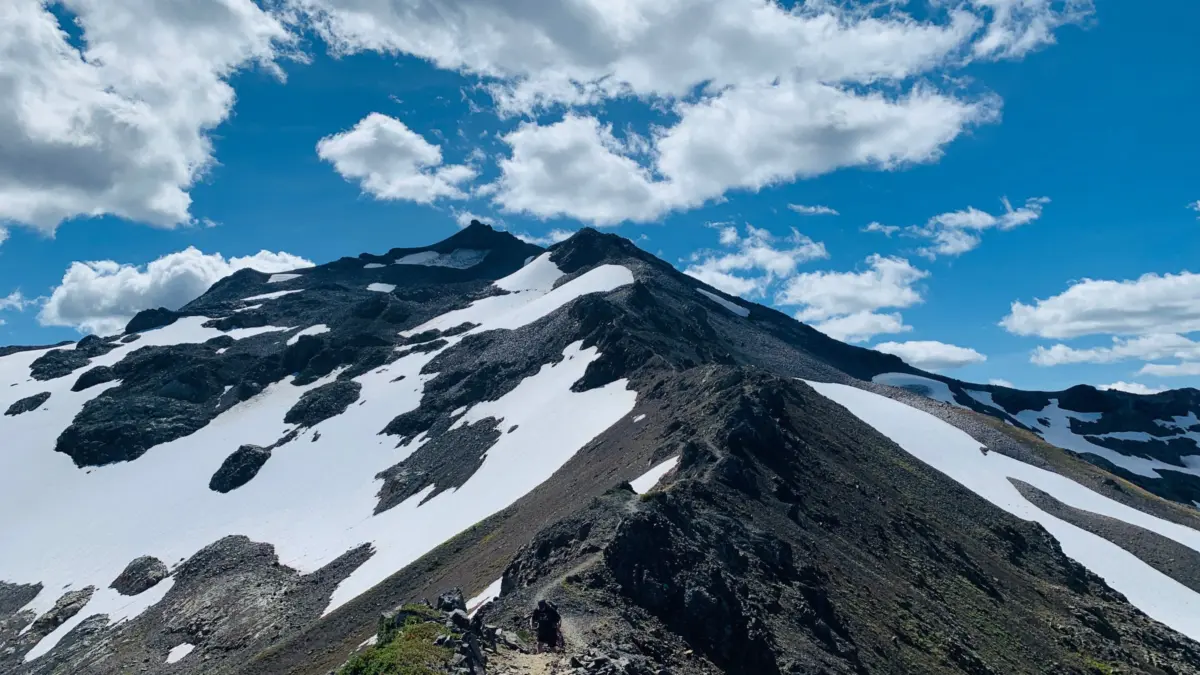
Situated in Washington’s Cascade Range between Mount Rainier and Mount Adams, the Goat Rocks Wilderness is renowned for its dramatic alpine scenery, knife-edge ridges (such as the infamous Knife’s Edge section of the PCT), and sweeping volcanic vistas. Sitting predominantly above 5,000 to 6,000 feet in elevation, the area is exceptionally vulnerable to rapid weather shifts.
Because the region acts as a high-altitude barrier to Pacific storm systems, it frequently captures incoming moisture, turning gentle low-pressure systems into localized blizzards.
The Shoulder-Season Trap
September is widely regarded by thru-hikers as the golden hour of long-distance trekking in the Pacific Northwest—the days are warm, the mosquitoes have largely vanished, and fall foliage paints the valleys. However, this statistical window creates a false sense of security.
Historical weather data for the Gifford Pinchot National Forest and surrounding alpine zones indicates that winter storms can—and frequently do—drop several feet of snow before October 1. Hikers accustomed to mild late-summer conditions often fail to pack adequate four-season gear, heavy-duty winter layers, or avalanche-rated staking systems.
The Physiology of Hypothermia
Hypothermia is a medical emergency that occurs when the body loses heat faster than it can generate it, causing a dangerous drop in core body temperature (below 95°F or 35°C).
| Stage of Hypothermia | Core Temperature | Physical & Mental Symptoms |
|---|---|---|
| Mild | 93°F – 95°F | Vigorous shivering, cold/numb extremities, loss of fine motor skills, mild confusion. |
| Moderate | 86°F – 93°F | Violent shivering stops, irrational behavior, slurred speech, lethargy, muscle rigidity. |
| Severe | Below 86°F | Unconsciousness, weak pulse, shallow breathing, eventual organ failure and cardiac arrest. |
Crucially, experts emphasize that freezing temperatures are not strictly required for hypothermia to set in. The combination of wind (which strips away the micro-layer of warm air surrounding the body) and moisture (which increases thermal conductivity by substituting air with water in clothing) can induce severe hypothermia in ambient temperatures well above freezing. In this case, 60 mph winds combined with wet snow created an effective wind chill far below zero, accelerating the hiker’s heat loss exponentially.
Official Responses and Expert Commentary
The successful rescue has sparked widespread discussion across the Pacific Northwest outdoor community, drawing praise for the professional response teams and highlighting ongoing educational campaigns regarding backcountry safety.
Tacoma Mountain Rescue Unit Statement
In an official debrief shared via social media channels, Tacoma Mountain Rescue emphasized the decisive role played by modern technology:
"This mission is a good reminder of why a satellite messenger belongs in your pack. His SOS got help moving hours before anyone would have known he was in trouble."
TMRU representatives noted that without the precise GPS coordinates provided by the satellite device, search teams would have been forced to sweep a massive, multi-square-mile wilderness zone in zero-visibility conditions, a delay that likely would have proved fatal.
Search and Rescue (SAR) Infrastructure in Washington
Washington State relies heavily on volunteer-driven SAR organizations—such as TMRU, Pierce County Explorer Search and Rescue, and the King County Search and Rescue Association—to manage thousands of backcountry incidents annually. These organizations operate largely on donations, grants, and the extraordinary personal sacrifice of volunteers who drop their jobs, families, and sleep to deploy into life-threatening environments at a moment’s notice.
Law enforcement agencies and county sheriffs reiterated their gratitude for these volunteers while issuing renewed warnings to the public.
"Our mountain rescue partners perform superhuman feats in weather conditions that most people wouldn’t step outside in," noted a regional emergency management spokesperson. "However, every rescue averted by proper preparation saves volunteer lives and protects public resources."
Implications for the Outdoor Community
The Goat Rocks incident serves as a glaring wake-up call for the broader hiking, backpacking, and thru-hiking community, carrying several direct takeaways for anyone venturing into alpine environments during the shoulder seasons.
1. The Redefinition of "Three-Season" Gear
Lightweight backpacking has exploded in popularity, with many hikers shedding ounces by utilizing minimalist trekking-pole tents and ultralight quilts. While effective in summer, these setups are structurally inadequate when confronted with high-altitude alpine gales and wet snow loads.
Backpackers must carefully evaluate their shelter systems. If heading into high-elevation terrain during September or October, carrying a four-season tent, robust stakes, and a reliable snow shovel can mean the difference between weathering a storm and becoming a statistic.
2. Universal Adoption of Satellite Communication
For decades, wilderness travelers relied on whistle blasts, signal fires, or waiting until someone at home noticed they were overdue. Today, compact, two-way satellite communicators (such as Garmin inReach, ZOLEO, or Apple Emergency SOS via satellite) have revolutionized wilderness rescue.
The hiker in this incident owes his life to his device. By cutting down the notification window from days to minutes, he allowed rescue teams to intercept him before his mild-to-moderate hypothermia transitioned into irreversible physiological collapse.
3. The Reality of Climate Volatility
As global weather patterns become increasingly erratic, historical averages for seasonal weather shifts are becoming obsolete. Early-season dumps, unseasonable freezes, and extreme wind events are occurring earlier and with greater ferocity. Outdoor enthusiasts can no longer rely on calendar months (e.g., "September means early autumn, not winter") to dictate their gear lists or route planning. Flexibility, real-time weather monitoring via satellite forecasts, and a willingness to turn back are essential survival skills.
A Legacy of Incidents at Goat Rocks
This weekend’s rescue is merely the latest chapter in a long history of high-stakes weather emergencies in the Goat Rocks Wilderness.
Just a year prior, in 2025, the Washington State Animal Response Team was forced into a complex evacuation to rescue a stranded dog belonging to a PCT hiker who had suffered a severe traumatic injury and required an emergency helicopter airlift. The isolated nature of the terrain, combined with its exposed ridgelines, guarantees that Goat Rocks will continue to test the limits of even the most experienced mountaineers.
Final Thoughts
As the snow melts from the Goat Rocks trails and the 2026 thru-hiking season draws to a close, the unnamed hiker in his 20s returns to civilization with a profound appreciation for the thin margin of error in the mountains. Thanks to the relentless dedication of Tacoma Mountain Rescue, Pierce County Explorer Search and Rescue, and the foresight of modern satellite technology, a tragic headline was averted.
For the outdoor community, the incident remains an enduring testament to an immutable wilderness truth: nature does not negotiate, preparation is non-negotiable, and when the storm hits, your greatest asset is your own self-reliance.
