

Published September 11, 2026
For decades, planning an outdoor excursion meant boxing yourself into one of three rigid categories: the raw, lightweight vulnerability of backpacking; the equipment-heavy logistics of car camping; or the sanitized distance of booking a traditional hotel room. Each option comes with built-in compromises. Backpacking demands enduring sore shoulders and dehydrated meals just to catch a sunrise. Car camping forces you to wrestle with tent poles in the dark and sleep on thin, deflating pads that leave your joints aching by morning. Hotels offer comfort, but they completely divorce you from the landscape, often requiring long, frustrating morning drives just to reach a trailhead parking lot.
However, a growing number of travelers are discovering a sophisticated, comfortable middle ground: the hybrid basecamp.
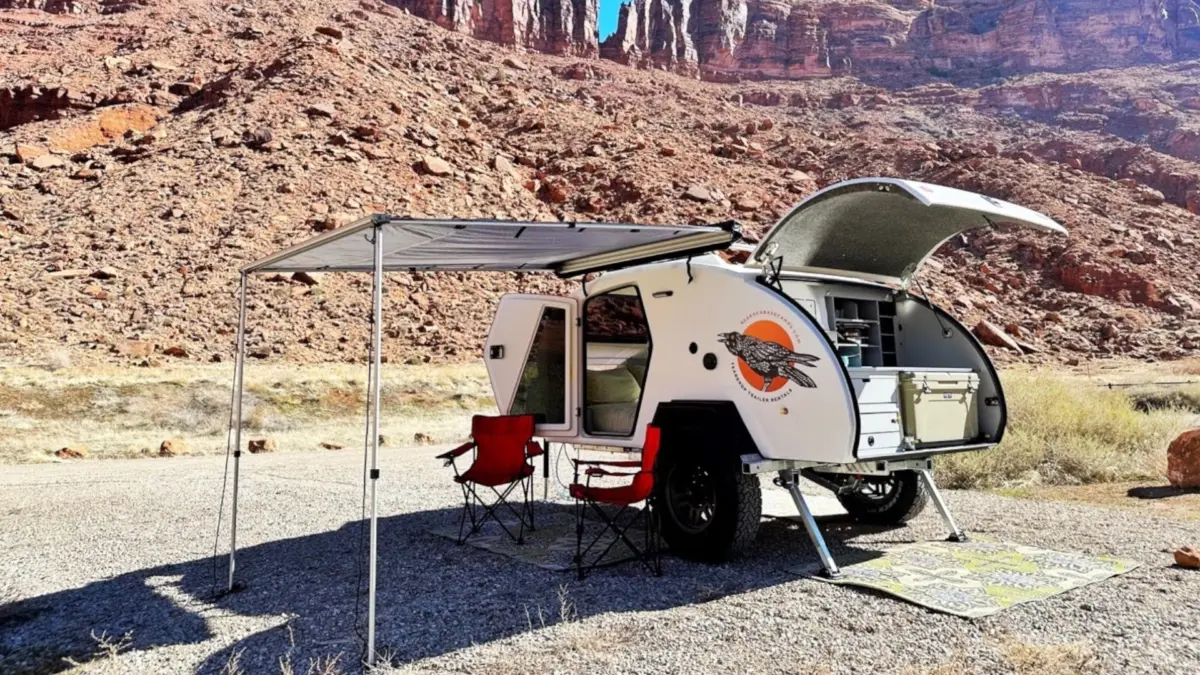
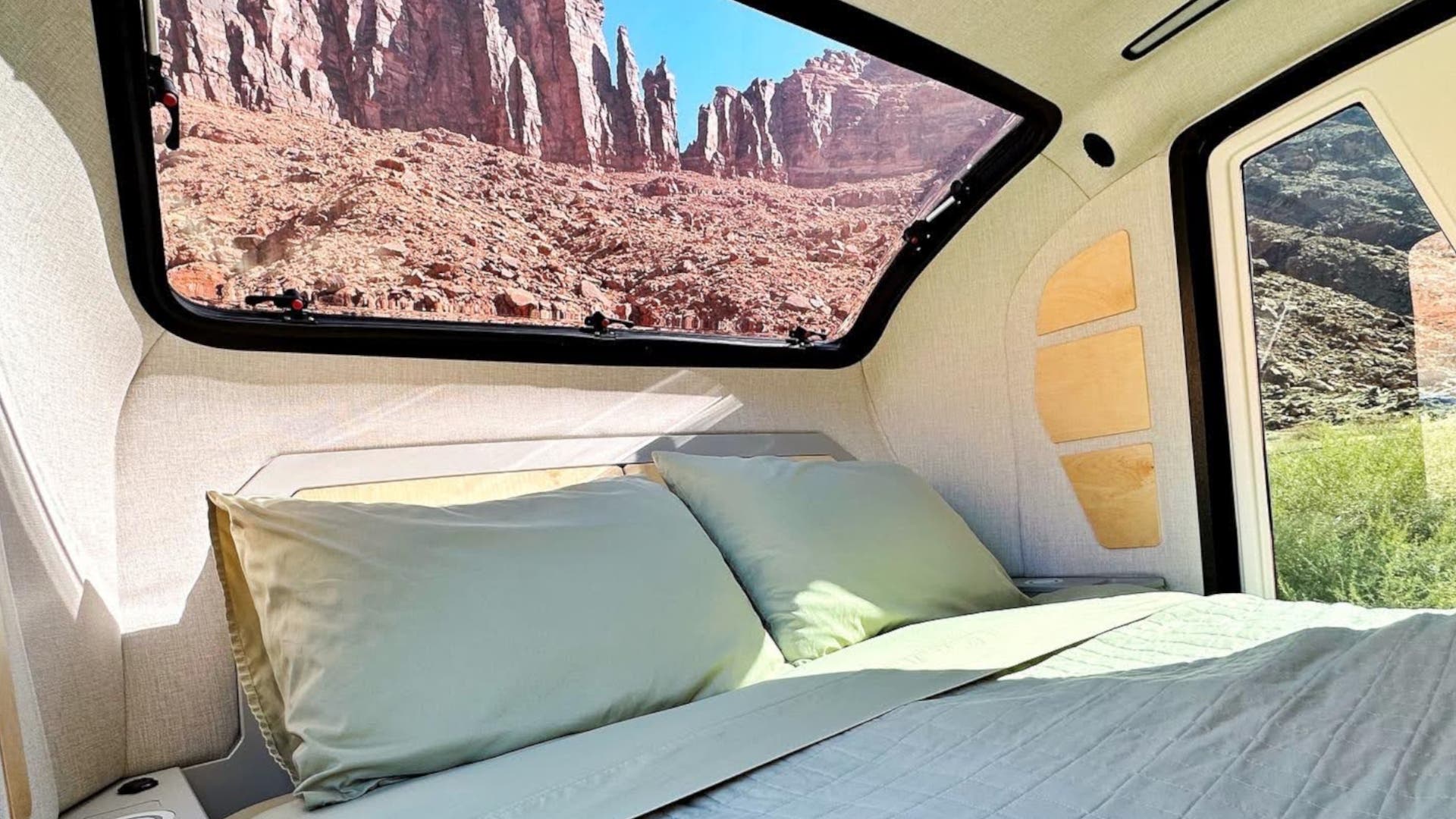
The concept is deceptively simple. Instead of hauling a heavy RV or pitching a tent yourself, you rent a compact travel trailer—typically a nimble teardrop model—from a local host who delivers, sets up, and levels it at a pre-booked or first-come, first-serve campsite. You are left with a semi-permanent, weather-proof stronghold nestled deep in nature. From this comfortable operational hub, you can launch ambitious high-mileage day hikes, trail runs, and explorations, returning each evening to a real queen-sized bed, integrated heating, and a fully stocked outdoor kitchen.
While the underlying philosophy of setting up a static camp to explore a region is hardly new, the logistics have undergone a quiet revolution. Peer-to-peer rental platforms, localized delivery services, and innovative design have transformed trailer camping from a cumbersome hobby reserved for truck owners into an accessible, plug-and-play travel style.
Main Facts: Anatomy of the Trend
The hybrid basecamp model thrives at the intersection of convenience and outdoor immersion. Last fall, looking for a way to escape a traditional family holiday on the East Coast without breaking the bank on a guided excursion or sacrificing basic creature comforts, one traveler tested this exact travel model in the red rock country of Moab, Utah.
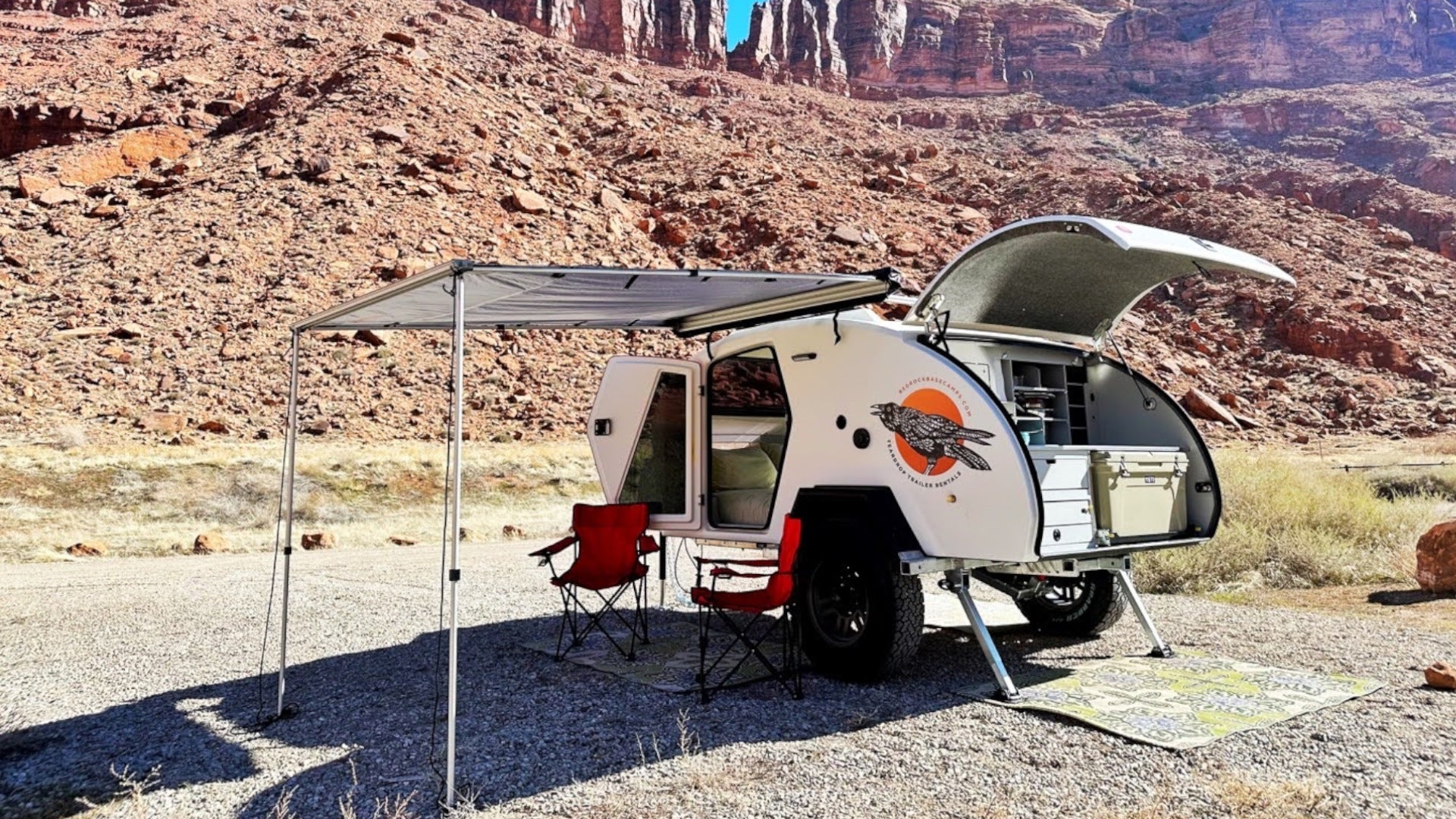
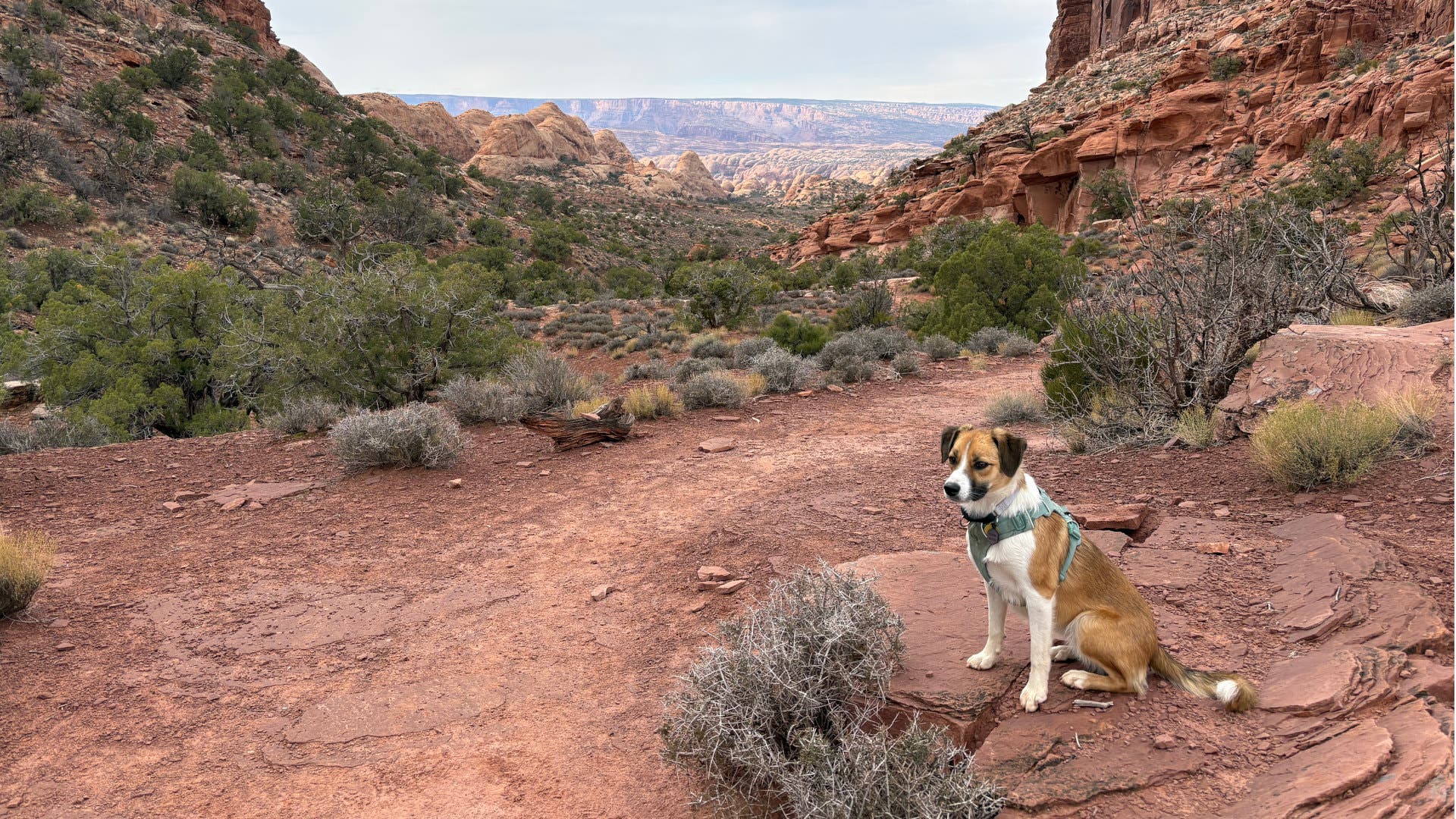
Accompanied only by a dog, the solo traveler bypassed the two primary logistical hurdles that usually deter people from trailer camping: vehicle capability and towing anxiety. Renting a large camper van or hauling a traditional travel trailer thousands of miles across state lines—such as driving from Boulder, Colorado, to Moab along the winding mountain corridors of I-70—requires a heavy-duty vehicle, specialized driving skills, and high fuel costs.
Instead, the traveler utilized a localized turnkey service. By partnering with companies like Red Rocks Base Camps, renters can select a teardrop trailer online, choose a target recreation zone, and have the host physically deliver the unit directly to the campsite.
The total financial footprint of this three-night Moab retreat illustrates the economic viability of the trend:
- Trailer Rental: ~$365
- Pet Fee: $40
- Campsite Fees (Big Bend Recreation Site, 3 nights @ $20/night): $60
- Total Cost: $465 (roughly $155 per night)
When measured against traditional lodging, the pricing remains competitive. According to data from Booking.com, standard chain hotels in Moab—such as the Hampton Inn, Wyndham, or Quality Inn—routinely command between $300 and $400 for a three-night stay. Premium, adventure-oriented boutique hotels in the region, like Gravity Haus, easily eclipse $750 for the same duration. While a hybrid basecamp is not the absolute cheapest way to sleep under the stars, it delivers an unprecedented value proposition: hotel-grade comfort situated fifty feet from the banks of the Colorado River.
Chronology: A Four-Day Moab Itinerary
To understand how a hybrid basecamp functions in practice, one must look at how a traveler structures their days when unburdened by the chores of striking a tent or commuting from an urban hotel.
Day One: Arrival and the Sandstone Gateway
The journey began with a morning drive across state lines into Utah, turning travel time into an active itinerary. Rather than wasting the afternoon checking into a distant motel, the traveler arrived at the Bureau of Land Management’s (BLM) Big Bend camping area along the Colorado River—situated roughly 20 minutes outside of Moab.
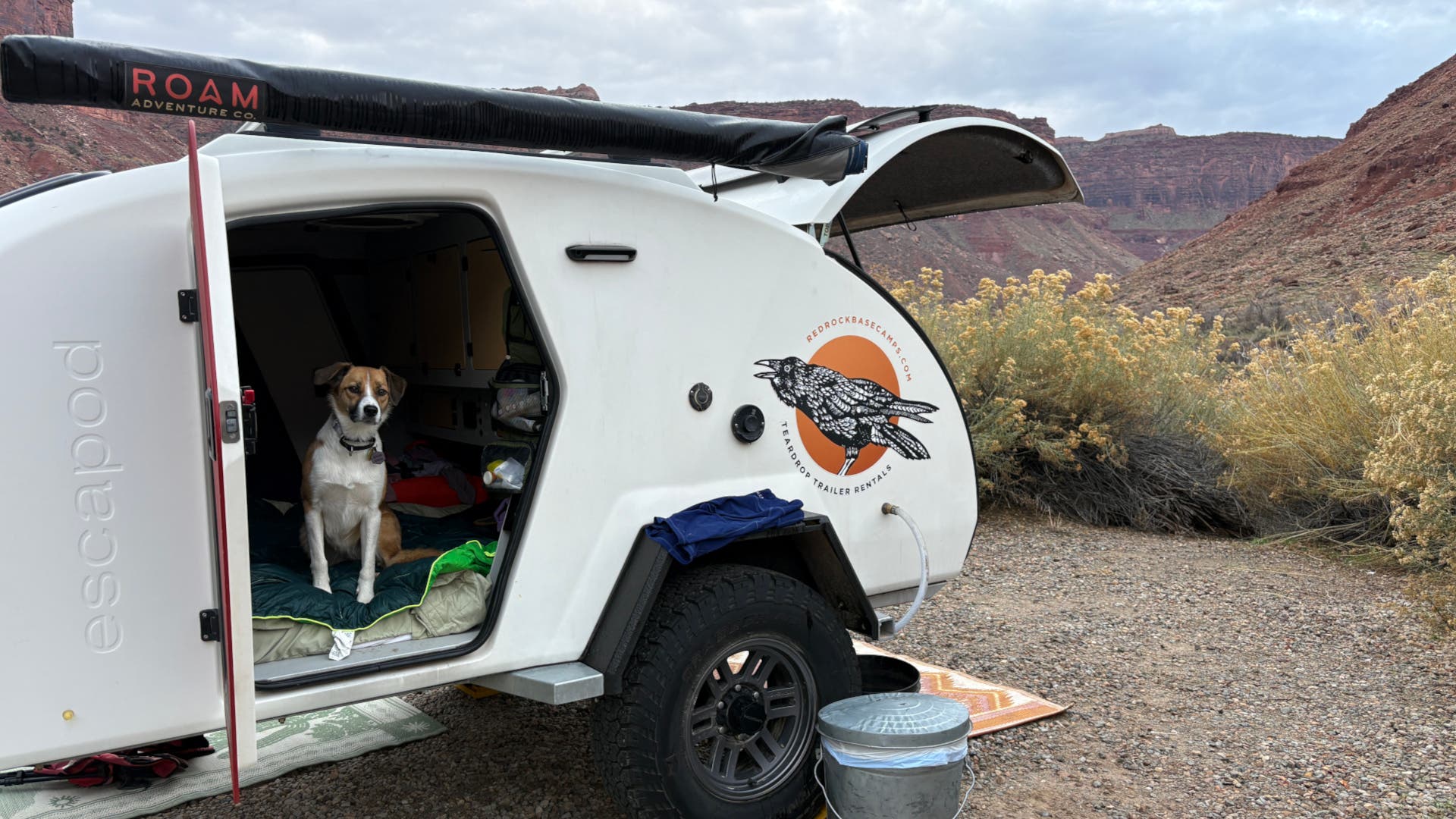
Because the rental host had pre-arranged and delivered the teardrop trailer directly to the campsite, the traveler was able to drop their personal gear inside the warm, stationary cabin and immediately head out. The first objective was the 4-mile Jeep Arch Trail. As afternoon light cast deep shadows across the canyon, the dog and its owner hiked along sandstone pathways framed by towering rust-red and orange walls, shaking off the stiffness of the long drive. Returning to camp required no setup labor; the trailer was already anchored, the bed was made, and the outdoor galley kitchen was ready for use.
Day Two: High-Mileage Tech and Canyon Cool-Downs
Day two represented the physical peak of the trip. Capitalizing on the high-quality sleep afforded by a climate-controlled, quiet cabin, the traveler tackled the Hidden Valley Trail—a demanding 6-mile out-and-back route featuring 1,200 feet of elevation gain.
- Morning Push: The initial half-mile of Hidden Valley is a steep, highly technical climb that demands focus and agility. Once cleared, the trail flattens into a dramatic, elevated valley nestled high above the Moab valley floor. The traveler turned around at the 3-mile mark (with options to connect further into the Moab Rim Trail).
- Midday Respite: Following a hearty lunch in downtown Moab, the itinerary shifted to lower gear.
- Afternoon Stroll: The group walked the 1.5-mile Mill Creek Trail. Though widely known in peak summer for its refreshing swimming holes and frequent stream crossings, the November shoulder-season weather meant brisk temperatures where wet feet were easily avoided.
Day Three: Bridges and Paved Panoramas
With the legs feeling the accumulated mileage of the previous days, day three adopted a balanced "high-to-low" pacing model.
The morning began with a flatter, 4.5-mile excursion along the Grandstaff Canyon Trail. Winding through deep desert flora, the route culminates in dramatic, towering vistas from beneath the colossal Morning Glory Natural Bridge. Rather than calling it a day, the afternoon featured a gentle recovery walk along the paved Moab Canyon Pathway, kicking off from Lions Park to loosen up tired muscles without pounding technical rock.
Day Four: The Grand Finale
On the final morning, before making the long drive back to Colorado, the itinerary saved one of the region’s most iconic landscapes for last: the Fisher Towers Trail.
Stretching 4.6 miles out-and-back with 1,500 feet of cumulative elevation gain, the route winds through a labyrinth of towering, surreal mudstone pillars. Along the way, the traveler watched professional rock climbers scaling the sheer faces of the formations while taking in sweeping, uninterrupted panoramas of the desert valley below. By early afternoon, the trailer was locked up, the host coordinated the pickup, and the traveler departed for home—fatigued, satisfied, and entirely untethered from packing up wet canvas.
Supporting Data: The Logistics of Deliverable Campers
The rapid expansion of the hybrid basecamp market is supported by a significant shift in the recreational vehicle (RV) rental ecosystem. For years, platforms like Outdoorsy, RVshare, and Rvezy focused primarily on traditional peer-to-peer motorhome and trailer rentals where the user was expected to handle the heavy towing.
However, industry metrics indicate a massive spike in "delivery-only" or "drop-off" filtering on these platforms. Novice campers and fitness-focused travelers—such as trail runners, mountain bikers, and backcountry skiers—frequently lack vehicles equipped with heavy-duty towing packages, brake controllers, and high-capacity hitch receivers.
[Traditional RV Rental] ---> Requires Truck + Towing Skill + Setup Labor
[Hotel Stay]            ---> Expensive + Isolated from Trailheads
[Hybrid Basecamp]       ---> Delivered Teardrop + Prime Campsite + Comfort
By removing the towing barrier, rental companies have unlocked a new demographic of outdoor enthusiasts:
- Vehicle Independence: Renters do not need to pilot a massive 30-foot motorhome down narrow, winding canyon roads or worry about finding oversized parking spots at crowded trailhead lots. They can drive their standard fuel-efficient crossover or sedan to the trail.
- Weather Resilience: Modern teardrop trailers frequently come equipped with deep-cycle batteries, solar panels, USB charging banks, and thermostatically controlled propane or electric heaters. When nighttime temperatures in desert or alpine environments plummet below freezing—as they frequently do during shoulder seasons—campers avoid the hypothermic risks and condensation nightmares of traditional tent camping.
- Optimized Nutrition: Unlike backpacking trips constrained by weight limits or car camping setups that require unpacking an entire trunk just to make coffee, teardrop units typically feature a rear-hatch galley kitchen. Equipped with integrated two-burner stoves, Yeti coolers, running water systems, and designated storage, these kitchens allow travelers to maintain high-calorie, nutritious diets essential for athletic recovery.
Official Responses and Industry Insights
Hospitality experts and outdoor recreation economists view the hybrid basecamp trend as a natural evolution in how consumers value experiential travel over luxury asset accumulation.
"People are increasingly hesitant to purchase expensive recreational equipment—whether it’s a $25,000 teardrop trailer or a $100,000 sprinter van—that sits in a driveway for 350 days out of the year," notes Marcus Vance, an outdoor hospitality analyst based in Denver. "At the same time, travelers are seeking authentic proximity to public lands without sacrificing the sleep quality required to run twenty miles or complete a strenuous day hike. The delivery model bridges that gap perfectly."
Campground managers and public land agencies have also noted shifts in visitor behavior. Dispersed camping areas and reservation-heavy state and national parks are seeing longer average stays from visitors who establish a secure, static basecamp rather than moving sites every single night.
"When visitors have a stable, comfortable shelter waiting for them, they tend to integrate better with the local community," explains a recreation technician for the Bureau of Land Management in southeastern Utah. "They buy groceries in town, eat at local restaurants between morning and afternoon hikes, and treat the campsite as a legitimate home base rather than a temporary crash pad."
Implications: The Future of Outdoor Recreation
The mainstreaming of deliverable, hybrid basecamps carries several profound implications for the future of outdoor tourism, environmental conservation, and travel economics.
1. Democratization of Technical Terrain
Historically, high-mileage day-hiking trips in remote regions required either elite wilderness survival skills (backpacking) or significant financial investment in guided expeditions and upscale lodges. By lowering the logistical barrier to entry, the hybrid basecamp opens up rugged landscapes to demographics that might otherwise feel intimidated by traditional tent camping or restricted by physical limitations.
2. Reduced Wear and Tear on Public Lands
One hidden benefit of the static trailer model is a reduction in vehicle transit impacts. When travelers use a large camper van as their daily driver, they must pack up their entire living quarters every time they want to drive to a restaurant, grocery store, or distant trailhead. This increases traffic congestion on fragile access roads and burns unnecessary fossil fuels. With a hybrid basecamp, the trailer stays safely anchored at the campsite while the traveler uses a smaller, more fuel-efficient vehicle for daily errands.
3. A Shift in Rental Market Infrastructure
As platforms like RVshare, Outdoorsy, and specialized boutique operators continue to refine their delivery logistics, the definition of "camping" is permanently expanding. The market is proving that travelers do not necessarily want to rough it to experience nature; rather, they want frictionless access to the wilderness paired with the regenerative comfort of a real mattress and a hot cup of coffee at dawn.
For travelers looking to maximize their trail mileage without waking up with a sore back, the hybrid basecamp has officially graduated from a clever travel hack to the gold standard of modern outdoor adventure.
