

Published September 11, 2026
Reporting by Sam MacIlwaine and Anna Kramer
In an era where the downsizing, leasing, and erosion of public lands have increasingly become routine headlines, a new, unprecedented threat has emerged from the heart of California’s Sierra Nevada. The Trump administration has found itself at the center of a mounting firestorm following revelations that it quietly pushed the National Park Service (NPS) to broker a controversial land swap with a private equity firm.
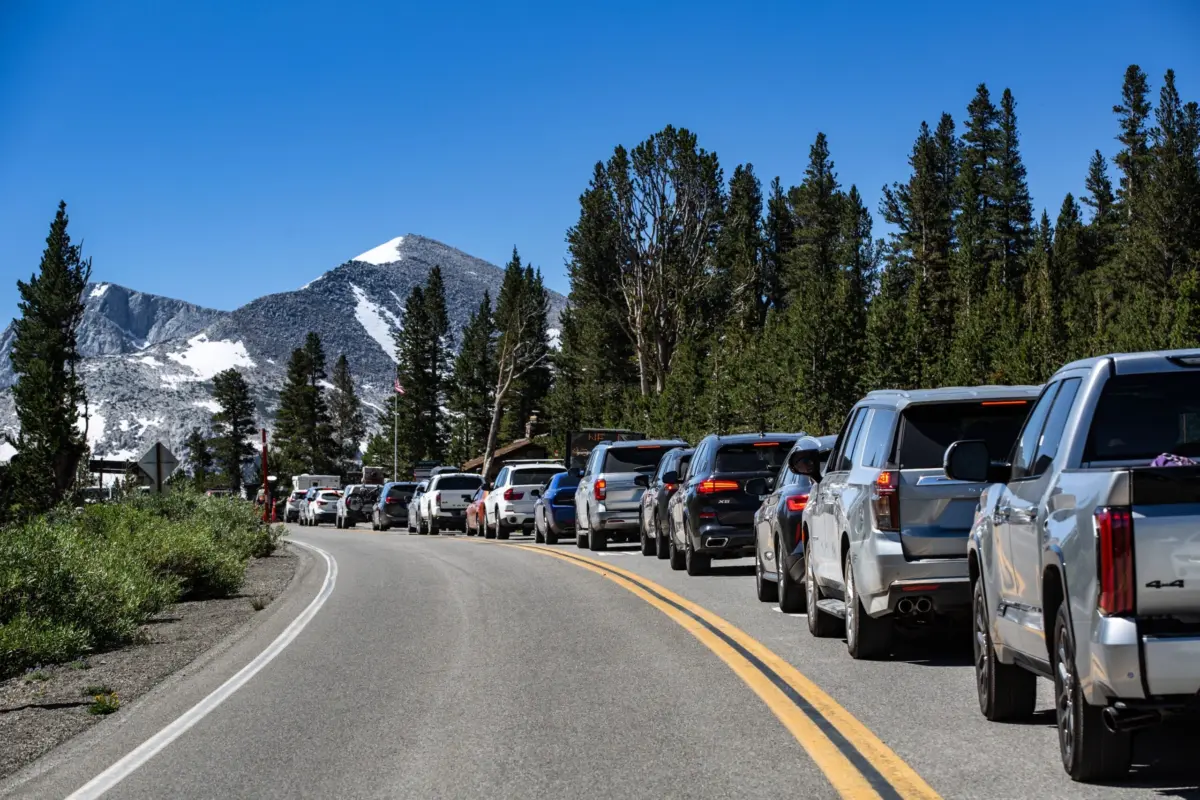
The deal, if finalized, would carve a brand-new, private access road through pristine Yosemite National Park wilderness, connecting an adjacent luxury commercial development directly to the park floor and allowing wealthy resort guests to completely bypass the agonizing traffic lines at existing public gates.
The plan has triggered immediate, fierce backlash from conservationists, lawmakers, outdoor advocacy groups, and cultural icons alike. Yet, as conflicting statements emerge from federal agencies and developers, a deeper investigation into decades-old court records, real estate portfolios, and historical archives reveals a calculated, long-playing scheme to privatize portions of America’s public heritage.
Main Facts: The Proposed Yosemite Land Swap
At the core of the controversy is an 83-acre privately owned parcel of land known as the Hazel Green Ranch, located approximately 600 feet west of the "Hazel Green Dip"—a subtle sag in Big Oak Flat Road roughly three miles inside Yosemite’s Oak Flat entrance.
In 2024, the property was acquired for $4 million by an LLC dubbed "Sanctuary at Yosemite," controlled by Kingsbarn Realty Capital, a Las Vegas-based private equity firm boasting a massive $2.8 billion portfolio of income-generating commercial properties. The firm intends to build an exclusive resort on the property, featuring a 150-room luxury hotel and 80 private cabins.
However, the economic viability of the luxury development hinges entirely on access. Without a direct route into the park, guests would face grueling drives and standard congestion. To solve this, Kingsbarn has been negotiating a land swap with the National Park Service. Under the proposal, the federal government would trade a sliver of protected Yosemite parkland—under half a mile in length—in exchange for an equivalent parcel, allowing the developer to bulldoze a private road straight into the park.
Who Stands Against the Deal?
The proposed land swap has galvanized a broad coalition of opponents. Denunciations have poured in from major environmental and labor groups, including:
- The Yosemite Union
- The National Parks Conservation Association
- The National Federation of Federal Employees
- The Sierra Club
- Both California U.S. Senators, Alex Padilla and Adam Schiff
Even cultural figures have weighed in. Alex Honnold, the world-famous free-solo climber and Yosemite local, took to social media to blast the proposal, writing on his Instagram story: “[T]his is the epitome of selling the future to cash out in the present. Craziness.”
Chronology: A Decades-Long Battle for the Backdoor
The push to commercialize Hazel Green Ranch is not a new idea; it is the culmination of a nearly 30-year campaign by private speculators attempting to leverage Yosemite’s unmatched prestige for immense financial gain.
1997–1999: The Caretaker’s View
Ken Yager, founder of the Yosemite Climbing Association (YCA), lived and worked at Hazel Green as a resident caretaker from 1997 to 1999 in exchange for free housing. Yager recalls the area as an ecological jewel. "While it’s only a distance of 200 park land yards, [this trail] weaves through a forest of large trees, populated by the most varied wildlife I’ve ever seen in the park," Yager wrote in a newsletter.
1998–2000: The First Resort Bid
Yager personally witnessed the ranch’s ownership transfer in 1998, when investor Lewis Geyser purchased the property with the explicit intention of building an upscale, eco-friendly resort. During the NPS’s drafting of the Yosemite Valley Plan—an initiative designed to curb crippling traffic—Geyser offered the agency the use of spillover parking spots on his property. In exchange, he expected the NPS to build him an access road. The Park Service rejected the offer, effectively cutting off Geyser’s shortcut.
2007–2012: The Courts Slam the Door
Refusing to back down, Geyser launched a multi-front legal battle against the NPS and the Department of the Interior (DOI) between 2007 and 2012. He sued for the right to use and improve two historical 1870s stagecoach routes that intersected with Big Oak Flat Road. He lost two major complaints and a subsequent appeal.
At the time, Mariposa County administrative officer Rick Benson told The Mercury News, "I don’t think [Geyser] believes the [resort] project is viable unless he gets the road access."
2024: Kingsbarn Takes the Reins
With previous dreams of a resort stalled by legal defeats and a lack of cooperation from federal authorities, Geyser sold the Hazel Green Ranch in 2024 for $4 million to Kingsbarn Realty Capital. Armed with deep financial resources and favorable political winds under the current administration, the private equity firm breathed new life into the stalled project—successfully securing meetings at the highest levels of the Department of the Interior.
Supporting Data & Real Estate Economics
To understand why a narrow strip of forest is worth fighting over, one must examine the staggering mathematics of national park real estate.
Ken Yager estimates that securing a private, direct road into Yosemite would instantly transform Hazel Green from a standard million-dollar mountain property into an asset valued at "$100 million dollars plus." Control over a dedicated entrance gives a private resort an unearned, monopolistic advantage over public tourism.
The Landscape of Inholdings
Yosemite National Park currently contains three major sections of privately owned property, known as "inholdings":
- Wawona
- Foresta
- Aspen Valley
Crucially, all three of these historical tracts are entirely enclosed by NPS land, and residents or visitors must still enter the park through standard public gates. Hazel Green, by contrast, sits on the boundary, directly accessible via U.S. Forest Service roads connecting to Highway 120 outside the park boundaries.
If Kingsbarn’s project moves forward, its affluent guests would bypass the notoriously crowded public entrance gates entirely, sliding straight into the Valley floor. This preferential treatment stands in stark contrast to the experience of everyday visitors—and even Yosemite’s own underpaid park employees, many of whom are forced to endure long daily commutes from El Portal just to get to work. Furthermore, if the park attempts to charge resort guests standard admission, the burden will fall on an already decimated, downsized NPS workforce to staff a brand-new, private-access entrance booth.
Official Responses: Denials vs. Confessions
The public relations fallout surrounding the leaked deal has exposed a glaring contradiction between Washington officialdom and the private developers driving the agenda.
Initially, the Trump administration went into damage control. On August 28, a Department of the Interior spokesperson flatly denied that the agency was working behind the scenes to surrender park land.
"This story relies on anonymous allegations to manufacture a political narrative that simply is not true," the DOI spokesperson wrote to Outside magazine. "There has been no political pressure to reach a predetermined outcome, and claims suggesting the Department is secretly working to hand over NPS land to a private developer are false."
However, the administration’s defensive denials collapsed just 10 hours later when Kingsbarn’s high-powered attorney, Lanny Davis, publicly confirmed the exact opposite. In an official press release issued via Access Newswire, Davis openly admitted to collaborating with park officials.
"Over the last six months, Kingsbarn Realty Capital and I have been working directly and cooperating with National Park Service staff at Yosemite National Park in California to provide safe access from the Hazel Green property to the park entrance," Davis wrote. "We identified a land exchange for an access road under half a mile."
The developer’s CEO, Jeff Pori, corroborated this timeline in a subsequent interview with The Washington Post, revealing that the DOI itself had directed him to NPS staff during an in-person meeting the previous year. Pori confirmed that the Hazel Green parcel is actively undergoing federal appraisal—the critical precursor to executing a land swap.
Implications: Setting a Dangerous Precedent
As the dust settles on the initial disclosures, legal experts and conservationists are warning that the implications of the Hazel Green land swap extend far beyond the borders of Yosemite.
The Legal Roadblock
Former NPS Director Jon Jarvis, who served during the Obama administration, told Politico that the land swap "cannot be done" under existing federal conservation laws. Jarvis pointed to the Redwood Act of 1978, which explicitly mandates that all NPS authorizations and construction activities "shall be conducted in light of the highest public value." Legal scholars argue that trading public wilderness to enrich a private equity firm violates this foundational statute, making the deal ripe for a successful lawsuit.
Bypassing Congress
While major public land transfers typically require congressional approval, a DOI spokesperson told The Washington Post that a land exchange might sidestep Congress entirely "if the proponent agrees to cover all associated costs." This loophole has alarmed lawmakers like Senators Padilla and Schiff, who are vowing legislative pushback.
However, public comment periods and environmental impact studies offer no absolute guarantees. Earlier this year, fierce public opposition failed to stop the controversial transfer of Arizona’s sacred Oak Flat climbing area to a foreign-owned mining company after the measure was quietly slipped into a must-pass federal bill.
The Domino Effect for National Parks
For veterans of the park system like Ken Yager, the danger lies in the precedent. If a multi-billion-dollar private equity firm can successfully carve a private highway into America’s crown jewel, the floodgates will open for commercial interests across the entire federal park system.
"If this happens, imagine what’s going to happen in other parks that don’t have the voice Yosemite has," Yager warned. "If they get away with this, every national park is in danger. Every one."
