

Updated September 4, 2026
Main Facts
As late summer transitions into crisp early autumn across the United States and the Northern Hemisphere, a familiar phenomenon occurs: spiders seem to suddenly materialize everywhere. Hikers brushing face-first into delicate silken webs, urban commuters spotting glossy black widows scaling concrete pedestrian overpasses, and homeowners discovering wolf spiders scuttling across back patios all report the same seasonal awakening.
However, according to arachnologists, this sudden visibility is largely an illusion of behavior rather than a population explosion. Total arachnid populations remain remarkably stable throughout the year. The surge in encounters is driven by a singular biological imperative: the annual search for mates. When North American spiders reach sexual maturity in the late summer months, their secretive, sedentary habits give way to frantic, widespread wandering. Driven by reproductive urgency, males abandon their solitary ambushes to seek out prospective partners, pushing them out into the open—and directly into the path of humans.
Chronology
The seasonal visibility of spiders follows a distinct biological timeline governed by weather, metabolism, and life cycles:
- Spring (Hatchling Phase): Spiderlings emerge from overwintering egg sacs. At this microscopic stage, they are nearly invisible to the naked eye and disperse widely via wind or short-range crawling.
- Early-to-Mid Summer (Growth Phase): Benefiting from warm temperatures and high metabolic rates, juvenile spiders capitalize on peak insect availability. Plentiful prey and favorable weather allow them to undergo multiple molts, leading to a substantial growth spurt.
- Late Summer to Early Autumn ("Spider Season"): Mature males undergo their final molt. They charge their palpal bulbs—specialized reproductive organs near their faces—with sperm and abandon their hiding spots to roam. This period marks peak human-spider interaction.
- Post-Mating Period: After mating, the lifespans of mature male spiders rapidly draw to a close. Most succumb to cold autumn temperatures or fall prey to predators—and occasionally, to their own mates. Meanwhile, surviving females lay eggs or settle in for the winter, resetting the cycle.
Supporting Data
The dramatic encounters of late summer are backed by behavioral ecology and regional population data. North America is home to approximately 4,000 distinct spider species, the vast majority of which spend the majority of the year hidden from human view as ambush predators.
During the warmer months, elevated ambient temperatures increase metabolic rates among ectothermic creatures, allowing spiders to process food and grow at accelerated rates. By September, these creatures have reached their maximum seasonal size, making them far more noticeable.
Despite public perception, encounters with medically significant species remain statistically rare, and the actual threat of injury is remarkably low. According to historical records compiled by America’s Poison Control Centers, there has not been a single confirmed fatality from a black widow bite in the United States since 1983. Furthermore, diagnostic accuracy regarding spider bites remains a challenge within the medical community. A notable 2016 study published in the journal Toxicon concluded that nearly 80 percent of clinical diagnoses attributing wounds or skin lesions to spider bites may be fundamentally incorrect, with symptoms frequently stemming from bacterial infections, underlying dermatological conditions, or other insect bites.
Official Responses and Expert Insights
To understand the science behind spider season, experts emphasize that human anxiety regarding arachnids is largely disproportionate to their actual ecological role and temperament.
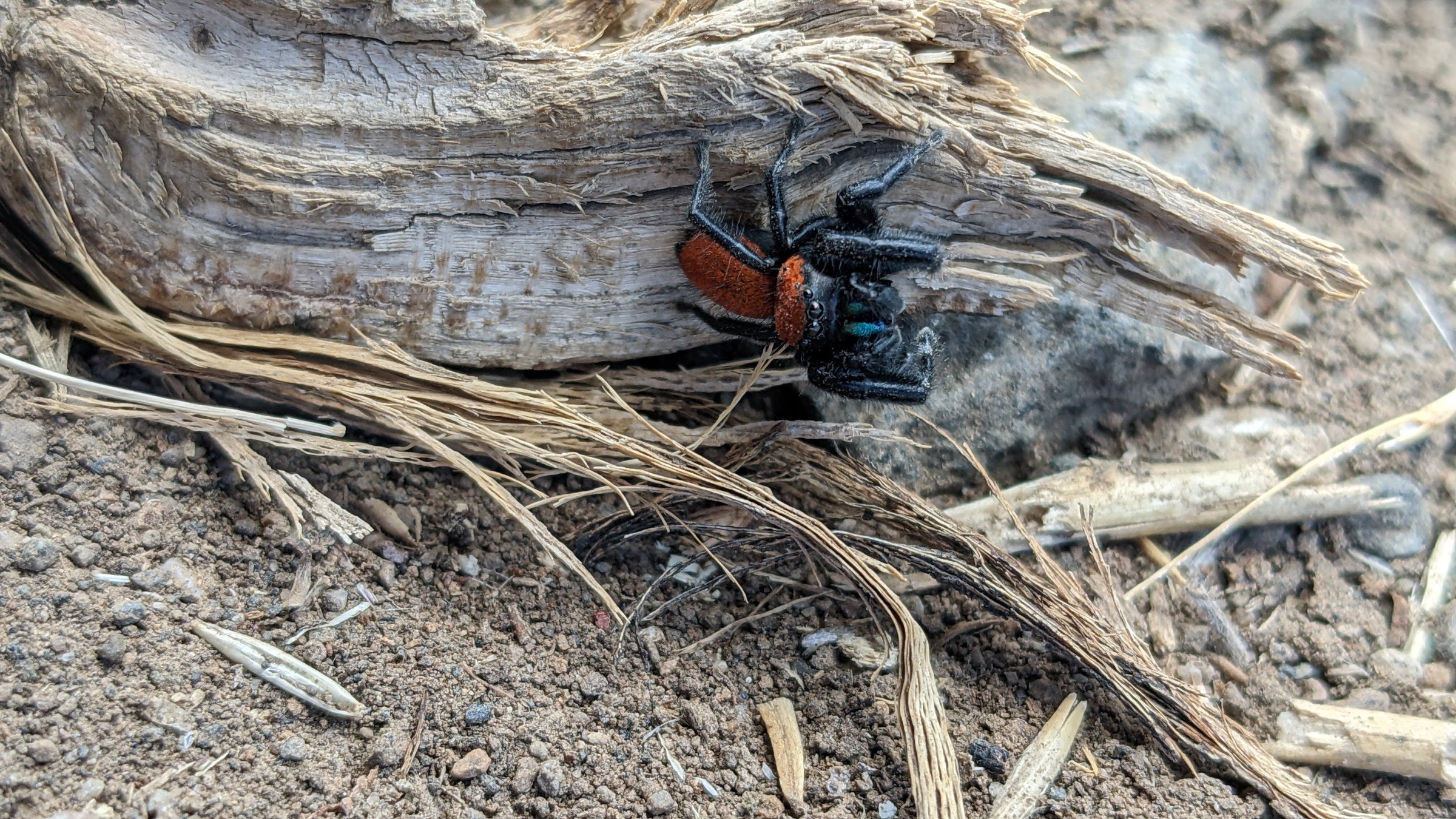
“At this time of the summer in Colorado, that’s when the males start wandering and looking for females,” explains Jackie Billotte, a research associate at the Butterfly Pavilion in Westminster, Colorado, and a PhD candidate at Colorado State University. “Mating becomes the primary goal. So, you’re just bound to run into males that are out looking for a good time, for lack of a better term.”
Billotte notes that the fundamental biology of spiders dictates their cautious nature. Venom is metabolically expensive to produce, requiring significant caloric and physiological investment. Consequently, spiders view venom as a precious resource reserved strictly for subduing prey—not for defending themselves against enormous mammals thousands of times their size. When confronted by a human, a spider’s evolutionary instinct is almost invariably to freeze or flee.
“Venom is expensive to make,” Billotte reiterates. “Spiders can’t afford to waste it, so they generally only bite as a last resort to avoid being crushed.”
Addressing the realities of arachnid courtship, Billotte points out that mating interactions can be perilous. “The Tinder scene for spiders is a little rough,” she jokes, referring to the phenomenon of sexual cannibalism. “It’s called sexual cannibalism, and it’s exactly what it sounds like. It’s not an all-the-time thing, and it varies by species… but it does happen, and it makes sense evolutionarily because it’s a free meal.”
When evaluating the risk of venomous bites, Billotte maintains a pragmatic perspective. While she advises anyone experiencing severe pain, systemic swelling, or nausea following a bite to consult a medical professional, she stresses that the vast majority of encounters resolve safely on their own. “I would never tell anyone if you get bit and it’s getting red and angry, don’t go to the doctor,” Billotte says. “लेकिन are you immediately going to die? No, probably not.”
Implications
The annual autumn spider surge carries important implications for how humans coexist with urban and wilderness ecosystems. For outdoor recreationists, hikers, and gardeners, late summer requires a shift in perspective—moving away from reflexive fear and toward an appreciation of urban and rural biodiversity.
As human development increasingly intersects with natural habitats, encounters with native wildlife are inevitable. Understanding the seasonal rhythms of local fauna transforms a startling encounter with a web or a wandering orb weaver from a cause for panic into an educational opportunity. Furthermore, spiders serve a vital ecological function by acting as natural pest control, managing populations of flies, mosquitoes, and agricultural insects that directly impact human health and comfort.
Ultimately, arachnologists like Billotte hope that fostering curiosity during these seasonal spikes can shift public attitudes from apprehension to stewardship. By encouraging younger generations to safely observe, rather than destroy, the creatures in their backyards, communities can cultivate a deeper respect for the complex, often unseen natural webs that sustain local ecosystems.
