

Published: September 4, 2026
Author: Special Reporting Desk
A climber takes a dangerous "whipper" fall on a vertical granite wall two miles from the nearest parking area, shattering her right tibia. A hiker collapses from heat exhaustion in punishing 104°F temperatures six miles deep into a desert canyon. A seasoned backpacker, pushing through fading twilight, stumbles on loose scree and snaps an ankle, instantly stranding themselves in the wilderness. Meanwhile, miles away in an urban interface, a vulnerable dementia patient wanders out an unlocked residential door into freezing sub-zero temperatures, vanishing into the pitch black night.
These are not isolated emergencies; they represent the harrowing, high-stakes daily reality for America’s volunteer search and rescue (SAR) teams. Spanning technical rope rescues, swiftwater extractions, avalanche recovery, and specialized canine tracking, more than 10,000 dedicated volunteer rescuers operating across roughly 1,150 specialized SAR teams stand ready to deploy at a moment’s notice. Operating in blinding snowstorms, torrential downpours, and blistering heatwaves, these volunteers leave their families, jobs, and beds at any hour of the day or night with a single overarching mission: to keep people alive.
However, beneath the heroic narratives of midnight extractions lies an increasingly fragile infrastructure. Across the United States, America’s volunteer SAR community is facing an unprecedented systemic crisis marked by volatile call volumes, widening financial shortfalls, extreme physical and emotional burnout, and a widening chasm in government support.
Main Facts: The State of Modern Search and Rescue
The contemporary American SAR landscape is characterized by a massive mismatch between rising public demand and shrinking institutional resources.
- The Scale of the Network: There are currently more than 10,000 active volunteer search and rescue personnel distributed across approximately 1,150 teams nationwide.
- Surging Call Volumes: While some regions have leveled off after pandemic-era peaks, many teams—particularly throughout the Rocky Mountain West—are reporting historic, unmanageable call volumes. Colorado alone logged a staggering 3,000 reported rescues in 2025, while Washington and Arizona recorded roughly 1,500 and 600 rescues, respectively.
- Expanding Mission Profiles: Modern SAR teams are no longer responding solely to lost hikers and injured mountaineers. Their duties increasingly encompass specialized population searches (such as dementia patients and at-risk youth) and unconventional civil defense duties, including assisting with wildfire evacuations.
- Financial Pressures: Because SAR is largely volunteer-driven, operators face compounding fiscal strains. Surging fuel prices, skyrocketing gear replacement costs, and heavy investments in modern technologies like drones and satellite communicators are quickly draining team coffers.
Chronology: From Post-WWII Growth to Pandemic Surges
To understand how America arrived at this modern tipping point, it is necessary to examine the historical evolution of organized wilderness rescue.
1959: The Birth of Organized SAR
The national Mountain Rescue Association (MRA) was founded in 1959 in direct response to a post-World War II explosion in outdoor recreation. As more Americans took to the backcountry, the frequency of wilderness emergencies outpaced local law enforcement capabilities, necessitating a standardized, highly skilled, and organized volunteer rescue apparatus. Over the decades, the MRA evolved into the largest organized volunteer SAR network in the United States, setting rigorous qualification standards in technical rope rescue, wilderness search, and avalanche/winter operations.
2020–2021: The Pandemic Outoor Boom
The COVID-19 pandemic catalyzed an unprecedented mass migration of people into the great outdoors. Cooped up and seeking safe recreation, millions of Americans hit local trails, state parks, and backcountry zones. Propelled further by viral social media trends highlighting scenic peaks and remote vistas, a massive wave of novice and underprepared adventurers entered environments they were ill-equipped to handle.
2025–2026: The New Normal and Divergent Trends
By 2025 and into 2026, the long-term echoes of the pandemic boom have manifested in divergent regional pressures. While states like Colorado continue to smash historical rescue records—such as the Alpine Rescue Team in Jefferson County fielding 120 calls in a fraction of a year, matching an entire historical annual average—other regions are experiencing perplexing drop-offs. Paradoxically, this slowdown in certain areas has created its own retention crisis, leaving highly trained volunteers disillusioned and feeling underutilized.
Supporting Data: The Metrics of Strain
Data compiled from state coordinators, regional associations, and individual rescue units paint a stark picture of an overburdened system.
- Exploding Caseloads: The Allegheny Mountain Rescue Group in western Pennsylvania has seen its annual search missions double since 2020, now routinely handling more than 50 complex operations a year.
- The "14er" Effect: In Colorado, mountains exceeding 14,000 feet in elevation—colloquially known as "14ers"—have become flashpoints for distress calls, drawing massive crowds of hikers who often underestimate altitude sickness, rapid weather shifts, and physical exhaustion. Mountain bike injuries in high-alpine terrain have similarly spiked.
- The Legislative Divide: Funding mechanisms vary wildly by jurisdiction. While Colorado has established state-level support systems through the CORSAR (Colorado Outdoor Recreation Search and Rescue) Card and Backcountry Search and Rescue (BSAR) programs, other states remain deeply hostile to institutional funding. Most notably, the Wyoming State Senate rejected a vital budgetary measure in February to fund volunteer SAR, forcing local teams to rely entirely on private donations, grassroots fundraising, and corporate grants like Rocky Talkie’s annual SAR Awards.
Official Responses: Voices from the Front Lines
Leadership across the nation’s preeminent SAR organizations are sounding the alarm, warning that the current trajectory is unsustainable without systemic reform.
"Is SAR overburdened? I think it’s 100 percent overburdened," says Mountain Rescue Association (MRA) President Chris Ruch. "The increase in call volume and the technical complexity of those calls is a stressor on the volunteers and their families. But not being utilized is also putting pressure on teams if they shrink as people leave because they feel like they’re not contributing despite all of the hours of training and expense of gear. There are a lot of new factors in play."
Ruch emphasizes that the definition of an "overburdened" team extends far beyond mere call volume; it is deeply economic. "There’s a lot of sacrifices that come with volunteering with search and rescue," Ruch explains. "It’s time in learning skills and frequent trainings. It’s paying for personal equipment and gas. It’s missing kids’ soccer games and family events. It’s continuing education, and it’s leaving your home at any hour and not knowing when you’ll be back."
State coordinators are also witnessing the broadening scope of emergency response. Colorado State SAR Coordinator Trevin Montano points out that SAR volunteers are increasingly deployed outside traditional wilderness parameters.
"We had some really good examples of that in Colorado in the past year," Montano notes. "Mesa County Search and Rescue helped with the evacuation of rafters on the Colorado River during the Turner Gulch Fire, and Dolores County Search and Rescue helped evacuate people who were threatened by the Stoner Mesa Fire. Those aren’t necessarily the types of incidents people traditionally think about when they hear ‘search and rescue,’ but SAR teams can bring a lot of useful capabilities to those incidents."
Shane Ruzinsky, president of Albuquerque Mountain Rescue in New Mexico, highlights that the survival of the entire institution rests on the intrinsic passion of its members, despite the lack of financial compensation.
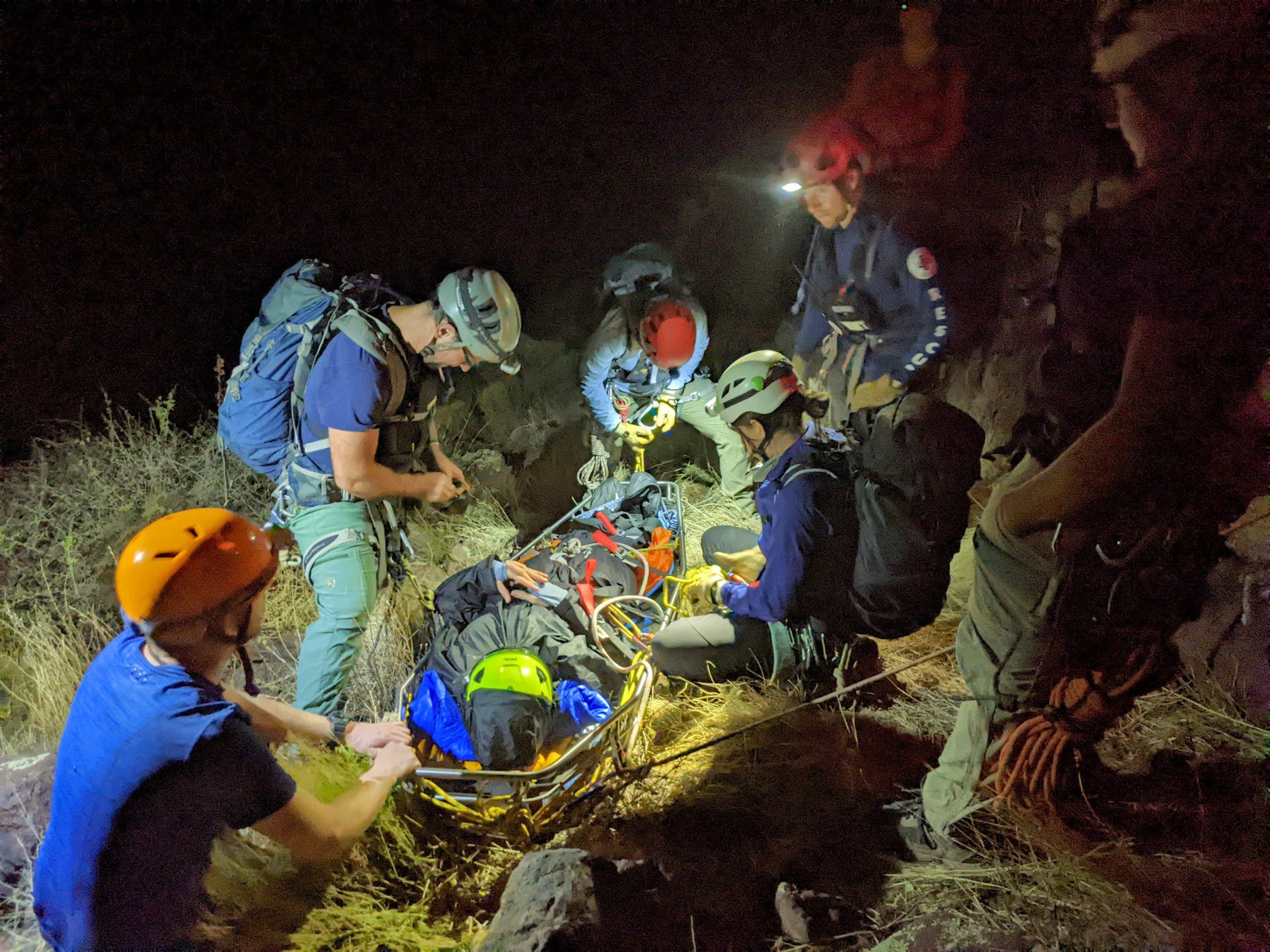
"Volunteer search and rescue survives because of people who are willing and passionate to put in the time to do it," Ruzinsky says. "And the only payment that you receive is the sense of accomplishment and meaning in human experiences and helping to save someone’s life."
Implications: Burnout, Attrition, and the Future of SAR
The compounding pressures facing volunteer search and rescue teams carry profound implications for public safety, outdoor recreation culture, and community resilience.
1. The Threat of Volunteer Burnout
The combination of midnight deployments, escalating technical risks, financial outlays for personal gear, and the emotional toll of tragic outcomes is driving a quiet exodus of veteran rescuers. When experienced volunteers burn out and leave, decades of institutional knowledge and specialized leadership vanish with them, putting newer recruits at greater risk during complex operations.
2. Widening Jurisdiction Gaps
As local budgets tighten and state legislatures push back against allocating public funds to volunteer organizations, the burden falls disproportionately on rural counties with minimal tax bases. Communities adjacent to heavily trafficked public lands are often forced to choose between underfunding essential public safety services or taxing local residents to subsidize rescues for out-of-state visitors.
3. The Changing Face of Recruitment
Despite the hardships, teams continue to actively recruit. However, modern SAR requires much more than rugged outdoor endurance. Ruzinsky notes that effective teams rely on a diverse cross-section of professional backgrounds.
"Folks with financial backgrounds, public relations, individuals with teaching backgrounds, realtors, lawyers, medical professionals—it really takes a diverse set of people to effectively run the volunteer search and rescue team," Ruzinsky says. "One of a volunteer team’s strengths is that we can tackle a problem in a really diverse set of mindsets, skill sets, and backgrounds… All of those experiences come together with training to problem solve in really creative ways."
Joining a SAR Team: What Prospective Volunteers Need to Know
For outdoor enthusiasts and community-minded citizens looking to give back, America’s SAR network offers an unparalleled, if demanding, avenue for public service.
- Where to Start: In most states, volunteer search and rescue is overseen by the county sheriff’s department. (Exceptions include New Mexico and Alaska, where SAR falls under state police jurisdiction). Contacting a local sheriff’s office is the primary entry point to find active local teams.
- Public Meetings: Most SAR teams host monthly meetings that are open to the general public. These gatherings provide a low-pressure environment to assess team culture, time commitments, and specific membership requirements.
- No Prior Expertise Required: While outdoor familiarity helps, rookie applicants are rarely expected to be elite mountaineers out of the gate. "You don’t need to be an expert before joining a SAR team," assures Trevin Montano. "Teams will put you through their own training, and every team does things a little differently."
- The Time Commitment: Prospective members must be clear-eyed about the realities of the role. Rigorous months-long training regimens, written and practical skills testing, mandatory meeting quotas, and unpredictable call-outs mean SAR operates more like an uncompensated second career than a casual weekend hobby.
As Jack Mitchell, MRA Rocky Mountain Region Chair, reflects on a lifetime of service that began when he was just 14 years old: "Search and rescue has really shaped who I am as a person. It really gave me a sense of community and a group that I feel that I belong to and contribute to. It’s not a hobby, it’s a job you’re passionate about that you don’t get paid for. But you’re still getting up at 2 in the morning to go help someone when it’s raining out. That takes a special group of incredible people you’re not going to find anywhere else."
