

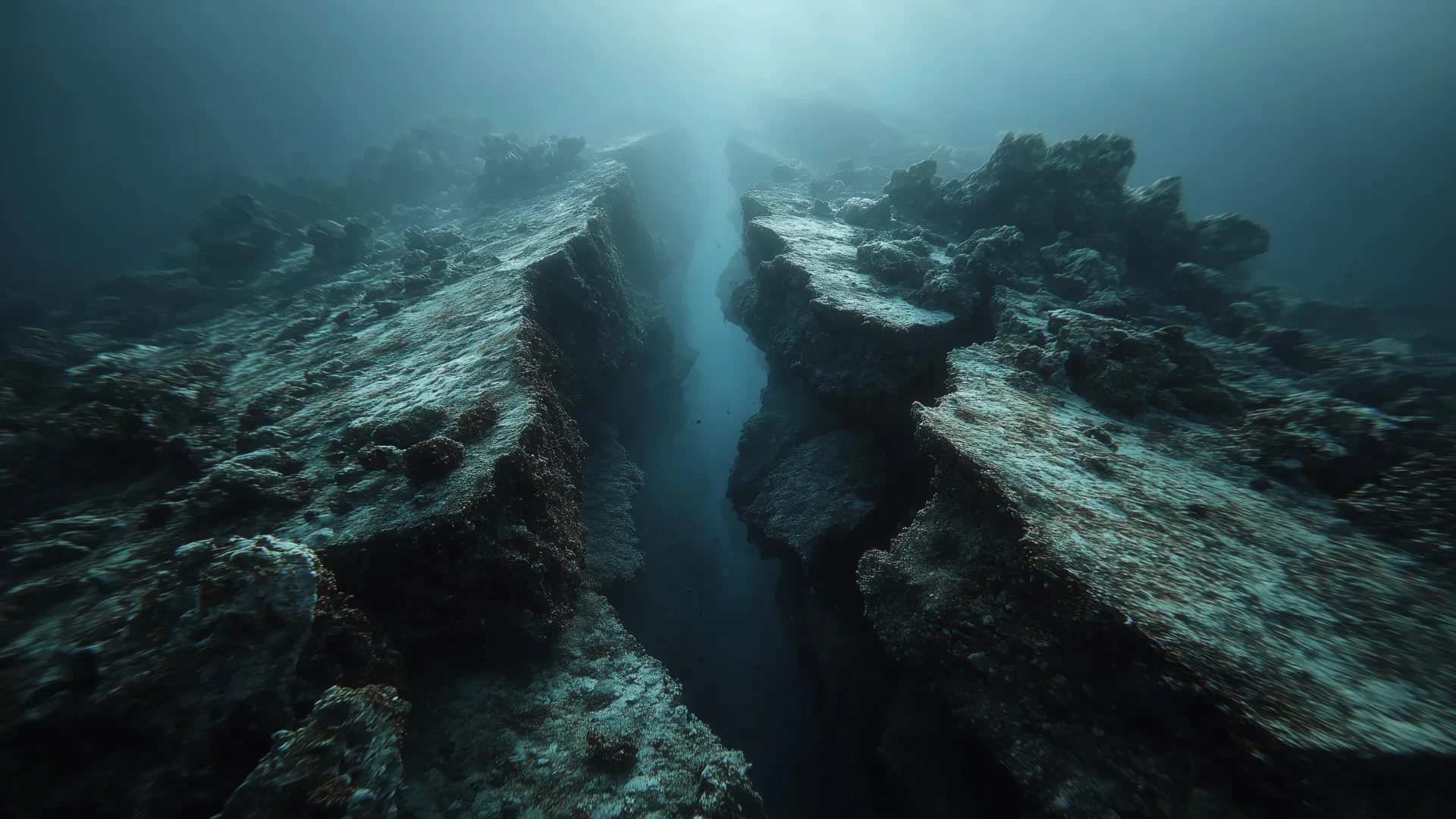
SEATTLE — Deep beneath the churning grey waters of the Pacific Ocean off the coast of Vancouver Island, one of Earth’s most powerful geological engines is beginning to unravel. In a discovery that is reshaping our understanding of planetary mechanics, researchers have captured an unprecedented, high-resolution view of a major tectonic system in the very throes of dismantling itself.
The findings, published in the journal Science Advances, offer geologists their first clear look at a subduction zone caught in the act of dying. Subduction zones—vast, subterranean regions where one tectonic plate is forced downward beneath another and plunged into the fiery mantle—are responsible for the planet’s most catastrophic earthquakes, colossal volcanic arcs, and the long-term recycling of continents and ocean basins.
Until now, however, observing the terminal phase of these massive systems has remained largely out of reach. While geologists have long studied the ancient, fossilized remains of dead tectonic plates preserved in the geological record, catching a system in its final, fracturing moments has been akin to finding a smoking gun.
Main Facts: The Cascadia Breakup
The new research focuses on the Cascadia subduction zone, a sprawling tectonic boundary stretching from northern California up to British Columbia. Specifically, off the coast of Vancouver Island, the oceanic Juan de Fuca and Explorer plates are slowly being forced downward beneath the North American continental plate.
Using advanced seismic imaging techniques analogous to a medical ultrasound, researchers mapped the hidden architecture of the seafloor. What they found shattered conventional geological assumptions: rather than remaining a single, cohesive sheet of rock sinking uniformly into the Earth, the oceanic slab is actively fracturing, tearing apart piece by piece.
- The Mechanism: The subduction zone is not shutting down in a singular, catastrophic collapse. Instead, it is undergoing an "episodic" or "piecewise" termination.
- The Scale: Researchers identified multiple massive tears cutting through the plate, including a staggering vertical offset where a section of the slab has dropped by roughly five kilometers.
- The Result: As individual segments snap and detach from the main descending slab, they form independent "microplates," fundamentally altering the dynamics of the Earth’s crust.
Brandon Shuck, a geologist at Louisiana State University and lead author of the study, offers a vivid metaphor for the geological process: "Getting a subduction zone started is like trying to push a train uphill—it takes a huge effort. But once it’s moving, it’s like the train is racing downhill, impossible to stop. Ending it requires something dramatic—basically, a train wreck."
Yet, as the Cascadia data reveals, the end of the line looks less like a sudden collision and more like a slow-motion derailment. "Instead of a big train wreck," Shuck notes, "it’s like watching a train slowly derail, one car at a time."
Chronology of Discovery: From Shipboard Echoes to Seismic Revelation
The path to this discovery stretches back decades, rooted in the persistent mystery of how mature subduction systems finally expire. Plate tectonics constantly reshapes the surface of the Earth. As oceanic crust sinks, it pulls material down toward the mantle. Left unchecked, this process would eventually consume ocean basins entirely, crashing continents together and erasing the planet’s geological history.
Because subduction systems can remain active for tens of millions of years, geologists have long sought to understand what forces ultimately stop them.
The breakthrough came via modern oceanographic exploration and high-powered acoustic imaging:
- The Data Collection (2021): Researchers embarked on the NSF-funded Cascadia Seismic Imaging Experiment (CASIE21). A specialized research vessel deployed a 15-kilometer-long streamer packed with underwater listening instruments.
- Acoustic Probing: As the ship traversed the Pacific, it fired powerful sound waves down through the water column and deep into the Earth’s crust.
- Echo Analysis: By measuring how these sound waves bounced back off subterranean rock layers, scientists constructed a detailed, three-dimensional seismic image of the subducting slab.
- The Revelation: The resulting data revealed a 75-kilometer-long tear cutting directly through the sinking plate, complete with massive fault offsets and areas where seismic activity abruptly ceased.
Supporting Data: Reading the Earth’s Pulse
To confirm that the plate was actively tearing rather than merely faulted from ancient stress, the research team correlated their seismic images with earthquake hypocenter data.
Earthquakes are the physical manifestation of tectonic stress; they occur when locked blocks of rock suddenly slip past one another. The absence of earthquakes, therefore, can be just as revealing as their presence.
- The 75-Kilometer Tear: Along a major fracture zone stretching roughly 75 kilometers, researchers observed a distinct dichotomy. Some sections continued to generate moderate seismic activity, while adjacent areas were eerily quiet.
- Detached Fragments: According to the study, portions of the plate that have completely sheared off no longer produce earthquakes because the rocks are no longer locked together under stress.
- Expanding Gaps: The quiet zones indicate that detachment has already occurred in specific areas, and those isolated gaps are steadily widening.
Transform faults—boundaries where crustal blocks slide horizontally past one another—play a critical role in this structural failure. In the Cascadia region, these transform structures act like geological scissors, cutting laterally across the plate and isolating individual fragments that eventually evolve into autonomous microplates.
Official Responses and Expert Perspectives
The academic community has received the findings with a mix of excitement and re-evaluation, viewing the Cascadia data as a Rosetta Stone for understanding plate tectonics.
"This is the first time we have a clear picture of a subduction zone caught in the act of dying," lead author Brandon Shuck emphasized. By watching the plate rip apart piece by piece, geologists finally have an empirical model for phenomena that were previously only guessed at through ancient, weathered rock sequences.
Other geologists point out that these observations solve long-standing puzzles regarding orphaned plate fragments found around the globe. For decades, researchers studying regions like Baja California have puzzled over "fossil microplates" left behind by the ancient Farallon plate—a colossal oceanic plate that once spanned much of the eastern Pacific.
The Cascadia observations provide the missing link: the Farallon plate did not vanish in a single, mysterious collapse; rather, it unraveled in a step-by-step disassembly line, shedding microplates as it died.
Furthermore, the physical breakdown of the slab changes the thermal and chemical dynamics of the Earth’s interior. When a segment of a sinking plate breaks away, it leaves behind an opening known as a slab window. This thermal gap allows superheated material from the mantle to well upward toward the crust, potentially altering local magma production and triggering novel episodes of volcanism.
Implications: What This Means for Cascadia and Beyond
For residents of the Pacific Northwest, any major news regarding the Cascadia subduction zone inevitably raises anxieties about the "Big One"—the catastrophic megathrust earthquake that scientists know the region is eventually capable of producing.
However, researchers are careful to contextualize the timeline:
- Geological vs. Human Time: The progressive tearing and dismantling of the Juan de Fuca plate is unfolding over millions of years. It is a glacial, evolutionary process, not a sudden event that poses an immediate threat over decades or centuries.
- Hazard Reality: The discovery does not change the immediate seismic hazard profile of the Pacific Northwest. The Cascadia subduction zone remains fully capable of generating massive, destructive earthquakes and tsunamis driven by the remaining intact portions of the plate.
- Refining Models: While the structural breakup will not cause tomorrow’s earthquake, incorporating these newly mapped tears and microplate boundaries into advanced seismic hazard models will help scientists better understand how future ruptures might propagate, travel, and dissipate.
A Rare Front-Row Seat
For the global geological community, the significance of the Cascadia discovery lies in its rarity. Earth’s crust usually hides its most dramatic transitions beneath miles of ocean water and solid rock, operating on timescales too vast for human comprehension.
By capturing the Juan de Fuca plate in the slow-motion agony of its demise, science has gained a front-row seat to the life cycle of a tectonic world—proving that even the most massive pillars of our planet eventually break down, one piece at a time.
