

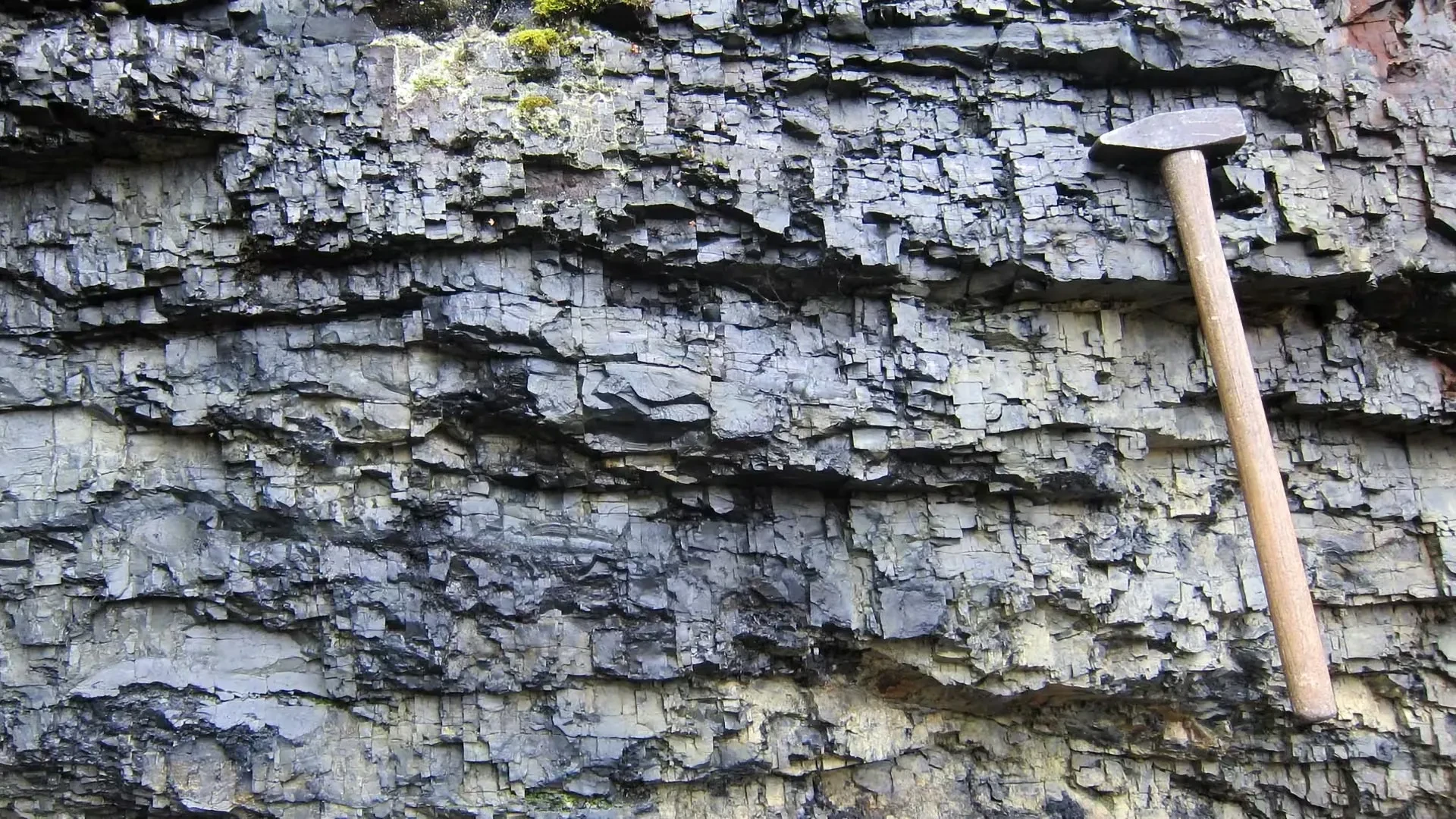
PASADENA, California — Between 2.5 and 2 billion years ago, planet Earth experienced what scientists widely regard as the most profound chemical metamorphosis in its surface history. Oxygen, once a vanishingly rare trace gas in the atmosphere, began to accumulate in unprecedented quantities. This seismic shift, known as the Great Oxidation Event (GOE), unlocked an entirely new chapter of planetary evolution. By permanently altering the chemical composition of the air and the oceans, the GOE set the stage for the biochemical pathways that eventually permitted the rise of complex, multicellular life—paving the way for plants and animals roughly half a billion years ago.
For decades, geochemists and paleoclimatologists have studied the sedimentary archives left behind by this tumultuous era. As oxygen levels surged for the first time, gargantuan quantities of organic microbial material were rapidly buried beneath ancient seafloors. This massive burial sequestered carbon into the Earth’s crust, leaving behind a distinct and peculiar isotopic signature.
For generations of researchers, that anomalous chemical signal was interpreted as proof of a planet-wide cataclysm: a moment when Earth’s global carbon cycle spun wildly out of balance, mirroring the radical atmospheric transformation taking place above.
However, a groundbreaking study led by researchers at the California Institute of Technology (Caltech) is now challenging this foundational dogma. By peering into microscopic time capsules preserved within rocks from one of the world’s oldest fossil oil fields, the research team has discovered that a cornerstone piece of evidence for this global upheaval might actually be the result of a purely local event.
Published in the journal Geology under the title "Paleoproterozoic thermogenic hydrocarbon generation, Zaonega Formation, Russia," the findings threaten to rewrite how scientists interpret the geochemical scars of early Earth.
Main Facts
At the heart of the new study is a rigorous re-examination of drill cores retrieved from the Zaonega Formation in Karelia, northwestern Russia, alongside comparative reflections from the distant Francevillian Basin in Gabon. For decades, geologists have pointed to an unusual carbon-isotope signal found in both locations—collectively referred to as the Shunga-Francevillian event—as definitive proof of a global disruption to the Earth’s carbon cycle occurring roughly 2 billion years ago.
The Caltech-led team investigated this narrative by analyzing gases trapped inside microscopic fluid inclusions within pyrobitumen-rich rocks from the Zaonega Formation. Pyrobitumen is an insoluble form of organic carbon generated when ancient petroleum or kerogen is subjected to intense geothermal heating deep within the Earth’s crust.
By combining advanced natural gas isotope analytics with geological field data, the researchers concluded that the famous carbon-isotope anomaly in the Zaonega Formation can be entirely explained by local, regional phenomena. Rather than signaling a planetary-scale environmental crisis, the data points to a localized chain of events driven by subterranean magma, migrating hydrocarbons, and methane-consuming microbes confined to a sedimentary basin spanning just a few hundred square kilometers.
The implications are far-reaching. Because the Zaonega Formation serves as a primary geological reference site for the Shunga-Francevillian event, questioning its global significance forces the scientific community to re-evaluate whether the entire episode was truly a worldwide phenomenon or merely a collection of isolated local events.
Chronology of a Planetary Transformation
To understand the weight of the new study, it is necessary to retrace the timeline of Earth’s infancy and the methodical development of modern geochronology.
The Dawn of Oxygen (2.5 to 2 Billion Years Ago)
During the Archean Eon, Earth was an alien world. Its atmosphere was rich in methane, carbon dioxide, and nitrogen, but practically devoid of free oxygen. Oceans were largely anoxic and iron-rich.
The advent of oxygenic photosynthesis by microscopic cyanobacteria gradually began pumping oxygen into the shallow seas. Around 2.4 to 2.2 billion years ago, this oxygen finally overwhelmed the chemical sinks (such as dissolved iron) in the oceans and began leaking into the atmosphere, triggering the Great Oxidation Event.
The Accumulation of the Carbon Record
As surface waters became oxygenated, vast blooms of microorganisms thrived and subsequently died, raining organic detritus down onto ancient seafloors. Tectonic movements buried this organic carbon in thick sedimentary layers.
Over millions of years, geologists recovered this history by drilling deep into the Earth’s crust, extracting long cylinders of solid rock known as drill cores. By examining the ratios of carbon isotopes—the heavier and lighter forms of the carbon atom—scientists learned to read these cores like the growth rings of an ancient tree, reconstructing the metabolic and environmental shifts of deep time.
The Discovery of the Shunga-Francevillian Signal
In the latter half of the 20th century, geologists working in the Karelia region of Russia and the Francevillian Basin in Gabon identified a strikingly unusual carbon-isotope signature preserved in rocks dating to roughly 2 billion years ago. Because this signature appeared in two widely separated geographic regions, it was christened the Shunga-Francevillian event and integrated into textbooks as a prime example of global-scale carbon cycle instability following the GOE.
The Caltech Intervention (Present Day)
The recent pivot in this narrative began when Aivo Lepland, a researcher at the Geological Survey of Norway (NGU), arrived at Caltech for a sabbatical. Lepland brought with him a novel collection of isotope measurements derived from gases trapped within Zaonega rocks—measurements that lacked a definitive interpretation.
Concurrently, Caltech’s Nivedita Thiagarajan and John Eiler had recently wrapped up extensive research measuring isotope ratios in modern natural gases, establishing a sophisticated new framework for understanding how hydrocarbons form and evolve underground. When Lepland’s data met Caltech’s analytical framework, the old global-crisis narrative began to crack.
Supporting Data and Methodology
To test the validity of the Shunga-Francevillian signal, the research team utilized cutting-edge analytical techniques to examine gases that had remained hermetically sealed inside microscopic pockets within the Zaonega rocks for two billion years.
Microscopic Fluid Inclusions
The researchers focused on samples from the Zaonega Formation, recognized as one of the oldest fossil oil fields on Earth. Within these rocks are fluid inclusions—tiny microscopic bubbles of liquid and gas trapped inside minerals during their formation or subsequent alteration. By extracting and analyzing the isotopic composition of these pristine ancient gases, the team gained direct insight into the chemical conditions of the subsurface two billion years ago.
The Magma, Methane, and Microbe Model
The data revealed a compelling sequence of geological and biological interactions:
- Magmatic Intrusion: A sheet of molten magma forced its way upward through layers of marine sediment in the Zaonega basin, which at the time sat beneath a prehistoric ocean.
- Thermal Cracking: The immense heat radiated by the magma baked the surrounding organic-rich sediments, causing trapped petroleum and kerogen to thermally crack. This process generated massive amounts of thermogenic hydrocarbons, including methane and propane.
- Gas Migration: These newly formed gases migrated upward through the porous sediment column.
- Microbial Consumption: Upon reaching the upper layers of the sediment near the ancient seafloor, the methane encountered specialized microbial communities. These microbes consumed the methane as an energy source.
- The Isotopic Signature: The biomass produced by these methane-eating microbes carried a distinctively light carbon-isotope signature. When preserved in the geological record, this microbial signature closely mimicked the anomaly that scientists had previously attributed to a global atmospheric and oceanic disruption.
Temperature Gradients Confirm the Hypothesis
Physical evidence strongly supports this local thermal model. The researchers mapped a distinct thermal gradient radiating outward from the ancient magma intrusion. Temperatures soared to roughly 350 degrees Celsius immediately adjacent to the magma sheet, dropping off progressively to about 72 degrees Celsius near an ancient seafloor asphalt spill located approximately 300 meters higher up in the stratigraphic column.
This gradient proves that intense, localized geothermal heating took place, providing all the necessary ingredients to drive the hydrocarbon generation and microbial processing responsible for the local isotopic shift.
Official Responses and Perspectives
The authors of the study emphasize that while they cannot completely rule out minor contributions from broader environmental shifts, their empirical data demonstrates that local basin dynamics were the primary driver of the Zaonega anomaly.
"One major debate centers on an unusual carbon-isotope signal that has often been interpreted as evidence of a worldwide environmental change," says Nivedita Thiagarajan (PhD ’12), lead author of the Geology paper and senior scientific researcher in the lab of John Eiler at Caltech.
"We studied gases trapped in microscopic pockets within rocks from the Zaonega Formation in Karelia, Russia… and found that the carbon-isotope signal at this key site can be explained by local phenomena that occurred in a several-hundred-square-kilometer sedimentary basin rather than across the entire globe."
Aivo Lepland of the Geological Survey of Norway (NGU), a co-author on the study, highlights the erratic nature of the Earth during this critical window of evolutionary history.
"Earth, in a way, went crazy during that time interval when oxygen appeared in the atmosphere. What we are trying to assess are the causes and consequences of Earth oxygenation," Lepland explains. "This information is archived in the rocks, so, in order to study what happened, you have to study rocks."
Reflecting on the significance of their findings to the broader scientific community, Thiagarajan notes, "Because Zaonega is a reference site for the Shunga-Francevillian event, our findings raise important questions about whether it should be considered a worldwide event."
Implications for Future Research
The publication of this study does not mark the end of the inquiry; rather, it opens a brand-new frontier in Precambrian geology. If the famous isotopic signature in Russia was driven by localized magmatic and microbial activity rather than a planetary crisis, geologists are left with a pressing question: Does the parallel signal found in Gabon tell the same local story, or was that event genuinely global?
Testing the Theory in Gabon
To resolve this mystery, the international research community is turning its attention back to Africa. The next major phase of research centers on samples collected through the GOE-DEEP project, an ambitious scientific drilling campaign co-funded by the International Continental Scientific Drilling Program (ICDP).
In the summer of 2025, co-author Aivo Lepland spent four months on the ground in Gabon coordinating a comprehensive drilling campaign designed to retrieve pristine rock cores from the Francevillian Basin. The newly recovered cores safely arrived at NGU facilities in Norway in February.
Plans are already underway for an international team of researchers spanning 18 countries to begin sampling and analyzing these cores later this year.
"Now we can really put things together by doing a similar type of study on the Gabonese rocks to compare the two sites," Lepland says, encapsulating the collaborative ethos of modern geosciences. "This is how science moves forward."
Re-evaluating Deep-Time Geochemistry
Beyond the specific debate over the Zaonega and Gabon formations, the Caltech study serves as a cautionary tale for geochemists studying deep time. It underscores the danger of extrapolating global environmental interpretations from localized geological snapshots without thoroughly accounting for subsurface thermal anomalies, magmatic intrusions, and the complex metabolic handiwork of ancient subterranean microbes.
As analytical technologies continue to advance—allowing scientists to probe individual fluid inclusions and measure isotopic ratios with unprecedented precision—our understanding of Earth’s formative epochs will inevitably undergo further refinement. For now, the narrative of the Great Oxidation Event remains as dynamic and shifting as the ancient crust that preserves its memory.
Additional contributors to the published study in Geology include Florian Eichinger of Hydroisotop GmbH, a specialized natural isotope analysis laboratory in Germany, and Anthony Prave of the University of St. Andrews in Scotland.
