

Main Facts
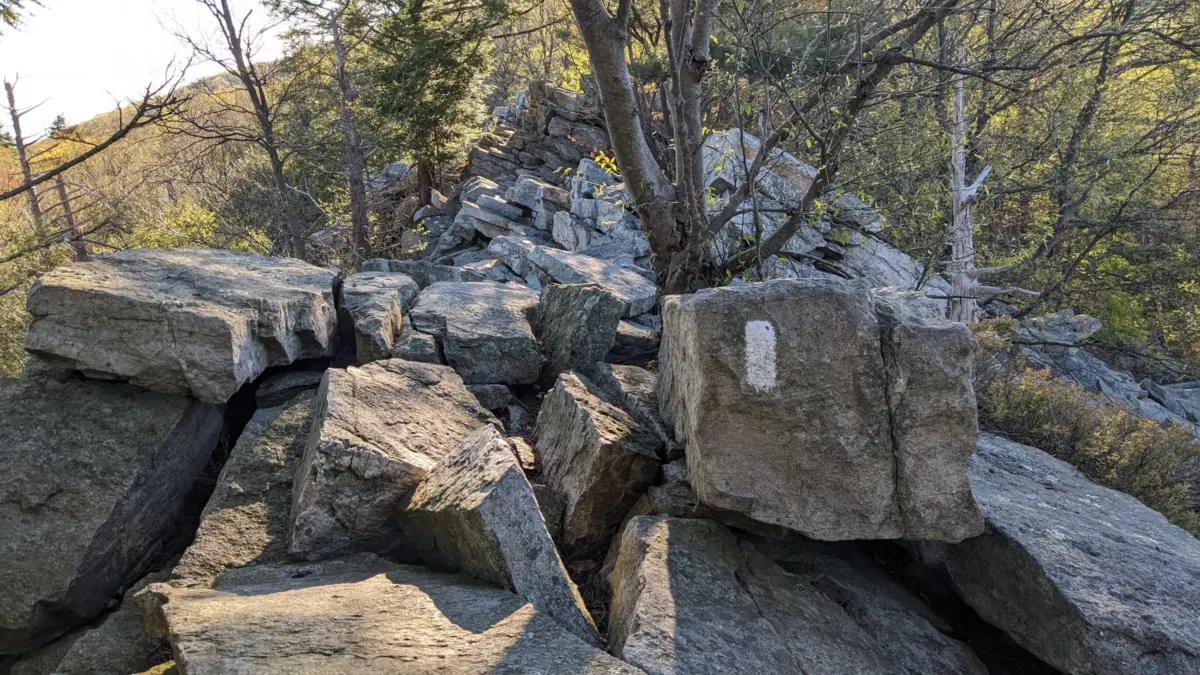
A 29-year-old unnamed man is recovering in a local hospital following what emergency responders are calling a miraculous survival after a catastrophic 50-foot fall along the Appalachian Trail in Lehigh County, Pennsylvania. The incident occurred over the weekend near the notoriously rugged and scenic Bear Rock overlook, a popular yet hazardous geographical feature known for its steep, rocky terrain and dramatic drop-offs.
The victim, who was hiking alone and not participating in a long-distance thru-hike of the famous 2,190-mile trail, plunged approximately 40 to 50 feet from an overlook onto bare rock below. The fall occurred sometime on Saturday. Miraculously, despite sustaining serious injuries to his ribs and spinal column, the man survived the impact and remained conscious. However, the force of the fall threw his cellular phone a distance away from where he landed, rendering him initially unable to call for help.
Trapped, immobilized, and exposed to the elements, the man was forced to endure a harrowing night in the open wilderness. It was not until approximately 10:30 a.m. on Sunday—nearly half a day after the accident—that he was finally able to summon the strength to crawl toward his device and place a call for rescue.
Emergency crews from the Germansville Fire Company, led by Fire Chief Jay Scheffler, responded swiftly to the complex and remote accident site, deploying utility terrain vehicles (UTVs) to navigate the difficult terrain. Rescuers successfully stabilized the patient and transported him off the mountain to a waiting hospital within two hours of the distress call.
While medical professionals and emergency responders are astonished by the man’s physical resilience, the incident has reignited critical conversations regarding wilderness safety, the severe risks of hiking alone without an emergency itinerary, and the dangerous intersection of alcohol and backcountry recreation.
Chronology of Events
The sequence of events leading up to the rescue unfolded over a grueling 20-hour period, testing the limits of human endurance and highlighting the vulnerabilities of solo backcountry travel.
Saturday: The Ascent and the Accident
While authorities have not released a precise timeline of the victim’s movements prior to the fall, investigators believe he arrived at the Bear Rock area in Lehigh County on Saturday. Unlike the seasoned backpackers who frequently traverse this section of the Appalachian Trail—often attempting to complete the monumental journey from Georgia to Maine—the 29-year-old man was identified by local rescue officials as an occasional or casual hiker.
At some point during the day or evening, the man found himself navigating the steep terrain near the Bear Rock overlook. Given the proximity to nightfall and the challenging nature of the trail’s rocky outcroppings, a misstep resulted in a catastrophic fall. He plummeted over the edge, dropping between 40 and 50 feet before slamming into the bare rock surface below.
The impact caused severe trauma, primarily affecting his ribs and spinal column. Though the man avoided catastrophic head trauma or immediate internal bleeding that would have led to rapid unconsciousness, his situation remained dire. To compound his nightmare, his cell phone—his only lifeline—had bounced away upon impact, landing out of his immediate reach.
Saturday Night: Surviving the Elements
Stranded at the base of the rocky drop-off, the injured hiker spent the entire night exposed to the elements. With compromised mobility due to his spinal and rib injuries, he could only wait for morning. The psychological toll of being stranded alone in the dark, in immense pain, and without any way to communicate with the outside world added to the physical agony of his injuries. Because he had not informed friends or family of his specific hiking plans or expected return time, no search parties were mobilized overnight, leaving him entirely reliant on his own eventual ability to sound the alarm.
Sunday Morning: The Rescue Operation
As daylight broke on Sunday, the man summoned a tremendous reserve of physical and mental resilience. Despite the agonizing pain in his spine and ribs, he managed to inch his way across the rocky terrain until he reached his phone. At approximately 10:30 a.m., he placed a call for help.
The Germansville Fire Company immediately mobilized a technical rescue response. Fire Chief Jay Scheffler coordinated the deployment of personnel and specialized off-road equipment, including UTVs (Utility Task Vehicles), to access the rugged backcountry site where the man lay injured.
Upon reaching the patient, emergency medical personnel performed a rapid trauma assessment, stabilized his spine and ribs to prevent further injury, and loaded him securely onto transport equipment. Despite the logistical challenges of the remote location, the rescue team successfully extracted the patient and transferred him to a local hospital within two hours of the initial 911 dispatch.
Supporting Data and Context
The Appalachian Trail (AT) is one of the premier footpath destinations in the world, stretching from Springer Mountain in Georgia to Mount Katahdin in Maine. While millions of people visit sections of the trail annually, the Pennsylvania stretch—often affectionately or derisively known as "Rocksylvania"—presents distinct and formidable physical challenges.
The Hazards of "Rocksylvania"
Pennsylvania boasts more than 220 miles of the Appalachian Trail, much of which is characterized by relentless, sharp quartzite and sandstone boulders. Trail runners and day hikers frequently encounter ankle-turning, knee-wrenching terrain that demands constant vigilance. Overlooks, such as Bear Rock in Lehigh County, offer breathtaking vistas of the valleys below but introduce severe vertical hazards. Falls from these elevated vantage points are rare in terms of total volume, but when they do occur, they frequently result in catastrophic trauma due to the hard, unyielding bedrock.
Emergency Response Demographics
According to local emergency services in Lehigh and surrounding counties, rescue operations along the AT are not uncommon. However, the profile of those requiring rescue typically falls into a few distinct categories:
- Inexperienced Day Hikers: Individuals who underestimate the physical demands, elevation changes, and technical footing of the trail.
- Underprepared Visitors: Hikers who embark on afternoon treks without adequate water, navigation tools, first-aid supplies, or proper footwear.
- Late-Decisions/Lost Travelers: Hikers who misjudge the time required to complete a loop or out-and-back trail, finding themselves stranded after sunset without flashlights or headlamps.
The victim in this weekend’s incident fit several of these risk profiles. He was traveling alone, lacked basic safety communication protocols, and encountered severe trouble in a high-consequence environment as daylight faded.
Official Responses
The rescue operation drew sharp commentary from local emergency leadership, who praised the department’s tactical execution while issuing stern warnings about backcountry complacency.
Fire Chief Jay Scheffler of the Germansville Fire Company, who spearheaded the weekend rescue effort, expressed initial astonishment at the man’s condition when first-responders reached him at the base of the cliff.
"For how far he fell, I was sure he was going to have suffered worse damage," Scheffler remarked, noting that while the injuries to the man’s ribs and spinal column were severe, they miraculously avoided immediate life-threatening paralysis or internal organ failure.
Scheffler also shed light on the circumstances surrounding the hiker’s presence on the mountain. Clarifying that the individual was not a long-distance thru-hiker attempting the arduous end-to-end journey, the Chief noted behavioral factors that likely contributed to the accident. Most notably, Scheffler confirmed that rescue personnel detected "a strong smell of alcohol" at the scene. While investigators cannot definitively reconstruct every detail of the pre-fall moments, the presence of intoxicants in a high-risk, vertical environment drastically increases the likelihood of fatal miscalculations.
Furthermore, Scheffler expressed frustration regarding the hiker’s lack of preparedness and communication. When rescuers questioned why he had waited nearly half a day—enduring a freezing, painful night alone—before trying to reach his phone, the man reportedly told them, "I didn’t want to bother you."
Chief Scheffler’s response to that sentiment was blunt and pragmatic: "What else are you going to do out here by yourself [with serious injuries]? It comes down to doing stuff you shouldn’t be doing while hiking alone."
Despite the criticism, Scheffler acknowledged the man’s extraordinary physical resilience and mental toughness in surviving the ordeal, noting that he anticipates speaking with the survivor once he is formally discharged from medical care.
Implications and Wilderness Safety Takeaways
The near-tragedy at Bear Rock serves as a powerful cautionary tale for the outdoor community, underscoring the absolute necessity of risk management when recreating in remote environments.
1. The Dangers of Solo Hiking Without a Plan
While solo hiking is a peaceful and popular pursuit for many outdoor enthusiasts, it eliminates the built-in redundancy of a travel partner who can administer first aid, maintain a beacon, or hike out for help if an accident occurs. When hiking alone, adhering to strict communication protocols is non-negotiable.
- The Itinerary Rule: Always leave a detailed trip plan with a trusted friend or family member, including the exact trailheads you will use, your planned route, and your expected return time.
- Check-In Timelines: Establish a mandatory check-in time with your contact. If you fail to check in by that hour, your contact knows to alert local authorities immediately.
2. The Perils of Intoxicants in the Backcountry
The consumption of alcohol or recreational substances while navigating technical mountain terrain is a leading contributor to preventable wilderness accidents. Impaired balance, diminished depth perception, slowed reaction times, and impaired risk-assessment capabilities are disastrous when combined with 50-foot cliffs, loose rock, and exposed ledges. Emergency management agencies consistently advise maintaining absolute sobriety until safely returned to a front-country campsite or home.
3. Emergency Communication Preparedness
In this incident, the victim was fortunate that his cell phone—though thrown out of reach—survived the impact and remained functional enough to make a call the following morning. However, relying solely on standard cellular service in remote, mountainous regions is a dangerous gamble.
- Cell Coverage Gaps: Large portions of the Appalachian Trail have zero or severely degraded cellular reception.
- Satellite Communicators: Devices such as Garmin inReach, ZOLEO, or personal locator beacons (PLBs) allow users to send SOS signals and two-way text messages via satellite constellations regardless of local cellular towers. Carrying a satellite rescue device can shave hours or even days off a rescue timeline, potentially saving lives in critical medical emergencies.
As the 29-year-old man continues his recovery in the hospital, his story will undoubtedly be shared among wilderness educators, search and rescue teams, and trail clubs as a testament to both the fragility of human life in the mountains and the astonishing endurance of the human spirit.
