

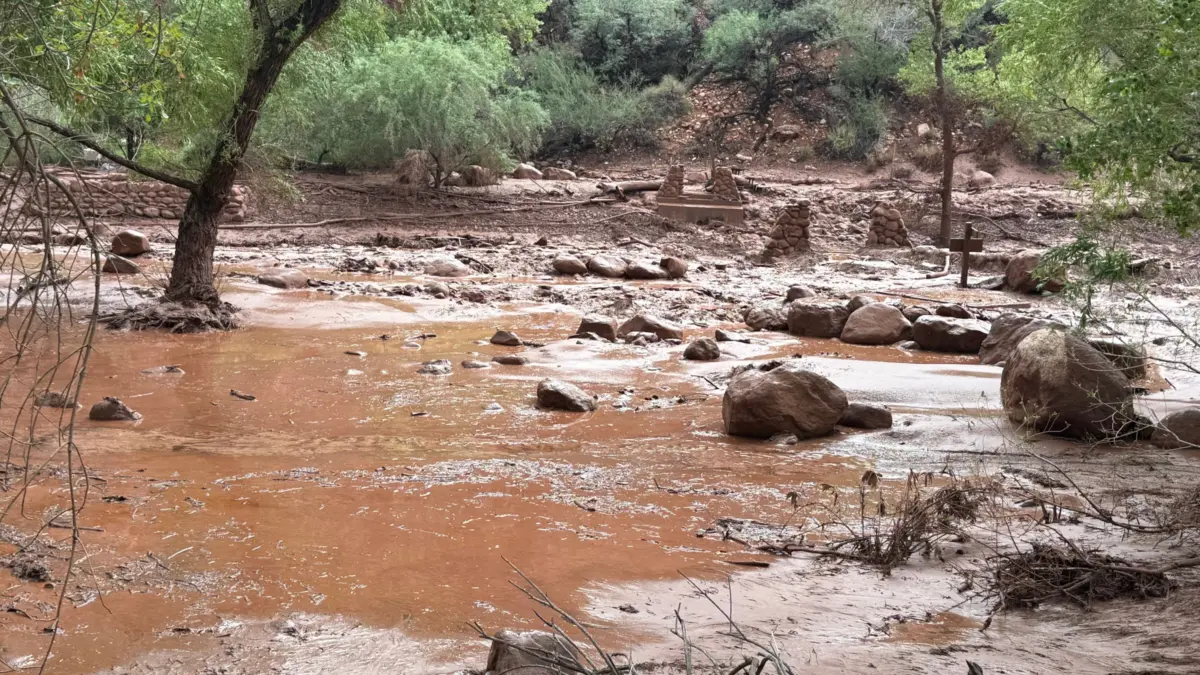
GRAND CANYON NATIONAL PARK, ARIZONA — Grand Canyon National Park remains paralyzed by the catastrophic aftermath of a violent flash flood that swept through the inner gorge on August 29, 2026. The disaster has claimed at least two lives, left roughly 15 hikers unaccounted for, and inflicted historic damage on critical park infrastructure, including the vital Transcanyon Waterline.
In response to the disaster, park administration has enacted sweeping indefinite closures, cutting off access to iconic destinations such as Phantom Ranch, shuttering North Rim overnight facilities, and halting water systems across vast sectors of the park. Federal, state, and local rescue operations continue around the clock, battling treacherous terrain, unstable ground, and compromised communication lines to search for survivors and assess the full scale of the devastation.
Main Facts
The flash flood event of August 29 struck without warning, transforming normally manageable watercourses into raging torrents of mud, debris, and boulders.
- Fatalities and Missing Persons: Park officials have confirmed at least two fatalities. The body of a 46-year-old man was recovered near Crystal Rapids on Sunday evening, August 30. A second victim was recovered the following morning. Search-and-rescue teams are actively looking for approximately 15 additional visitors who may still be missing in the inner canyon or along the Bright Angel Creek corridor.
- Infrastructure Destruction: Initial damage assessments by the National Park Service (NPS) indicate that approximately 40 percent of the Transcanyon Waterline—a lifeline supplying water to both rims and the inner canyon—has been severely damaged or completely destroyed. Landslides and high waters have also heavily impacted bridges, trails, and visitor facilities.
- Sweeping Closures: Phantom Ranch, including the Bright Angel Campground, Phantom Ranch Canteen, and cabins, is closed indefinitely. The entire North Kaibab Trail, along with the historic Black Bridge and Silver Bridge, is closed to all public access.
- Water and Utility Crises: With the Transcanyon Waterline crippled, severe water conservation mandates are in effect. No water is available at the North Rim or the North Kaibab Trailhead, and South Rim campgrounds are restricted to "dry camping" with all potable water spigots turned off.
- Evacuations: Emergency helicopters and ground teams successfully evacuated more than 60 stranded visitors from the inner canyon in the immediate aftermath of the flood.
Chronology of the Disaster
August 29, 2026: The Deluge
Severe, localized monsoon storms dumped unprecedented volumes of rain over the Grand Canyon watershed in a matter of hours. The sudden influx of water overwhelmed natural drainage systems, sending massive walls of water crashing down side canyons and into the main corridor of Bright Angel Creek and the Colorado River.
Campers and hikers caught in the inner canyon experienced sudden, life-threatening rises in water levels. Eyewitness accounts and social media footage shared in the aftermath revealed harrowing scenes of campers scrambling up cliff sides and scrambling toward rescue helicopters at Phantom Ranch, while park infrastructure and debris floated down the churning, mud-choked Colorado River.
August 30, 2026: Initial Emergency Response and First Recovery
As daylight broke, emergency services launched a massive multi-agency search-and-rescue operation. Helicopters buzzed the inner canyon to hoist stranded visitors to safety. By Sunday evening, NPS search teams recovered the body of the 46-year-old male victim near Crystal Rapids. Park leadership convened emergency briefings to address structural failures, particularly focusing on the catastrophic breach of the Transcanyon Waterline.
August 31, 2026: Broad Closures and Second Fatality
On Monday morning, the NPS announced a second fatality resulting from the flooding. With conflicting reports of missing persons coming in from worried family members and outfitters, the park service established a dedicated tip line. Park officials announced indefinite closures for Phantom Ranch, the North Kaibab Trail, and both suspension bridges. The Arizona Trail Association formally announced that a continuous thru-hike of the Arizona Trail was no longer possible due to the closure of the North Kaibab Trail section, with no viable bypass routes available.
Supporting Data and Operational Impacts
The logistical footprint of the August 29 flood is staggering, affecting every facet of park operations and regional tourism.
- Water Infrastructure Vulnerability: The Transcanyon Waterline is a critical engineering marvel built in the 1960s to pump water from Roaring Springs on the North Rim across the canyon to the South Rim and inner developments. A 40 percent destruction rate means that restoring basic utilities will require complex, long-term engineering intervention, heavy airlift operations, and substantial federal funding.
- Thru-Hiking Disruption: The closure of the North Kaibab Trail severs the only direct trans-canyon corridor for hikers. Because the Arizona Trail relies on this exact route to bridge the North and South rims, long-distance hikers have been forced to abandon their attempts or seek alternate, highly circuitous non-canyon routes.
- South Rim Status: While South Rim infrastructure remains largely intact—including parts of the South Kaibab, Tonto, and Bright Angel trails—visitation has plummeted. The restriction of South Rim campgrounds to dry camping and the deactivation of water spigots have drastically reduced the park’s capacity to support overnight guests. Visitors are currently reliant on bottled water purchases at general stores.
- Search-and-Rescue Strain: Search-and-rescue (SAR) teams are operating at maximum capacity. Personnel are navigating unstable mudslides, washed-out trails, and compromised communication lines while searching for the 15 potentially missing hikers.
Official Responses and Public Appeals
The National Park Service, alongside regional emergency management agencies, has mobilized all available resources to manage the crisis. In official statements released through their primary web channels, park administrators emphasized that public safety remains the absolute priority.
"Our primary focus is saving lives, accounting for missing individuals, and stabilizing emergency infrastructure," an NPS spokesperson stated in an operational briefing. "The scale of this natural disaster is immense. The force of the water was sufficient to alter canyon geography, tear up industrial-grade water lines, and sweep away infrastructure that has stood for decades."
The NPS has made a direct plea to the public for information regarding anyone who may have been in the path of the floodwaters. Anyone who has knowledge of hikers camping in the inner canyon or traveling along the Bright Angel Creek corridor on August 29 is urged to contact the NPS Investigative Services Branch immediately at 888-653-0009.
Concurrently, regional outdoor groups and community organizations have stepped up to support stranded travelers. The Arizona Trail Association has utilized social media networks to keep the thru-hiking community informed of trail closures, advising all prospective visitors to cancel or postpone planned backcountry excursions until further notice.
Implications for the Future
The August 29 flash flood raises profound questions regarding infrastructure resilience, climate volatility, and visitor safety in America’s national parks.
Environmental and Climatic Factors
As extreme weather events become increasingly frequent due to shifting climatic patterns, arid landscapes like the Grand Canyon are uniquely vulnerable. Flash floods in deep canyons offer virtually no advance warning time, transforming dry washes into lethal hazards within minutes. Park planners face the immense challenge of hardening aging infrastructure against increasingly violent meteorological phenomena.
Economic and Tourism Consequences
Grand Canyon National Park is a massive economic engine for northern Arizona, drawing millions of international and domestic visitors annually. The indefinite closure of Phantom Ranch—a bucket-list destination booked out months or even years in advance—along with the suspension of overnight lodging and inner-canyon camping, will result in millions of dollars in lost revenue for the park and local gateway communities like Tusayan and Williams.
Ethics of Re-entry and Visitor Responsibility
Even as portions of the South Rim remain open, a heated debate has erupted within online hiking communities and social media forums. Experienced backpackers and local guides have strongly discouraged casual tourists from venturing into the canyon while emergency operations are ongoing. Critics point out that non-essential travel places an unnecessary burden on strained rescue personnel, diverts critical resources away from the search for missing persons, and exposes unprepared visitors to secondary hazards such as rockfalls, heat exhaustion without reliable water sources, and unstable trail conditions.
As recovery efforts press forward through September, Grand Canyon National Park stands as a sobering reminder of the raw, untamed power of nature, and the monumental task ahead to heal one of the nation’s most treasured natural wonders.
