

WEOGUFKA, Alabama — High in the rolling topography of the southern Appalachian foothills, the sharp, authoritative whine of a chainsaw cuts through the humid Alabama air. The blade bites deep into the heartwood of a mature, straight-standing longleaf pine.
Standing on a gentle slope with the poise and posture of a seasoned prize-fighter, a remarkably fit senior citizen with a cascading silver beard and shoulder-length hair expertly maneuvers the heavy machinery. His corded forearms flex above heavy-duty hiking boots, well-worn jeans, and a faded, vintage Appalachian Trail Days t-shirt. With a practiced flick of his wrists, he pops a wide V-shaped wedge from the tree’s three-foot-wide trunk. He pauses, shields his eyes against the sun, and sights up the timber as it begins to sway rhythmically in the canopy breeze. A wide grin breaks across his weathered face, followed by a resonant, joyful yodel:
"Timber!"
He steps backward up the slope as the great pine groans, crackles, and finally tears through the surrounding canopy to slam into the Alabama clay with a thunderous, earth-shaking whack.
Walking up to the fallen giant, the man places a hand gently on its rough bark. "Thank you for your sacrifice," he murmurs softly. "I promise it won’t be in vain, that you will be put to good use and appreciated for a long, long time to come."
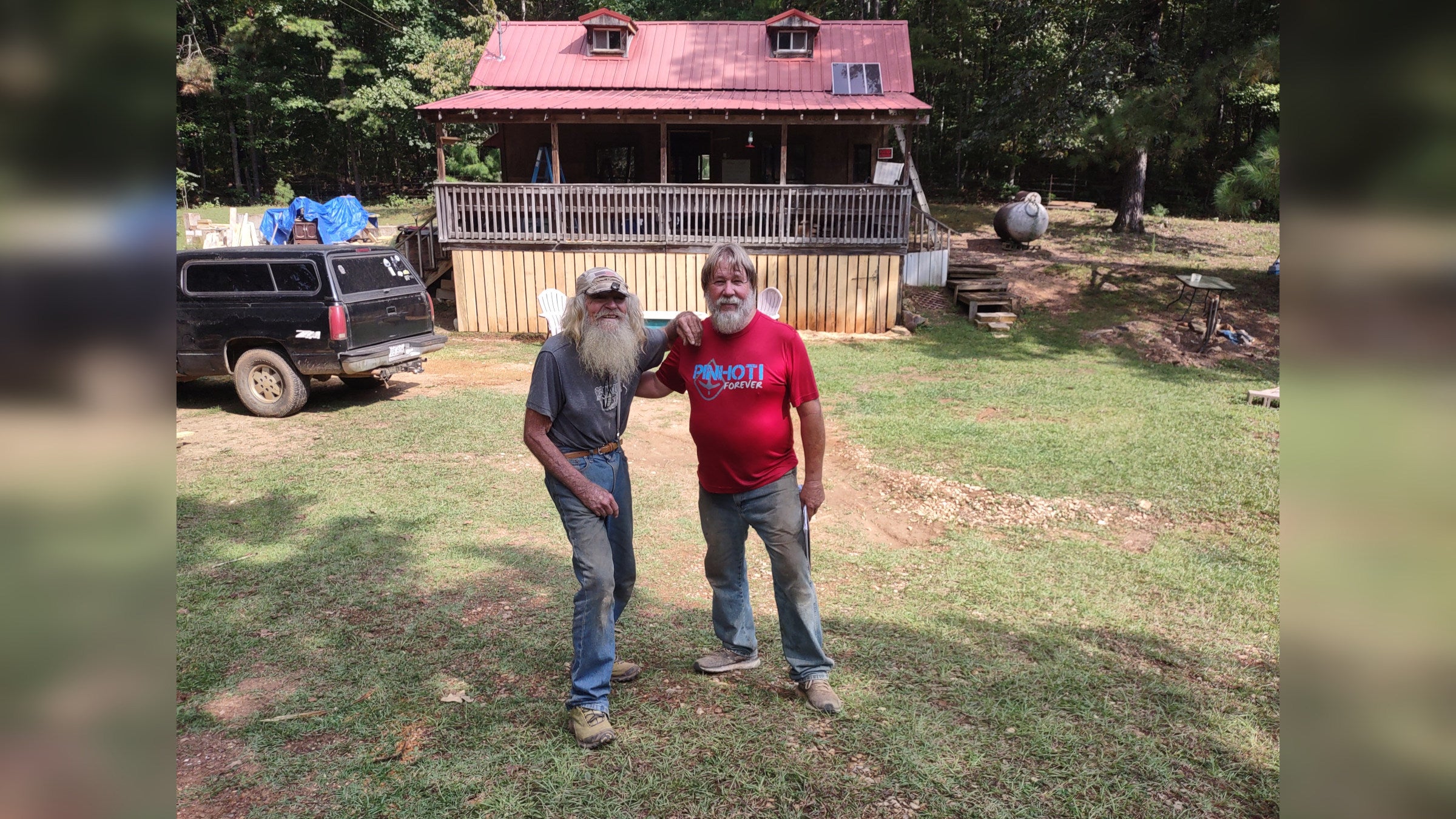
This able-bodied octogenarian is M.J. “Nimblewill Nomad” Eberhart. At 88 years old, Eberhart is a living legend in the global backpacking community, having made international headlines in 2021 when he became the oldest person at the time to thru-hike the legendary Appalachian Trail (a record since broken by his 91-year-old friend, Dale “Grey Beard” Sanders). Today, however, Eberhart is not chasing white blazes or counting miles. Along with a handful of silver-haired backpacking companions, he is harvesting raw materials.
By sunset, these felled pines will be cut into board-length sections, loaded onto the bed of a pickup truck, and hauled over to an antique sawmill that Eberhart completely refurbished himself. Housed in the mouth of a weathered cattle barn turned curing shed, the machine transforms the raw timber into high-grade flooring, sturdy siding, and structural two-by-fours.
The destination for all this freshly milled lumber? The construction site of the brand-new, first-of-its-kind Hiker Trash Old Folks Home.
Main Facts: A Sanctuary for the Long-Distance Soul
Designed as a dedicated, nonprofit independent living community for aging long-distance backpackers, this pioneering project is a direct outgrowth of the Southern Comfort Hiker Hostel, which Eberhart launched alongside partners Randy and LuAnne Anderson earlier this summer.
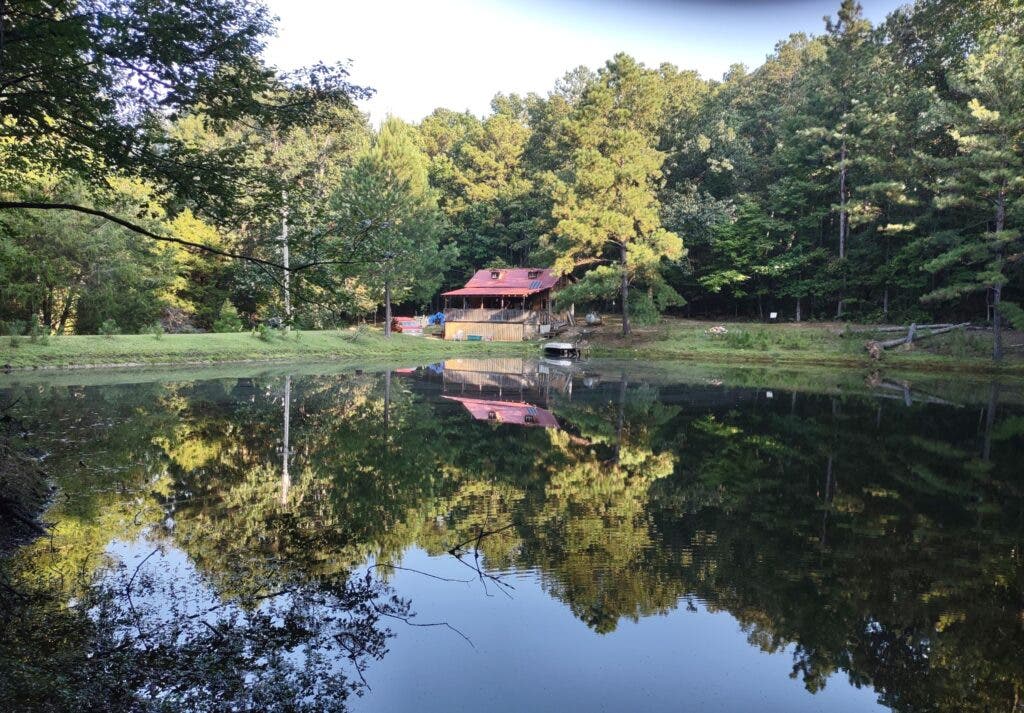
The entire operation occupies a picturesque corner of the 160-acre Caperton Ranch in Weogufka, Alabama. Geographically, the location sits roughly 8.6 trail miles from the southern terminus of the rugged Pinhoti Trail at Flagg Mountain. The 350-mile footpath acts as the official southern gateway to the Appalachian Mountain chain, linking seamlessly to the Benton MacKaye Trail in Georgia and forming a critical leg of the expansive Eastern Continental Trail, which stretches all the way down to the Florida Keys.
The overarching vision of the community is simple yet profound: to build a permanent, supportive haven where elderly and retired trekkers can live out their golden years surrounded by peers who understand the peculiar, transformative magic of life on the trail.
"We envision this as a place where old hikers like me can come live, stay for a while, or simply visit when their bodies force them to finally hang up their pack," says Eberhart, affectionately known to his friends as "Sunny."
By tethering the senior living quarters directly to an active hiker hostel, the founders have engineered a space that prevents aged trekkers from falling into the isolation that so often plagues retirement. Instead, residents will remain permanently immersed in the vibrant, unconventional culture and community of long-distance backpacking.
Furthermore, the geographical placement of the ranch was calculated with surgical precision. "It’s perfect in terms of bringing in a lot of active hikers, but not so many that we have to worry about getting overwhelmed," Eberhart explains. Additionally, the southern latitude shields residents from the brutal, freezing winters typical of the northern stretches of the AT, offering a mild climate ideal for aging joints and year-round outdoor lifestyle enthusiasts.
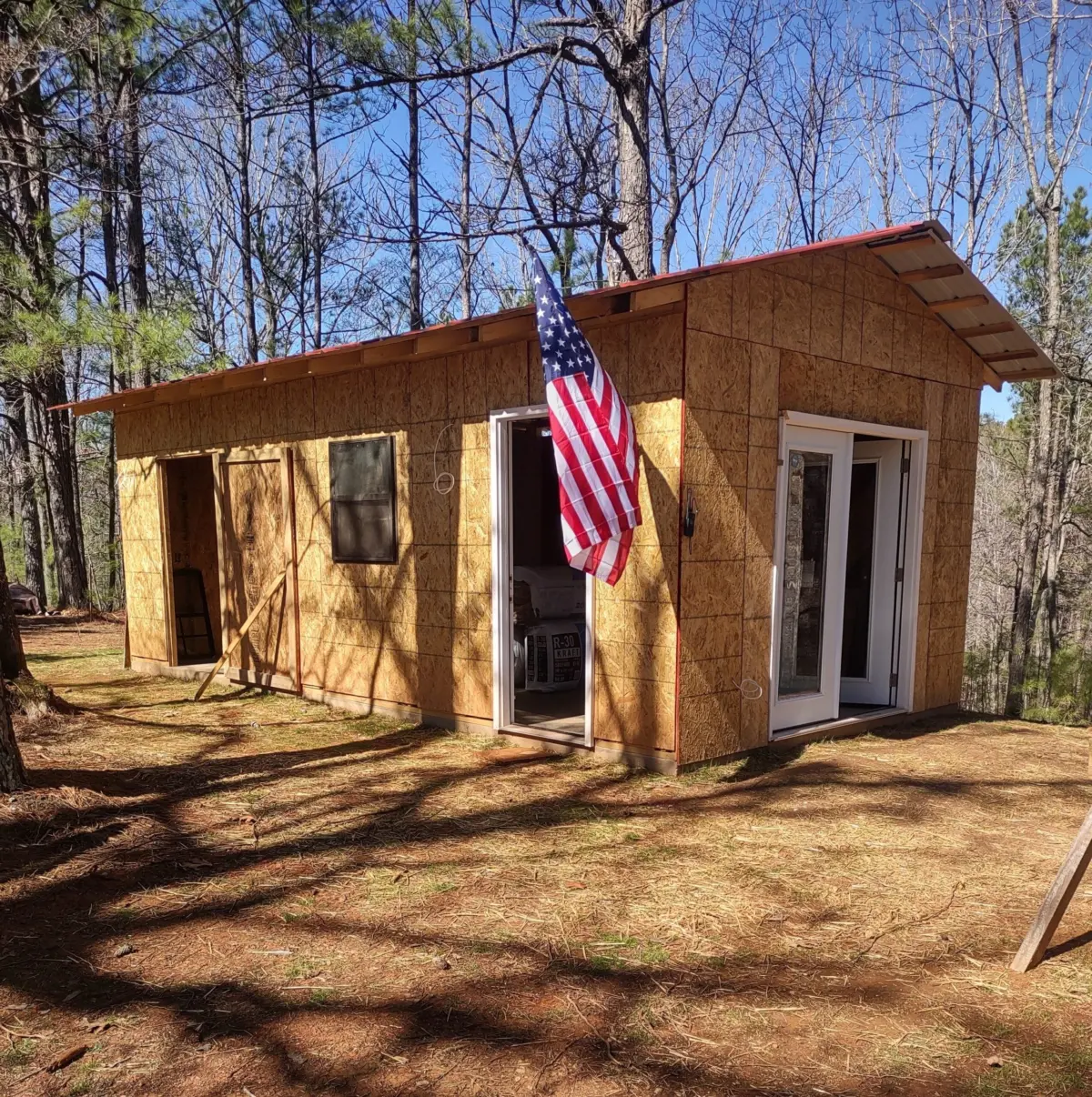
When fully realized, the residential complex will feature a cluster of rustic, custom-built studio cabins arranged harmoniously around a central welcome center, a communal pavilion, and a modern bathhouse. Future phases of development include dedicated tent pads and RV hookups equipped with electricity and water.
Chronology: From Campfire Philosophy to Reality
The seed for the Hiker Trash Old Folks Home was planted years ago during a serendipitous evening of fireside philosophizing somewhere along the southern reaches of the Appalachian Trail.
Eberhart and the Andersons were gathered around an open flame with Janet Hensley—a legendary, long-time shuttle and support driver affectionately known across the trail as "Miss Janet." Hensley had been hauling a van full of college-aged thru-hikers, and the conversation had naturally drifted from trail misadventures to the broader horizons of life.
The youthful hikers spoke with boundless optimism about fulfilling futures yet to be lived. Listening to them, their elders began to muse on how fluid that concept of a "good life" becomes as the decades tick away. Eventually, the dialogue turned inward.
"I asked something like, ‘Do any of you think about what we’re gonna do with ourselves when doing this becomes impossible?’" recalls Hensley, now 63.
Hensley, who spent three decades living out of a van following the seasonal migration of thru-hikers up and down the eastern seaboard after retiring from running an Erwin, Tennessee hostel, admitted the thought had crossed her mind many times. "But I’d never landed on a satisfying answer," she says. "Because, for me, a life without the trail doesn’t seem like much of a life at all."
Randy "Chuck Norris" Anderson, now 67, understood the sentiment intimately. He fell hard for the ethos of the AT community during his 2007 thru-hike—an experience he describes as utterly life-altering.
"The way people treat one another on this trail is generally very different than how we treat each other out in the so-called real world," Anderson observes. Strip away social status, career titles, and material wealth under weeks of physical exertion, silence, and breathtaking mountain vistas, and human beings are left bare. "On the trail, you support and encourage and help your fellow hikers out on their journey… It’s like you’ve been welcomed into this amazing family that gives and gives, and because it is so amazing, you want to pay that forward."
Eberhart shared that exact spiritual alignment. He had originally taken up backpacking in the 1980s as a psychological and emotional escape from the fluorescent lights and windowless examination rooms of his career as a Florida optometrist. Upon retiring in 1998, he launched into a thru-hike of the Florida Trail that snowballed into a continuous, 4,000-mile odyssey along the Eastern Continental Trail. That journey dissolved his old identity as a healthcare professional and birthed the "Nimblewill Nomad," a persona that has since logged more than 50,000 trail miles.
"Everyone agreed we wanted to spend the rest of our time on this earth being as close to the hiker community as possible," Anderson says.
The universe seemed to conspire to make that dream a reality around 2020. Eberhart was working as a full-time state forest caretaker at Flagg Mountain when his longtime friend, Lloyd Caperton, casually asked if he wanted to move into a cabin on the Caperton family’s Weogufka cattle ranch.
The two men had first crossed paths in 2000, when Eberhart was trudging south on a mammoth 4,000-mile trek that had started nearly a year prior in Newfoundland. Desperate for food, a bedraggled Eberhart had wandered into Caperton’s rural country store and service station. Back then, rural southern residents frequently viewed long-distance backpackers with deep suspicion or outright hostility. Expecting to be chased off, Eberhart braced himself as he opened the door. Instead, Caperton took one look at the exhausted, dirt-caked traveler and smiled.
"You look like you’ve been on quite a journey," Caperton said warmly. "Let’s get you some coffee and something good to eat."
They talked for hours. Two decades later, that single act of rural hospitality laid the bedrock for a multi-generational retirement community. When Caperton offered Eberhart the cabin, the Andersons were concurrently searching for a permanent base near the AT. Eberhart pitched the idea of the hostel and the senior community; Caperton enthusiastically greenlit the venture, granting the group absolute creative freedom across the ranch and free rein to harvest onsite pine trees for lumber. Furthermore, Caperton formalized his commitment by pledging to donate the entire property to The Nature Foundation upon his passing, anchored by a legal clause ensuring the hostel and retirement home operate in perpetuity as long as they remain self-sustaining.
Supporting Data & Logistics
While the project relies heavily on grassroots community support, its operational model is remarkably resourceful:
- Location: Caperton Ranch, Weogufka, Alabama (160 acres total; situated 8.6 trail miles from Flagg Mountain).
- Target Demographics: Retired long-distance backpackers, trail angels, and outdoor enthusiasts seeking an independent, community-driven living arrangement.
- Infrastructure Phase I: A newly constructed welcome center, an initial rustic studio cabin, and a wood-milling operation utilizing salvaged local timber.
- Infrastructure Phase II: A dozen studio-style residential cabins, a communal bathhouse, a central pavilion with an outdoor grill and firepit, and fully serviced RV/tent sites.
- Funding Mechanisms: A dedicated online GoFundMe campaign is actively underwriting heavy infrastructure costs, including an expanded well system, modern septic capabilities, and central bathhouse facilities.
- Admission Criteria: According to the founders, applicants must demonstrate a genuine kindness, a lifelong passion for long-distance trekking, and the physical mobility required to climb two or three steps unassisted.
Official Responses and Community Impact
The response from the broader outdoor community has caught the founders entirely off-guard. Despite engaging in virtually zero formal marketing, Eberhart and the Andersons have already been flooded with dozens of inquiries via email from aging hikers eager to secure a spot in the compound.
The first wave of residents was originally slated to include another titan of the trail: legendary 87-year-old thru-hiker George “Billy Goat” Woodard, who was designated to take up residence in the community’s very first cabin. Though unexpected health complications have temporarily delayed Woodard’s arrival, the momentum behind the project continues to accelerate. Eberhart expects the first permanent residents to officially move onto the ranch next year, with Janet Hensley slated to occupy quarters during her off-seasons.
To ensure the community maintains its unique cultural fabric, the operators are designing structured group activities that bridge generational divides. Residents will have access to optional volunteer opportunities—such as trail magic distribution, maintaining regional footpath sections, and supporting overnighting thru-hikers passing through the Southern Comfort Hostel.
The central firepit and grill-equipped pavilion are viewed by the founders as the beating heart of the community.
"You find that broad mix of age groups on the trail, but not as intentionally concentrated as we anticipate it will be here," Eberhart notes with a grin. "Younger and middle-aged hikers will be able to sit around with old-timers like me and listen to us tell yarns and try to pass ’em off as wisdom."
Implications: Redefining Aging in the Great Outdoors
The establishment of the Hiker Trash Old Folks Home signals a fascinating cultural evolution within the outdoor recreation space. For decades, long-distance backpacking was viewed strictly as a transient, youthful pursuit—a temporary escape from reality before settling down into the traditional suburban American dream of mortgages, office jobs, and conventional retirement communities.
By creating a permanent, physical infrastructure tailored specifically to the psychological and social needs of aging dirtbags, Eberhart, the Andersons, and Caperton are challenging the conventional paradigms of aging. They are proving that a life spent in pursuit of wilderness, simplicity, and community does not have to end when the physical body inevitably slows down.
For the residents who will soon call the pine forests of Weogufka home, this corner of Alabama offers something far more valuable than rocking chairs on a quiet porch. It offers a continuation of the trail family—a place where the campfire never truly burns out, where the coffee is always hot, and where the stories of mountains conquered can be shared across the generations until the final sunset.
