

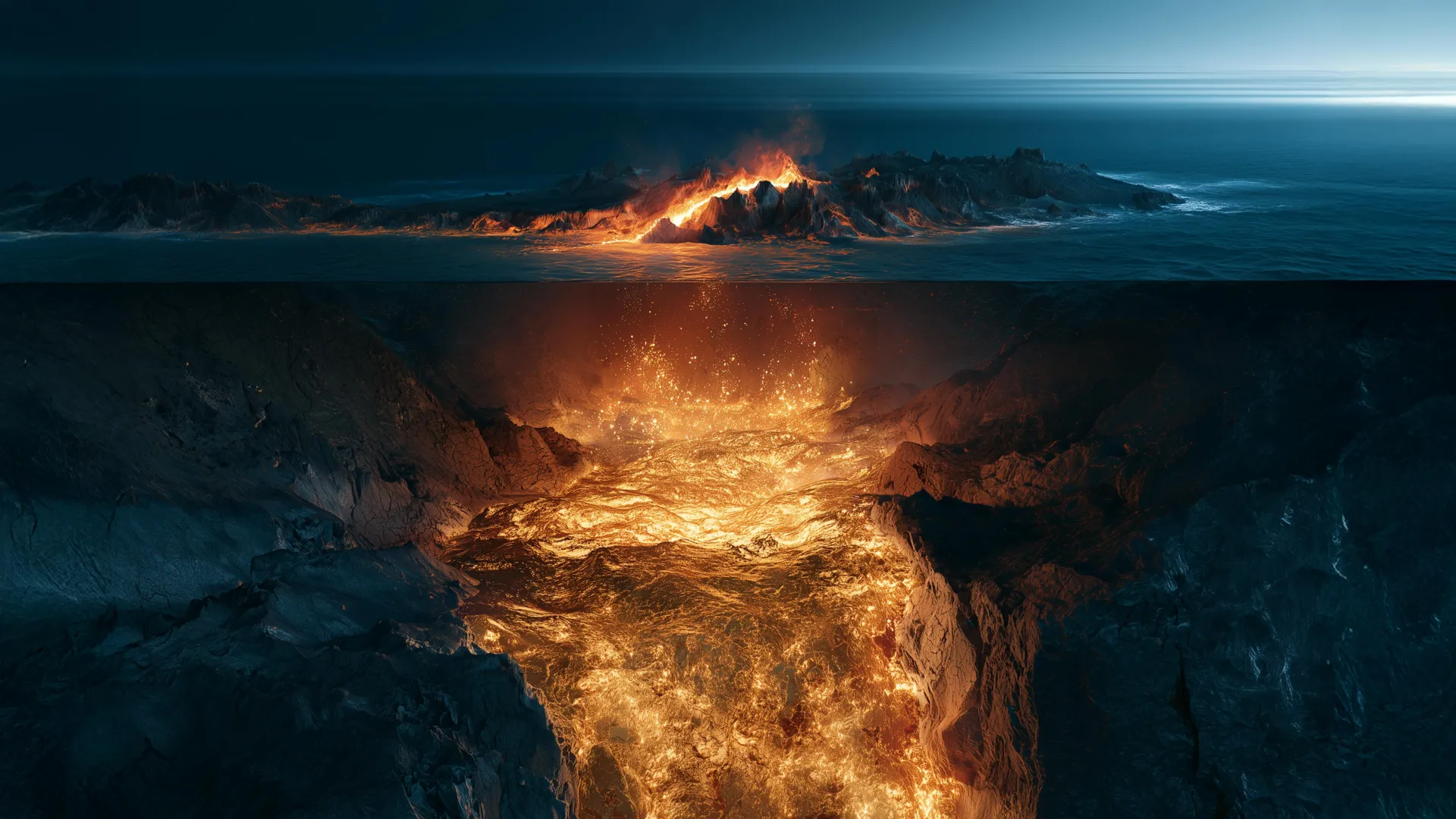
KIEL, GERMANY — Deep beneath the rolling, remote waves of the South Pacific, a colossal geological engine is at work, operating as nature’s own high-pressure foundry. For decades, geologists have been captivated by a persistent planetary mystery: why certain island arcs—spectacular, crescent-shaped chains of submarine volcanoes formed where one tectonic plate dives beneath another—are exceptionally enriched in precious metals, most notably gold.
Now, a team of international researchers led by Dr. Christian Timm, a prominent marine geologist at the GEOMAR Helmholtz Centre for Ocean Research Kiel, has uncovered the hidden mechanisms driving this phenomenon. Their groundbreaking study reveals that the mantle beneath these subduction zones functions as a sophisticated, multi-stage melting machine, progressively concentrating gold long before any magma ever reaches the Earth’s crust.
While the rocks recovered from the ocean floor are far from being commercially mineable, the findings offer an unprecedented look at the nascent stages of the Earth’s precious metal cycle. By decoding the chemical signatures locked inside ancient volcanic glass, science is finally tracing the arduous, subterranean journey of gold from the deep mantle to the ocean floor.
Main Facts: The Sub-Oceanic Gold Foundry
The new research centers on the mechanics of subduction zones, regions of the Earth’s crust where tectonic convergence forces an oceanic plate downward into the mantle—a process known as subduction. As the descending plate plunges into the planetary interior, it triggers extensive volcanic activity overhead, giving rise to island arcs.
Key takeaways from the study include:
- The Multi-Stage Melting Engine: Gold enrichment in island arcs is not the result of a single, isolated geological event. Instead, it requires a history of repeated, high-degree melting of a mantle source that has already been depleted by earlier tectonic cycles.
- The Role of Water: While scientists initially hypothesized that water released directly from the descending plate might chemically bind with and transport gold, the new data proves a more nuanced reality. Water acts primarily as a high-octane catalyst, lowering the melting point of the mantle and driving intense, widespread rock melting.
- Sulfide Breakdown: In the deep mantle, gold is predominantly trapped within microscopic sulfide minerals. Only when melting becomes intense enough to completely destroy these sulfide structures is the sequestered gold fully released into the rising magma.
- Pristine Preservation: By analyzing 66 primitive volcanic glass samples dredged from the seafloor, researchers captured a chemical snapshot of the original magma before crystallization could alter its composition.
Chronology: How the Investigation Unfolded
To understand how noble metals behave in the extreme, high-temperature environments far beneath the ocean floor, Dr. Timm and his colleagues embarked on a targeted geological expedition to the southwestern Pacific Ocean.
Step 1: Sampling the Kermadec Arc and Havre Trough
The researchers focused their efforts on the Kermadec island arc and the adjacent Havre Trough, located north of New Zealand. This region is a textbook example of an intra-oceanic subduction system, characterized by intense submarine volcanism and complex tectonic interactions. Using specialized marine research vessels, the team collected 66 volcanic glass samples directly from the seafloor.
Step 2: Capturing "Time Capsules" of Magma
Volcanic glass forms when molten lava erupts underwater and cools instantaneously upon contact with near-freezing ocean abyssal waters. This thermal shock prevents minerals from crystallizing, effectively locking the liquid magma’s original chemical composition into a glassy time capsule. Among the recovered specimens, the most valuable to the research team were "primitive glasses"—samples that retained the unadulterated chemical fingerprint of the magma before it evolved or interacted with the surrounding crust.
Step 3: High-Precision Chemical Analysis
Back in the laboratory, researchers measured minute, trace-level concentrations of gold alongside a suite of other chalcophile (sulfur-loving) elements, including silver, copper, selenium, and platinum. Because these elements react in predictable, similar ways during thermal melting, comparing their ratios served as a chemical forensic tool, allowing scientists to reconstruct the melting conditions deep within the Earth’s mantle.
Supporting Data: What the Laboratory Revealed
The analytical results provided stark contrasts between normal mid-ocean ridge basalts—the typical volcanic rocks formed at spreading centers like the Mid-Atlantic Ridge—and the specialized magmas of the Kermadec island arc.
- Elevated Gold Concentrations: The primitive glasses analyzed by Timm’s team revealed gold concentrations reaching up to six nanograms per gram of rock. While six nanograms sounds vanishingly small, it is several times higher than the gold concentrations found in comparable mid-ocean ridge magmas.
- Anomalous Metal Ratios: The samples exhibited unusually high gold-to-copper ratios, far outstripping those measured in fertile, un-depleted mantle sources or standard primitive basalts. However, their silver-to-copper ratios remained consistent with typical mantle compositions.
- The Threshold of Melting: The chemical patterns indicated that the mantle beneath the Kermadec arc melted at relatively high temperatures—specifically, above the sulfide liquidus. This thermal threshold is critical because it represents the exact point where sulfide minerals completely break down, freeing all trapped gold into the surrounding melt.
Despite these elevated concentrations, Dr. Timm emphasizes that the rocks do not constitute a bonanza for prospectors. "The rocks do not contain enough gold to be commercially mined," he notes. "Economically viable ore deposits require concentrations several orders of magnitude higher than what we observe in these primary mantle melts."
Official Responses and Scientific Insights
The study challenges long-held assumptions within economic geology and petrology, particularly concerning the role of water in metal transport.
For years, many geoscientists operated under the "direct transport" hypothesis: the belief that fluids driven off the descending oceanic plate acted as chemical taxis, leaching gold from the mantle and carrying it upward into the crust. The new data, however, paints a more complex picture.
"We initially assumed that water released from the subduction zone directly controlled gold enrichment," explains Dr. Christian Timm, lead author of the study. "However, our data show that water mainly facilitates mantle melting. The key factor for high gold concentrations is the high—and in part repeated—degree of melting."
Rather than acting as a direct carrier for gold, water serves as a powerful thermal catalyst. By promoting extensive melting, water enables the destruction of sulfide minerals, unlocking the mantle’s hidden vaults.
"Gold in the mantle is commonly bound in sulfide minerals," Timm elaborates. "At high degrees of melting, these minerals break down, releasing their gold completely into the melt. This means gold can remain trapped during limited melting. Once melting becomes intense enough to destroy the sulfide minerals, however, the stored gold is released and enters the rising magma."
Implications: The Life Cycle of Gold and Hydrothermal Systems
While the primary findings focus on the deep mantle, the implications of this research extend all the way to the seafloor surface and the rich hydrothermal vent systems that dot modern island arcs.
Rethinking Hydrothermal Ore Deposits
Along submarine volcanic chains, superheated fluids circulate through fractured crust, dissolving metals and depositing them in towering structures known as hydrothermal sulfide chimneys or "black smokers." Many of these modern seafloor deposits are exceptionally rich in gold, copper, and zinc.
Dr. Timm believes that the multi-stage mantle melting mechanism identified in their study may help explain why these hydrothermal systems carry such high metal loads.
"The mechanism we identify could contribute to the elevated gold concentrations observed in hydrothermal systems in subduction zones," Timm states, adding a note of caution that this specific link requires further empirical investigation. "However, this link still needs to be explored further through targeted sampling and fluid-inclusion studies."
Redefining the "Alchemy" of Ore Formation
Ultimately, the study shifts the timeline of gold deposit formation deeper into Earth’s history. While local, near-surface geological processes—such as boiling, cooling, and phase separation in hydrothermal fluids—are still required to concentrate gold into minable ore bodies, the foundational ingredients are established long before the magma begins its ascent.
"We are effectively looking at the first step in the life cycle of gold," Dr. Timm concludes. "It begins with the transfer of gold from the mantle into a melt that eventually forms volcanoes. The alchemy starts long before the metal ever reaches the surface."
As researchers continue to map the hidden chemical pathways of the deep Earth, studies like this bridge the gap between petrology and economic geology, offering a clearer window into how our planet concentrates its rarest and most coveted treasures.
