

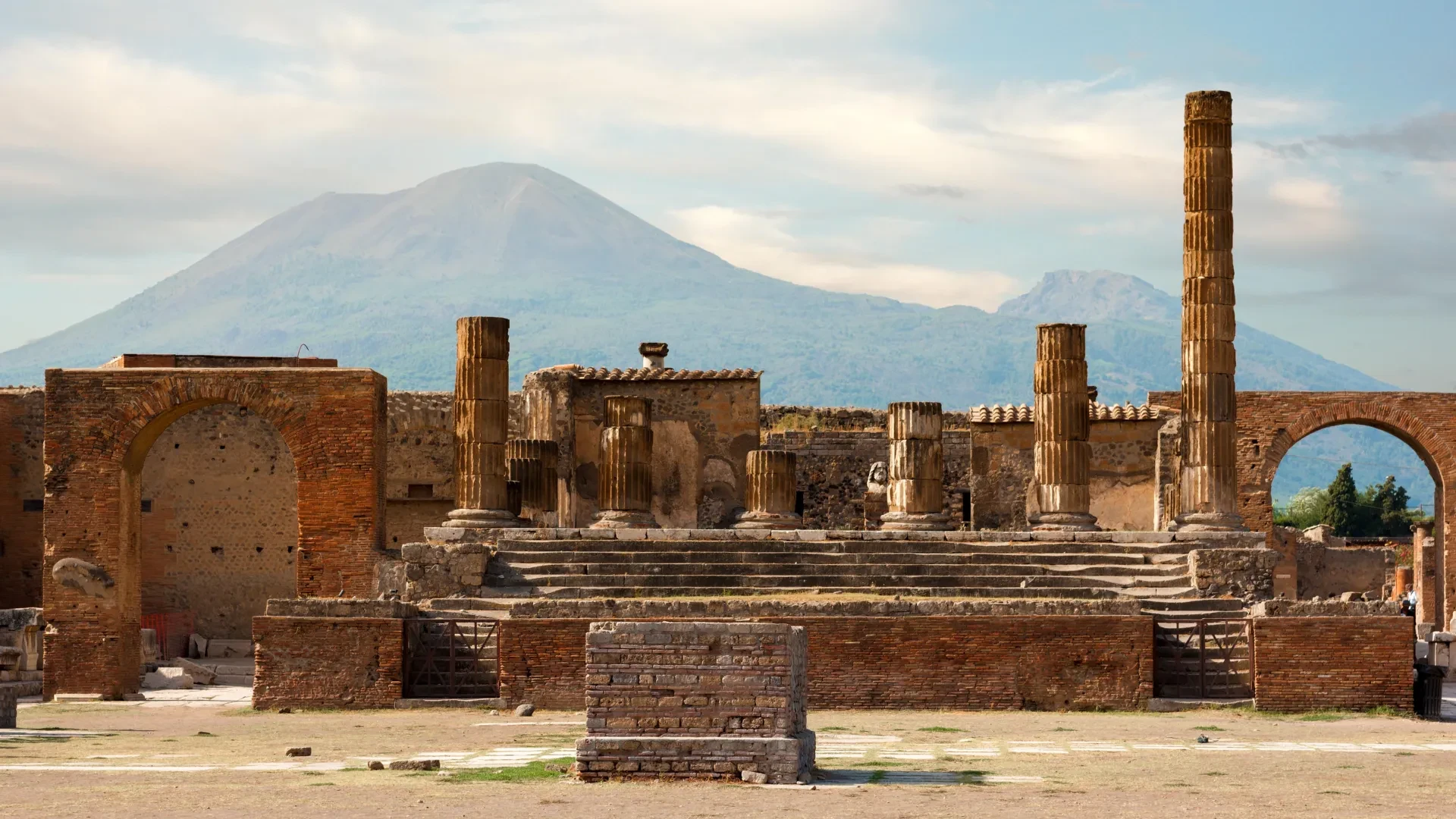
Nearly two millennia ago, a catastrophic roar echoed across the Bay of Naples as Mount Vesuvius erupted in a cataclysmic fury, burying the vibrant Roman cities of Pompeii and Herculaneum under millions of tons of ash, pumice, and stone. Among the eyewitnesses was the Roman author and administrator Pliny the Younger, who watched the terrifying plume rise from across the bay and documented the tragedy that claimed the life of his uncle, the famed natural philosopher Pliny the Elder.
While Pliny the Younger’s letters successfully preserved the human drama of one of antiquity’s most notorious disasters, they inadvertently achieved something far beyond historical preservation. They captured vital temporal benchmarks of the eruption itself. Today, those ancient written observations have provided modern scientists with an unusually precise historical anchor. By anchoring cutting-edge radiometric techniques to this 2,000-year-old disaster, researchers have significantly sharpened our planet’s nuclear clocks, offering a breakthrough that promises to reshape how we understand Earth’s chronology—from the rise and fall of ancient civilizations to the pacing of mass extinctions millions of years ago.
Main Facts
A collaborative international team of researchers from the Berkeley Geochronology Center, the University of California, Berkeley, and the University of Padua in Italy has published a groundbreaking study in the journal Science Advances. The team successfully utilized the historical eruption of Mt. Vesuvius—dated to 79 CE—as a calibration standard to dramatically improve the precision and accuracy of argon-argon (⁴⁰Ar/³⁹Ar) dating, one of the foundational methods used by geologists to determine the ages of rocks and volcanic events.
By analyzing pristine mineral samples extracted from decades-old pumice reserves and leveraging advanced mass spectrometry alongside updated neutron irradiation techniques, the team achieved remarkable benchmarks. Their argon-argon measurements successfully dated the ancient eruption to 1,938 years (plus or minus 13 years) before the minerals were analyzed in 2025. When measured against the historical date preserved by Pliny the Younger, the minerals were precisely 1,946 years old—yielding a stunning precision of 0.7% and an accuracy of 0.4%.
This methodological leap allows researchers to refine the half-life governing the radioactive decay of potassium-40 into argon-40. The newly calculated half-life stands at 12.044 billion years (give or take 0.088 billion years), effectively doubling the precision of the previously accepted value derived from nuclear physics. Ultimately, this upgraded radioactive clock gives scientists a powerful tool to synchronize Earth’s geological, biological, and archaeological timelines with unprecedented exactness.
Chronology
To understand how a first-century disaster was transformed into a twenty-first-century scientific benchmark, one must trace a timeline spanning nearly two millennia of history, technology, and fieldwork.
October 24, 79 CE: The Cataclysm
Following decades of seismic unrest culminating in a catastrophic earthquake years prior, Mount Vesuvius violently erupts. Over the course of nearly two days, pyroclastic surges and dense ash falls obliterate Pompeii, Oplontis, and Stabiae. Pliny the Younger meticulously chronicles the phases of the eruption in letters to the historian Tacitus, inadvertently documenting the exact chronological window of the disaster.
1997–1998: Early Sampling and Initial Tests
Researchers led by Paul Renne first test argon-argon dating methods using sanidine crystals extracted from pumice produced during the 79 CE eruption. Recognizing the potential of these samples, co-author Andrea Marzoli of the University of Padua collects fresh, highly potassium-rich pumice from Oplontis—a Roman settlement buried during the earliest phases of the eruption. These samples are placed into storage, where they remain unanalyzed for nearly three decades.
The 2010s: Linking Volcanism and Mass Extinctions
Paul Renne utilizes argon-argon dating to establish precise age frameworks for major tectonic and climatic events, including a massive meteor impact, continental flood basalt eruptions in India, and the extinction of non-avian dinosaurs 66 million years ago. These tight constraints bolster the scientific consensus that a catastrophic asteroid impact compounded volcanic stresses to devastate Earth’s biosphere.
Recent Years: Reopening the Archives
Graduate students Caroline Hasler, Anthony Fuentes, and Andy Tholt, alongside postdoctoral fellow Jack Carter in Renne’s laboratory, decide to revisit Marzoli’s archived 1998 pumice samples. Recognizing that analytical capabilities have advanced exponentially since the late 1990s, the team initiates a fresh round of high-precision testing.
2025: Breakthrough Publication
The team publishes a two-part scientific triumph in Science Advances. They introduce a novel Bayesian statistical scheme designed to intercalibrate argon-argon dating with uranium-lead dating methods. Backed by superior mass spectrometers, improved neutron irradiation protocols, and rigorous historical reassessments of the eruption date, the researchers unveil a recalibrated geochronological standard capable of decadal accuracy within the historical realm.
Supporting Data
The reliability of radiometric dating depends entirely on the fidelity of its fundamental constants and the purity of the physical samples being measured. In this study, the research team optimized every link in the analytical chain.
The Physics of Argon-Argon Dating
Argon-argon dating relies on the natural radioactive decay of potassium-40 (⁴⁰K) into argon-40 (⁴⁰Ar) within volcanic minerals. Because argon is an inert gas that generally escapes magma before crystallization, it is effectively zeroed out at the moment of an eruption. When scientists expose rock samples to a nuclear reactor, non-radioactive potassium-39 (³⁹K) is converted into argon-39 (³⁹Ar). By measuring the precise ratio of radiogenic ⁴⁰Ar to neutron-induced ³⁹Ar using a mass spectrometer, scientists can calculate how much time has elapsed since the mineral cooled.
The Advantage of Early Eruption Pumice
Magma chambers beneath stratovolcanoes are rarely homogenous; they undergo magmatic differentiation over time. Heavier elements like iron and magnesium concentrate near the lower regions of a chamber, while lighter, highly soluble elements such as potassium tend to migrate toward the upper tiers.
Because potassium-rich magma sits near the top of the chamber, it is frequently the very first material expelled during an explosive eruption. Consequently, it settles at the bottom of the resulting stratigraphical fallout. The Oplontis pumice samples collected by Andrea Marzoli originated from these earliest deposits, providing an exceptionally potassium-rich and homogeneous batch of sanidine crystals. This chemical purity drastically reduced analytical noise and uncertainty.
Resolving the Fall vs. Summer Debate
Before the Vesuvius eruption could serve as an absolute calibration standard, graduate student Caroline Hasler had to confront a persistent historical controversy: Did the eruption truly happen on August 24, as traditionally interpreted from Pliny’s letters, or later in the autumn of 79 CE?
Skeptics of the August date often point to archaeological finds, such as a coin recovered from Pompeii minted in what they argue must have been September, alongside autumnal botanical remains like walnuts and pomegranates found preserved in the ash. Hasler reexamined the controversial coin alongside a broad corpus of contemporaneous Roman currency, concluding that the coin was likely minted earlier in the year.
Nevertheless, accounting for the nuances of historical interpretation, the research team allowed for a conservative two-month window of uncertainty around the exact date. While vital for calculating the precise radioactive decay constant of potassium-40, this minor temporal range had a negligible impact on the overall calibration of the dating technique.
Official Responses
The implications of the study have reverberated across the global geoscience community, drawing praise for its innovative synthesis of historical texts, physical sample curation, and advanced statistical modeling.
"If you want to put together the eruptive history of a volcano in relatively recent time, precision and accuracy really count," said study leader Paul Renne, a professor in residence of earth and planetary science at UC Berkeley and director of the Berkeley Geochronology Center. "The study shows that you can achieve that kind of highly useful precision and accuracy into the historical realm."
Renne emphasized that accuracy—how close a measurement is to the true value—and precision—how consistently a measurement can be reproduced—must work in tandem. By integrating better samples, cutting-edge mass spectrometry, and the analytical strategies developed by co-author Bill Cassata, the team successfully crossed a long-sought methodological threshold.
"This lets us more precisely infer causality between events in the geologic record, for example a meteor impact structure and a mass extinction," Renne noted, reflecting on how localized calibrations scale up to global Earth-history questions.
Furthermore, Renne praised the integrative approach spearheaded by his students and fellows, noting that the breakthrough was born from a convergence of disciplines. "It was really just a combination of better samples, instrumental advantage, and a more concerted effort. All of those things came together," he said.
Speaking on the broader horizon of geochronology, Renne outlined the ultimate goal of the research group: "We’re hoping to really unify as many geologic dating methods as we can by using the same mathematics, the same Bayesian approach, and just bringing more data, more raw observations into that mix. But argon-argon dating is always going to be a standard—it’s going to be an important calibrant in that sense."
Implications
The successful recalibration of argon-argon dating using the Vesuvius benchmark carries profound consequences across multiple scientific disciplines, stretching from hazard mitigation to deep-time evolutionary biology.
Hazard Mitigation in Populated Volcanic Zones
For geologists assessing volcanic risks, knowing when an eruption happened in the past is the key to forecasting when it might happen in the future. Active stratovolcanoes near heavily populated metropolitan areas—such as Popocatépetl near Mexico City, Vesuvius near Naples, and Mount Merapi near Yogyakarta, Indonesia—pose continuous existential threats to millions of residents. By establishing decadal accuracy for historical and pre-historical eruptions, scientists can construct much tighter eruption frequencies and hazard models, giving civil authorities better data for disaster planning.
Unifying Earth’s Geological Clocks
Geochronology relies on multiple independent radioactive decay systems, including carbon-14 dating for organic materials under 55,000 years old and uranium-lead dating for ancient rocks formed billions of years ago. Historically, these disparate methods have occasionally produced frustrating inconsistencies when applied to the same geological formations.
By applying a unified Bayesian statistical framework—published by the Berkeley team earlier in 2025—researchers can now intercalibrate these methods against one another far more reliably. Because argon-argon dating bridges the gap between young organic samples and ancient crystalline rocks, its newly fortified precision acts as a master key, aligning disparate radioactive clocks into a single, cohesive timeline.
Reconstructing Deep-Time Crises
On a macro-evolutionary scale, the refined techniques allow scientists to untangle the complex web of triggers behind Earth’s ancient mass extinctions. When trying to determine whether volcanic flood basalts outpaced asteroid impacts—or whether they acted in a devastating tandem—every year matters. By shrinking uncertainties down to fractions of a percent, researchers can reconstruct the sequence of prehistoric catastrophes with forensic clarity.
Two thousand years ago, Pliny the Younger watched a column of ash blot out the sun, mourning his uncle and recording a tragedy for posterity. Today, those handwritten words have quietly armed modern scientists with the precision needed to read the Earth’s deepest and most complex chapters.
