

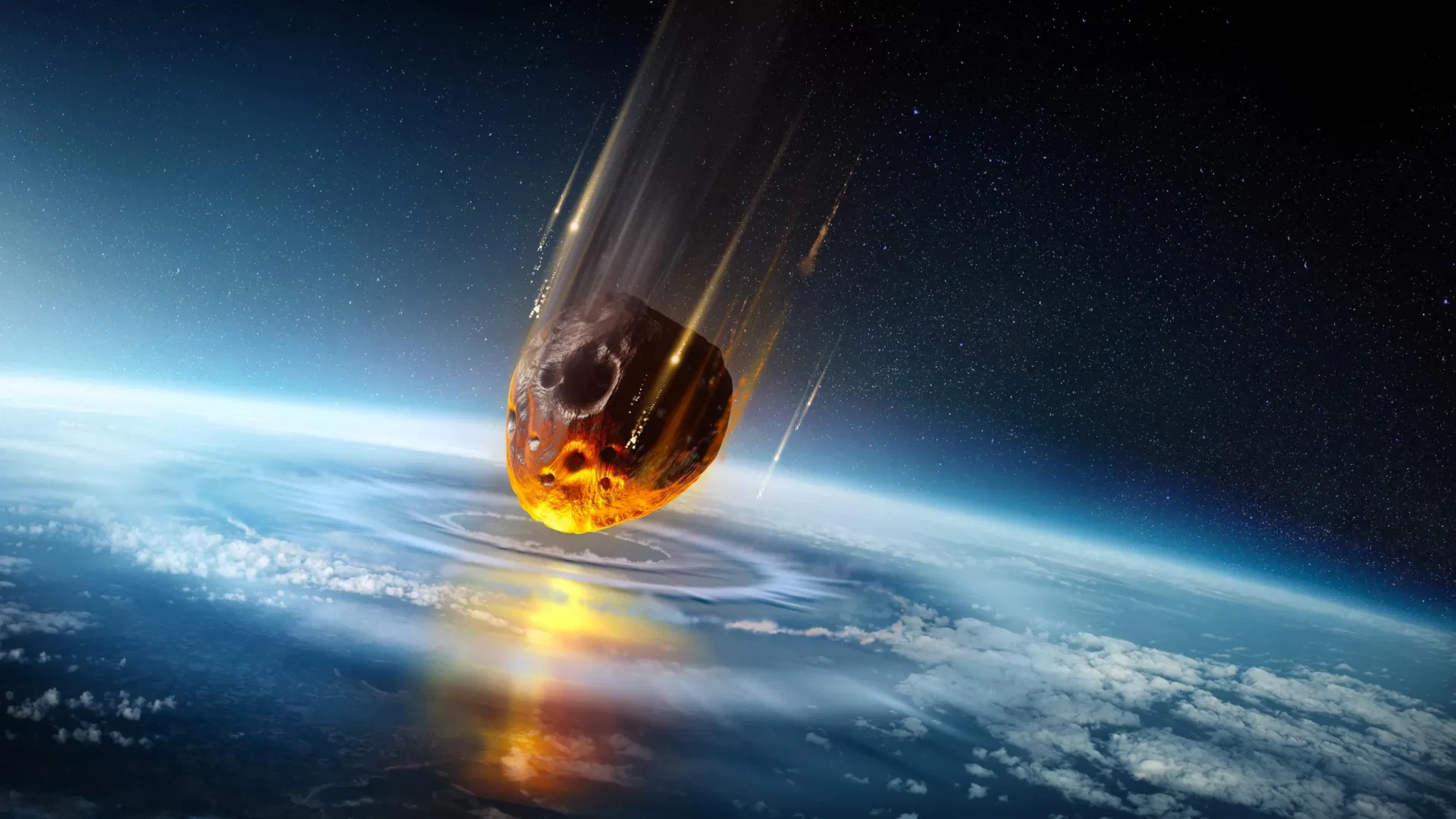
AUSTIN, Texas — In a scientific revision that ripples across disciplines from structural geology to evolutionary paleontology, researchers at The University of Texas (UT) at Austin have dramatically rewritten the geologic biography of one of North America’s most economically valuable and scientifically studied impact structures.
Deep beneath the rolling landscape of Major County, Oklahoma, near the town of Ames, lies a massive, circular meteor impact structure stretching miles underground. Long blanketed by thick layers of younger sedimentary rock, the Ames structure is far more than an academic curiosity; it is a prolific hydrocarbon reservoir, producing substantial quantities of oil and gas that have driven local energy economies for decades. Yet, for all its commercial importance, the true origin story of the crater has remained shrouded in uncertainty—until now.
In a study published in the July issue of Meteoritics & Planetary Science, a team of geoscientists from UT Austin’s Jackson School of Geosciences announced that the Ames impact structure is nearly 100 million years younger than previously believed. By utilizing high-precision radiometric dating techniques on microscopic crystals extracted from impact-altered granite, the researchers determined that the colossal collision occurred approximately 370 million years ago, during the Late Devonian epoch, rather than during the Middle Ordovician period around 467.5 million years ago.
This profound recalibration removes a foundational piece from a long-standing geological puzzle, challenging prevailing theories about ancient asteroid showers, rewriting the interpretation of fossil archives, and realigning the Oklahoma crater with a turbulent chapter in Earth’s biological history: the Frasnian-Famennian mass extinction.
Main Facts: Upending a 467-Million-Year-Old Consensus
For decades, standard geological consensus placed the formation of the Ames crater firmly within the Middle Ordovician period. This classification linked the Oklahoma impact to a much broader global phenomenon known as the Ordovician Meteor Event. During this distant geological chapter, North America and other continental plates appear to have been peppered by a cluster of massive meteorite strikes.
The concentration of impact structures from this specific window of time inspired some planetary scientists to propose a radical hypothesis: that Earth, much like Saturn today, may have once been encircled by a temporary ring of asteroid debris. As this cosmic ring slowly destabilized and rained down upon the planet, it would have left a dense cluster of impact craters in its wake. Because of its structural characteristics and geographic location, the Ames crater was routinely cited as a premier example of this Ordovician bombardment.
The new research from UT Austin completely dismantles that classification.
- The Revised Age: By isolating and dating zircon crystals from granite altered by the shock of the impact, researchers found that the meteorite struck roughly 370 million years ago during the Late Devonian.
- The Error Revealed: The previous age estimates were based entirely on microfossils—specifically the tooth fragments of conodonts, an extinct, eel-like chordate. While these fossils originated in Ordovician rocks, the new study demonstrates that the impact event simply churned up and redeposited ancient sediments, trapping older biological material inside younger impact breccias.
- Broader Implications: By removing Ames from the Ordovician Meteor Event, scientists must reevaluate the viability of the ancient Saturn-like ring hypothesis. Simultaneously, the crater’s new Late Devonian timeline places it intriguingly close to the Frasnian-Famennian mass extinction, an apocalyptic ecological crisis that unfolded approximately 372 million years ago and devastated global marine ecosystems.
Chronology of the Discovery: From Fieldwork to Final Publication
The journey toward rewriting the history of the Ames structure is a story of meticulous detective work, advanced technological application, and bittersweet dedication to scientific legacy.
The Inception and Fieldwork (Circa 2018)
The project was originally initiated by Andrew Parisi, then a graduate student at the UT Jackson School of Geosciences. Recognizing anomalies in how the crater’s history had been pieced together, Parisi traveled to Norman, Oklahoma, to secure a vital rock core from the archives of the Oklahoma Geological Survey. This core contained material from the heart of the Ames structure, bearing the physical scars of the ancient hypervelocity impact.
Working alongside his academic mentors, Parisi extracted tiny zircon crystals from the granitic basement rock that had been melted, shattered, and thermally altered by the asteroid’s kinetic energy. Tragically, Parisi passed away following his graduation in 2018, before the full scope of his foundational sample preparation could culminate in a published manuscript.
Technological Validation and Data Convergence
Following Parisi’s passing, the research team—led by Associate Professor Elizabeth Catlos and Jackson School Dean Danny Stockli—continued the painstaking work of analyzing the extracted zircons.
To ensure the radiometric data was accurate and that the crystals had genuinely recorded the shock of a meteorite impact rather than a later tectonic event, the UT team partnered with NASA scientists. Using advanced imaging technologies such as cathodoluminescence and electron backscatter diffraction, the researchers peered inside the microscopic crystals.
When a zircon crystal is subjected to the unimaginable pressures and temperatures of a hypervelocity impact, its internal crystal lattice undergoes distinct structural changes, often recrystallizing in characteristic patterns. The NASA-assisted imaging confirmed that the Ames zircons bore these unmistakable shock signatures.
Analytical Breakthrough
With the physical mechanisms verified, the team applied Uranium-Lead (U-Pb) geochronology to the crystals. U-Pb dating is widely considered the gold standard for determining the absolute ages of ancient rocks, relying on the predictable radioactive decay of uranium into lead within minerals like zircon.
No matter which analytical pathway or subsample the researchers tested, the radiometric clock pointed insistently to the same geological epoch. "No matter what technique we used, it was coming back to this younger signal," noted lead author Elizabeth Catlos.
The findings were finalized with contributions from several key figures, including co-author Michael Brookfield, an affiliated researcher at the Jackson School who also passed away prior to publication, alongside Research Professor Sean Gulick and Professor Emeritus Mark Cloos. The culmination of their collective efforts was formally accepted and published in Meteoritics & Planetary Science in July.
Supporting Data: Why the Earlier Date Was Misleading
To understand how the scientific community operated under a 100-million-year miscalculation for so long, geoscientists had to untangle how the crater’s timeline was initially constructed.
Before the UT Austin study, researchers relied heavily on biostratigraphy—dating rock layers by examining the fossils embedded within them. Within the sedimentary matrix of the Ames structure, geologists discovered preserved conodont elements. Conodonts are microscopic, tooth-like microfossils left behind by an extinct, jawless, vertebrate-like marine creature that swam Paleozoic seas. Because these specific conodont species evolved and went extinct during the Ordovician period, previous researchers logically concluded that the rock layers containing them—and by extension, the impact event itself—must also be Ordovician.
However, Catlos and her team demonstrated that biostratigraphy can be profoundly deceptive in the chaotic aftermath of a meteor impact. When a multi-kilometer-wide asteroid strikes the Earth, it vaporizes rock, triggers massive tsunamis, melts the crust, and excavates a transient cavity hundreds of meters deep. In the process, the cataclysmic blast churns up vast quantities of pre-existing sedimentary and crystalline basement rock, violently mixing older strata with newly formed impact breccias.
In the case of Ames, an asteroid slamming into the region during the Late Devonian period excavated and incorporated older Ordovician sedimentary layers that happened to be rich in conodont teeth. The impact preserved these microscopic fossils within the newly formed debris field, successfully tricking generations of geologists into dating the impact by the age of the ingested fossils rather than the age of the impact melt itself.
By stripping away the biological proxy and relying on the absolute radiometric clocks ticking inside the robust zircon crystals, the UT team exposed the temporal illusion. Zircon ($ZrSiO_4$) is exceptionally resistant to weathering, chemical alteration, and thermal resetting, making it an ideal geological time capsule. When the meteorite struck 370 million years ago, the thermal and shock energy reset the uranium-lead clocks in the crystals, stamping them indelibly with the true date of the collision.
Official Responses and Expert Perspectives
The implications of the Ames crater revision have reverberated throughout the academic community, drawing praise for the precision of the methodology and prompting discussions about how many other impact structures worldwide might be misdated.
"These small crystals allow us to go back in time and learn about the major changes to Earth’s ancient landscapes," said Danny Stockli, dean of the Jackson School of Geosciences and a co-author of the study. Stockli emphasized the broader potential for modern geochronological techniques to clean up the geological record. "It would be great to do this for more of the meteor impact sites across the continent so we could get a more accurate timeline for these major events."
The study highlights a critical vulnerability in how impact structures are cataloged globally. Many craters lack easily datable crystalline basement rocks exposed at the surface, forcing geologists to rely on secondary evidence like overlying sediments or entrained fossils. By demonstrating that impact structures can incorporate ancient fossils while being hundreds of millions of years younger, the UT Austin paper serves as a cautionary tale for planetary geologists.
Reflecting on the philosophical shift the paper represents in Earth history, Elizabeth Catlos offered a vivid analogy regarding how scientists categorize major global events.
"With this research, we’re basically taking a major pawn out of the Ordovician Meteor Event and dumping it into the Frasnian-Famennian event, and saying, ‘This is where this impact belongs,’" Catlos explained.
Implications: A New Piece of a Mass Extinction Puzzle
The relocation of the Ames impact structure from the Ordovician to the Late Devonian is far more than a localized correction for Oklahoma geology; it touches upon one of the most fundamental debates in paleontology and geobiology: What drives mass extinctions on Earth?
For decades, scientists have debated the primary catalysts behind the planet’s major biotic crises. Are mass extinctions driven primarily by extraterrestrial forces—such as asteroid impacts, cosmic ray bursts, or nearby supernovae—or are they the result of terrestrial, endogenic processes, such as massive continental-scale volcanic eruptions (known as Large Igneous Provinces, or LIPs), rapid climate shifts, or catastrophic oceanic anoxia?
The Late Devonian period played host to a series of severe environmental crises, the most prominent of which was the Frasnian-Famennian extinction event approximately 372 million years ago. This extinction pulse decimated roughly 70 to 80 percent of all animal species on Earth, hitting shallow-water marine ecosystems, reef-building organisms, ammonoids, and brachiopods particularly hard. Coral reefs, which had dominated tropical seas for millions of years, nearly vanished, taking almost 100 million years to fully recover.
While scientists have frequently pointed to massive volcanic outpourings—such as the Viluy Traps in Siberia—as the likely culprit behind the Frasnian-Famennian crisis, the newly established 370-million-year age of the Ames impact places a significant extraterrestrial event uncomfortably close to the timeline of the extinction.
While the Ames structure, measuring roughly 9 to 10 miles (15 kilometers) in diameter, is not large enough to have triggered a global mass extinction on its own (unlike the Chicxulub impact that wiped out the dinosaurs 66 million years ago), its synchronization with the Late Devonian epoch adds a critical data point to the global environmental ledger. Establishing precise temporal frameworks is the first step toward determining whether the Late Devonian featured a cluster of cosmic impacts similar to the hypothesized Ordovician event, or if the Ames impact was an isolated visitor from the cosmos that coincided with an already stressed planetary biosphere.
Ultimately, the UT Austin study underscores the dynamic and ever-evolving nature of Earth history. By combining the dogged persistence of field geology with cutting-edge radiometric dating and NASA-backed structural imaging, the researchers have rescued the Ames crater from an inaccurate historical pigeonhole. In doing so, they have provided science with a sharper lens through which to view the ancient forces that shaped our planet’s landscapes and forged the very crucible of life.
