

By Global Science Correspondent
Published in Communications Biology
Main Facts: Unmasking a Cryptic Species
While the four-foot-tall Emperor penguin reigns as the undisputed icon of Antarctica, it shares the Southern Hemisphere with 17 other distinct penguin species. Many of these avian residents inhabit isolated, windswept islands that remain fiercely difficult for researchers to access. This geographic isolation has long masked a profound biological secret.
An international team of researchers, spearheaded by scientists in Chile and the University of California, Berkeley, has officially identified an entirely new species of gentoo penguin (Pygoscelis). Published in the journal Communications Biology, this discovery marks the first time a new penguin species has been formally named in more than a century.
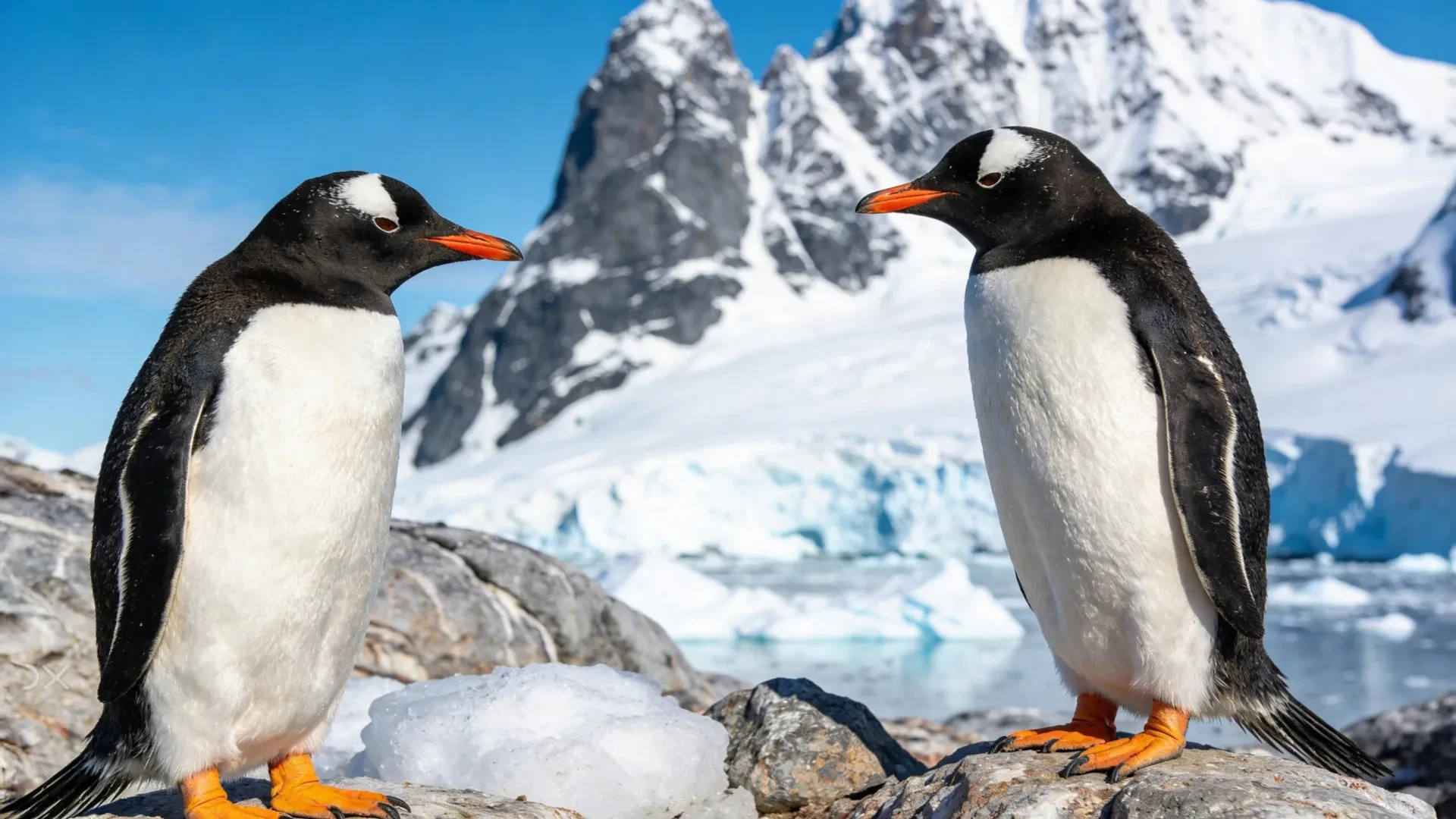
The breakthrough stems from a comprehensive genomic analysis revealing that what scientists historically classified as a single, globally distributed gentoo penguin species is actually a complex of four separate, distinct species. Among them is a "cryptic species"—a bird that looks virtually identical to other gentoos, bearing the familiar tuxedo-like black back and stark white underside, yet possessing profound genetic divergences.
This newly defined southeastern lineage, scientifically designated Pygoscelis kerguelensis, makes its home on the remote Kerguelen Islands—historically known in French as the Îles de la Désolation (Desolation Islands)—situated nearly 2,000 miles away from any permanently inhabited landmass. Alongside this newly minted species, the researchers elevated three previously recognized subspecies to full species status, fundamentally rewriting the taxonomic history of one of the Antarctic’s most familiar inhabitants.
Chronology: A Century of Debate and Modern Genomic Breakthroughs
The path to rewriting the gentoo penguin’s family tree has been paved with more than a hundred years of scientific contention, shifting technologies, and cross-continental collaboration.
A Century of Taxonomical Confusion
For over a century, ornithologists and evolutionary biologists debated how many species or subspecies existed within the gentoo complex. Previous researchers had proposed as many as six different gentoo subspecies based on superficial observations, but a universal consensus remained frustratingly out of reach. Traditional taxonomy relied heavily on morphology—measuring bill lengths, flipper sizes, and body weights—which proved inadequate for distinguishing populations that looked nearly identical on the outside.
The Rise of Integrative Genomics
To finally put the long-running disagreements to rest, Dr. Juliana Vianna, a professor of ecosystems and environment at Andrés Bello National University in Santiago, Chile, joined forces with co-senior authors Dr. Rauri Bowie, a curator in UC Berkeley’s Museum of Vertebrate Zoology, and Dr. Elie Poulin, a professor at the University of Chile. Together, they forged a global consortium of penguin specialists, orchestrating a massive genomic study that spanned multiple continents and oceans.
The turning point arrived when University of Chile graduate student Daly Noll, the paper’s first author, led an exhaustive genomic analysis. For the first time, researchers sequenced the whole genomes of 64 penguins collected across 10 distinct breeding colonies, comprehensively covering the entire geographic range of the gentoo penguin. By examining thousands of genetic variations known as single nucleotide polymorphisms (SNPs), the team bypassed the limitations of physical observation, unlocking the evolutionary history written within the birds’ DNA.
The Timeline of Diversification
To understand how these populations split, Bowie and Vianna drew upon nearly a decade of collaborative research into penguin evolution.
- 22 Million Years Ago: Fossil and genetic evidence indicates that modern penguins first originated near the shores of Australia and New Zealand.
- Millions of Years Later: Emperor and King penguin lineages diverged early, with Emperors anchoring themselves to the harsh, ice-bound coasts of Antarctica, while Kings adapted to sub-Antarctic environments.
- 12 Million Years Ago: The stabilization of the Antarctic Circumpolar Current acted as a marine superhighway and a barrier, helping other penguin groups disperse throughout the sub-Antarctic. They eventually colonized remote archipelagoes, pushing as far north as the coasts of Africa and South America.
- 300,000 to 500,000 Years Ago: The four modern gentoo species actively diverged. Geographic isolation, combined with the formidable barrier of the Antarctic Polar Front—where water temperatures and salinity shift abruptly—locked the populations into separate evolutionary trajectories.
Supporting Data: Diet, Evolution, and Local Adaptations
The survival and subsequent speciation of the gentoo penguin are deeply intertwined with its unique behavioral flexibility and physiological adaptations.
The Advantage of a Flexible Diet
Unlike many of their Antarctic cousins—such as the Adélie and Emperor penguins, which rely heavily on krill—gentoos are dietary generalists. They consume almost anything they can catch underwater, including fish, squid, cuttlefish, and krill. This dietary plasticity has provided them with a distinct evolutionary edge, particularly as climate change disrupts traditional marine food webs. While krill-dependent species face population contractions, gentoos living along the Antarctic Peninsula have seen their numbers rise.
Ironically, this same adaptability catalyzed their division into four distinct species. Because gentoos could find diverse prey locally, they did not need to undertake massive migrations to feed. They routinely returned to the exact same breeding colonies year after year. Over millennia, isolated island populations adapted specifically to their local microenvironments, with natural selection steadily reinforcing these differences across their genomes.
Genomic Specializations Across Lineages
The high-resolution genomic data revealed how each gentoo species evolved specific physiological machinery to conquer its unique habitat:
- The Southern Gentoo (Pygoscelis ellsworthi): Inhabiting the Antarctic Peninsula, coastal Antarctica, and South Georgia Island, this is the most numerous lineage. Genomic analysis revealed an enrichment of genes linked to heat production, lipid and fat storage, and light perception. The adaptations in light perception are believed to help the birds navigate the extreme seasonal swings of polar daylight and the blinding glare of ice-sheet reflections.
- The Eastern Gentoo (Pygoscelis taeniata): Residing north of the Polar Front on the Crozet, Marion, and Macquarie Islands, this lineage possesses a genome optimized for efficient carbohydrate metabolism and superior diving performance. Key genetic markers involve oxygen transport, blood vessel formation, lung development, and mitochondrial activity—traits that allow them to forage longer underwater in oceans characterized by lower biological productivity.
- The Northern Gentoo (Pygoscelis papua): Restricted to the Falkland/Malvinas and Martillo Islands off South America, this population shows genetic enrichment in pathways governing digestion, heart contraction, and muscle excitation, supporting the sustained physical exertion required for prolonged foraging dives.
- The Southeastern Gentoo (Pygoscelis kerguelensis): The newly discovered species inhabiting the remote Kerguelen and Heard Islands, perfectly adapted to life near the sub-Antarctic convergence zone.
Official Responses and Conservation Implications
The formal recognition of four distinct gentoo species carries immediate, high-stakes consequences for conservation policy across the Southern Hemisphere.
A Call for Fragmented Conservation Action
Because the newly identified southeastern gentoo and other sub-Antarctic lineages exist in isolated, low-population pockets, they are exceptionally vulnerable to environmental disruption. The sub-Antarctic region comprises widely scattered islands governed by a mosaic of nations, including Chile, South Africa, France, the Netherlands, Australia, and New Zealand.
"It’s very important that conservation institutions in all the different countries involved recognize and take appropriate action to save these three gentoo penguin species," stressed Dr. Juliana Vianna.
While the southern gentoo (Pygoscelis ellsworthi) is thriving and may even expand its range southward as the Antarctic continent warms, its northern counterparts face an increasingly hostile future.
Climate Modeling and Future Habitats
When the research team applied climate models to forecast suitable gentoo habitats through the year 2050, the projections for island-dwelling populations were stark. Under moderate climate change scenarios, sub-Antarctic species risk losing suitable habitat entirely across their current island ranges, with few or no accessible neighboring islands to serve as refuges.
Dr. Vianna drew a direct parallel to other fragile endemic populations: "In terms of climate change, island species that have really low population sizes could be compared with the sub-Antarctic gentoo penguins. Galapagos and other island penguin species, because they’re endemic to these islands, will find no place to go after a change in their environment. Those islands are very isolated, and these penguins cannot adapt easily to colonize any other region."
Beyond climate change, these isolated populations contend with a compounding matrix of threats: warming oceans, direct habitat destruction, invasive predators like rats and feral dogs, competition with commercial fisheries, and accidental entanglement in fishing gear.
Beyond Taxonomy: Genomics as a Conservation Tool
The expansive genomic dataset compiled for this study offers utility far beyond resolving historical classification debates. Dr. Rauri Bowie emphasized that modern genomics has fundamentally revolutionized conservation biology.
Currently, Dr. Vianna and her colleagues are actively scanning penguin genomes for genetic markers associated with natural resistance or vulnerability to avian influenza—a devastating pathogen sweeping through global bird, marine mammal, and penguin populations. Identifying specific genetic traits linked to survival will allow conservationists to pinpoint which vulnerable island populations face the highest risk of catastrophic die-offs.
"Whole genome sequencing has transformed our ability to not only look at adaptation from a perspective of how things diversify, but it has really important conservation value," Bowie concluded.
As nations from around the globe digest these findings, the survival of the newly named Kerguelen gentoo penguin and its sub-Antarctic relatives will depend heavily on whether international conservation bodies can unite across borders to protect the genetic diversity hidden within the world’s most remote oceans.
The international research team included biologists from Chile, the United States, Australia, Spain, Venezuela, South Africa, the United Kingdom, France, Argentina, Monaco, and Brazil, uniting under a shared mission to decode and protect the evolutionary legacy of Southern Hemisphere wildlife.
