

August 21, 2026 — When an unexpected August snowstorm descended during a backpacking expedition into the remote expanses of Alaska’s Gates of the Arctic National Park, the limitations of rigorous route-planning became immediately apparent. The itinerary was instantly obsolete; survival and comfort dictated that we hunker down, pitch our tents tight, and wait out the squall.
No backpacker relishes the prospect of being tentbound for hours on end, yet that particular afternoon offered a rare luxury: unhurried time. Nestled deep inside a warm sleeping bag, I passed the hours immersed in a stack of literature pre-loaded onto an electronic reader. Without those books, a day defined by biting wind and claustrophobic gray skies would have deteriorated into an exercise in psychological endurance.
Yet, for every trip where an e-reader proves its worth, there are a dozen others where the calculus of weight dictates otherwise. On standard backpacking itineraries, a persistent debate occupies the trail: Is the added ounce-age of a book or traditional Kindle truly justifiable? Will fatigue eclipse the desire to read by the time camp is finally made? More often than not, the pursuit of an ultralight setup wins out, leaving reading materials on the nightstand. And almost invariably, regret sets in the moment twilight gives way to total darkness.
The eternal friction between minimizing pack weight and satisfying the craving for literature on the trail may have finally found a resolution. Enter the world’s smallest e-reader: a device so diminutive it threatens to redefine how backpackers manage camp entertainment.
Main Facts: Introducing the XTEINK X3
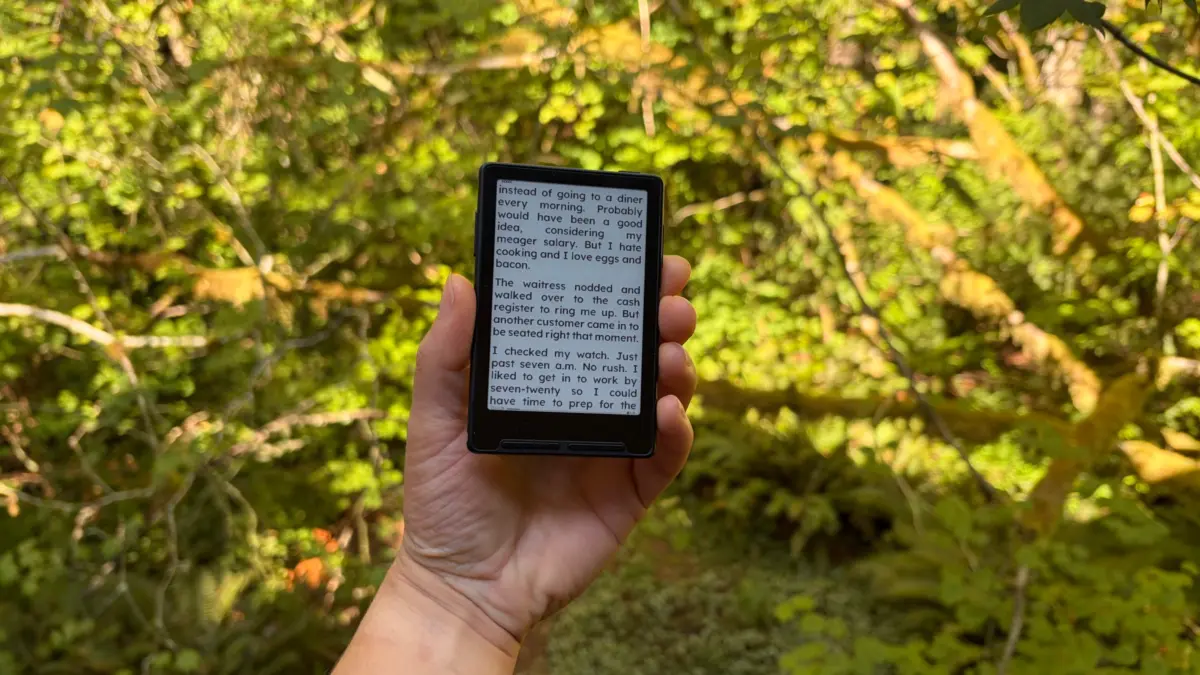
Manufactured by Chinese tech brand XTEINK, the X3 is an ultralight, pocket-sized electronic reader engineered specifically to vanish into a pocket or sit flush against a mobile device. Measuring in with a 3.7-inch display, the magnetized device can physically attach to the back of a smartphone, positioning reading material alongside everyday applications with the explicit intent of curbing mindless social media scrolling.
At a retail price of just $69, the X3 costs less than a week’s worth of commercial freeze-dried camp meals. Weighing a mere 58 grams—roughly equivalent to a standard Snickers candy bar—it undercuts standard market offerings by a wide margin. For comparison, a 10th-generation Kindle Oasis weighs 188 grams without its protective case, while the lightest model in Amazon’s current standard lineup features a 6-inch display, weighs 158 grams, and retails for $110.
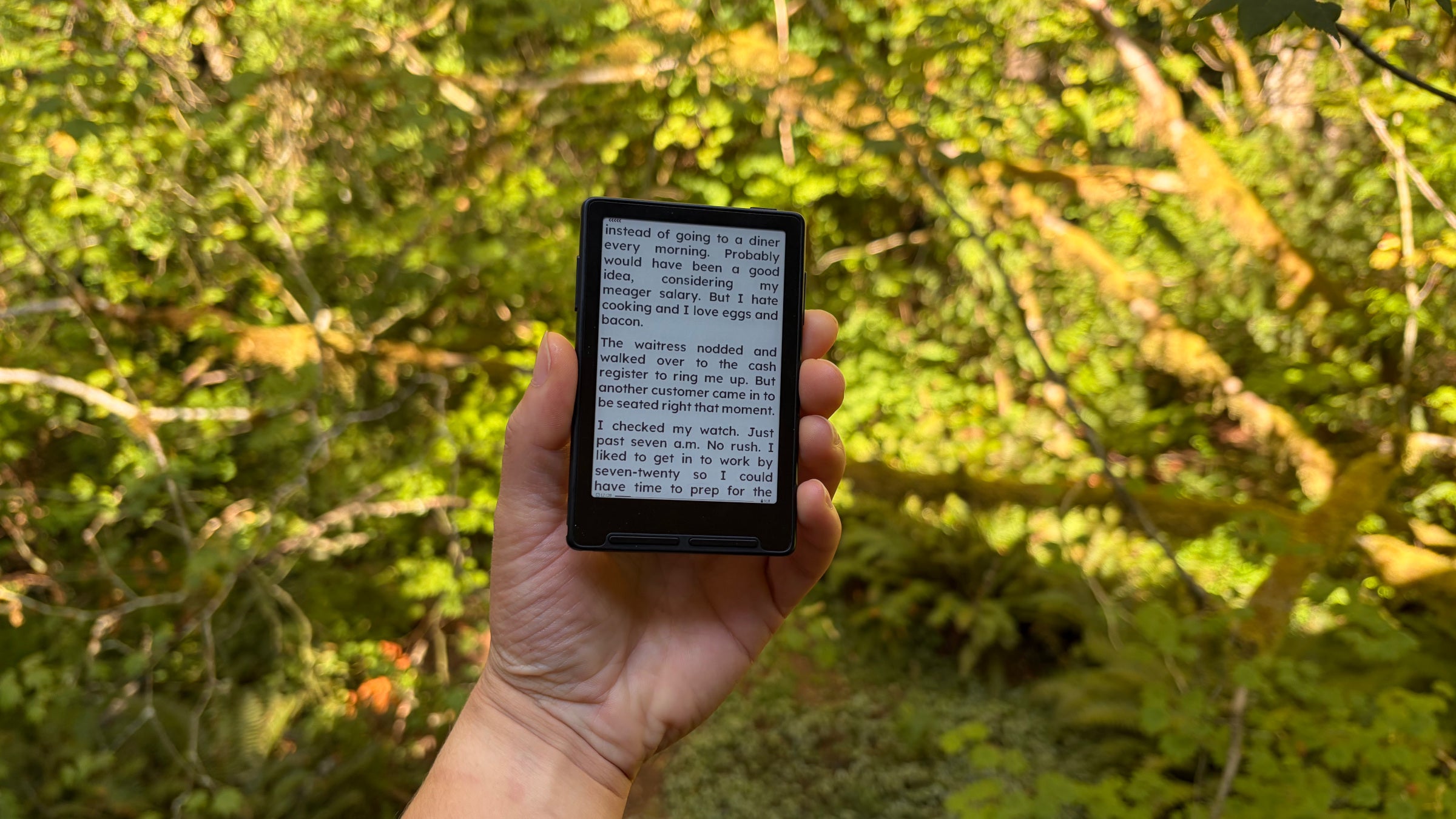
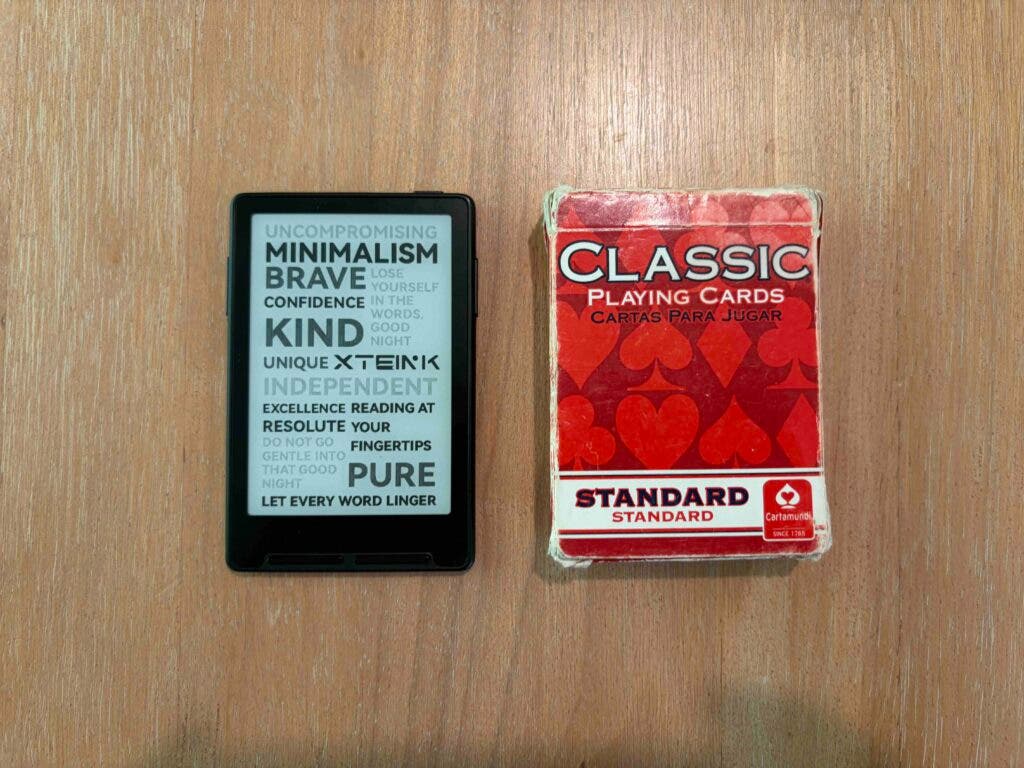
For weight-conscious thru-hikers and weekend backpackers alike, the X3 presents an intriguing proposition: genuine e-ink technology scaled down to the size of a playing card, offering a dedicated reading experience without the traditional weight penalty.
Chronology: From Alaskan Storms to Field-Testing the Device
The trajectory of this gear review spans from the storm-swept tundra of the Arctic North to weekend field tests across rugged domestic trails.
- Summer 2025: Trapped in a backcountry tent during an unseasonal Alaskan blizzard, the author relies entirely on a standard e-reader to survive hours of forced confinement, cementing the psychological value of literature in the wilderness.
- Early 2026: The ongoing compromise between heavy traditional e-readers and phone-screen fatigue prompts a search for alternative solutions, leading to the discovery of the XTEINK X3.
- Mid-2026 Field Testing: The author acquires an X3 unit and puts it through a series of weekend backpacking trips, assessing everything from file transfer protocols and companion app navigation to battery longevity and real-world durability.
- August 2026: Final evaluation published, weighing the device’s utility against traditional smartphones and full-sized e-readers.
Supporting Data: Specifications and Performance Metrics
To properly evaluate whether the X3 is a legitimate piece of backcountry equipment or merely a novel gadget, it helps to break down the hard numbers gathered during testing.
Physical Dimensions and Weight
- Display Size: 3.7 inches (surface area comparable to a standard playing card).
- Thickness: Approximately 5 mm, yielding an exceptionally slim profile.
- Weight: 58 grams (equivalent to a candy bar; significantly lighter than the 158-to-188-gram range of standard Kindles).
Battery Performance
- Capacity: 650 mAh.
- Stated Longevity: 10 to 14 days based on one to three hours of daily reading.
- Field Reality: After multiple weekend trips, the review unit failed to exhaust its initial charge, demonstrating that it easily eliminates the need to carry a dedicated charging block for standard trips.
Compatibility and Transfer Protocols
- Supported Formats: EPUB, PDF, TXT, and MOBI files.
- Transfer Methods: Wireless transfer via Wi-Fi utilizing the companion smartphone app, or direct loading via the included physical card reader.
- Ecosystem Limitations: Incompatible with mainstream digital library loan applications like Libby, requiring users to source public domain texts, self-purchased e-books, or free downloadable files.
Official and Developer Insights: Navigating the Ecosystem
While the hardware of the X3 excels in minimalism, software integration presents a mixed bag that reflects its niche manufacturing origins.
Setup via XTEINK’s companion smartphone app is structurally straightforward, yet the user experience reveals translation friction. Many interface pages within the app appear to be translated directly from Chinese to English, leaving the specific functions of certain menus somewhat opaque. Essential tasks—such as wireless file transfers and setting custom standby wallpapers—are functional, but advanced customization requires patience.
Furthermore, the X3 lacks a touch screen, relying instead on a physical four-button layout. Navigating menus requires a short learning curve. Users can turn pages either via button actuation or by physically shaking the device—a quirky feature that adds a layer of intuitive control.
Font adjustments on the device itself are similarly constrained. While the default font size matches standard book layouts and remains legible for average eyesight, modifying text scaling directly on the hardware takes practice. Advanced users can bypass these limitations by integrating open-source e-reader software such as Crosspoint, though doing so demands technical savvy.
Implications: Gimmick or Gamechanger for the Modern Backpacker?
Evaluating a piece of gear like the XTEINK X3 requires looking past its novelty appeal and examining how it alters the wilderness experience.
Battery Conservation on the Trail
For many backpackers, utilizing a smartphone as an all-in-one media hub is standard practice. Phones handle digital mapping, emergency communication, and backcountry photography. However, using a phone to read books at night rapidly drains battery reserves, forcing hikers to pack heavy external power banks. At 58 grams, the X3 provides a dedicated screen that preserves the smartphone’s battery for critical safety and navigation needs.
The Psychological Value of E-Ink
An electronic ink screen operates fundamentally differently than an LCD or OLED smartphone display. Free of distracting blue light and intense screen glare, e-ink mimics the tactile, restful experience of traditional paper. For backpackers attempting to disconnect from modern digital dependencies, carrying a dedicated text-only device maintains that boundary far better than opening a multi-use smartphone in the quiet of a tent.
As the author notes: "Perhaps even more importantly: I go to the trail to get off my phone. Reading is better than scrolling, but the longer my phone stays buried in my pack, the more I get out of a hike or backpacking trip."
Durability and Trade-Offs
The X3 is not officially waterproof, requiring users to stow it inside a standard plastic snack bag or an internal pocket during heavy downpours. Additionally, the lack of an integrated frontlight means nighttime reading relies entirely on a separate camp headlamp. (Though XTEINK has since released the X4 Pro, which addresses some of these limitations with a built-in frontlight, touch screen, and slightly larger display at 72 grams, the X3 remains the pinnacle of absolute weight minimalism).
Final Verdict
For ultralight enthusiasts who refuse to compromise on literary pursuits, the XTEINK X3 bridges a long-standing gap in backcountry gear. It successfully eliminates the weight penalty of traditional e-readers, protects critical smartphone battery life, and—most importantly—keeps digital distractions locked away while deep in the wilderness.
