

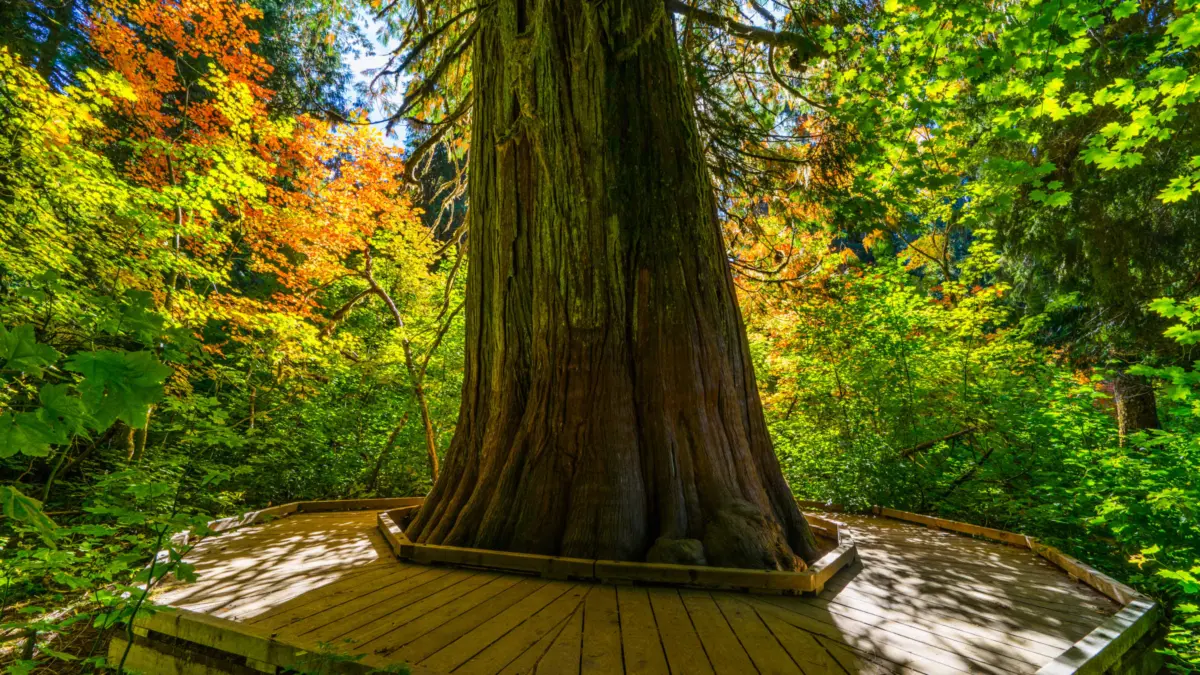
WASHINGTON — For years, one of the Pacific Northwest’s most ethereal and awe-inspiring natural sanctuaries has remained frustratingly out of reach. Tucked away within the rugged topography of Mount Rainier National Park, the Grove of the Patriarchs—a breathtaking old-growth rainforest housing living wooden titans that have stood watch for a millennium—has been closed to the public following a devastating natural disaster in 2021.
Now, a glimmer of hope has emerged for hikers, naturalists, and outdoor enthusiasts eager to walk among the giants once again. In a joint initiative, the National Park Service (NPS), in close partnership with the Federal Highway Administration, has officially unveiled a comprehensive blueprint to construct a brand-new suspension bridge and connecting trail system. This visionary project aims to safely restore public access to the historic site, healing a major scar left by severe weather and marking a milestone in resilient park infrastructure planning.
While the preliminary designs represent a major step forward, eager visitors will need to exercise patience. Project timelines indicate that construction is slated to kick off in 2028, with a tentative grand reopening projected for 2029. As the NPS moves forward with environmental reviews and public comment periods, the proposal offers a fascinating look at modern conservation engineering—balancing the insatiable public desire to experience wild spaces with the unpredictable, dynamic power of nature.
Main Facts: The Vision for the New Crossing
At the heart of the closure and the subsequent restoration plan is the Ohanapecosh River, a powerful waterway whose shifting channels and seasonal torrents proved too much for the park’s previous infrastructure.
The centerpiece of the newly proposed project is a completely redesigned suspension bridge positioned approximately half a mile downstream from the site of its predecessor. Planners determined that simply rebuilding in the original footprint was unfeasible due to ongoing, severe erosion risks. By shifting the crossing to a more geologically stable location, park officials hope to secure the route against future flooding events.
The engineering specifications for the new structure are significantly more robust than those of the bridge it replaces:
- Expanded Length: The proposed steel and wood-decked suspension bridge will span an impressive 215 feet, effectively doubling the length of the original 1961 structure.
- Elevated Design: To protect the bridge from surging floodwaters, the deck will be suspended 35 to 40 feet above the riverbed.
- New Trail Infrastructure: Approximately 0.5 miles of newly constructed trail will be cut and graded to seamlessly connect the new bridge location back into the existing labyrinth of paths, boardwalks, and bridges that wind through the Grove of the Patriarchs.
- Timeline to Completion: The project is currently at the 30 percent design milestone. Public open houses are underway, with construction targeted for 2028 and an anticipated opening date in 2029.
Despite the modern engineering required to make the site accessible, the fundamental magic of the destination remains unchanged. The 1.3-mile journey leads visitors into a secluded ecosystem of cathedral-like proportions, home to Douglas-firs, silver firs, Western red cedars, and western hemlocks boasting circumferences of up to 25 feet. These ancient sentinels provide critical, undisturbed habitat for sensitive and endangered wildlife, including the northern spotted owl and the marbled murrelet.
Chronology: From Catastrophe to Restoration
To understand the significance of the 2026 announcement, one must look back at the cascade of environmental events that severed access to the grove, transforming a beloved park amenity into a logistical puzzle for land managers.
2021: The Cataclysmic Flood
In late 2021, an atmospheric river event dumped relentless rainfall across the Pacific Northwest, triggering widespread flooding and mudslides throughout Mount Rainier National Park. The Ohanapecosh River swelled far beyond its normal banks, unleashing a torrent of water and debris that battered the "Big Tree Bridge."
The steel and wood-decked suspension structure—which had safely carried generations of hikers across the river since its installation in 1961—suffered catastrophic structural failures. Recognizing the immediate danger to human safety and the impossibility of quick repairs in the face of ongoing river instability, park leadership enacted an immediate, indefinite closure of the Grove of the Patriarchs, dismantling the remnants of the wrecked bridge to prevent further environmental damage.
2022–2025: Assessment and Feasibility
For the next several years, the trail remained strictly off-limits. Park rangers, hydrologists, and landscape architects conducted extensive environmental assessments of the Ohanapecosh River corridor.
During this period, climate data, river flow patterns, and erosion rates were meticulously analyzed. It quickly became apparent that the original bridge site was trapped in a high-risk erosion zone. Rebuilding in the exact same spot would guarantee another washout during the next major weather anomaly. Consequently, planners went back to the drawing board, pivoting toward a more sustainable, long-term engineering solution that involved moving the crossing point entirely.
August 2026: The Proposal Unveiled
The multi-year planning phase culminated in August 2026, when the NPS and the Federal Highway Administration officially released their comprehensive proposal. Alongside detailed architectural renderings, the park launched an interactive 3D map allowing the public to virtually explore the proposed bridge design and trail layout.
Simultaneously, the agency announced a pair of public open houses—one in-person and one virtual—scheduled for late August 2026, opening the floor for community feedback and marking the official commencement of the environmental review process.
2028–2029: Anticipated Construction and Reopening
Subject to the successful navigation of federal environmental approvals, shovels are expected to break ground in 2028. If timelines hold true without major supply chain or weather disruptions, hikers could step foot onto the new suspension bridge and re-enter the sacred old-growth grove by 2029—nearly a decade after the 2021 floods silenced the trail.
Supporting Data: Engineering a Modern Marvel in a Wild Landscape
Designing infrastructure in a national park requires a delicate balancing act between human utility and environmental preservation. The data driving the new Grove of the Patriarchs project highlights the unique challenges faced by federal land managers in the Cascade Range.
Hydrological Realities
Mount Rainier is a glaciated volcano, meaning its hydrological systems are notoriously volatile. Sudden glacial outbursts, heavy autumn rains, and heavy snowpacks melting rapidly in the spring create extreme seasonal fluctuations in river volumes. The Ohanapecosh River, in particular, has demonstrated a tendency to aggressively migrate across its floodplain.
By increasing the bridge length to 215 feet and elevating the deck up to 40 feet above the riverbed, engineers are providing a massive safety buffer. This extra clearance ensures that even during a 100-year flood event, raging waters and floating debris will pass harmlessly beneath the structure without compromising its integrity.
Ecological Footprint Mitigation
Building a half-mile of new trail and a massive suspension bridge in a pristine old-growth forest requires meticulous ecological planning to avoid disturbing root systems, sensitive soils, and endangered species habitats.
- Habitat Protection: The northern spotted owl and marbled murrelet rely on the dense, multi-layered canopy and decaying fallen logs of old-growth forests like the Grove of the Patriarchs for nesting and foraging. Construction windows will likely be strictly regulated to avoid disturbing these birds during sensitive breeding seasons.
- Sustainable Materials: Modern park engineering heavily favors weathering steel, sustainable composite woods, and pre-fabricated modular components that can be flown in by helicopter or assembled with minimal heavy machinery intrusion on the forest floor.
- Visitor Dispersion: While the bridge restores access to a high-density tourist area, the new trail alignment offers an opportunity to design pathways that naturally guide foot traffic away from fragile areas, protecting the 1,000-year-old tree roots from soil compaction—a silent killer of ancient trees.
Official Responses: The Philosophy of Dynamic Landscapes
The announcement of the bridge project has drawn praise from conservationists and park advocates alike, who view the plan as a pragmatic acknowledgment of a changing climate and increasingly volatile weather patterns.
Emily Hunt, a historical landscape architect with Mount Rainier National Park, captured the core philosophy guiding the park’s modern infrastructure initiatives in a recent statement:
"The best and worst part of Mount Rainier and its surrounding landscape is that it is very dynamic. The land is always changing and evolving due to storms, rivers meandering, changing of seasons and their intensities," Hunt explained. "Throughout the park we are constantly trying to keep up with trails, buildings, roads, and bridges so that they can be continually accessible for all, after these future ‘dynamic moments’."
This perspective represents a cultural shift within park management agencies. Rather than fighting nature to maintain static, historical footprints—such as trying to rebuild a bridge in a spot where the river clearly wants to flow—modern architects are working with the landscape, anticipating erosion, and designing flexible, resilient assets that can weather the storms of the 21st century.
Local tourism boards, regional hiking coalitions, and outdoor recreation advocates have also welcomed the news. For years, the closure of the Grove of the Patriarchs created a noticeable void in the visitor experience at Mount Rainier, often funneling higher concentrations of tourists into fewer accessible corridors like Paradise and Sunrise. Reopening the Ohanapecosh area will once again distribute visitors more evenly across the park’s vast acreage.
Implications: What This Means for Hikers and the Future of Park Infrastructure
As the National Park Service moves forward with the National Environmental Policy Act (NEPA) review process, the implications of this project extend far beyond a single footbridge in Washington state.
A Blueprint for Climate-Resilient Parks
Across the United States, national parks are on the front lines of climate change. Increased frequency of extreme weather events, glacial retreat, unseasonal flooding, and catastrophic wildfires are constantly testing the limits of park infrastructure built decades—or even a century—ago.
The strategy employed at Mount Rainier—relocating assets out of high-hazard zones, scaling up engineering specifications to withstand higher maximum stress, and utilizing advanced spatial mapping for public transparency—serves as a working model for other public lands facing similar threats.
Public Engagement and the NEPA Process
The rollout of the project also highlights the vital role of public participation in federal land management. By hosting open houses (with both in-person sessions and virtual meetings scheduled for late August 2026) and providing interactive 3D maps online, the NPS is ensuring that stakeholders have a voice in shaping the future of the park.
Citizens have the opportunity to review environmental impacts, suggest modifications, and voice support or concerns before final permits are issued and construction contracts are awarded.
The Return of an Icon
For the millions of outdoor enthusiasts who flock to Mount Rainier National Park annually, the ultimate implication is emotional as well as practical. Walking across a 215-foot suspension bridge high above the rushing turquoise waters of the Ohanapecosh River will once again open the gateway to a living museum.
Standing beneath the emerald canopy of trees that sprouted around the year 1026 offers a humbling perspective on human history and geologic time. When the new bridge opens its gates in 2029, it will not just reconnect a trail—it will restore a vital bridge between humanity and the ancient, enduring soul of the Pacific Northwest wilderness.
