

Published: August 21, 2026
Author: Gear Desk
Retail Price: $125 (Currently 25% off at REI, down from its standard $166 MSRP)
Main Facts
Every backcountry enthusiast knows the psychological battle of the dawn alarm. As temperatures plummet inside the tent overnight, the transition from the cocoon-like warmth of a sleeping bag into the biting, crisp air of a mountain morning requires a sheer act of willpower. Enter the Exped Dreamwalker, a piece of hybrid camp gear designed to eliminate that exact friction point.
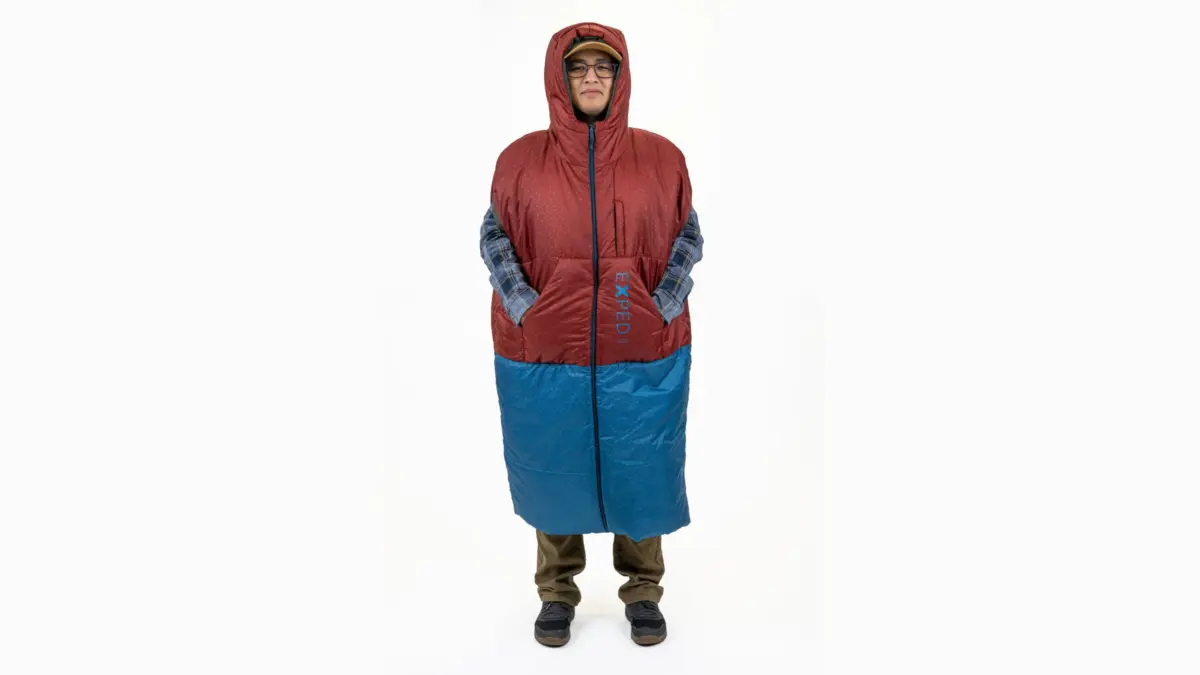
Functioning primarily as a 40-degree Fahrenheit comfort-rated sleeping bag by night, the Dreamwalker defies traditional categorization. It straddles the line between a semi-rectangular bag and a wearable garment. With a blunt footbox, a distinctive center zipper, and a jacket-inspired 3D hood, it keeps sleepers warm through cool-weather nights.
However, the defining characteristic of the Dreamwalker is its metamorphosis. By unzipping strategically placed arm ports and cinching the drawstring-closure footbox, the user can instantly transform the sleeping bag into a fully wearable, insulated poncho. An intricate system of internal toggles allows campers to adjust the garment to three distinct length settings, preventing the hem from dragging in the dirt or mud.
Weighing in at 3 pounds, 5 ounces for the regular size, with a packed volume of 27 liters, the Dreamwalker is unapologetically targeted at front-country recreationists, car campers, and basecamp enthusiasts rather than ultralight backpackers counting every ounce in their packs.
Chronology
The Evolution of Wearable Sleep Systems
The concept of wearable sleeping gear is not entirely new, but its execution has historically polarized the outdoor community.
- Early 2000s: The market saw early iterations of "humanoid" sleeping bags with separate arms and legs (such as the original Selk’bag). While innovative, these suits often suffered from complex sizing issues, poor thermal efficiency, and excessive bulk, relegating them to novelty items rather than serious pieces of camp equipment.
- 2010s: Manufacturers shifted focus toward multi-use blankets, camp ponchos, and modular quilts. Brands realized that consumers wanted versatility around the campfire without looking like astronauts or sacrificing the thermal benefits of a traditional bag.
- August 21, 2026: Exped formally pushes the envelope further into mainstream retail availability with promotional pricing at major outdoor outfitters like REI. The modern Dreamwalker represents a maturation of the concept—blending the simplicity of a traditional zip bag with the functional utility of an insulated coat.
Supporting Data and Technical Specifications
To understand where the Exped Dreamwalker fits into an outdoor gear rotation, it is essential to examine the raw numbers. While it offers unmatched convenience, its physical dimensions and thermal ratings dictate specific use-case scenarios.
Technical Breakdown: Exped Dreamwalker (Regular)
| Feature | Specification |
|---|---|
| Temperature Rating | 40°F (Comfort/Transition threshold for mild conditions) |
| Total Weight | 3 lbs, 5 oz (1,502 grams) |
| Packed Volume | 27 Liters |
| Insulation Type | Synthetic fill |
| Shell Material | Durable, water-resistant ripstop polyester |
| Length Adjustability | 3-stage internal toggle system |
| Key Access Points | Center front zipper, dual zippered arm holes |
| MSRP | $166 (Available at promotional pricing of $125) |
The Weight vs. Packability Trade-off
At over three pounds and boasting a 27-liter packed volume, the Dreamwalker consumes roughly half the capacity of a standard 50-liter backpacking pack. This data point underscores why gear analysts emphasize its role in car camping. Backpackers requiring compact setups typically target down bags or quilts packing down to 5 to 10 liters. However, for weekend warriors tossing gear into the trunk of a crossover or setting up a spacious basecamp, the bulk is easily managed.
Official Responses and Industry Reception
Outdoor gear reviewers and consumer feedback channels have offered a nuanced reception to the Dreamwalker, praising its comfort while remaining realistic about its limitations.
Manufacturer Intent
Exped’s design philosophy behind the Dreamwalker centers on eliminating camp discomfort. According to product development briefs from the brand, the goal was to create a "seamless transition space" between sleeping and waking. By allowing users to step out of their tents with their primary insulation still wrapped around their bodies, Exped aims to solve the dreaded morning chill that deters casual campers from spending nights outdoors.
Early User and Critic Feedback
- The Comfort Factor: Campers frequently praise the psychological boost of wearing the bag while drinking morning coffee. Reviewers note that the arm holes are positioned intuitively, allowing for full range of motion—whether flipping pancakes on a camp stove or holding a warm mug.
- Thermal Performance: Field tests confirm that the 40-degree rating is accurate for mild summer and late-spring conditions. However, reviewers caution against taking the Dreamwalker into true sub-freezing environments, noting that the convertible design inherently allows minor drafts compared to a vacuum-sealed mummy bag.
- The Sizing Debate: While the internal toggle system successfully shortens the bag for walking around, shorter users note that the poncho mode can still feel slightly oversized, emphasizing the importance of choosing the correct size tier.
Implications for the Outdoor Gear Market
The positioning of the Exped Dreamwalker at a discounted price point of $125 signals broader trends in the outdoor recreation market.
1. Broadening the Appeal of Camping
For novice campers or individuals who find traditional gear intimidating or uncomfortable, hybrid products lower the barrier to entry. Equipment that bridges the gap between indoor coziness and outdoor utility helps attract demographic segments that might otherwise be put off by the austere nature of traditional camping.
2. The Rise of Comfort-First Car Camping
While the ultralight segment continues to dominate marketing campaigns for thru-hiking and mountaineering, the vast majority of consumer spending occurs in the car camping and recreational spaces. Products like the Dreamwalker prove that innovation in this sector does not have to focus exclusively on shedding grams; instead, it can focus on enhancing livability, camp luxury, and user experience.
3. Sustainability and Multi-Functionality
From an environmental perspective, multi-use gear inherently promotes smarter resource consumption. By combining a sleeping bag and a heavy-duty camp jacket into a single unit, manufacturers reduce the overall demand for auxiliary products, encouraging a minimalist mindset even within the realm of car camping luxury.
Conclusion
The Exped Dreamwalker does not attempt to reinvent the alpine sleeping bag, nor does it claim to be a replacement for technical gear designed to weather brutal mountaineering conditions. Instead, it carves out a niche for the relaxed weekend camper. By solving one of the most universally disliked aspects of sleeping outdoors—leaving the warmth of the bag on a cold morning—it offers a clever, comfortable, and practical solution that redefines what camp mornings can feel like. Whether bundled up around a flickering campfire or shuffling across a dewy meadow to the latrine, the Dreamwalker ensures that the comfort of bed travels wherever you do.
