

August 10, 2026
By Global Science & Outdoor Living Desk
Main Facts: A Rare Double Feature in the August Sky
As the dog days of summer reach their zenith, the night skies are preparing to deliver one of the most visually stunning and scientifically captivating double-features of the decade. On August 12, 2026, two major astronomical phenomena—the peak of the annual Perseid meteor shower and a dramatic solar eclipse—will converge on a single calendar day.
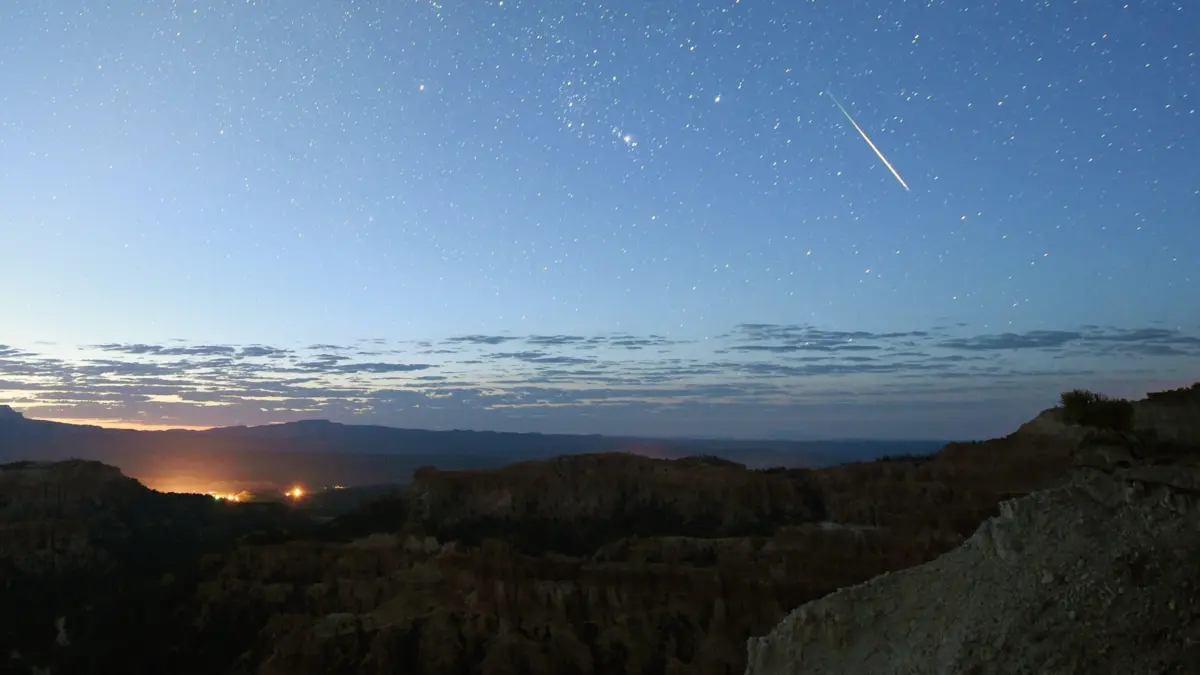
For astronomy enthusiasts, casual stargazers, and outdoor adventurers alike, the timing could not be more ideal. The climax of the Perseids coincides precisely with a new moon. Without the luminous glare of a lunar body washing out the firmament, the atmospheric canvas will be pitched in near-total darkness. In areas far removed from artificial light pollution, observers are projected to witness up to 100 shooting stars per hour as Earth plows through the dusty debris trail left in the wake of Comet Swift-Tuttle.
Simultaneously, daytime skies across portions of the Northern Hemisphere will dim as a solar eclipse sweeps across Greenland, Iceland, and western Europe. While observers in North America will miss out on the path of totality, residents and travelers across roughly two dozen northern U.S. states and Canadian provinces will be treated to a partial solar eclipse, provided they utilize certified eye protection.
According to outdoor and astronomy experts, the premier venue for witnessing this cosmic convergence is not a crowded observatory or an urban rooftop, but the open wilderness. By hitting the trail and escaping the grid, stargazers can bypass both light pollution and the oppressive daytime heat of mid-August.
Chronology: The Timeline of the August 2026 Celestial Events
Understanding the sequence of these astronomical events allows observers to plan their viewing schedules for maximum impact.
- Late July to Early August: Earth enters the outer edges of the Swift-Tuttle debris stream, marking the gradual onset of the Perseid meteor shower. Sightings begin to increase incrementally night by night.
- August 10: Astronomical forecasts confirm optimal atmospheric visibility. Reports highlight the simultaneous approach of a new moon, guaranteeing prime dark-sky conditions for the upcoming peak.
- August 12 (Daytime): The solar eclipse reaches its peak. Totality darkens the skies over Greenland, Iceland, and western Europe, while a partial eclipse is visible across targeted regions of North America during mid-day hours.
- August 12 (Nighttime): The Perseid meteor shower reaches its absolute maximum rate. Fireballs streak across the atmosphere at speeds exceeding 37 miles per second, peaking in frequency late into the night and hours before dawn on August 13.
- Mid-August Onward: The Perseids taper off, though sporadic meteors from the tail end of the stream remain visible for several days under clear skies.
Supporting Data: The Mechanics and Metrics of the Perseids
The Perseids are celebrated not merely for their volume, but for their brilliance. Originating from Comet Swift-Tuttle—a massive periodic comet with a nucleus roughly 16 miles wide—the meteoroid stream consists of ancient ice and rock particles shed over millennia. As Earth intersects this debris cloud, particles slam into our upper atmosphere at roughly 133,200 miles per hour. The intense kinetic energy vaporizes the particles, ionizing the surrounding air molecules and creating the bright, glowing streaks known as shooting stars.
Key Observation Metrics
- Hourly Rate: Up to 100 meteors per hour under pristine, dark-sky conditions.
- Velocity: ~37 miles per second (60 kilometers per second).
- Moon Phase: New Moon (0% illumination), guaranteeing zero lunar interference.
- Geographic Visibility: Optimal across the entire Northern Hemisphere, with the best visibility occurring in remote wilderness areas, high-altitude mountain ranges, and designated Dark Sky Parks.
Official Responses and Expert Insights
To maximize the viewing experience, prominent scientists and outdoor educators have weighed in on how to safely and effectively engage with the double feature.
NASA scientist Dr. Amber Straughn, renowned for her instrumental work on the James Webb Space Telescope—an instrument designed to peer deeper into the cosmos than ever before—emphasizes the value of reconnecting with the night sky from the ground. While space-based observatories unlock the secrets of distant galaxies, Straughn notes that simple backyard or backcountry astronomy fosters a vital, visceral connection to our immediate celestial neighborhood.
Outdoor industry veterans have similarly stepped forward to curate prime itineraries for the event. Former Backpacker Associate Editor Emma Veidt assembled comprehensive trail maps guiding enthusiasts away from crowded overlooks. From the jagged peaks of Colorado’s Maroon Bells to the rugged ridges of New Hampshire’s North Twin, South Twin, Guyot, Bonds, and Hale Loop, experts stress that elevation and isolation are the ultimate tools for meteor hunting.
Furthermore, conservation groups and national park rangers have issued guidance regarding lesser-traveled destinations. Locations such as Maine’s Katahdin Woods and Waters National Monument have been highlighted as premier viewing platforms, offering both minimal light pollution for the Perseids and optimal viewing geometry for the partial solar eclipse. Out West, Joshua Tree National Park remains a favored sanctuary, offering vast desert expanses where visitors can spread out across backcountry routes without bumping elbows with fellow stargazers.
Implications: The Intersection of Outdoor Recreation and Astronomy
The convergence of the Perseids, a new moon, and a solar eclipse carries broad implications for tourism, environmental conservation, and public engagement with science.
Boost to Backcountry Tourism
Outdoor recreation economies near designated Dark Sky Parks—such as Bryce Canyon in Utah, the Badlands in South Dakota, and remote regions of northern Maine—are anticipating a surge in overnight visitors. Land management agencies view this as an opportunity to educate the public on Leave No Trace principles, emphasizing that increased night-time foot traffic must be balanced with strict adherence to wilderness preservation.
Heightened Awareness of Light Pollution
As artificial illumination increasingly washes out the night sky across suburban and urban sectors, events like the Perseid meteor shower serve as a powerful reminder of what is being lost. Environmental advocates hope that the intense media attention surrounding the 2026 celestial double feature will drive renewed legislative support for dark-sky ordinances, energy-efficient outdoor lighting, and the preservation of pristine nocturnal ecosystems.
Safety and Preparedness in the Wilderness
Combining backcountry exploration with nocturnal stargazing introduces unique logistical challenges. Emergency search and rescue teams remind the public that navigating rugged terrain after dark requires specialized gear, including red-light headlamps to preserve night vision, reliable GPS devices, and adequate thermal layers to combat alpine temperature drops.
Ultimately, whether witnessing the moon take a bite out of the sun from a northern Canadian province or watching a blazing Perseid fireball tear across the Milky Way from a quiet mountain ridge, the events of August 12, 2026, offer a profound reminder of our place in the universe. By stepping off the beaten path and looking upward, humanity finds a rare moment of shared global wonder.
