

Main Facts
In the hyper-competitive world of ultralight backpacking, shaving ounces is often described as an obsession, but occasionally, a piece of gear arrives that redefines the category entirely. The Zpacks Summer Quilt has captured the attention of thru-hikers, minimalists, and weight-conscious backpackers by pushing the boundaries of warmth-to-weight efficiency. Tipping the scales at a mere 9.7 ounces for a regular-length model, this 40-degree sleeping quilt weighs roughly the same as two sticks of butter, or just slightly more than a standard modern smartphone.
When compressed, the quilt achieves a pack volume comparable to a footlong submarine sandwich, making it an ideal choice for backpackers attempting to downsize to ultra-compact pack volumes without sacrificing their sleep systems. Retailing at an original price point of $359, the quilt has recently seen promotional discounting, available for $309 using specific seasonal discount codes directly through the manufacturer’s platform.
Despite its featherlight construction, the quilt does not sacrifice fundamental thermal performance. Field testing in shoulder-season conditions—such as chilly September nights in northern Minnesota—demonstrated that the quilt punches well above its weight class, retaining enough warmth to deliver a comfortable night’s sleep when paired with an adequately insulated sleeping pad.
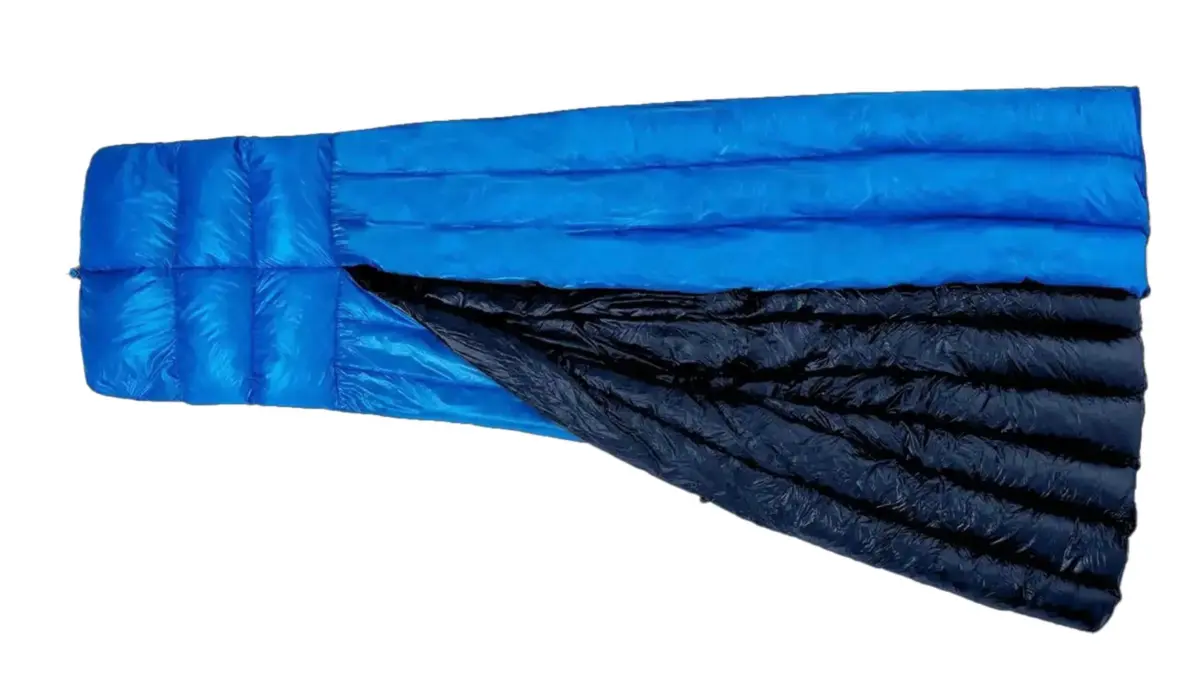
The secret to its performance lies in a hybrid baffling architecture. The upper torso utilizes vertical baffles to prevent the premium 900-fill power down from shifting laterally during the night, while the lower section features a horizontally-baffled, sewn footbox designed to trap body heat and eliminate cold drafts around the feet. For hikers prone to tossing and turning, an optional pad-attachment strap system is available for a nominal weight penalty of just 6 grams and an additional $10, securing the quilt tightly to sleeping pads to prevent convective heat loss.
Chronology
The evolution of the Zpacks Summer Quilt reflects broader manufacturing trends within the outdoor gear industry, where consumer demand for hyper-specialized, ultralight equipment has accelerated rapidly over the past decade.
- Early 2010s: The rise of cottage-industry gear manufacturers. Zpacks establishes itself as a dominant force in ultra-lightweight backpacking by pioneering the use of cuben fiber (now known as Dyneema Composite Fabrics) and high-fill-power down in shelters and sleep systems.
- Mid-to-Late 2010s: As the popularity of long-distance trails like the Appalachian Trail and Pacific Crest Trail surges, demand for sub-pound sleep systems grows. Standard sleeping bags begin losing market share to versatile, open-back quilts that save weight by omitting unnecessary bottom insulation that is compressed and rendered ineffective by body weight.
- 2022–2024: Zpacks refines its existing lineup of sleeping quilts, identifying a specific gap in the warm-weather market. Feedback from thru-hikers indicates that traditional 20-degree and 30-degree quilts are often excessively warm—and therefore unnecessarily heavy—for summer trips, fastpacking excursions, and southern-latitude adventures.
- August 2026: Zpacks officially features the Summer Quilt as a focal point of its seasonal gear lineup, launching targeted promotional campaigns and highlighting its performance benchmarks in real-world northern climate testing. Industry reviewers and field testers document its remarkable 9.7-ounce weight benchmark, cementing its status as one of the lightest commercially viable sleep systems available to the public.
Supporting Data
To understand the engineering achievement behind the Zpacks Summer Quilt, it is essential to examine the technical specifications and comparative metrics that define modern ultralight sleep systems.
Technical Specifications Matrix
| Feature | Specification |
|---|---|
| Total Weight (Regular) | 9.7 ounces (approx. 275 grams) |
| Temperature Rating | 40°F (approx. 4.4°C) |
| Down Insulation Type | 900-Fill Power Goose Down (Ethically sourced, Hydrophobic treatment) |
| Compressed Volume | Equivalent to a footlong sub sandwich |
| Upper Baffle Orientation | Vertical (prevents down migration) |
| Lower Baffle Orientation | Horizontal (optimized for sewn footbox warmth retention) |
| Optional Accessories | Solo Quilt Strap with snaps (Adds 6 grams, $10) |
| Base Retail Price | $359 (Frequently discounted to $309 via seasonal promotions) |
Comparative Thermal Efficiency Analysis
In rigorous field evaluations conducted across diverse geographic environments, the 900-fill power down used in the Zpacks Summer Quilt demonstrates exceptional loft recovery. Unlike synthetic fills that degrade rapidly after repeated compression cycles, high-tier goose down maintains its cluster integrity, trapping microscopic pockets of dead air to insulate the user effectively.
However, thermal performance in a quilt—unlike a traditional zippered mummy bag—is highly dependent on user interaction and the insulation value (R-value) of the underlying sleeping pad. Field data gathered during September testing in the Boundary Waters region of northern Minnesota indicated that when paired with an insulated sleeping pad rated at an R-value of 4.0 or higher, testers remained comfortable down to the manufacturer’s lower limit of 40°F. Conversely, when paired with uninsulated or low-R-value pads, conductive heat loss through the ground necessitated the use of additional base layers, highlighting the systemic nature of ultralight sleep setups.
Official Responses
Representatives from Zpacks, as well as independent gear analysts and seasoned long-distance backpackers, have weighed in on the design philosophy and market positioning of the Summer Quilt.
Zpacks’ product development team has consistently emphasized that the design philosophy of the Summer Quilt centers on the concept of "active weight reduction." According to company statements, the primary goal was not merely to build the lightest possible fabric container, but to engineer a functional shelter for the human body that eliminates redundant materials without compromising safety or basic comfort.
"When you are covering thousands of miles on foot, every single fraction of an ounce matters," noted a senior product developer during a recent gear design seminar. "Hikers were modifying existing gear or carrying heavy bags that caused thermal discomfort during warm summer nights. The Summer Quilt was engineered to fill that exact operational window—providing just enough warmth, zero excess bulk, and uncompromising packability."
Independent gear reviewers and long-distance trail veterans have largely validated these claims, though they offer practical caveats. In reviews published by major outdoor publications, testers noted that while the quilt is an engineering marvel, its minimalist nature requires a learning curve.
"Quilts require active user management," notes one veteran gear tester. "Because there is no zipper or hood, you have to tuck the edges beneath your shoulders when the temperature dips. But for anyone willing to master the technique, shedding over a pound from your pack compared to a standard synthetic sleeping bag completely changes your stride on the trail."
Implications
The introduction and commercial validation of ultra-minimalist gear like the Zpacks Summer Quilt carry significant implications for the broader outdoor recreation industry, manufacturing supply chains, and the backpacking community at large.
1. Shift in Consumer Expectations
The success of sub-10-ounce sleep systems accelerates a cultural shift within backpacking. For decades, safety margin calculations dictated carrying heavier, warmer gear "just in case." As reliable field data demonstrates that modern high-fill down and smart baffling can deliver adequate rest at remarkably low weights, hikers are increasingly adopting modular, trip-specific sleep kits rather than relying on a single all-season sleeping bag. This mindset encourages lighter base weights, which in turn reduces physical fatigue, minimizes the risk of overuse injuries on long trails, and expands the daily mileage potential of average backpackers.
2. Manufacturing and Material Innovations
To achieve a 9.7-ounce weight milestone, manufacturers must utilize cutting-edge textile engineering, including ultra-thin denier face fabrics (often weighing under 10 denier) treated with durable water repellent (DWR) coatings, combined with ethically sourced, ultra-high-loft down clusters. This drives continuous innovation across the supply chain. As consumers demand more performance from lighter materials, textile mills are forced to develop fabrics that offer higher tear strength-to-weight ratios, paving the way for even lighter gear generations in the future.
3. Environmental and Safety Considerations
While the reduction of gear weight offers clear ergonomic advantages, it also introduces certain risk factors that the outdoor community must navigate. A 40-degree quilt provides very little margin for error in unexpected alpine weather events, where unseasonal drops in temperature, rain, or high winds can quickly lead to hypothermia. Industry educators and rescue organizations emphasize that ultra-lightweight systems must be paired with rigorous trip planning, accurate weather forecasting, and the inclusion of versatile emergency layers (such as a lightweight wind shell or rain jacket) that can double as sleep augmentation.
Ultimately, the Zpacks Summer Quilt represents more than just a commercial product; it is a physical manifestation of the ongoing minimalist ethos in modern outdoor exploration—proving that sometimes, less is definitively more.
