

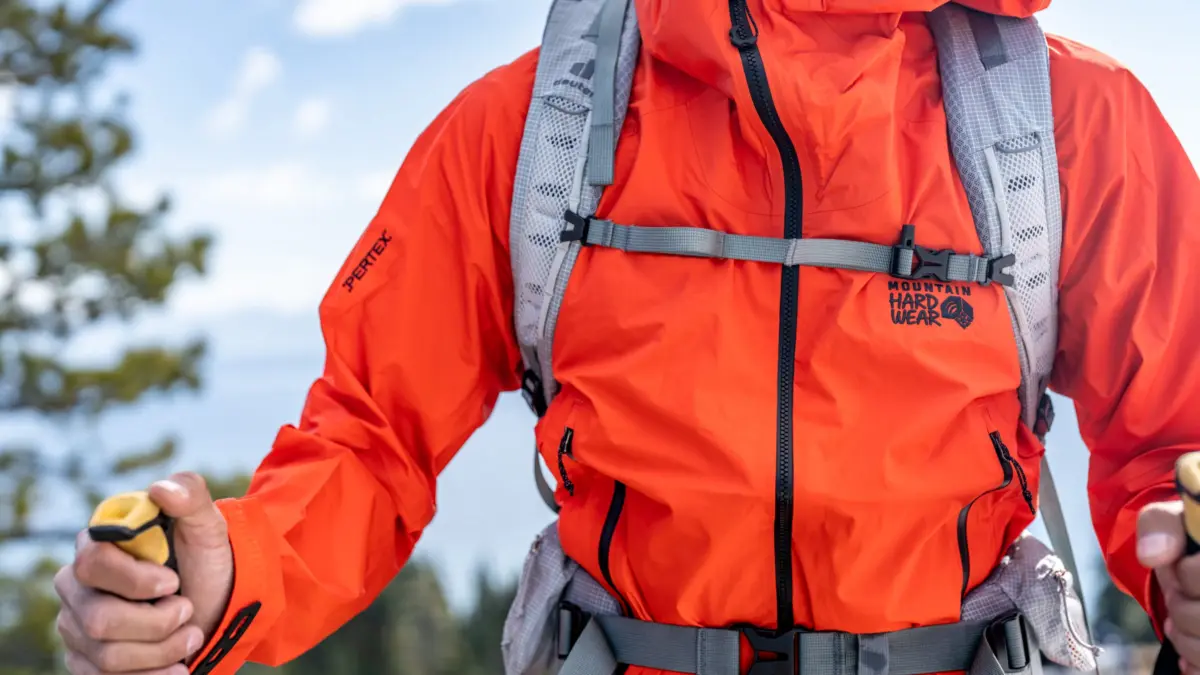
In the high-stakes world of alpine mountaineering and backcountry backpacking, gear selection often dictates the line between an exhilarating adventure and a survival scenario. When severe weather hits, the margin for error shrinks dramatically. For years, outdoor enthusiasts have faced a frustrating compromise: either lug heavy, bombproof hardshells that weigh down the pack and restrict movement, or opt for ultralight, fragile windbreakers that wet out at the first sign of sustained downpours.
However, recent advancements in textile engineering are fundamentally shifting this paradigm. Leading the charge is the Mountain Hardwear Premonition UL Jacket—a garment that has emerged as the definitive favorite for men’s weather protection this season. Currently capturing attention not only for its technical prowess but also for a massive 50 percent discount bringing its price down to $215, the Premonition UL represents a masterclass in balancing featherlight packability with rugged durability.
Main Facts: Deconstructing the Mountain Hardwear Premonition UL
At its core, the Mountain Hardwear Premonition UL Jacket is designed for fast-and-light practitioners who refuse to compromise on weather security. Built around a 20-denier, 3-layer Pertex fabric architecture, the jacket hits a sweet spot in technical outerwear.
- Weight: Weighing in at a mere 11.2 ounces, the jacket virtually disappears in a pack or on the body, making it an ideal choice for ounce-counting thru-hikers and alpine climbers.
- Material & Construction: The 3-layer Pertex construction provides a robust physical barrier against driving rain and wind while maintaining high levels of breathability during high-output aerobic climbs.
- Durability: Despite its ultralight classification, testers put the fabric through grueling real-world stress tests—including dense Alaskan bushwhacking—where it resisted snags, abrasions, and tears.
- Weather Resistance: Field evaluations noted exceptional performance in "complete hypothermia weather," successfully repelling hours of cold, relentless moisture without wetting out.
- Availability & Alternatives: The full-zip jacket is currently seeing deep discounts across select sizes (Small, Large, and XL). For those seeking an even lighter setup, the Premonition UL Anorak variant strips the weight down to an astonishing 8.9 ounces and is currently slashed by 70 percent. For women seeking comparable top-tier protection, the Outdoor Research Aspire 3L Jacket is also seeing a 25 percent markdown.
Chronology: The Journey to the Modern Ultralight Hardshell
To understand why the Premonition UL represents a significant milestone, it helps to examine the evolutionary timeline of waterproof-breathable outerwear over the past several decades.
Era 1: The Heavy Armor (Late 20th Century)
For decades, waterproof shells were defined by heavy canvas-like nylons bonded with thick, non-porous membranes or early-generation coatings. These jackets were stiff, loud, notoriously heavy (often exceeding 20 to 30 ounces), and trapped internal body heat and sweat, frequently leaving hikers wetter from the inside out than from the rain outside.
Era 2: The 2.5-Layer Revolution (Early 2000s)
As outdoor recreation surged, brands raced to drop weight. The introduction of 2.5-layer jackets brought down the scale by replacing the interior protective fabric layer with a printed protective matrix or "half-layer." While these jackets were remarkably light and cheap, they lacked long-term durability. The interior coating tended to flake or abrade against skin oils and backpack straps over time, leading to compromised waterproofing.
Era 3: The 3-Layer Renaissance and Pertex Integration (2015–Present)
The modern era solved the durability puzzle by refining 3-layer laminates—fusing an outer face fabric, a waterproof-breathable membrane, and an inner backer into a single, cohesive, highly flexible sheet. Textile innovators like Pertex pushed boundaries further by engineering densely woven face fabrics that shed water naturally while maximizing breathability. The release of the Mountain Hardwear Premonition UL is a direct product of this modern manufacturing renaissance, proving that a jacket can be whisper-light without sacrificing structural integrity.
Supporting Data: Field Testing and Market Metrics
The acclaim surrounding the Premonition UL is backed by rigorous empirical testing in some of North America’s most unforgiving environments. Field testers deployed the jacket across varying microclimates, ranging from the arid, fire-fatigued pine forests of Colorado to the humid, briar-choked river valleys of Southeast Alaska.
| Performance Metric | Premonition UL Rating / Data | Industry Average for Ultralight Shells |
|---|---|---|
| Weight | 11.2 oz (Jacket) / 8.9 oz (Anorak) | 10.0 oz – 14.0 oz |
| Fabric Denier | 20D 3-Layer Pertex | 10D – 30D |
| Durability Index | High (survived heavy brush) | Moderate to Low (prone to tearing) |
| Weatherproofing | Exceptional (tested in hypothermic rain) | Variable |
| Current Sale Price | $215 (50% off MSRP) | Varies ($200–$400) |
Regional weather patterns have heavily influenced gear demands in recent years. In places like Colorado, extended drought conditions punctuated by sudden, violent monsoon downpours have made reliable daily-carry rain shells an absolute necessity for outdoor workers, rescue personnel, and recreationalists alike. When moisture finally returns to parched ecosystems, the psychological and physical comfort of a dependable hardshell transforms a miserable, freezing slog into a manageable—and even enjoyable—experience.
Official Responses and Manufacturer Insights
Industry analysts and brand representatives point out that designing gear like the Premonition UL requires navigating a complex engineering paradox: reducing weight requires thinner threads and fewer structural reinforcements, yet consumers demand rugged longevity.
Mountain Hardwear’s design team addressed this by strategically deploying high-tenacity yarns in the Pertex weave. By optimizing the yarn density rather than simply adding layers of polyurethane coatings, the brand achieved high tear-strength metrics while keeping the overall garment profile exceptionally slim.
"The goal with the Premonition series was never just to make the lightest jacket on the market," noted an anonymous product developer close to the line. "Anyone can strip away features and fabric until a jacket weighs nothing. The real triumph is engineering a piece that can take a beating through alders and sharp rock faces, keep driving rain out for hours on end, and still pack down so small you forget it’s in your pack until you desperately need it."
Competitor brands have similarly noticed the shift. Outdoor Research, whose Aspire 3L Jacket remains a top recommendation for women, has heavily emphasized modular ventilation and multi-season versatility in its recent design cycles, signaling a broader industry-wide movement away from single-use emergency shells toward do-it-all alpine armor.
Implications: What This Means for the Future of Outdoor Gear
The mainstream discounting of high-end ultralight shells like the Premonition UL (currently marked down to $215, with the anorak sibling dropping to an unprecedented 70 percent off) carries several important implications for the outdoor retail market and everyday consumers.
1. Democratization of Technical Performance
Historically, cutting-edge 3-layer waterproof technology was restricted to high-end, premium-priced flagship garments that frequently retailed well north of $400. Deep seasonal markdowns and streamlined manufacturing processes are gradually lowering the financial barrier to entry, allowing weekend warriors and budget-conscious backpackers access to elite-tier weather protection.
2. The Shift Toward Minimalism and Multi-Use Gear
As climate volatility increases erratic weather patterns globally—from sudden mountain thunderstorms to unseasonal downpours—the demand for packable, everyday-carry gear will only surge. Consumers are increasingly rejecting heavy, bulky outerwear in favor of modular, minimalist layers that integrate seamlessly into fast-and-light packing systems.
3. Sustainability and Durability
In an era dominated by fast-fashion and disposable consumer goods, the longevity of outdoor gear remains a critical environmental talking point. Jackets that survive aggressive bushwhacking, abrasive rock scraping, and multi-season abuse ultimately reduce waste. By building an ultralight jacket that refuses to shred at the first sign of friction, Mountain Hardwear and its competitors are setting a benchmark for sustainable product lifecycles—proving that light weight does not have to come at the expense of long-term durability.
Ultimately, whether you are preparing for a thru-hike along the Continental Divide, navigating a wet afternoon in the Pacific Northwest, or simply looking to upgrade your emergency kit before the autumn storms roll in, the current generation of ultralight hardshells proves that you no longer have to choose between staying dry and traveling light.
