

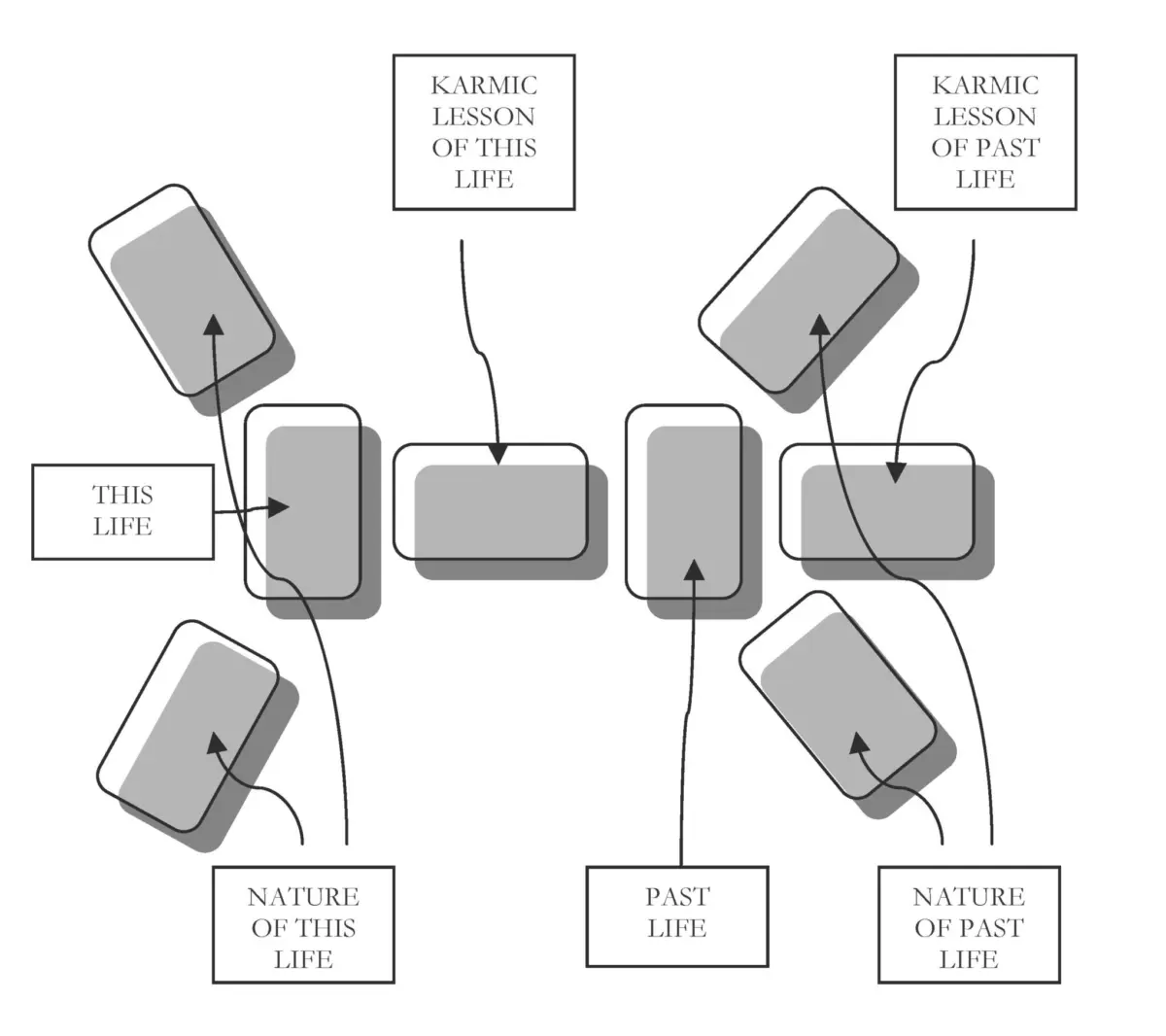
LONDON — In the ever-evolving landscape of esoteric practices and metaphysical self-discovery, a new methodology has emerged that promises to bridge the gap between contemporary psychological introspection and ancestral soul exploration. Known as Ancient Echoes, this innovative "split-deck" tarot system has been capturing the attention of practitioners, diviners, and spiritual seekers worldwide. Developed under the principles of Tarosophy—a modern approach to tarot that emphasizes wisdom, play, and philosophical application over mere fortune-telling—Ancient Echoes offers a structured, highly visual framework for examining past lives and understanding how historical residues shape our present-day existence.
This comprehensive report delves into the mechanics of the Ancient Echoes method, explores its historical and psychological contexts, outlines the step-by-step procedure of the spread, examines expert and practitioner responses, and analyzes the broader implications of utilizing cartomancy for past-life regression.
Main Facts: What Is Ancient Echoes?
At its core, Ancient Echoes is a specialized tarot layout and divination technique designed to trace the threads of the soul across multiple incarnations. Unlike traditional linear spreads that look strictly at past, present, and future within a single lifetime, Ancient Echoes utilizes a sophisticated categorization of the tarot deck to map out a soul’s evolutionary journey.
The practice relies on a Tarosophy "split-deck" technique. Instead of shuffling and drawing from a unified deck of 78 cards, the practitioner systematically divides the deck into three distinct stacks:
- The Court Cards (Pages, Knights, Queens, Kings), which represent personality archetypes, soul essences, and relational dynamics.
- The Major Arcana (The Fool through The World), which symbolize overarching life themes, spiritual archetypes, and profound karmic lessons.
- The Minor Arcana (Aces through Tens), which depict the day-to-day realities, material experiences, emotional currents, and environmental circumstances of a given lifetime.
By isolating these categories and drawing them in a specific sequence, the reader creates a dynamic constellation on the table. This constellation mirrors the interplay between the individual’s current incarnation and the lingering echoes of past lives.
Crucially, the method is not a static one-off reading. Ancient Echoes is designed to be expandable, allowing practitioners to work outward in concentric layers of time, uncovering a multi-generational or multi-incarnational narrative thread that links who we are today with the ghosts of who we once were.
Chronology and Evolution of the Practice
While cartomancy has been used for centuries to peer into the unknown, the formalization of past-life tarot spreads is a relatively modern phenomenon, gaining serious momentum alongside the New Age movement of the late 20th century and the digital esoteric explosion of the 21st century.
The Rise of Tarosophy
To understand Ancient Echoes, one must first trace the roots of Tarosophy itself. Coined as a term to describe the "wisdom of tarot," this movement moved away from rigid, dogmatic interpretations popularized in the Victorian era and returned the cards to a tool for philosophical contemplation, inner alchemy, and personal empowerment.
As practitioners sought deeper therapeutic and spiritual applications for the cards, traditional spreads—such as the Celtic Cross—began to feel inadequate for addressing complex, transpersonal queries like reincarnation, ancestral trauma, and soul purpose.
Development of the Split-Deck Technique
The breakthrough for Ancient Echoes came with the realization that mixing all 78 cards together often diluted the specific energetic signatures required to investigate distinct layers of existence. By separating the deck, the reader could isolate:
- Who is experiencing the life (Court Cards).
- What lessons are being learned (Major Arcana).
- How the daily life actually manifests (Minor Arcana).
This modular approach transformed tarot reading from a passive receipt of predictive information into an active, archaeological excavation of the psyche. Over the past few years, workshops, online masterclasses, and community test groups have refined the Ancient Echoes protocol into the structured methodology utilized by esoteric practitioners today.
Step-by-Step Guide: How to Perform the Ancient Echoes Spread
For those wishing to engage with the method firsthand, the protocol requires patience, focused intent, and a clear surface. Below is the precise procedural breakdown of the Ancient Echoes spread as established by its developers.
Step 1: Preparation and Separation
Begin by taking a standard 78-card tarot deck and thoroughly sorting the cards into three distinct piles:
- Stack A: The Court Cards (16 cards).
- Stack B: The Major Arcana (22 cards).
- Stack C: The Minor Arcana (56 cards).
Step 2: Establishing the Present-Time Soul
Take the Court Card stack and shuffle them well. Draw one card blindly from the stack and place it directly in the centre of your reading table.
- Incantation/Focus: As you place the card down, state internally or aloud: “This is the nature of my Soul in present-time.”
- Interpretation: This card represents your current psychological mask, your active archetypal energy, or how your deeper soul essence is currently expressing itself in this modern incarnation.
Step 3: Framing the Current Lifetime
Next, take the Minor Arcana stack, shuffle thoroughly, and draw two cards. Place these two cards flanking or surrounding the central Soul Court Card.
- Incantation/Focus: “This is the nature of my lifetime in this life.”
- Interpretation: These two cards describe the immediate environmental, emotional, and practical conditions of your current day-to-day existence. They ground the abstract spiritual energy of the Soul card into tangible reality.
Step 4: Summoning the Previous Lifetime Echo
Return to the Court Card stack, shuffle them once more while keeping your eyes on the two Minor Arcana cards of your current life. Draw one Court Card and place it to one side (top, bottom, left, or right) of the current-life Minor cards.
- Incantation/Focus: *“This is an echo of my previous lifetime self.”
- Interpretation: This card introduces the persona of your past-life self, establishing a bridge between your historical identity and your present awareness.
Step 5: Identifying the Karmic Lesson
Take the Major Arcana stack and shuffle it with intention. Select one card and lay it down directly in the space between the current-life Court Card and the previous-life Court Card.
- Incantation/Focus: “This is the Karmic lesson I must learn in this lifetime.”
- Interpretation: The Major Arcana card acts as the spiritual bridge or bridge-keeper. It highlights the unfinished business, spiritual mandate, or evolutionary test that connects your past incarnation to your present growth.
Step 6: Unveiling the Past Life Environment
Take the Minor Arcana stack once again, shuffle while meditating on the Major Arcana Karmic Lesson card you just drew. Select two cards and place them directly against the previous-life Court Card.
- Incantation/Focus: “This was the nature of that previous life.”
- Interpretation: These two cards flesh out the historical setting, struggles, relationships, or daily atmosphere of your past-life incarnation.
Step 7: Weaving the Narrative
With the initial layout complete, the practitioner is tasked with weaving a cohesive story. Look at how the past-life Court Card and its accompanying Minor Arcana cards interact. Then, observe how the central Karmic Lesson (Major Arcana) bridges that past reality into your present-time soul expression.
Step 8: Expanding the Echoes (Iterative Process)
Ancient Echoes does not stop at a single past life. You can continue the chain indefinitely:
- Take another Major Arcana card as a new Karmic Lesson linked to the previous-life Court Card.
- Work further outwards, laying down new Court and Minor cards to uncover older, deeper lifetimes stretching back into the mists of history.
Supporting Data and Observational Techniques
Experienced practitioners of Ancient Echoes have noted that deeper insights can be gleaned by looking beyond individual card meanings and analyzing broader patterns across the layout.
1. Gender and Suit Demographics in Past Lives
When examining the Minor Arcana cards attached to previous-life Court Cards, readers are encouraged to look at statistical or thematic trends:
- Predominance of Suits: A heavy concentration of Cups might suggest lifetimes focused on emotional trials, relationships, artistry, or spiritual devotion. Wands could point toward lifetimes of exploration, entrepreneurship, conflict, or high-energy output. Pentacles often denote agrarian, mercantile, or material struggles and achievements, while Swords frequently indicate lives touched by intellect, conflict, legalities, or hardship.
- Gender Signatures: While traditional Court Card assignments vary by deck, observing the distribution of male, female, or non-binary archetypal representations across your past-life chain can reveal fascinating patterns in how your soul has explored gender roles throughout history.
2. The Karmic Progression Line
If you choose to perform multiple iterations of the spread, you can align your Karmic Lesson cards (the Major Arcana cards drawn in Step 5) in a sequential row. Analyzing this chronological chain of Major Arcana cards often reveals a profound developmental arc—such as moving from the heavy burdens of The Tower or The Hanged Man toward the integration of The World or The Sun. This linear analysis turns individual readings into a comprehensive spiritual biography.
Official Responses and Expert Perspectives
The introduction of Ancient Echoes has sparked lively discussions within tarot communities, psychological circles, and esoteric forums.
The Esoteric Community
Mainstream tarot traditionalists have praised the method for its structural elegance. By separating the deck, it prevents the cognitive overload that often happens when beginners try to interpret 78 cards shuffled together indiscriminately.
"Ancient Echoes respects the architecture of the tarot," notes prominent tarot author and educator Marcus Vance. "By giving the Court Cards, Majors, and Minors specific jobs to do, the cards stop fighting each other on the table and start working as an organized committee."
Psychological and Therapeutic Reactions
While academic psychologists remain skeptical of literal reincarnation, many transpersonal therapists acknowledge the therapeutic value of narrative-based projective techniques. In psychological frameworks, past-life regression—whether induced via hypnosis or tarot spreads—serves as a powerful metaphoric tool.
By externalizing internal conflicts onto a "past life," clients are often able to bypass conscious psychological defenses, addressing deep-seated fears, guilt, or behavioral patterns with greater objectivity and self-compassion. Ancient Echoes provides a structured canvas for this exact form of narrative therapy.
Implications of the Ancient Echoes Methodology
As spiritual practices continue to adapt to the needs of the modern seeker, the implications of spreads like Ancient Echoes extend across several domains:
1. Re-enchantment of Personal Narrative
In an age marked by hyper-rationalism and digital detachment, many individuals feel disconnected from a sense of deep history or ancestral legacy. Ancient Echoes offers participants a way to actively author and explore a grand, mythic narrative of self. It transforms mundane anxieties into chapters of a grand, unfolding soul journey.
2. Evolution of Tarot Education
The success of split-deck methodologies like Ancient Echoes signals a shift in how tarot is taught. Rather than memorizing 78 static dictionary definitions, students are encouraged to understand the structural syntax of the deck—treating Major Arcana as archetypal milestones, Court Cards as psychological actors, and Minor Arcana as the stage scenery of lived experience.
3. Accessible Inner Healing
Unlike formal past-life regression therapy, which can be costly and requires trained hypnotherapists, Ancient Echoes places the tools of exploration directly into the hands of the individual. Armed with nothing more than a standard deck of tarot cards and a quiet space, anyone can embark on an introspective journey through time, seeking closure, understanding, and personal transformation.
Conclusion
Whether viewed as a literal window into past incarnations or a brilliant psychological mirror for the subconscious mind, Ancient Echoes represents a significant milestone in modern cartomancy. By breaking down the barriers between the Major, Minor, and Court cards, it invites us to listen closer to the whispers of history that live inside us. As more seekers pick up their decks and lay down their first Soul and Karmic Lesson cards, the ancient echoes of the past continue to shape, heal, and illuminate the present.
