

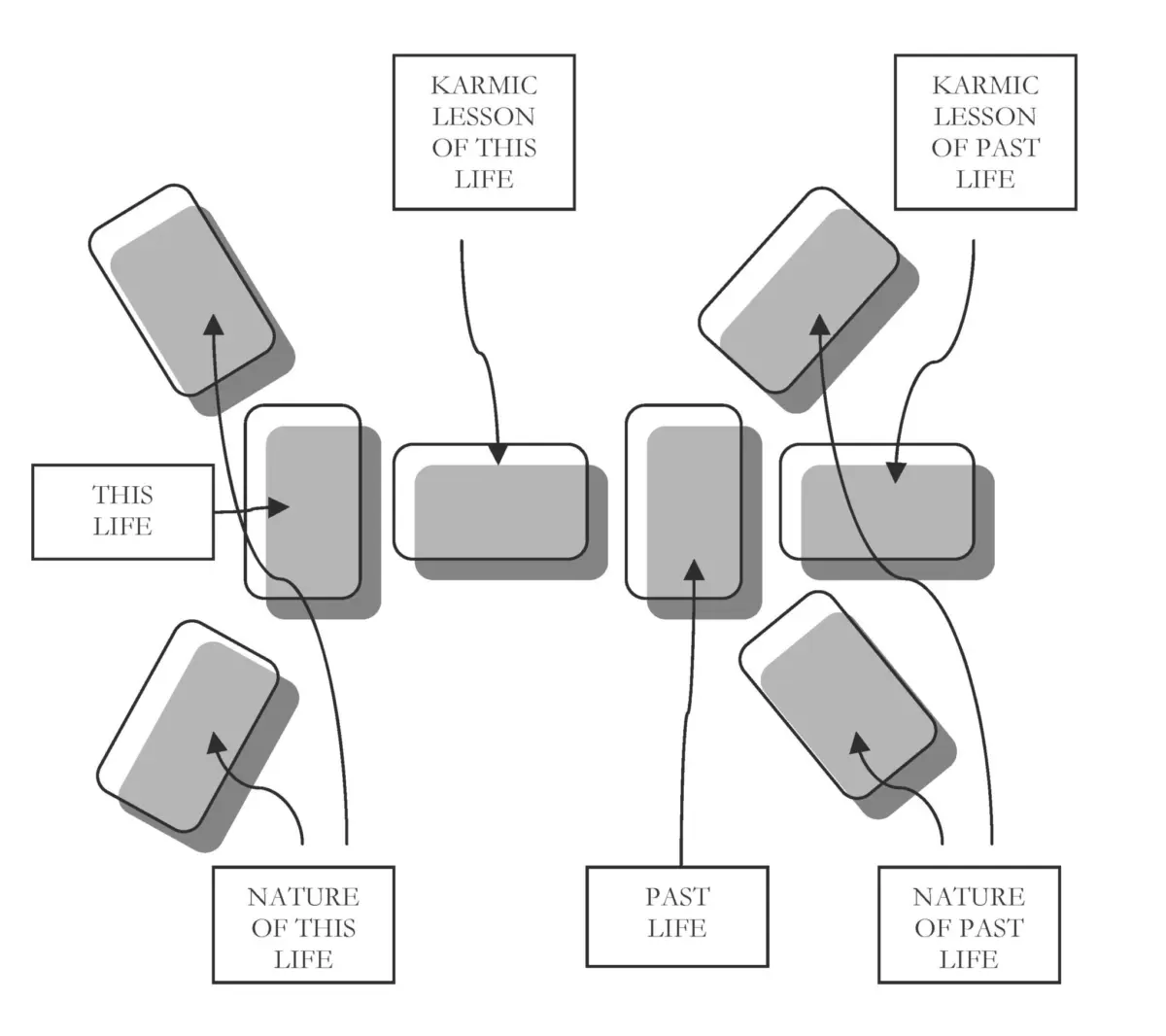
LONDON — In the ever-evolving landscape of esoteric practices and intuitive arts, a new methodology has emerged that bridges the gap between historical consciousness and contemporary self-reflection. Known as "Ancient Echoes," this innovative divination spread utilizes a specialized Tarosophy "split-deck" technique to investigate past lives and examine their direct, tangible bearing on modern existence. Developed within the broader framework of modern tarot philosophy, the practice has begun to attract attention from seasoned readers, holistic practitioners, and individuals seeking deeper psychological and spiritual frameworks to understand their personal narratives.
Unlike traditional, linear tarot spreads that address immediate futures or general advisory questions, Ancient Echoes transforms the standard 78-card deck into an archaeological tool for the psyche. By methodically categorizing the cards into distinct structural pillars—Court Cards, Major Arcana, and Minor Arcana—practitioners can construct a multi-layered genealogical map of the soul, tracing patterns of behavior, vocation, and karmic destiny across both current and preceding lifetimes.
Main Facts: Deconstructing the "Ancient Echoes" Framework
At its core, Ancient Echoes is designed to bypass superficial inquiries and dive straight into the foundational architecture of personal identity. The system relies on a foundational rule of Tarosophy: the intentional separation of the deck into three distinct stacks before any reading commences.
The primary mechanics of the layout depend on assigning specific energetic roles to each arcana category:
- Court Cards represent the psychological states, archetypes, and soul signatures of individuals—both in the present and in past incarnations.
- Minor Cards illustrate the day-to-day conditions, environments, mundane realities, and specific life circumstances.
- Major Arcana embody overarching spiritual themes, soul milestones, and karmic lessons that demand resolution.
The layout begins at the epicenter of the reader’s current reality. By drawing a single Court Card, the practitioner establishes the baseline: "This is the nature of my Soul in present-time." From there, two Minor Arcana cards are drawn and placed flanking the central Soul card to answer the defining question of the current incarnation: "This is the nature of my lifetime in this life."
What follows is a meticulously orchestrated expansion outward. By drawing a previous-life Court Card, pairing it with specific Minor Arcana to flesh out biographical details, and bridging the gap with Major Arcana karmic lessons, the spread transforms into a cascading lineage of historical identities. Practitioners are encouraged to look for recurring symbols, elemental dominant suits indicating historical vocations, and gender distributions among the court figures to breathe narrative life into the historical fragments.
Chronology: The Evolution of Tarosophy and Split-Deck Mechanics
To understand the genesis of Ancient Echoes, one must examine the historical evolution of modern tarot interpretation, often referred to as "Tarosophy." For centuries, tarot was viewed primarily either as a parlor game or as a closed esoteric system tied strictly to Golden Dawn Qabalah or traditional cartomancy.
The Shift Toward Modular Divination
In the late 20th and early 21st centuries, modern practitioners began experimenting with modular reading techniques. Rather than shuffling the entire 78-card deck blindly, innovative readers recognized that breaking the deck down into its constituent structural elements—Major, Minor, and Court cards—yielded a higher degree of granular clarity.
The Conceptualization of Past-Life Spreads
Historically, past-life readings relied heavily on astrological charts, hypnotic regression, or intuitive mediums. Tarot readers attempting past-life queries often struggled with cluttered spreads where the grand archetypes (Major Arcana) competed with mundane daily influences (Minor Arcana).
The introduction of the split-deck method solved this structural bottleneck. By isolating the Court Cards as representatives of incarnate personalities, developers of the Ancient Echoes technique created a consistent anchor point. Over the past several years, beta-testers within international tarot associations experimented with layering these stacks sequentially. The resulting methodology—officially codified into the Ancient Echoes protocol—allows readers to step backward through time iteratively, laying down a historical breadcrumb trail of successive incarnations anchored by recurring karmic themes.
Supporting Data: Structural Mechanics and Reading Protocols
Executing an Ancient Echoes reading requires precision, patience, and a structured workspace. Because the method relies on sequential layering rather than a single draw, practitioners must follow a strict procedural protocol to maintain narrative coherence.
Step-by-Step Execution Protocol
- Deck Segregation: Separate the complete tarot deck into three distinct stacks: Court Cards, Major Arcana, and Minor Arcana.
- The Present Soul Anchor: Shuffle the Court Card stack. Draw one card and place it centrally, reciting: "This is the nature of my Soul in present-time."
- The Current Incarnation: Shuffle the Minor Arcana stack. Draw two cards, placing them around the central Soul card, declaring: "This is the nature of my lifetime in this life."
- The Preceding Echo: Reshuffle the Court Card stack while meditating on the current life Minor cards. Draw one card, positioning it to the side (top, bottom, left, or right) of the Minor cards, and state: "This is an echo of my previous lifetime self."
- The Karmic Catalyst: Shuffle the Major Arcana stack. Select one card and place it directly between the present-time Court Card and the previous-life Court Card, affirming: "This is the Karmic lesson I must learn in this lifetime."
- Biographical Reconstruction: Shuffle the Minor Arcana stack once more, keeping the Karmic Lesson Major Card in mind. Draw two cards and place them against the previous-life Court Card, declaring: "This was the nature of that previous life." Use these cards to weave a cohesive narrative story of that historical existence.
Iterative Expansion and Pattern Recognition
The true depth of Ancient Echoes lies in its infinite scalability. Practitioners are not limited to a single past life. By taking the previous-life Court Card and drawing a new Karmic Lesson Major Card for it, the reader can step further back, working outwards in chronological "echoes" through an indefinite number of previous lifetimes.
Furthermore, advanced practitioners analyze structural metadata across the entire reading:
- Suit Analysis: Observing whether the previous life Minor cards are dominated by Wands (indicating labor, agriculture, or exploration), Cups (emotional, artistic, or religious vocations), Swords (military, legal, or intellectual pursuits), or Pentacles (commerce, trade, or craftsmanship).
- Karmic Alignment: Aligning all chosen Karmic Lesson Major cards in a sequential horizontal row to visually discern overarching evolutionary arcs, repeating soul lessons, or cyclical behavioral traps across centuries.
Official Responses and Expert Perspectives
The release of the Ancient Echoes framework has drawn varied reactions from the broader esoteric community, professional tarot readers, and psychological researchers interested in archetypal expression.
Endorsement from Esoteric Practitioners
Proponents of the method praise its psychological depth and narrative flexibility. Unlike deterministic divination systems that predict fixed futures, Ancient Echoes operates on a healing paradigm.
"By viewing past lives not as immutable historical facts, but as psychological mirrors constructed through archetypal language, users can untangle modern emotional blocks," notes one senior member of the international tarot community. "The split-deck mechanic prevents card fatigue and forces the reader to engage with specific layers of consciousness rather than getting overwhelmed by a chaotic, unified spread."
Skepticism and Critical Discourse
Conversely, skeptics and traditional cartomancers have raised questions regarding the subjective nature of the historical narratives generated through the process. Critics argue that weaving a story out of randomly drawn minor and major arcana cards relies heavily on confirmation bias and narrative projection rather than genuine metaphysical retrieval.
In response to these critiques, developers of Tarosophy emphasize that Ancient Echoes is best approached as an advanced creative visualization and therapeutic storytelling tool. Whether viewed through a literal lens of reincarnation or a psychological lens of Jungian archetypes and generational trauma, the utility of the method remains rooted in self-discovery and personal insight.
Implications: Psychological, Therapeutic, and Esoteric Impacts
The popularization of techniques like Ancient Echoes signals a broader shift in how divinatory tools are utilized in the 21st century. Moving away from fortune-telling and passive prediction, modern esoteric practices are increasingly tailored toward self-actualization, trauma-informed introspection, and narrative therapy.
Therapeutic Storytelling
By externalizing inner conflicts into historical "past-life" narratives, individuals who experience anxiety, recurring relational patterns, or existential stagnation can gain a safe psychological distance from their problems. Viewing a behavioral flaw not as an innate personal failure, but as an unresolved "Karmic Lesson" linked to a previous-life Court Card, allows individuals to rewrite their internal scripts with greater compassion and objectivity.
Future Outlook in Esoteric Education
As workshops and instructional guides detailing the Ancient Echoes split-deck method continue to circulate globally, educators anticipate that modular tarot techniques will become standard components of advanced intuitive training courses. By treating the tarot deck not as a flat book of answers, but as a modular database of human experience, practitioners are unlocking new dimensions of self-awareness that resonate across time, space, and consciousness.
