

By the Tarot Association Special Features Desk
Published: October 2024
Main Facts: A Fast, Engaging Tarot Technique Tailored for Gen Z
In an era defined by digital saturation, shrinking attention spans, and an ever-increasing demand for meaningful offline engagement, holistic practitioners are constantly seeking innovative ways to connect with the younger generation. Enter "The Four Pages," a streamlined, highly engaging Tarot reading technique specifically optimized for teenagers and young adults aged 14 to 19.
Developed more than a decade ago and rigorously road-tested across hundreds of face-to-face sessions—conducted strictly with parental permission—this method strips away the dense, esoteric complications of traditional 78-card spreads. Instead, it offers an accessible, empowering, and interactive experience designed to foster self-reflection, ambition, and emotional resilience.
At its core, "The Four Pages" utilizes the four Page cards from the Minor Arcana (traditionally representing youth, messages, and new beginnings) as a psychological mirror. By allowing the young participant to consciously select their own representative archetype, the reader establishes an immediate rapport. The deck is then shuffled, a card is drawn through a participatory stop-mechanism, and two surrounding cards are revealed: one indicating a lifelong ambition to strive for, and the other highlighting an innate inner strength to call upon during times of crisis.
By framing the exercise with a touch of theatrical flair—resembling a magic trick infused with intuitive guidance—practitioners have found remarkable success not only in one-on-one settings but also within lively group dynamics among teenagers eager for a turn.
Chronology: The Evolution of "The Four Pages" Method
To understand the enduring relevance of "The Four Pages" spread, it is helpful to trace its trajectory from an experimental concept to a trusted youth-engagement tool.
Phase 1: Inception and Early Trials (Mid-2010s)
Over ten years ago, veteran Tarot educators recognized a distinct gap in the market. Traditional Tarot spreads—such as the Celtic Cross or complex astrological layouts—were too slow, overly dense, and frequently alienated younger querents who were new to cartomancy. The objective was to design a micro-reading that took less than five minutes, required minimal setup, and spoke directly to the developmental milestones of adolescence: identity formation, peer pressure, educational horizons, and future aspirations.
Phase 2: Refinement and Safety Protocols (2015–2019)
As the technique was introduced to community workshops and private consultations, creators implemented strict ethical boundaries. Recognizing that minors require careful guardianship, practitioners mandated that all readings for individuals aged 14–19 be performed exclusively with explicit parental permission. Simultaneously, the phrasing used during the readings was meticulously refined. Negative prognostications were entirely discarded in favor of empowering, strengths-based coaching language.
Phase 3: Post-Pandemic Resurgence and Digital Adaptation (2020–Present)
Following the global pandemic, youth mental health professionals reported a surge in anxiety, existential dread, and social isolation among teenagers. Holistic mentors revived "The Four Pages" as a tangible, screen-free intervention. Its theatrical delivery—blending the wonder of a magic trick with profound psychological introspection—proved exceptionally effective at breaking down adolescent emotional barriers, leading to widespread adoption in youth mentoring circles, holistic fairs, and family living rooms alike.
Supporting Data: The Mechanics of the Spread
To execute "The Four Pages" reading effectively, practitioners follow a precise, step-by-step methodology designed to maximize engagement and personal agency.
Step-by-Step Breakdown of the Technique
- Extraction of the Pages: The reader removes the four Page cards (Page of Wands, Page of Cups, Page of Swords, and Page of Pentacles) from a standard 78-card Tarot deck, setting the rest of the deck aside temporarily.
- Identity Selection: The four Pages are laid before the young person. They are asked to select the Page that best resonates with their personality, current mood, or aspirations. This chosen card will represent them.
- Reshuffling: The remaining three unselected Pages are returned to the deck. The reader takes the young person’s chosen Page, shows it to them, and sets the narrative context: "This is you, walking into the future. Let the cards show us something that will always help you in your life, and something that you should set your sights on."
- The Draw: The Page is placed back into the deck, which is then thoroughly shuffled. The young person is asked to say "stop" at any point during the shuffling process.
- The Reveal: The reader turns the deck face up and searches for the young person’s Page, handing the card directly to them to hold.
- Interpretation of Surrounding Influences:
- The Card Above: Represents the ambition or goal they should frame their life around—an expansive horizon to aim for.
- The Card Below: Represents an invisible support system, an innate resilience or coping mechanism they can always rely on when facing adversity.
Practical Example from the Field
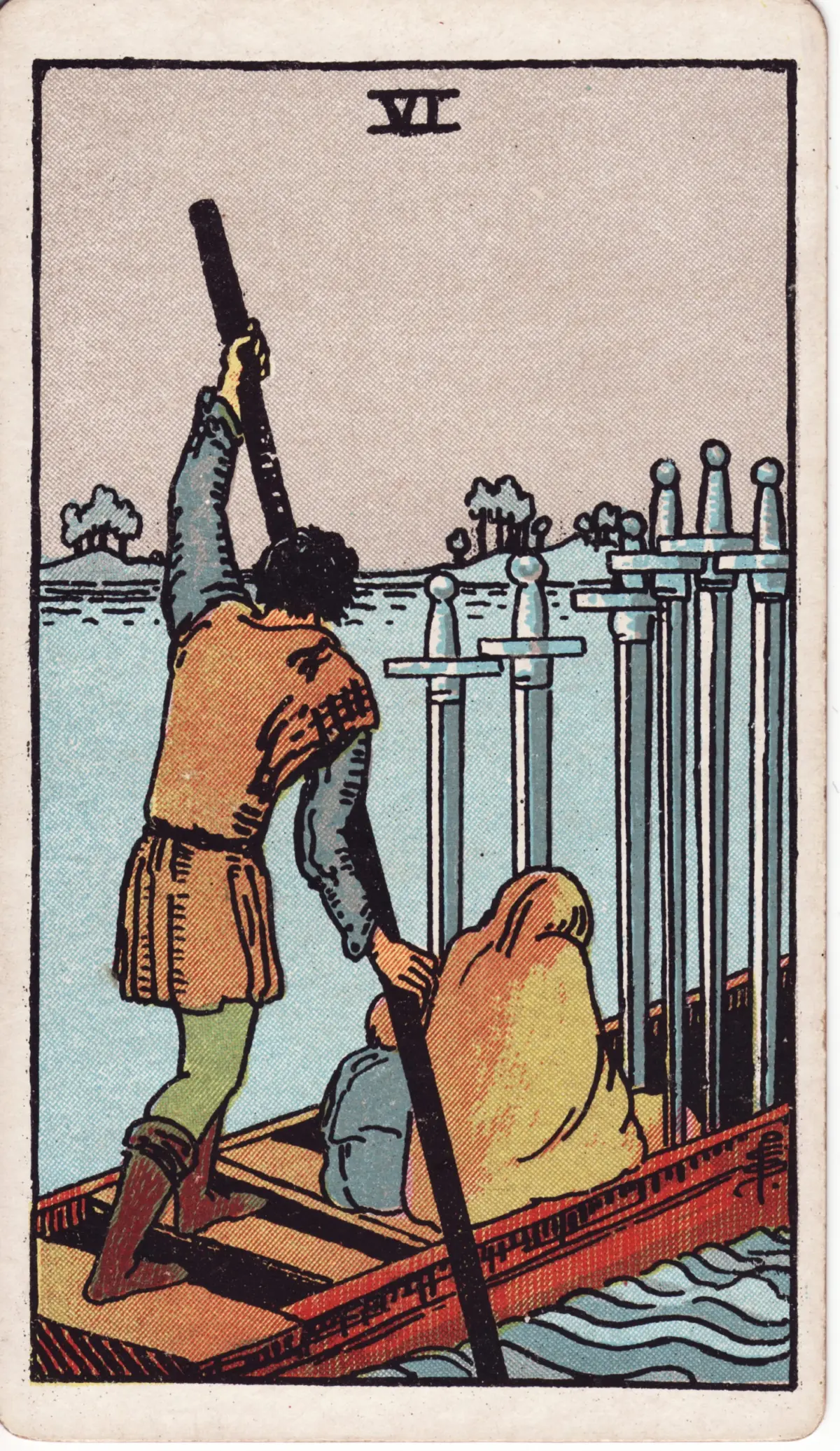
In a typical reading, suppose the young person’s Page is placed back into the deck and the shuffle reveals the Six of Swords positioned directly above their card, and the Seven of Wands positioned directly below.

The practitioner interprets this with uplifting clarity:
"Ah! You have the Six of Swords above you in life—this shows you should always go the distance, go out into the world and travel—or expand your horizons through learning and education. Get out there! Then you have the Seven of Wands carrying you through life. This shows you will always be able to keep your balance despite opposition. When the going gets tough, you will be able to stand your ground. Never forget this card. These two cards are your invisible friends in your life."
Official Responses and Expert Perspectives
The reception of "The Four Pages" within the broader esoteric and youth mentoring communities has been overwhelmingly positive. Educational psychologists, youth workers, and professional Tarot readers have weighed in on why the method succeeds where other modalities fail.
Youth Mentors and Holistic Practitioners
According to veteran Tarot instructors, teenagers today respond poorly to authoritarian or overly deterministic forms of divination. They do not want to be told what will happen; they want tools that help them figure out who they are and how they can navigate an uncertain world.
"By letting the teenager choose their own Page, we instantly validate their sense of self-determination," notes one senior Tarot Association contributor. "They aren’t passive recipients of a message dictated by fate; they are active co-creators of the reading from second one."
Ethical Considerations and Parental Consent
Child welfare advocates have praised the strict adherence to parental consent protocols. Because working with minors in esoteric spaces requires absolute transparency, the rule requiring parental permission ensures that families remain aligned. Furthermore, the framing of the cards as "invisible friends" and actionable life strategies steers clear of fatalism, transforming potential anxiety triggers into constructive coaching moments.
The Power of Performance
Magicians and stage mentalists who have integrated Tarot into their acts note that the "magic trick" aspect is vital. Adolescence is a phase where intellectual curiosity meets a desire for mystery. By presenting the search through the shuffled deck with theatrical flair, the reader bridges the gap between entertainment and profound personal insight, capturing the attention of even the most skeptical teenagers.
Implications: Fostering Resilience in Gen Z Through Esoteric Tools
The success of "The Four Pages" points to a broader cultural shift in how ancient wisdom traditions are being repurposed for modern psychological and developmental needs. As traditional institutional structures evolve, young people are increasingly turning to alternative frameworks—including astrology, mindfulness, and Tarot—to construct personal meaning and emotional resilience.
1. Combating Decision Fatigue and Anxiety
Modern teenagers face unprecedented pressure regarding academic performance, career choices, and social media validation. "The Four Pages" acts as a low-stakes mirror, cutting through the noise of daily stressors to highlight core ambitions (the card above) and internal coping mechanisms (the card below). By externalizing these concepts into tangible archetypes, youth can conceptualize their goals and fears more objectively.
2. Group Bonding and Social Connection
When performed in group settings—such as classrooms, youth clubs, or birthday gatherings—the spread transforms from an individual consultation into a shared communal experience. As young people watch their peers receive uplifting, personalized insights, curiosity spreads organically. This shared vulnerability fosters empathy, active listening, and deeper peer connections.
3. The Future of Youth Mentorship
As holistic practices continue to integrate into youth wellness initiatives, methods like "The Four Pages" demonstrate that ancient divinatory tools do not need to be watered down to be effective; rather, they need to be thoughtfully curated, ethically bounded, and creatively delivered. By speaking the language of empowerment, adventure, and resilience, this ten-year-old technique remains a gold standard for engaging the next generation.
