

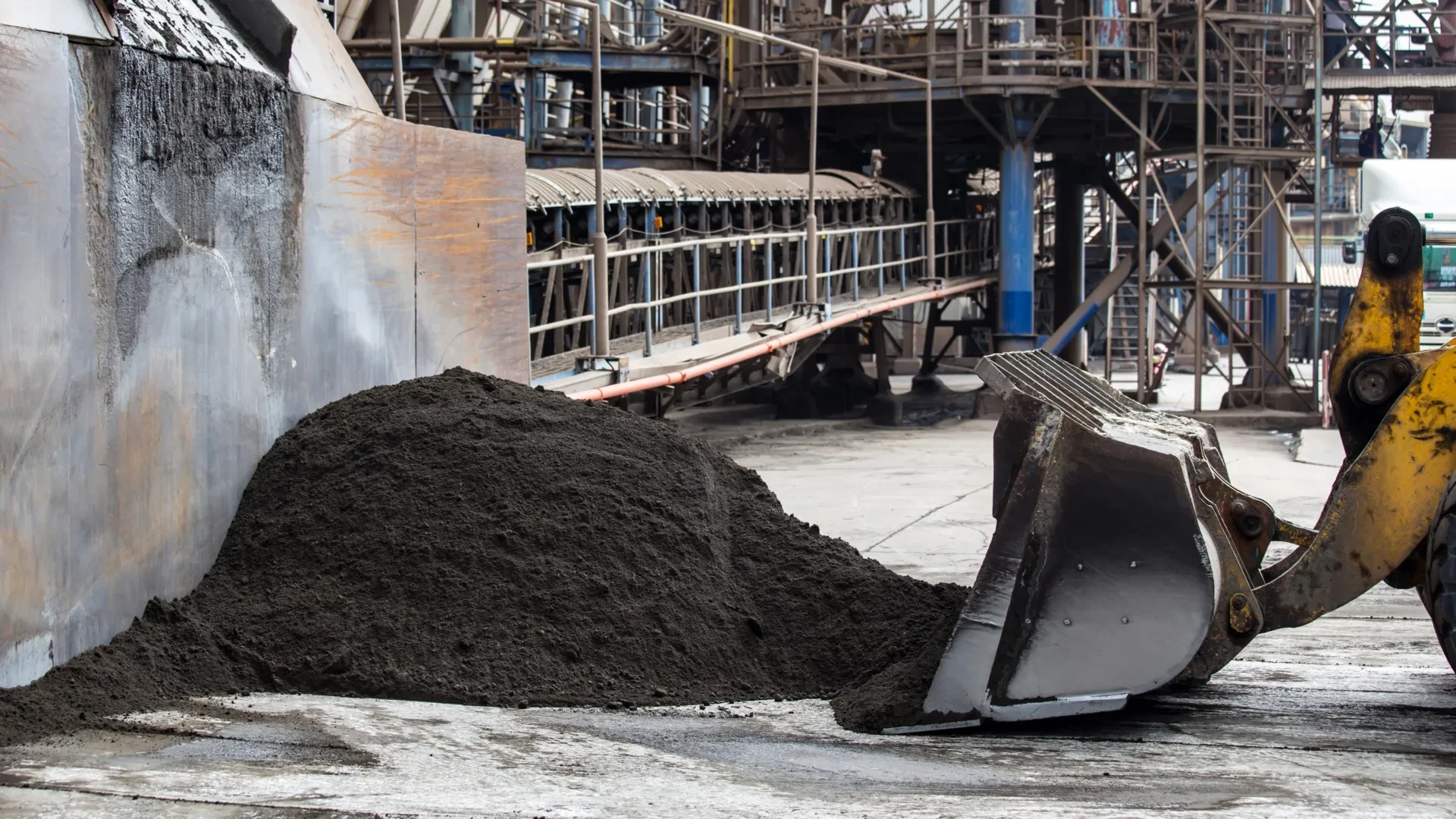
WORCESTER, Mass. — For over a century, the footprints of heavy industry have been measured not just by the products they manufacture, but by the colossal mountains of waste they leave behind. Coal ash from power plants, red mud from aluminum refining, and mine tailings from mineral extraction have long been treated as hazardous ecological burdens. These massive, slate-gray waste streams are frequently confined to sprawling landfills, toxic ponds, and heavily monitored impoundments, posing perpetual threats to surrounding ecosystems and local water tables.
Yet, a fundamental shift in perspective is quietly taking root within the scientific community. To a multidisciplinary team of researchers spearheaded by Worcester Polytechnic Institute (WPI), these industrial waste sites are no longer viewed merely as environmental liabilities. Instead, they are being re-envisioned as rich, untapped urban mines. Hidden within these discarded byproducts are massive quantities of silica, high-value rare earth elements (REEs), and other critical minerals essential for modern technology.
To unlock these resources, the National Science Foundation (NSF) has awarded the WPI-led team a prestigious $3.3 million grant through its highly competitive Growing Convergence Research program. Over the next five years, this funding will fuel a concerted, cross-institutional effort to determine whether the subtle, elegant biological strategies employed by microscopic algae, marine invertebrates, and terrestrial flora can be harnessed to extract these critical materials—doing so with a fraction of the energy and a fraction of the harsh chemicals required by traditional industrial processing.
Main Facts
The initiative brings together an elite coalition of researchers from institutions across the United States, including George Mason University, the University of California San Diego, the University of Massachusetts Amherst, and the University at Buffalo.
At its core, the project seeks to solve two interconnected industrial bottlenecks: the high environmental and financial cost of producing silicon-derived materials, and the staggering loss of valuable, critical elements trapped within industrial waste. Silicon-based materials—crucial for everything from structural concrete and glass to advanced semiconductors, ceramics, and silicones—typically demand punishing manufacturing conditions. They require blistering high temperatures, immense energy inputs, and aggressive chemical processing. Simultaneously, industries discard millions of tons of silicon-rich waste, such as metallurgical slag, construction debris, and coal combustion residuals.
Rather than relying on brute-force pyrometallurgy or toxic acid leaching to recover these elements, the research team is looking to nature. Diatoms (single-celled algae), sea sponges, and various plants routinely manipulate dissolved silica and minerals under ambient, low-energy conditions using specialized biomolecules and organic scaffolds. By reverse-engineering these natural mechanisms, the scientists hope to develop a "whole-material" recovery approach. This method aims not only to isolate high-value rare earth elements, but also to structurally transform the residual silica into marketable, high-grade products, minimizing waste to near zero.
Chronology of the Initiative
The path toward this ambitious five-year convergence project represents the culmination of years of individual materials science, geochemical, and biotechnological research across multiple laboratories.
- Pre-2023 (Foundational Research): Individual researchers—including WPI’s Mingjiang Tao, Carrick Eggleston, and Yan Wang—begin exploring the boundaries where biology intersects with mineralogy and sustainable manufacturing. Early concepts emerge regarding how biological catalysts might manipulate silicate structures or liberate trace metals from solid matrices.
- Late 2023 to Early 2024 (Consortium Assembly): Recognizing that the complexity of industrial waste streams cannot be solved by a single discipline, Tao and his colleagues begin forging partnerships across geographic and institutional lines. They recruit experts in artificial intelligence, geochemistry, computational chemistry, and bio-enabled metallurgy from George Mason, UC San Diego, UMass Amherst, and the University at Buffalo.
- Mid-2024 (Proposal and Peer Review): The multidisciplinary team submits a comprehensive proposal to the National Science Foundation’s Growing Convergence Research program, emphasizing the fusion of artificial intelligence, biotechnology, and civil engineering.
- Late 2024 (The $3.3 Million Award): The NSF officially approves and funds the five-year, two-phase initiative, providing the financial backing necessary to transition the concept from theoretical modeling to laboratory experimentation and, ultimately, scalable industrial design.
- 2025–2029 (The Five-Year Execution Horizon):
- Phase One: Focuses heavily on computational modeling, AI-driven biomolecule design, and fundamental explorations of biosilicification and silicate dissolution pathways.
- Phase Two: Transitions toward optimizing bio-enabled metallurgy, scaling the recovery processes, and evaluating the commercial viability of transforming waste-derived silica into industrial products.
Supporting Data: The Hidden Wealth in Our Landfills
The scale of the opportunity is staggering, both economically and environmentally. According to recent scientific assessments, the physical volume of silicon-rich and metal-bearing waste generated globally is accelerating alongside urbanization and energy demands.
Consider the following metrics shaping the urgency of the project:
- $8.4 Billion in Untapped Reserves: One prominent academic estimate suggests that U.S. coal ash landfills alone harbor approximately 11 million tons of trapped rare earth elements. At current market valuations, this localized waste inventory is worth roughly $8.4 billion—nearly eight times the volume of the nation’s current raw domestic rare earth reserves.
- Critical Mineral Vulnerability: Rare earth elements (such as neodymium, dysprosium, and yttrium) alongside critical minerals like lithium, cobalt, and specialized silicon components, are the foundational building blocks of the 21st-century economy. They are indispensable for electric vehicle motors, wind turbine generators, consumer electronics, defense guidance systems, and medical imaging devices.
- The Energy Cost of Silicon: Standard industrial synthesis of pure silicon and silicate derivatives often operates at temperatures exceeding 1,000 degrees Celsius, relying on carbon reductants and generating significant greenhouse gas emissions. In contrast, biological organisms construct intricate, nanoscale glass and silica frameworks at ambient temperatures using seawater and soil nutrients.
- Multidisciplinary Integration: The NSF grant directly supports a multi-institutional network spanning at least five major universities, integrating undergraduate and graduate students into immersive STEM research experiences designed to cultivate the next generation of sustainability innovators.
Official Responses and Leadership Insights
The leadership team behind the project emphasizes that the initiative is designed to transcend incremental waste management, aiming instead for a systemic redesign of how industrial societies source raw materials.
"Recovering critical minerals is only part of the opportunity," said Mingjiang Tao, associate professor in the WPI Department of Civil, Environmental, and Architectural Engineering and the project’s lead principal investigator. "We want to develop a process that uses as much of each waste stream as possible, separating strategically important elements while converting the remaining material into useful products. That whole-material approach could fundamentally change how industries manage waste and obtain essential resources."
Tao, whose primary research centers on geo-environmental engineering and biosilicification, will coordinate the overarching project while directing investigations into how organisms naturally precipitate silica and how those biological pathways can be scaled for industrial metal recovery.
Accompanying Tao are two key co-principal investigators whose distinct expertise forms the backbone of the technical strategy:
- Dr. Carrick Eggleston: A professor in WPI’s Department of Civil, Environmental, and Architectural Engineering with deep expertise in geochemistry, Eggleston is spearheading the effort to decode and optimize the chemical kinetics of silicate breakdown and reconstruction. His work examines intricate reaction pathways, dissolution rates, repolymerization, carbonation, glass formation, and silicone synthesis. "Understanding how natural systems coax silicon out of stable minerals gives us a chemical roadmap," Eggleston notes. "By translating those natural rates into engineered reactors, we can bypass the extreme heat typically required for these materials."
- Dr. Yan Wang: The William B. Smith Professor of Mechanical and Materials Engineering at WPI, Wang is widely recognized as a pioneer in battery recycling and sustainable manufacturing. Within this project, Wang leads the charge on developing bioengineered metallurgical techniques designed to selectively mine rare earth elements and critical metals from the dissolved waste matrices. "We are bridging the gap between molecular biology and industrial-scale metallurgy," Wang explains. "If we can engineer proteins or biomolecules that act as molecular magnets for specific rare earth ions, we can purify these elements with unprecedented precision and minimal environmental toxicity."
Implications: A New Ecosystem for Sustainable Materials
If successful, the implications of this five-year research endeavor extend far beyond the laboratory benches at WPI and its partner universities. The project represents a vital stepping stone toward a circular bioeconomy—an economic model where industrial waste streams are systematically looped back into high-tech manufacturing chains.
Mitigating Geopolitical Supply Risks
Currently, the global supply chain for rare earth elements and critical minerals is heavily concentrated in a small number of foreign nations, leaving Western economies vulnerable to supply disruptions, export quotas, and price volatility. By proving that millions of tons of domestic coal ash and industrial slag can be profitably and cleanly mined for these exact elements, the WPI-led initiative offers a pathway toward domestic resource independence. Securing a reliable, home-grown supply of critical minerals is considered a matter of national security and economic resilience.
Decarbonizing Materials Science
The environmental footprint of traditional materials production is immense. By adopting bio-inspired processing methods that operate at ambient temperatures and eliminate the need for concentrated, hazardous acids, industries could drastically lower their carbon emissions. Transforming waste silica into commercially viable products—such as specialized cements, insulation, or silicon precursors—further closes the loop, turning an ongoing economic and environmental liability into a self-sustaining asset.
Fostering Cross-Disciplinary Innovation
Beyond technical deliverables, the grant aims to build a broader, collaborative ecosystem. By connecting geochemists, biologists, materials scientists, data analysts, and artificial intelligence specialists with industry partners, policymakers, and educators, the initiative lays the institutional groundwork for future commercialization.
As the research team deploys advanced AI models to accelerate the discovery of designer biomolecules, they are establishing a digital-biological toolkit that can be adapted to new classes of industrial waste. For the students participating through WPI’s immersive STEM programs, the project offers a front-row seat to the future of engineering—where nature’s ancient ingenuity provides the solutions for modern humanity’s most complex ecological challenges.
