

By Global Science Correspondent
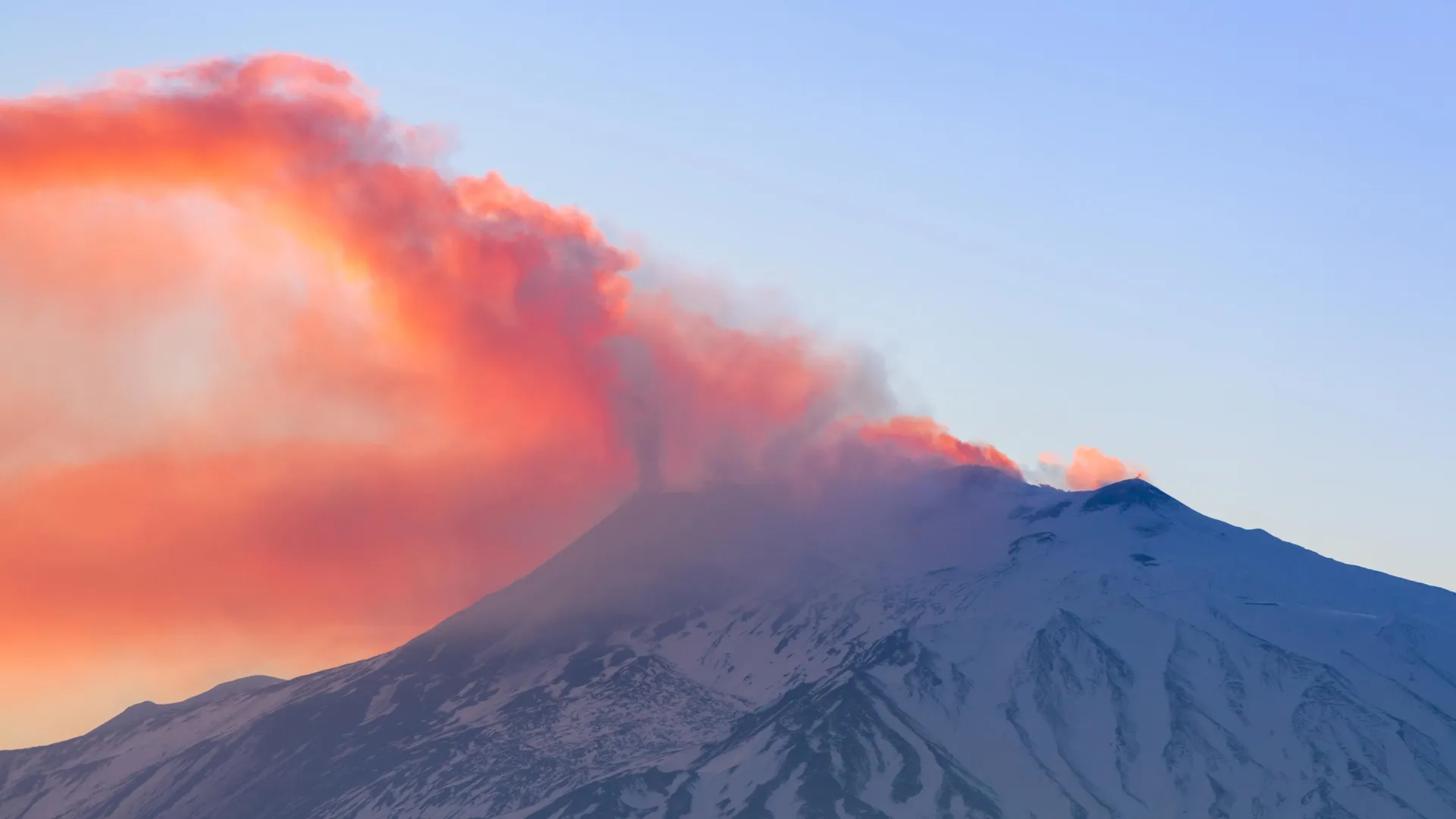
For centuries, Mount Etna has loomed large over the rugged eastern coast of Sicily, a towering monument to the raw, untamed power of the Earth. As Europe’s most active and voluminous volcano, Etna erupts with staggering regularity—spewing fountains of incandescent lava, billowing ash into the stratosphere, and captivating millions of tourists, photographers, and vulcanologists alike. Standing more than 3,000 meters (9,800 feet) above the Mediterranean Sea, this massive stratovolcano boasts a recorded history of activity spanning more than half a geological million years.
Yet, despite intense academic scrutiny, sophisticated satellite monitoring, and countless expeditions into its treacherous calderas, Mount Etna has long presented the scientific community with an intractable geological enigma. It steadfastly refused to fit into the neatly ordered boxes of classical plate tectonics.
Now, an international team of researchers—spearheaded by the University of Lausanne (UNIL) in Switzerland, in close collaboration with Anna Rosa Corsaro of the Istituto Nazionale di Geofisica e Vulcanologia (INGV) in Catania, Italy—has proposed a revolutionary explanation. Published in the Journal of Geophysical Research — Solid Earth, their study suggests that Mount Etna may have formed through a rare, highly unconventional volcanic process. If validated, this mechanism would make Etna entirely unique among the world’s major volcanic systems, potentially representing a massive, scale-magnified version of a rare geological phenomenon previously thought restricted to tiny submarine anomalies.
Main Facts: The Geological Rebel of the Mediterranean
To understand why Mount Etna has baffled generations of geologists, one must first look at the conventional framework of volcanology. For decades, standard textbook models have classified nearly all the world’s volcanoes into three distinct categories based on how and where their underlying magma is generated:
- Divergent Plate Boundaries (Mid-Ocean Ridges): Here, tectonic plates pull apart from one another, allowing magma from the mantle to passively rise and fill the gap, creating vast underwater mountain chains like the Mid-Atlantic Ridge.
- Convergent Plate Boundaries (Subduction Zones): When a dense oceanic plate collides with and slides beneath a lighter continental (or younger oceanic) plate, it plunges into the mantle. The intense heat and pressure, combined with the release of trapped water and volatiles, melt the surrounding rock, generating explosive arc volcanoes—such as those found along the infamous Pacific "Ring of Fire."
- Mantle Hotspots: These are localized columns of exceptionally hot magma originating deep within the Earth’s mantle, completely independent of plate boundaries. As tectonic plates slowly drift over these stationary thermal anomalies, they form chains of volcanoes, such as the Hawaiian archipelago or Iceland.
Mount Etna, however, gleefully breaks every rule in this established playbook. Geographically, it sits in a highly complex tectonic setting near a major convergent boundary where the African tectonic plate is actively subducting beneath the Eurasian plate. By all traditional logic, Etna should behave like a standard subduction-zone volcano, producing calc-alkaline lava rich in silica and characterized by violent, explosive eruptions.
Instead, Etna’s chemical fingerprint tells a completely different story. The elemental and isotopic makeup of its basaltic lava closely mirrors that of volcanoes fed by deep mantle hotspots—even though seismological and geophysical data confirm that no mantle hotspot exists beneath Sicily.
Furthermore, while subduction-zone magmas typically require complex melting processes triggered by fluids released from sinking slabs just moments before an eruption, Etna’s magma appears to have a completely different pedigree. It possesses a remarkably stable chemical composition that has remained largely uniform across 500,000 years of continuous activity, completely indifferent to the shifting tectonic stresses and environmental changes occurring in the crust around it.
Chronology: Unraveling Etna’s Half-Million-Year History
The puzzle of Mount Etna is not merely modern; it is deeply rooted in the ancient tectonic history of the Mediterranean basin, a region shaped by the relentless collision between Africa and Europe.
Phase 1: The Prehistoric Roots (500,000 – 100,000 Years Ago)
Geological evidence indicates that volcanic activity in the region began approximately 500,000 years ago. Long before the towering cone of modern Etna dominated the Sicilian skyline, submarine eruptions occurred off the ancient coastline in a shallow gulf. Over millennia, successive layers of basaltic lava built up on the seafloor, eventually emerging above sea level and transitioning into subaerial volcanic activity. Throughout this early phase, the chemical composition of the erupted material remained remarkably constant—a stubborn geological fingerprint that puzzled researchers attempting to link it to the local subduction zone.
Phase 2: The Modern Stratovolcano Takes Shape (100,000 – 10,000 Years Ago)
As the African plate continued its slow, inexorable northward push against Eurasia, the structural architecture of eastern Sicily became severely fractured and faulted. The ancient volcanic centers gradually migrated inland, consolidating into the massive, central edifice recognized today. Despite major structural collapses, massive flank eruptions, and alternating periods of effusive and explosive activity, the volcano continued to draw from the same mysterious, deep-seated magma reservoir, defying standard models of magma generation.
Phase 3: The 2006 Discovery of "Petit-Spot" Volcanism
While Etna continued its rhythmic rumblings in Italy, a parallel scientific breakthrough occurred halfway across the globe. In 2006, Japanese geologists analyzing the northwestern Pacific Ocean discovered an entirely new and unexpected type of volcanism. Dubbed "petit-spot" volcanoes, these tiny, isolated submarine mounds—often rising no more than a few hundred meters from the abyssal seafloor—defied conventional plate tectonics.
Researchers realized that these small volcanic structures were not fed by traditional plumes or subduction melting. Instead, they were being nourished by small, pre-existing pockets of melt trapped near the base of the lithosphere (the rigid outermost shell of the Earth). As the massive Pacific tectonic plate drifted and flexed over the underlying asthenosphere, the plate bent, creating micro-fractures. These fractures acted as natural plumbing systems, squeezing the pre-existing melt upward through the crust like liquid oozing from a compressed sponge.
For nearly two decades, petit-spot volcanism was viewed strictly as a geographical curiosity—a minor, localized phenomenon responsible for creating diminutive submarine bumps in the deep ocean, far removed from major tectonic margins.
Phase 4: The 2024 UNIL Breakthrough
The pivotal moment arrived when researchers at the University of Lausanne, combining decades of field data with advanced geochemical modeling, decided to re-evaluate Etna’s magma source through the lens of petit-spot mechanics. Led by Professor Sébastien Pilet, the research team analyzed rock samples spanning Etna’s entire 500,000-year history. By reconstructing the chemical evolution of the lava and comparing it against rigorous high-pressure melting experiments, the team arrived at a startling conclusion: Mount Etna may actually be a giant, terrestrial manifestation of petit-spot volcanism.
Supporting Data and Methodology: Inside the Lausanne Study
To test their audacious hypothesis, Professor Pilet’s team adopted a multi-disciplinary approach, blending rigorous geochemical analysis with structural geodynamics.
Geochemical Reconstruction
The researchers gathered and analyzed comprehensive suites of lava and tephra samples representing the entire chronological lifespan of Mount Etna. By examining trace elements, rare earth elements, and radiogenic isotopes within the mineral crystals (such as olivine and pyroxene), the team mapped out the chemical trajectory of the magma over half a million years.
The results were striking: despite profound regional tectonic shifts—including changes in plate convergence rates, crustal thickening, and the rotation of the Calabrian Arc—the chemical composition of Etna’s source magma showed virtually no long-term drift. This chemical stability strongly indicated that the magma was not being freshly generated on-demand by unstable subduction processes, but was instead being harvested from a pre-existing, long-lived reservoir.
Locating the Hidden Magma Source
Where does this magma reside? Based on geophysical and petrological modeling, the UNIL team proposes that Mount Etna is supplied by countless tiny pockets of melt residing in the upper mantle, situated approximately 80 kilometers (50 miles) beneath the surface.
In typical subduction-zone volcanoes, magma is generated dynamically just before an eruption through the flux-melting of mantle wedge rocks. At Etna, however, the magma pockets appear to have formed long before eruption, remaining stagnant and preserved within the upper mantle for extended periods.
The Tectonic "Sponge" Mechanism
How do these deep mantle pockets reach the surface? The answer lies in the intense tectonic collision between the African and Eurasian plates. As the African plate drives downward beneath Sicily, it experiences bending and flexure. This mechanical stress opens up deep crustal fractures and fault networks.
According to the study, these tectonic movements gently squeeze the upper mantle, forcing the pre-existing pockets of melt upward through the lithosphere. The process is remarkably analogous to a saturated sponge being compressed by hand. This physical squeezing mechanism effortlessly explains both Etna’s high eruption frequency and its anomalous geochemical signature.
Official Responses and Expert Perspectives
The publication of the study in the Journal of Geophysical Research — Solid Earth has sent ripples through the international vulcanology community, challenging deeply ingrained dogmas and opening exciting new avenues for research.
Dr. Sébastien Pilet, lead author and Professor at the Faculty of Geosciences and Environment at the University of Lausanne, emphasized the sheer scale of the anomaly during a press statement discussing the findings:
"Our study suggests that Etna may have formed through a mechanism similar to the one that generates petit-spot submarine volcanoes," Pilet explained. "This is unexpected, as such processes had previously only been observed in very small volcanic structures, typically rising no more than a few hundred meters. Mount Etna, by contrast, is a large stratovolcano, whose activity began around 500,000 years ago and which now towers more than 3,000 meters above sea level."
The research was conducted in close partnership with renowned Italian vulcanologist Anna Rosa Corsaro of the Istituto Nazionale di Geofisica e Vulcanologia (INGV) in Catania. Stationed in the shadow of the smoking volcano, INGV researchers monitor Etna’s volatile moods on a 24/7 basis. Corsaro and her colleagues played an instrumental role in providing geological context and local data samples that anchored the theoretical models in physical reality.
While peer review and lively academic debates are ongoing, many independent geologists have praised the study’s ingenuity. By bridging the gap between micro-scale submarine volcanism and macro-scale continental stratovolcanoes, the Lausanne team has provided a unified framework that solves several long-standing geochemical paradoxes.
Implications: Rewriting Textbooks and Improving Hazard Assessments
The ramifications of the UNIL study extend far beyond theoretical academic debates; they carry tangible, real-world consequences for the safety of millions of people living across Sicily.
1. Expanding the Geochemical Paradigm
If Mount Etna is indeed fueled by a petit-spot-like mechanism, it forces geologists to acknowledge that petit-spot volcanism is not merely a localized oceanic novelty. Instead, it may represent a fundamental, under-recognized category of volcanism—a fourth major type of volcano that can occur on continental crust and scale up to produce massive, towering edifices. This realization will prompt researchers worldwide to re-examine other mysterious volcanic systems that do not fit standard hotspot or subduction models.
2. Enhanced Volcanic Hazard Assessments
For the scientists at INGV in Catania, understanding the true plumbing system of Mount Etna is a matter of public safety. Sicily is densely populated around the base of the volcano, with major cities like Catania and numerous agricultural towns constantly exposed to the hazards of lava flows, ballistic projectiles, ash falls, and flank collapses.
By clarifying that Etna draws from pre-existing mantle pockets driven by tectonic squeezing rather than rapid, unpredictable mantle wedge melting, vulcanologists can refine their monitoring models. While this does not mean eruptions can be predicted with absolute calendar precision, it provides a more accurate physical model of how magma ascends through the crust. This deeper understanding enhances long-term hazard assessments, improves eruption forecasting tools, and aids civil protection agencies in planning evacuation routes and emergency responses.
Conclusion
Mount Etna has watched over human civilization in the Mediterranean for millennia, inspiring awe, myth, and scientific inquiry in equal measure. For decades, it stood as an inconvenient truth for geologists—a magnificent volcanic giant that stubbornly refused to play by the rules of classical plate tectonics.
Thanks to the pioneering research from the University of Lausanne and the Istituto Nazionale di Geofisica e Vulcanologia, the veil of mystery surrounding Etna is finally beginning to lift. By linking the majestic Sicilian stratovolcano to the humble mechanics of petit-spot volcanism, scientists have taken a monumental leap forward in our comprehension of the Earth’s fiery interior. As researchers begin searching for similar geological fingerprints across the globe, Mount Etna firmly secures its status not only as Europe’s most active volcano, but as one of the most scientifically significant geological wonders on our planet.
