

Published September 18, 2026
For ultralight backpackers, every single gram matters. The philosophy of shaving ounces often transforms packing lists into minimalist exercises in restraint, where multi-use items reign supreme and nonessentials are ruthlessly purged. Among the most contentious items in this calculus is the book.
While a novel provides invaluable psychological comfort, helping hikers pass grueling hours trapped in a tent during a torrential downpour or unwind after a punishing 20-mile day, standard reading material carries a heavy penalty. Paperbacks weigh too much, and traditional e-readers like the Amazon Kindle, while lighter, still demand precious space and weight budgets that purists prefer to allocate elsewhere. Consequently, many dedicated bookworms resign themselves to digital silence on the trail.
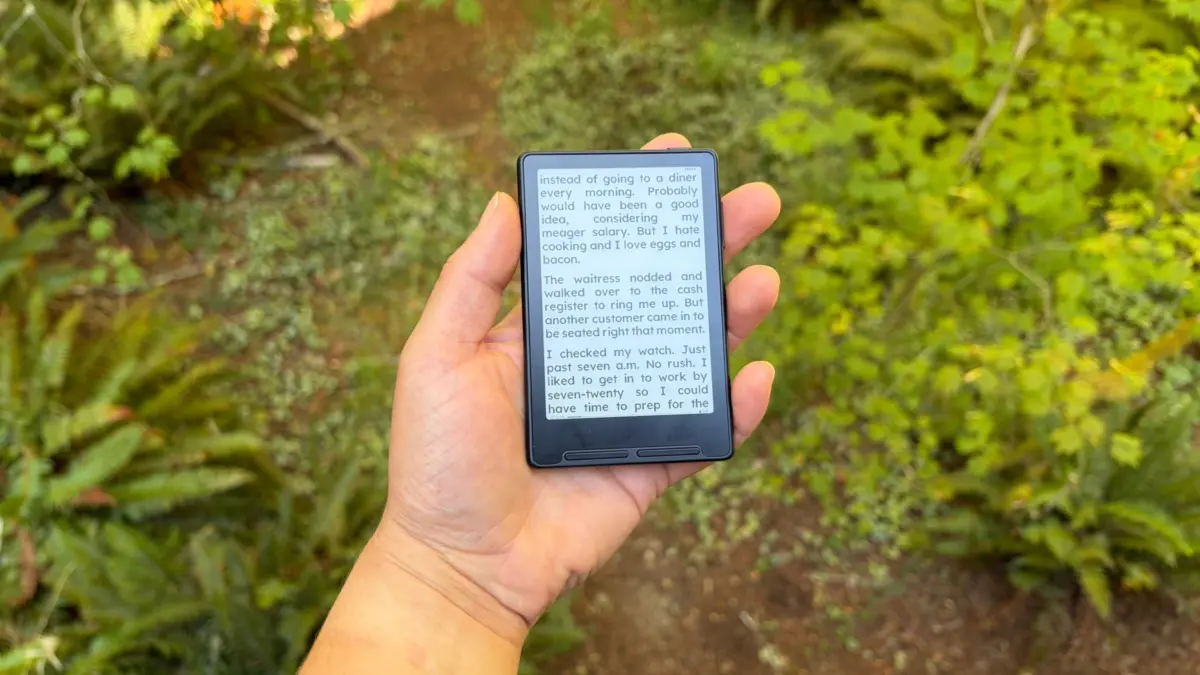
Enter the Xteink X3—a pocket-sized e-reader that is fundamentally disrupting the debate. Weighing in at a mere 58 grams and boasting a footprint roughly the size of a standard playing card, the X3 is small and light enough to convince even the most radical ultralight gatekeepers to carve out space in their packs. But does this micro-device truly hold up against the punishing realities of the backcountry, or is it merely an engineered novelty built for urban commuters rather than rugged trails?
Main Facts: Anatomy of the Xteink X3
To understand the appeal of the Xteink X3 to the outdoor community, one must first look at its staggering specifications. Manufactured by the Chinese electronics brand Xteink, the X3 was primarily designed for everyday urban carry—conceptually built to slide effortlessly into a pocket or attach magnetically to the back of a smartphone, offering users a dedicated screen for quick reading sessions instead of mindless phone-scrolling.
However, its physical dimensions accidentally make it a dream-come-true for backcountry minimalists:
- Dimensions & Surface Area: The device features a 3.7-inch e-ink display, comparable in surface area to a single playing card.
- Thickness: At just 5.1 millimeters thick, it is remarkably slim.
- Weight: It tips the scales at a feather-light 58 grams—roughly equivalent to a single Snickers bar. Crucially, this is less than half the weight of the lightest mainstream Kindle currently available on the market.
- Battery Life: Xteink claims the battery can endure 10 to 14 days of consistent use based on one to two hours of daily reading. Field testing confirms that casual readers will struggle to drain the battery over a standard weekend or multi-day backpacking trip.
- Price Point: At an affordable $69, it sits well below the cost threshold of high-end tablets and premium e-readers.
Despite these impressive stats, the device comes with distinct design compromises. It features no touchscreen, relying instead on a physical array of four buttons for page-turning and navigation. It also lacks a built-in front light, meaning nighttime reading requires a traditional headlamp. Finally, it completely lacks the water resistance found in many modern, full-sized e-readers.
Chronology: Putting the Micro E-Reader to the Ultimate Field Test
When outdoor gear testers first laid eyes on the X3, the immediate question was simple: Is this micro e-reader a gimmick or a game changer? To find out, reviewers took the device out of the box and directly onto the trail, documenting its performance across various phases of backcountry travel.
Phase 1: Pre-Trip Preparation and File Transfer
The testing process began at home, evaluating how difficult it was to load reading material onto the unconventional hardware. For users who already maintain a digital library of downloaded EPUB files, transferring documents to the X3 proved to be a fast, simple, and straightforward process via USB connection.
However, a major roadblock emerged for users heavily reliant on public library networks. While mainstream devices like Kindles integrate seamlessly with the Libby app—allowing readers to seamlessly download library loans directly to their hardware—the X3 offered no such intuitive integration. Finding a workaround for digital library books required technical patience, dampening the experience for readers who prefer borrowing over buying.
Phase 2: On-Trail Integration and Ergonomics
Out on the trail, the X3 was subjected to real-world handling. Stowed easily in a hip-belt pocket or buried deep within a pack, its microscopic footprint was virtually unnoticeable. During rest breaks, water stops, and snack breaks, pulling out the device to read a quick chapter proved remarkably convenient—a flexibility that bulky traditional e-readers simply cannot match.
Yet, navigation presented a clear learning curve. Without a touchscreen, flipping pages and browsing menus required tactile familiarity with the four physical buttons. Furthermore, as twilight faded inside the tent, the lack of an integrated front-light meant users had to rely on their camping headlamps to illuminate the e-ink page, mirroring the experience of reading a physical paperback in the dark.
Phase 3: Durability and Weather Resistance Assessment
The ultimate test for any piece of outdoor electronics is how it handles the elements. The X3 is entirely unprotected against water—it features no waterproof or water-resistant ratings.
Rather than treating the device with extreme caution, testers found a practical workaround: sliding the ultra-slim e-reader into a simple Ziploc bag alongside their other electronics. Protected from heavy rain, condensation, and accidental spills, the device survived weeks of rigorous testing without sustaining damage, proving that high-end structural waterproofing isn’t strictly necessary if a backpacker employs smart packing habits.
Supporting Data: Weighing the Gear Options
For ultralight backpackers, gear choices are rarely made in a vacuum. Every item must be weighed against alternative solutions. To evaluate the X3 objectively, testers compared it against the two most common reading strategies utilized on long-distance trails:
| Reading Method | Average Weight | Battery Impact | Screen/Lighting | Connectivity & Ecosystem | Price Range |
|---|---|---|---|---|---|
| Traditional Paperback | 150g – 400g+ | None | None (Requires Headlamp) | Physical book only | $10 – $25 |
| Smartphone (iPhone/Android) | 150g – 220g (Already carried) | High (Drains essential nav/emergency power) | Backlit (High eye strain in dark) | Universal apps (Libby, Kindle, etc.) | Free (Existing device) |
| Standard E-Reader (Kindle) | ~170g – 200g+ | Low to Moderate | Built-in front light, touchscreen | Seamless library integration | $100 – $250+ |
| Xteink X3 | 58g | Extremely Low (10-14 days) | E-ink, No front light, No touchscreen | Manual EPUB transfer required | $69 |
As the data illustrates, the smartphone remains the most weight-efficient option strictly on paper—after all, a hiker is already carrying it. However, relying on a smartphone introduces significant strategic vulnerabilities in the backcountry.
Official Perspectives and Industry Implications
The debate surrounding the Xteink X3 highlights a broader cultural shift within the outdoor recreation community: the growing desire for digital detoxification balanced against practical utility.
The Smartphone Dilemma
Ultralight purists frequently ask: Why carry a dedicated reading device at all when your smartphone can hold thousands of books?
For most seasoned backpackers, the answer comes down to resource management and mental health. A smartphone is a vital survival tool on modern trails, housing offline topographic maps, GPS tracking apps, satellite communication interfaces, and emergency contact numbers. Draining a phone’s battery on a novel leaves a hiker dangerously vulnerable if an unexpected delay or emergency occurs.
Furthermore, outdoor enthusiasts increasingly view backpacking as an opportunity to escape hyper-connectivity. Staring at an illuminated smartphone screen inside a tent dissolves the boundary between frontcountry distractions and wilderness solitude. Dedicated e-ink screens mimic the tactile feel of paper while blocking notifications, emails, and social media feeds.
Industry Implications for Gear Manufacturers
The emergence of micro-devices like the X3 signals a potential new frontier for consumer electronics outside the traditional tech hubs. While mainstream tech giants like Amazon, Kobo, and Boox focus heavily on expanding screen sizes, improving color displays, and adding advanced note-taking capabilities for students and office workers, a distinct market niche is opening up for hyper-portable, single-purpose gadgets.
Outdoor gear brands have traditionally left electronics to mainstream tech companies, focusing strictly on apparel, shelter, and cook systems. However, as hikers increasingly adopt lightweight tech, manufacturers may take notice of consumer enthusiasm for palm-sized, highly durable, low-power devices.
Verdict: Gimmick or Game Changer?
Ultimately, the Xteink X3 forces backpackers to evaluate their personal priorities on the trail.
- When it’s a Gimmick: If an adventurer places zero value on ultralight weight metrics, a full-sized e-reader or even a physical book will always provide a superior, friction-free user experience. Standard e-readers offer larger displays, built-in illumination, seamless library app integration (like Libby), and intuitive touchscreens that the X3 simply cannot match. Similarly, hikers who refuse to carry any nonessential electronics will find little use for it.
- When it’s a Game Changer: For the dedicated minimalist who refuses to compromise on trail weight, yet deeply desires distraction-free reading material without risking their smartphone’s emergency battery reserves, the X3 is revolutionary. At 58 grams and priced at $69, it occupies a vacant sweet spot in the outdoor gear ecosystem.
For backpackers who cherish the ritual of unwinding with a story inside a tent as the wind howls outside—while keeping their packs feather-light and their phones safely stowed away—the Xteink X3 earns its place in the pack.
