

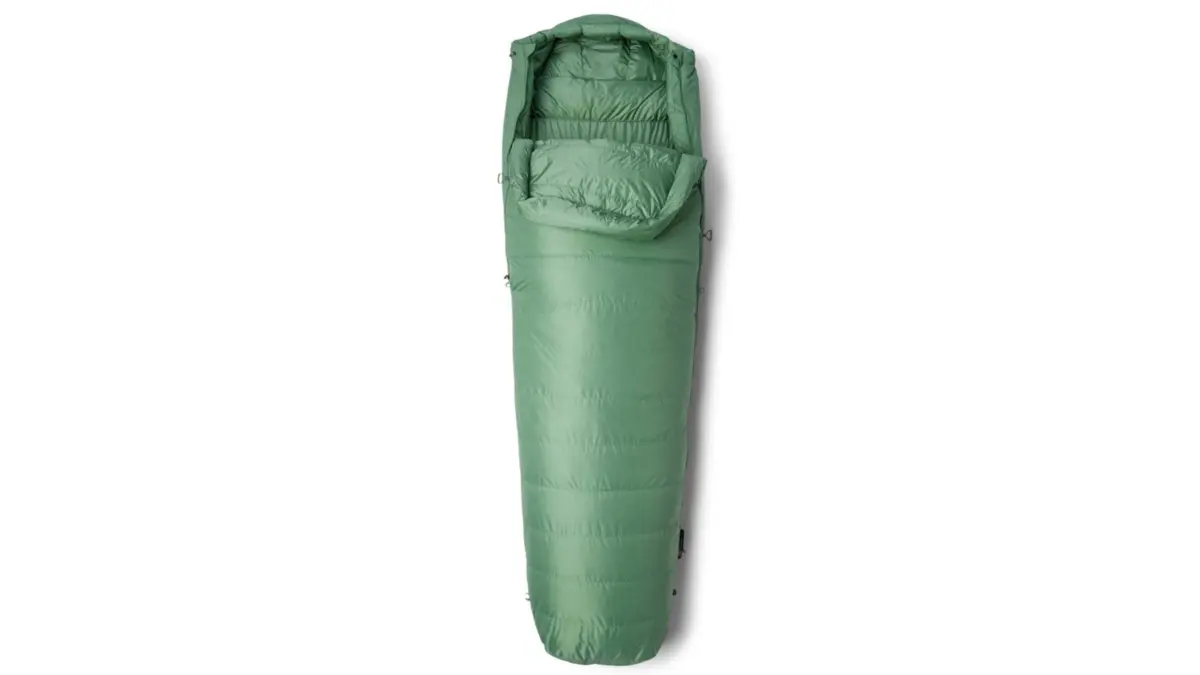
SEATTLE, WA — As autumn brings crisp air, dropping temperatures, and vibrant foliage to the backcountry, the classic ritual of crawling into a tent shifts from an invigorating adventure to a test of sheer willpower. For decades, the shoulder-season camping experience has been defined by a familiar compromise: sacrificing sleeping comfort to shave ounces, or wrestling with restrictive mummy bags that leave little room for movement.
Enter the Mountain Hardwear Yawn Patrol 15, a sleeping bag explicitly engineered to upend traditional design paradigms. Priced normally at a premium tier, the bag is currently turning heads with a rare 35 percent discount at retailers like REI, bringing its cost down to a much more accessible $227. Blending the thermal efficiency of a technical bag with the sprawling dimensions of a traditional camp quilt, the Yawn Patrol 15 is built for backpackers who view a good night’s rest not as an afterthought, but as an essential component of wilderness exploration.
Main Facts: Anatomy of the Yawn Patrol 15
To understand why the Mountain Hardwear Yawn Patrol 15 is generating significant buzz among outdoor enthusiasts and gear reviewers alike, it is necessary to examine its core specifications, design philosophy, and targeted use cases.
Design and Dimensions
Traditional mummy bags prioritize thermal retention by hugging the body tightly, a design choice that often results in claustrophobia, tangled limbs, and restricted sleeping positions for side-sleepers or restless sleepers. Conversely, traditional rectangular bags offer ample room but leak precious body heat through wide seams and unsealed perimeters.
The Yawn Patrol 15 stakes out a thoughtful middle ground. It features a lightly tapered silhouette that bridges the gap between a classic rectangular bag and an extra-roomy mummy bag. This hybrid architecture grants users the freedom to shift, turn, and bend their knees without pressing directly against the insulation and creating cold spots.
Insulation and Warmth
At the heart of the Yawn Patrol 15 is 650-fill-power down insulation. While ultra-lightweight alpine bags often utilize 800-fill or 900-fill goose down to achieve minimal pack weights, 650-fill offers an exceptional balance of plushness, durability, and affordability. The down loft creates a thick, cozy barrier that traps body heat effectively, making the bag ideally suited for crisp shoulder-season nights where temperatures dip into the teens and twenties Fahrenheit.
To combat convective heat loss—the chilling effect of cold air moving over the bag’s exterior—Mountain Hardwear incorporated a substantial, long draft tube running parallel to the zipper. This insulated baffle blocks wind and cold drafts from penetrating the closure system.
Thoughtful Integration Features
Beyond basic warmth and space, the Yawn Patrol 15 distinguishes itself through a suite of user-centric innovations designed to streamline the backcountry sleep experience:
- Pad Security System: Four integrated webbing loops located on the bottom of the bag allow campers to securely attach their sleeping pad. This prevents the common frustration of sliding off the pad in the middle of the night and waking up on the cold tent floor.
- Pillow Retention Pocket: An ingenious interior sleeve holds your camp pillow firmly in place, eliminating the midnight scramble to chase a sliding pillow around the hood.
- Electronics Management: A dedicated internal phone pocket keeps mobile devices close at hand. In cold weather, lithium-ion batteries drain rapidly; keeping a phone tucked inside the bag protects it from freezing temperatures and preserves battery life for morning navigation or photography, while preventing the device from slipping down into the dark abyss of the footbox.
Chronology: The Evolution of Shoulder-Season Sleep Systems
The journey toward a sleeping bag like the Yawn Patrol 15 reflects broader shifts in outdoor recreation culture, manufacturing technology, and consumer expectations over the past several decades.
Era of Rigidity: The Early Days of Technical Mountaineering
In the mid-to-late 20th century, outdoor gear design was dominated by alpine mountaineering needs. Sleeping bags were tools for survival in extreme environments. The strict mummy bag was king, designed with minimal fabric to reduce weight and maximize thermal efficiency at high altitudes. Comfort was secondary to survival metrics. Campers accepted cold toes, restricted movement, and cramped quarters as the unavoidable tax of sleeping in the mountains.
The Recreational Boom and the Demand for Comfort
As outdoor recreation expanded beyond elite mountaineering into mainstream weekend backpacking, car camping, and casual trekking, demographics shifted. A growing percentage of backpackers prioritized overall experience and recovery over summit-bagging metrics. Manufacturers began noticing that many recreationalists felt alienated by hyper-technical, restrictive gear.
The Hybrid Revolution (2020–Present)
Entering the 2020s, gear companies began experimenting with hybrid designs. Consumers demanded the warmth-to-weight ratio of technical bags combined with the livability of home bedding. Mountain Hardwear, known for its rigorous alpine heritage, recognized an opening in the market for a bag that did not treat comfort as a compromise.
The development of the Yawn Patrol series marked a strategic pivot: leveraging high-end materials like 650-fill down and technical draft tubes, but applying them to a more forgiving, roomier chassis. The mid-September 2026 update and subsequent promotional pricing further cemented the bag’s status as a premier shoulder-season option for everyday adventurers.
Supporting Data: Performance Metrics and Market Analysis
Evaluating the Yawn Patrol 15 requires analyzing how its specifications stack up against industry standards for cold-weather sleep systems.
Thermal Rating and Insulation Efficiency
The "15" in Yawn Patrol 15 designates its lower comfort limit, aligning with ISO/EN testing standards for roughly 15°F (-9°C). While individual cold tolerances vary—often influenced by factors such as nutrition, fatigue, and gender—field testing confirms that the bag performs exceptionally well in dry, cold conditions ranging from 20°F to 40°F.
| Feature | Specification | Industry Standard Comparison |
|---|---|---|
| Fill Power | 650-fill down | Balanced (Mid-tier; prioritizes durability and plushness over hyper-lightweight racing specs) |
| Temperature Rating | ~15°F (-9°C) | True shoulder-season capability (ideal for fall and early spring) |
| Shape | Hybrid Tapered | Wider than standard mummy; narrower than traditional rectangular |
| Price Point | $227 (on sale via REI) | Highly competitive for down insulation with advanced feature sets |
The Economics of Shoulder-Season Gear
Market data from outdoor retail analysts indicates a surging demand for "shoulder-season" equipment. As climate patterns shift and extended autumn seasons encourage longer camping calendars, gear that bridges the gap between summer lightweight setups and winter heavy-duty expeditions has become the fastest-growing sector in soft goods.
At a standard price point hovering near $350, the Yawn Patrol represented a solid investment; however, the recent 35 percent markdown at major outdoor distributors like REI has fundamentally shifted its market positioning. At $227, it undercuts many synthetic competitors while offering the superior compressibility and warmth-to-weight ratio of genuine down insulation.
Official Responses and Expert Perspectives
Industry insiders, gear testers, and manufacturing representatives have weighed in on the design philosophy and market reception of the Mountain Hardwear Yawn Patrol 15.
The Manufacturer’s Perspective
Mountain Hardwear designers emphasize that the Yawn Patrol was born from listening to frustrated campers. In internal design briefs, product developers noted a recurring theme in customer feedback: while technical gear kept people alive, it often failed to help them sleep soundly.
"We wanted to strip away the anxiety of the backcountry sleep routine," a Mountain Hardwear product line manager noted during the initial rollout. "If you are constantly fighting your sleeping bag—sliding off your pad, chasing your pillow, or feeling trapped like a mummy—you aren’t recovering for the next day’s trail miles. The Yawn Patrol is designed to make the tent feel like a sanctuary rather than a bivouac."
Outdoor Gear Reviewer Consensus
Independent gear testers across major outdoor publications have praised the bag for its tactical integration of minor features that yield major comfort dividends.
- On the Pad Loops: Reviewers consistently highlight the four webbing loops as a game-changer for restless sleepers. Unlike makeshift rigging or slippery nylon bottoms, the dedicated attachment system keeps the sleeping pad locked in precise alignment with the bag throughout the night.
- On the Phone Pocket: Tech-conscious backpackers have lauded the interior electronics pocket. In sub-freezing conditions, standard exterior pockets or leaving devices loose in the bag often results in dead batteries by dawn. The Yawn Patrol’s targeted placement keeps the phone warm against the body without creating physical discomfort.
- On the Fill: While gear purists occasionally debate the merits of 650-fill versus 850-fill down, consensus leans toward Mountain Hardwear’s choice for this specific category. The 650-fill provides a luxurious, heavy-blanket feel that mimics home bedding more closely than ultra-compressed high-fill alternatives.
Implications: What the Yawn Patrol 15 Means for the Future of Camping
The introduction and enthusiastic reception of sleeping systems like the Mountain Hardwear Yawn Patrol 15 point to broader cultural and technological shifts within the outdoor industry.
1. The Normalization of Comfort-First Backpacking
For decades, the cultural ethos of backpacking leaned heavily toward minimalism and stoicism—the idea that suffering on the trail and in camp was a badge of honor. The success of comfort-oriented technical gear signals a generational shift. Today’s outdoor enthusiasts, ranging from Gen Z weekend warriors to seasoned thru-hikers looking for better recovery, increasingly demand gear that enhances well-being. Comfort is no longer viewed as a compromise to performance; it is recognized as a vital enabler of sustained adventure.
2. Bridging the Gap Between Car Camping and Backcountry Trekking
Historically, gear was sharply bifurcated: heavy, plush items for car camping, and fragile, minimalist items for backpacking. Products like the Yawn Patrol 15 demonstrate that modern manufacturing techniques can bridge this divide. By utilizing compressible down insulation and lightweight shell fabrics while maintaining generous dimensions, gear designers are proving that backpackers do not need to choose between a good night’s sleep and a manageable pack weight.
3. Economic Accessibility in Technical Gear
With inflation and rising material costs putting pressure on outdoor gear budgets, the recent discounting of the Yawn Patrol 15 to $227 highlights an important trend: high-performance comfort is becoming more economically accessible. By lowering the financial barrier to entry for quality down sleep systems, brands are encouraging wider participation in shoulder-season camping—a time of year when trails are less crowded and natural landscapes are at their most visually stunning.
Conclusion
As fall mornings grow increasingly brisk and the temptation to stay indoors mounts, the Mountain Hardwear Yawn Patrol 15 offers a compelling counter-argument. By successfully merging the thermal reliability of a 15-degree down bag with the sprawling, unrestrictive comfort of a home bed, it transforms the campsite sleep experience from an endurance test into a genuine pleasure.
Backed by clever design innovations—such as the integrated pad loops, pillow retention sleeve, and battery-saving phone pocket—and made even more attractive by its current promotional pricing at major retailers, the Yawn Patrol 15 stands out as a defining piece of gear for the modern shoulder-season adventurer. For anyone looking to extend their camping calendar without sacrificing a restful night’s sleep, it proves that you don’t have to fight the cold—sometimes, you just need the right gear to lean into it.
