

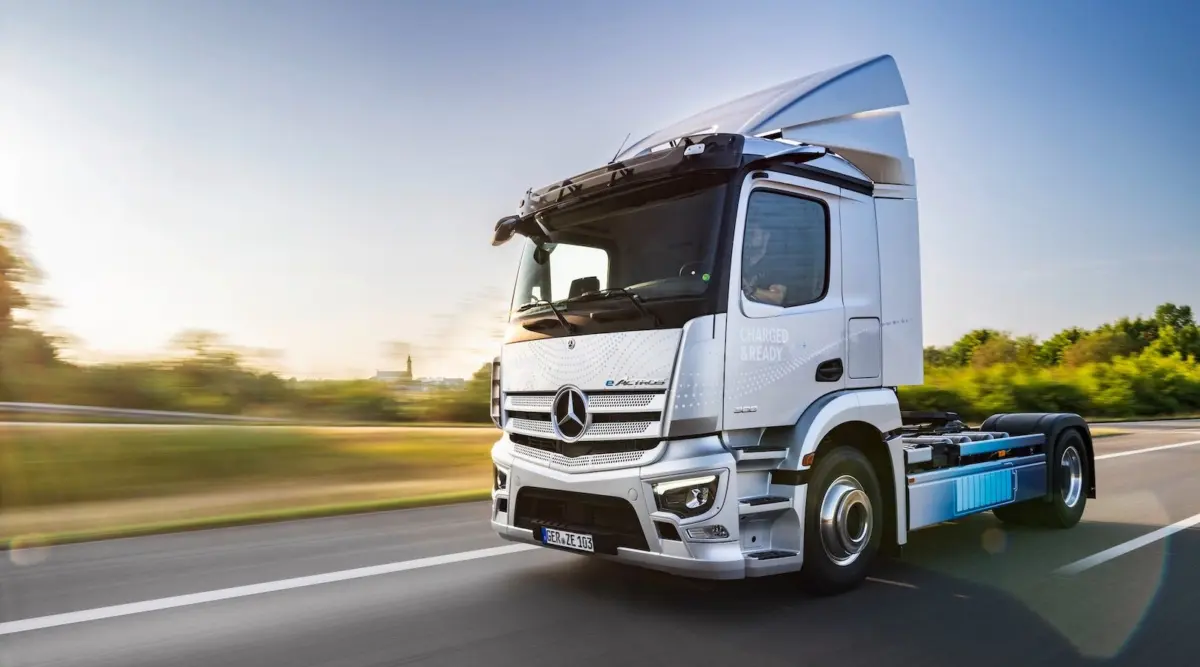
As Europe grapples with stubbornly high diesel fuel prices and the escalating economic toll of a heating climate, a high-stakes corporate tug-of-war has broken out in Brussels. At the center of the dispute is the future of the European Union’s heavy-duty vehicle (HDV) emissions standards.
On one side stand some of the continent’s largest corporate logistics and retail giants—including IKEA, EDF, Geopost, and DFDS—who are pushing the European Commission to hold the line on aggressive decarbonization targets. On the other side are traditional commercial vehicle manufacturers such as Daimler Truck, Volvo Group, and MAN, warning that lagging infrastructure and prohibitive regulatory penalties necessitate a three-year delay.
This clash highlights a fundamental tension in the green transition: while major end-users have calculated that electric fleets offer long-term financial self-interest and insulation from fossil fuel volatility, manufacturers argue that the broader ecosystem required to support mass adoption is moving far too slowly.
Main Facts: The Battle Lines in Brussels
The core of the conflict centers on the European Union’s existing carbon dioxide emission standards for commercial vehicles. Under the current legislative framework, truck makers are required to achieve steep reductions in CO2 emissions from their 2019 baselines:
- 2030: A 43% reduction
- 2035: A 64% reduction
- 2040: A 90% reduction
To meet these targets, a dramatic surge in the deployment of medium- and heavy-duty electric trucks (HDVs) is required. However, major truck manufacturers have balked, arguing that current market conditions make compliance by 2030 an unrealistic—and financially perilous—goal.
Major industrial players—including representatives from DAF Trucks, Daimler Truck, Ford Otosan, Iveco Group, MAN Truck & Bus, Scania Group, and Volvo Group—have formally requested a three-year delay. They point to sluggish market uptake, noting that zero-emission heavy-duty trucks currently hold a mere 2.4% market share across Europe.
Conversely, major corporate buyers who have committed to full fleet electrification via initiatives like the Climate Group’s EV100 coalition are demanding regulatory certainty. They argue that backing down now would penalize early movers, strand capital investments, and undermine Europe’s broader energy security and climate goals.
Chronology of the Conflict
The friction between regulatory aspirations, manufacturing realities, and corporate demand has unfolded across several critical milestones:

- The Baseline Framework: The European Union established ambitious long-term carbon reduction milestones for commercial transport, aiming to systematically phase out internal combustion engines in heavy-duty logistics over the next two decades.
- September 2026 (IAA Transportation Show, Hannover): Executives from Europe’s leading truck manufacturing groups took center stage at the industry’s premier exhibition to sound the alarm. They highlighted an "alarming delay" in enabling conditions—such as megawatt charging infrastructure and supportive weight-and-dimension regulations—and formally requested a three-year extension on the 2030 targets to avoid potential compliance penalties exceeding €2 billion.
- October 1, 2026: Members of the Climate Group’s EV100 coalition—led by corporate heavyweights like IKEA, EDF, Geopost, and DFDS—fired back. In a direct petition to European Commission President Ursula von der Leyen, they urged leadership to stand firm, arguing that regulatory stability is essential to maintain investment momentum in zero-emission freight.
Supporting Data: The Numbers Behind the Debate
An analysis of the current European heavy-duty transport sector reveals a stark contrast between regulatory ambition and on-the-ground reality:
- Current Market Penetration: Battery-electric and zero-emission heavy-duty trucks account for just 2.4% of the overall European market.
- Regional Disparities: Adoption rates vary wildly across member states. Germany leads the continent with a 4.3% market share for electric HDVs, while France sits at 2.4%. In major transit corridors like Poland, Spain, and Italy, electric heavy truck market penetration remains stubbornly below 1%.
- Financial Exposure: Truck manufacturers have warned that failing to secure a three-year compliance delay could expose the industry to collective regulatory penalties exceeding €2 billion.
- Climate and Human Impact: Beyond corporate balance sheets, the urgency of the transition is underscored by broader environmental metrics. Independent climate analyses noted that approximately 25,000 deaths occurred across Europe during recent scorching summer months, directly linked to extreme heatwaves exacerbated by global greenhouse gas emissions.
Official Responses and Stakeholder Positions
The divide between corporate buyers and manufacturing executives has produced sharply contrasting public positions.
The Corporate Buyers: Demand for Stability
For companies operating massive transport and delivery networks, predictability is paramount. The EV100 coalition—representing global enterprises spending billions on logistics—argues that the long-term operational savings of electric trucks far outweigh the higher upfront capital costs, especially in an era of volatile diesel prices.
Marion Labatut of EDF emphasized the consensus among progressive utilities and fleet operators:
"Businesses are already taking action to electrify their heavy-duty fleets, and EDF is helping them make it possible, while energy systems are investing in the infrastructure to support them. We are seeing steady progress on HDVs, and maintaining ambitious and stable CO2 standards will give companies the confidence to continue investing at scale, while helping ensure Europe remains competitive in the transition to zero-emission freight."
Dominic Phinn, Head of Transportation at Climate Group, echoed these sentiments, stressing that regulatory backpedaling punishes forward-thinking companies:
"The demand for zero-emission trucks is strong and growing every day. Businesses… have made significant investment in electric fleets on the understanding that Europe would provide a stable and ambitious regulatory framework for the transition. What companies need now is certainty, not a weakening of the rules that underpin investment decisions."
The Manufacturers: The Ecosystem Bottleneck
Truck builders maintain that they have fulfilled their end of the bargain by developing zero-emission vehicle platforms, but external systemic delays have paralyzed commercial adoption.

Karin Rådström, CEO of Daimler Truck, highlighted the structural impediments facing the sector:
"We are fully committed to sustainable transport. The investments have been made, and a wide range of CO2-free vehicles is available today. But making them commercially viable at scale also depends on the wider ecosystem that is clearly delayed and not yet developing fast enough. This means two things — doubling down on the enabling conditions fast, and for the EU to delay the 2030 compliance timeline by three years, to prevent penalties for manufacturers."
Manufacturers point to two major infrastructural bottlenecks:
- Grid Connections: Installing and commissioning megawatt-scale high-power charging hubs across major European freight corridors frequently takes years due to bureaucratic and electrical grid limitations.
- Regulatory Red Tape: The European Commission has been slow to update rules regarding vehicle weights and dimensions. Because battery packs are significantly heavier than internal combustion powertrains, electric trucks currently face payload disadvantages under legacy weight limits unless specific regulatory exemptions are swiftly enacted.
Broader Implications: Competitiveness, Climate, and Global Policy
This European standoff carries profound implications that extend well beyond the commercial trucking sector.
Economic Competitiveness vs. Regulatory Relief
Critics of the manufacturers’ petition suggest a degree of hypocrisy, noting that several legacy truck makers have similarly opposed stringent emissions rules in other jurisdictions, such as the United States and California. By attempting to water down compliance timelines, European manufacturers risk losing their competitive edge to fast-moving international rivals—particularly as global markets pivot definitively toward electrification.
The Human Cost of Delay
While corporate lobbyists and trade associations debate compliance windows and penalty thresholds, the macroeconomic and human costs of climate inaction continue to mount. As climate analysts and public health advocates frequently point out, regulatory delays in decarbonizing heavy transport directly prolong the release of particulate matter and greenhouse gases. The record-breaking mortality rates from extreme summer heat across Europe serve as a stark reminder that the transition away from fossil fuels is not merely an exercise in corporate financial optimization, but an urgent public health imperative.
The Commission’s Dilemma
Ultimately, the European Commission faces a delicate balancing act. Granting a three-year extension risks signaling a lack of resolve, potentially stalling infrastructure investments and disheartening pioneering fleet operators. Denying the extension, however, could result in multibillion-euro penalties for critical industrial partners, potentially destabilizing traditional manufacturing giants before the public charging ecosystem is fully operational.
As the debate moves forward, the resolution chosen by Brussels will set a powerful precedent for the global decarbonization of heavy transport.
