

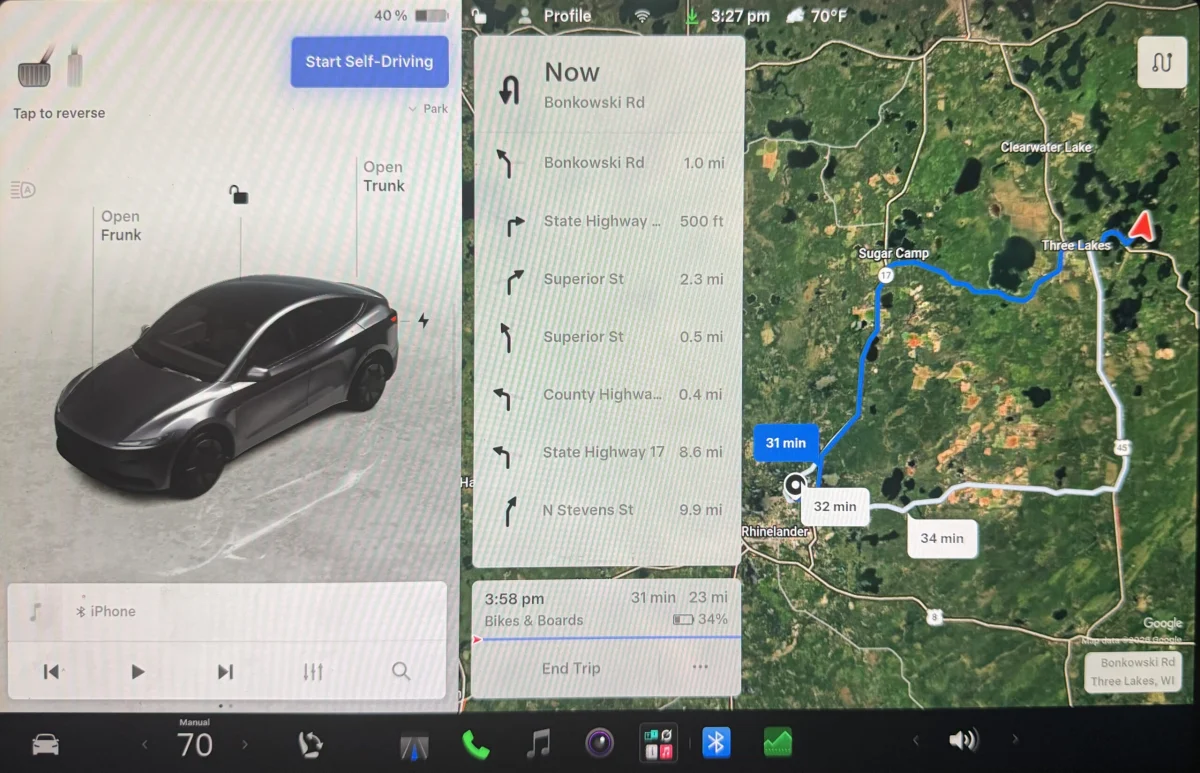
Three Lakes, Wisconsin — In an era defined by rapid advancements in artificial intelligence and autonomous mobility, the debate surrounding vehicular safety has reached a critical crossroad. With tens of thousands of traffic fatalities still plaguing roadways globally, attention has increasingly turned to automated driving systems as a potential solution to a persistent public health crisis.
Amid this backdrop, recent statements from Tesla leadership regarding the life-saving potential of its Full Self-Driving (FSD) technology have sparked a profound ethical debate. If autonomous software can drastically reduce highway deaths, industry analysts, consumer advocates, and everyday motorists are asking a fundamental question: Can automakers continue to treat life-saving safety features as high-margin luxury add-ons, or do they carry a moral imperative to make them universally accessible?
Main Facts
The debate centers on the intersection of corporate profitability, technological capability, and public safety. Earlier this year, on April 8, 2026, Tesla CEO Elon Musk asserted that the company’s Full Self-Driving system is so significantly safer than human drivers that it holds the theoretical potential to save up to 90% of the roughly one million lives lost annually in car crashes worldwide.
However, this bold safety projection collides with current consumer adoption hurdles. Despite continuous software iterations—such as FSD V14, which operates vehicles with professional-grade precision—the overall uptake rate among eligible Tesla owners remains constrained at approximately 15%. This low adoption is heavily influenced by financial friction, specifically a recurring subscription model priced at $99 per month, which keeps life-saving technology out of reach for the vast majority of drivers who already own hardware-capable vehicles.
Furthermore, real-world deployments are beginning to showcase the tangible capabilities of these systems. Drivers utilizing FSD V14 report sophisticated maneuvers, such as automatically yielding to and parking for emergency vehicles with flashing lights in rural and urban settings alike. Proponents argue that locking these advanced defensive driving capabilities behind a paywall creates an avoidable barrier to widespread public safety.
Chronology of Autonomous Evolution and Safety Milestones
To understand the weight of the current debate, it is helpful to examine the historical and recent timeline of automotive safety and Tesla’s technological rollout:
- 1959: Nils Bohlin patents the three-point seatbelt while working for Volvo. Feeling a profound moral responsibility for public safety, Volvo and Bohlin make the design available to all competing automotive manufacturers free of charge, permanently transforming global vehicle safety.
- Mid-2023: Tesla begins manufacturing vehicles equipped with Hardware 4 (HW4), establishing the robust sensor and computing foundation necessary for advanced autonomous navigation.
- Early 2026 (April 8): Elon Musk makes public statements claiming that Tesla FSD is advanced enough to potentially prevent the vast majority of global traffic fatalities.
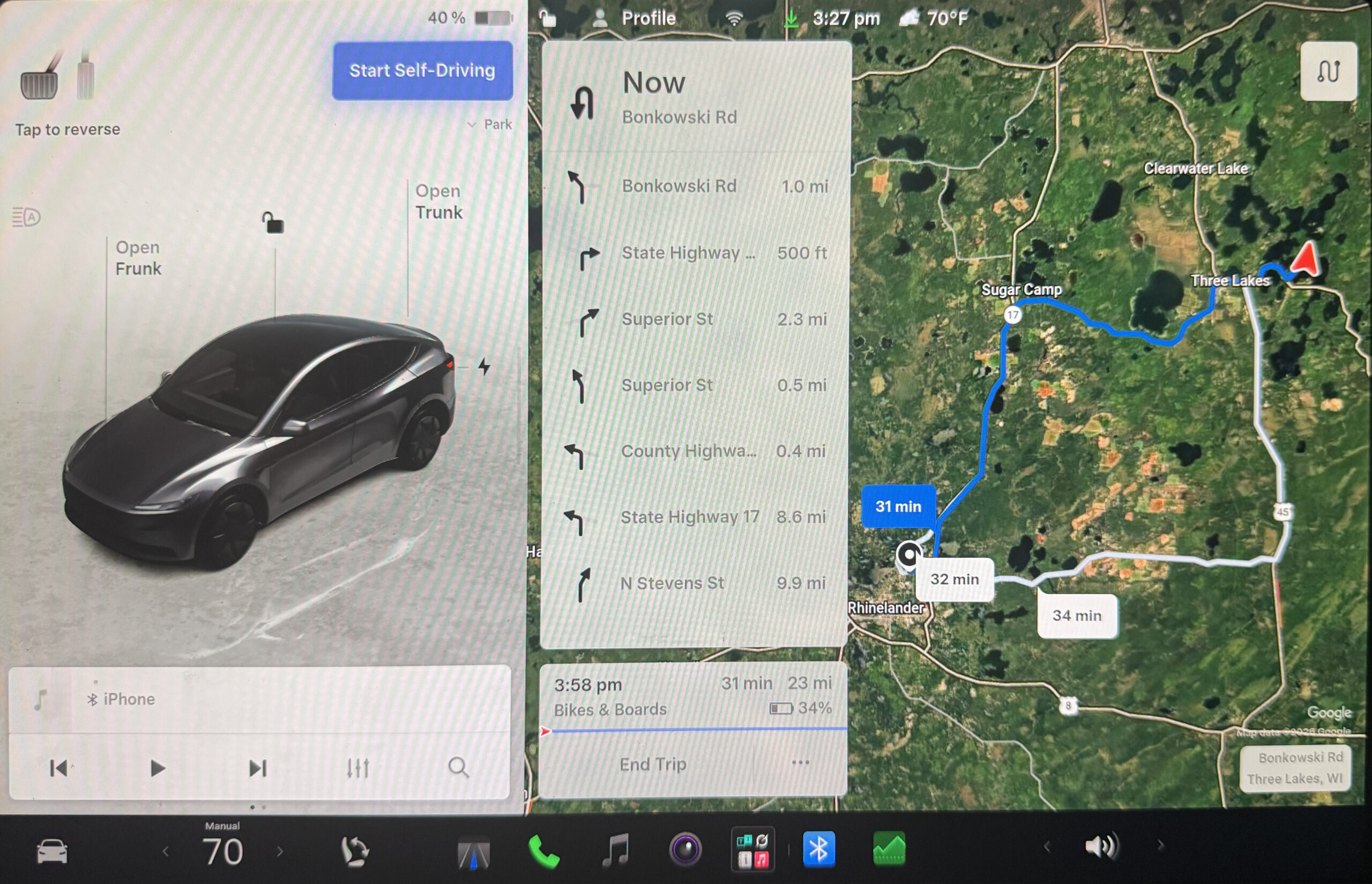
- June 11, 2026: Field tests in Three Lakes, Wisconsin, demonstrate advanced FSD V14 capabilities, including autonomous responses to oncoming emergency vehicles. Discussions with onboard AI systems (such as Tesla’s Grok assistant) highlight that regular FSD usage rates among early adopters can exceed 95%, while broader industry insurance discounts remain sparse and geographically limited.
Supporting Data and Real-World Usage
The statistical landscape of modern transportation underscores the urgency of the safety debate:
- Traffic Fatalities: In 2025 alone, the United States recorded an estimated 36,640 traffic fatalities, pointing to a persistent human toll on domestic roadways.
- Global Potential: According to Tesla’s internal projections and executive statements, widespread deployment of autonomous driving technology could theoretically mitigate a significant portion of the roughly one million annual global traffic deaths.
- Adoption Rates: Market uptake for Tesla’s FSD sits at roughly 15%, meaning that 85% of drivers piloting capable vehicles are not utilizing the software.
- Financial Impact: Eliminating the $99 monthly subscription fee would represent the forfeiture of an estimated $800 million annual revenue stream for Tesla, presenting a stark financial trade-off against public safety metrics. Conversely, alternative models—such as a nominal $500 safety fee baked into the upfront vehicle purchase price—could theoretically offset lost subscription income while ensuring immediate day-one access for consumers.
- Insurance Incentives: Emerging data indicates that forward-thinking insurance providers, such as Lemonade, have begun offering up to 50% discounts on the mileage fees for miles driven via FSD in select states (including Arizona, Colorado, Indiana, Missouri, Oregon, and Tennessee). However, these incentives remain geographically restricted, leaving many regions without financial incentives to encourage autonomous usage.
Industry Responses and Comparative Precedents
The ethical dilemma facing Tesla mirrors historical precedents in the automotive sector. When Volvo introduced the three-point seatbelt in 1959, the decision to waive patent royalties set a gold standard for corporate social responsibility, prioritizing human life over proprietary advantage.
A more recent parallel can be found in Tesla’s own evolution regarding the Supercharger network. For years, Tesla maintained a proprietary charging ecosystem. However, by opening its network to competing manufacturers and establishing the North American Charging Standard (NACS), Tesla catalyzed a nationwide cooperative framework that solved a massive infrastructural bottleneck for the entire electric vehicle industry.
Critics of the current FSD pricing model argue that a similar paradigm shift is needed for autonomous safety software. While legacy automakers and tech analysts continue to debate whether Tesla’s camera-only approach is sufficient—particularly in severe weather conditions where traditional human drivers often pull off the road—proponents argue that the economic viability and immediate accident-reduction capabilities of camera-based systems make them an indispensable tool for immediate deployment.

Furthermore, discussions with AI co-pilots integrated into modern Teslas reveal growing consumer awareness of usage metrics. Many dedicated drivers operate with FSD engagement rates exceeding 90%, proving that when drivers embrace the technology, it functions reliably over vast distances. Yet, secondary barriers remain: even among vehicle owners who purchased lifetime packages years ago, a lack of active engagement or default activation often leaves the safety features sitting dormant.
Implications for the Future of Mobility
As the autonomous vehicle industry matures, the decisions made by market leaders like Tesla will reverberate across regulatory bodies, insurance sectors, and consumer expectations.
If executive claims regarding the life-saving efficacy of automated driving hold true, the implications of maintaining a paywall are severe. The core questions moving forward include:
- The Default State of Safety: Should advanced driver-assistance systems be active by default upon vehicle startup, requiring a deliberate choice to disengage rather than a deliberate action to engage?
- Corporate Social Responsibility: At what scale of technological maturity does a proprietary safety feature transition from a commercial product into a moral necessity akin to seatbelts, airbags, and anti-lock brakes?
- Cross-Industry Standardization: Will regulatory pressure or competitive market forces eventually compel autonomous software architectures to be licensed or shared across all vehicle manufacturers to maximize systemic safety?
Ultimately, the trajectory of Full Self-Driving will be judged not only by its financial success as a software-as-a-service product, but by its tangible impact on human survival. As data continues to accumulate on the safety records of automated systems, the pressure on automakers to bridge the gap between technological potential and universal accessibility will only intensify.
