

By CleanTechnica Global EV Desk
Published October 2026
Main Facts
Chinese electric vehicle (EV) pioneer XPENG has officially closed out the third quarter of 2026 with a resounding operational recovery, registering record-breaking quarterly deliveries and cementing its status as a heavyweight in the global clean transportation sector. Despite facing headwinds earlier in the year that temporarily slowed its commercial momentum, the Guangzhou-headquartered automaker has rebounded aggressively, driven by strong consumer demand, technological advancements, and a rapidly expanding proprietary charging network.
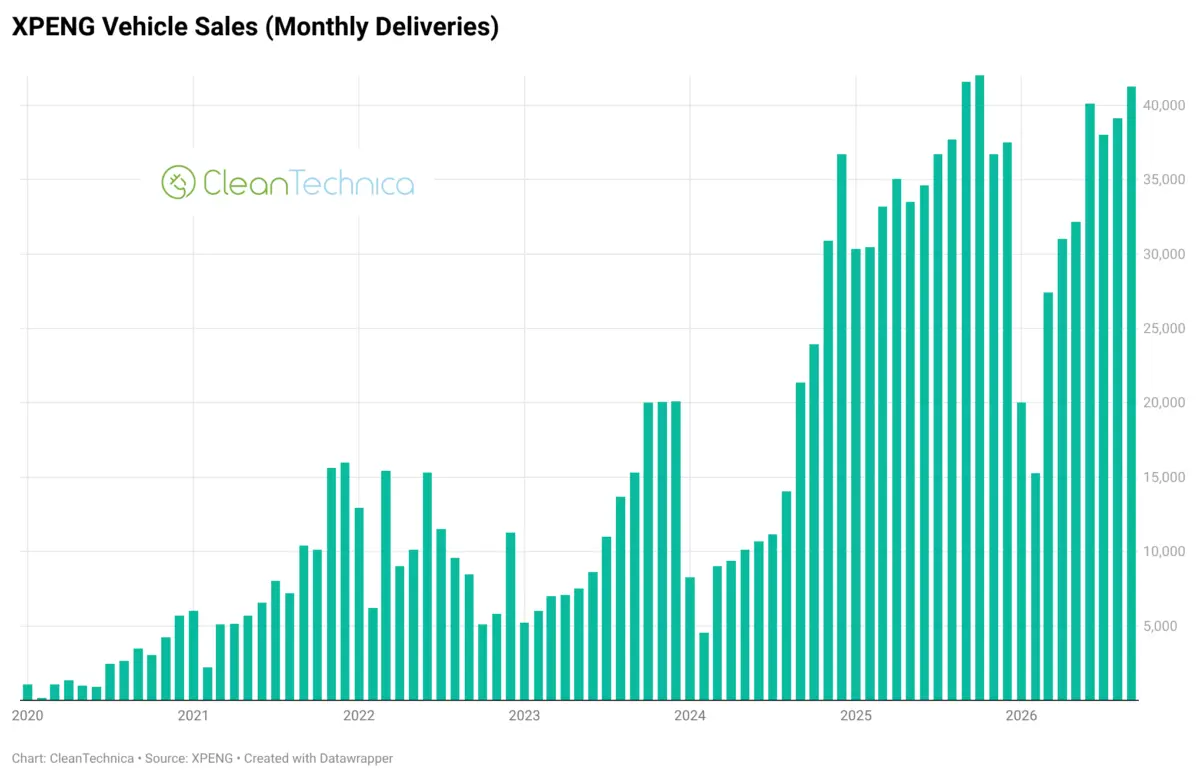
In September 2026 alone, XPENG delivered 41,256 electric vehicles to customers. This figure represents a healthy 5.5% month-over-month increase compared to August performance, underscoring a accelerating sales trajectory as the industry enters the final stretch of the year. While September deliveries dipped marginally by 0.8% compared to the same month in 2025, the overarching quarterly narrative remains overwhelmingly positive.
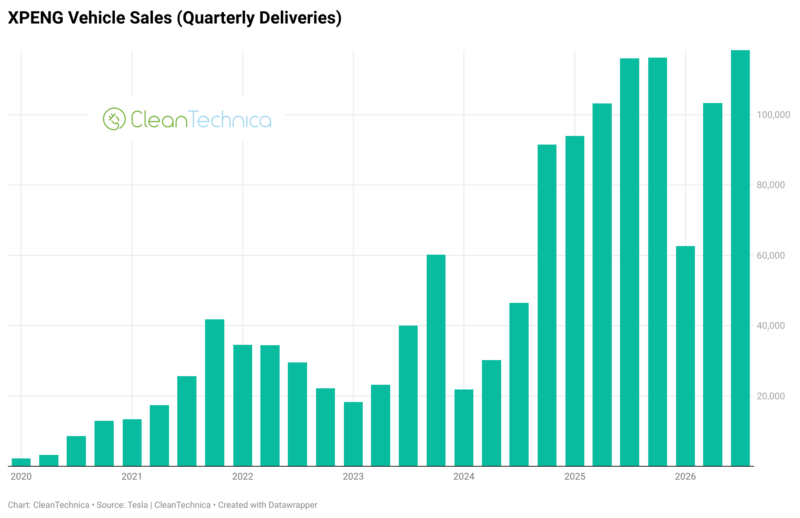
For the third quarter of 2026 as a whole, XPENG achieved record delivery volumes:
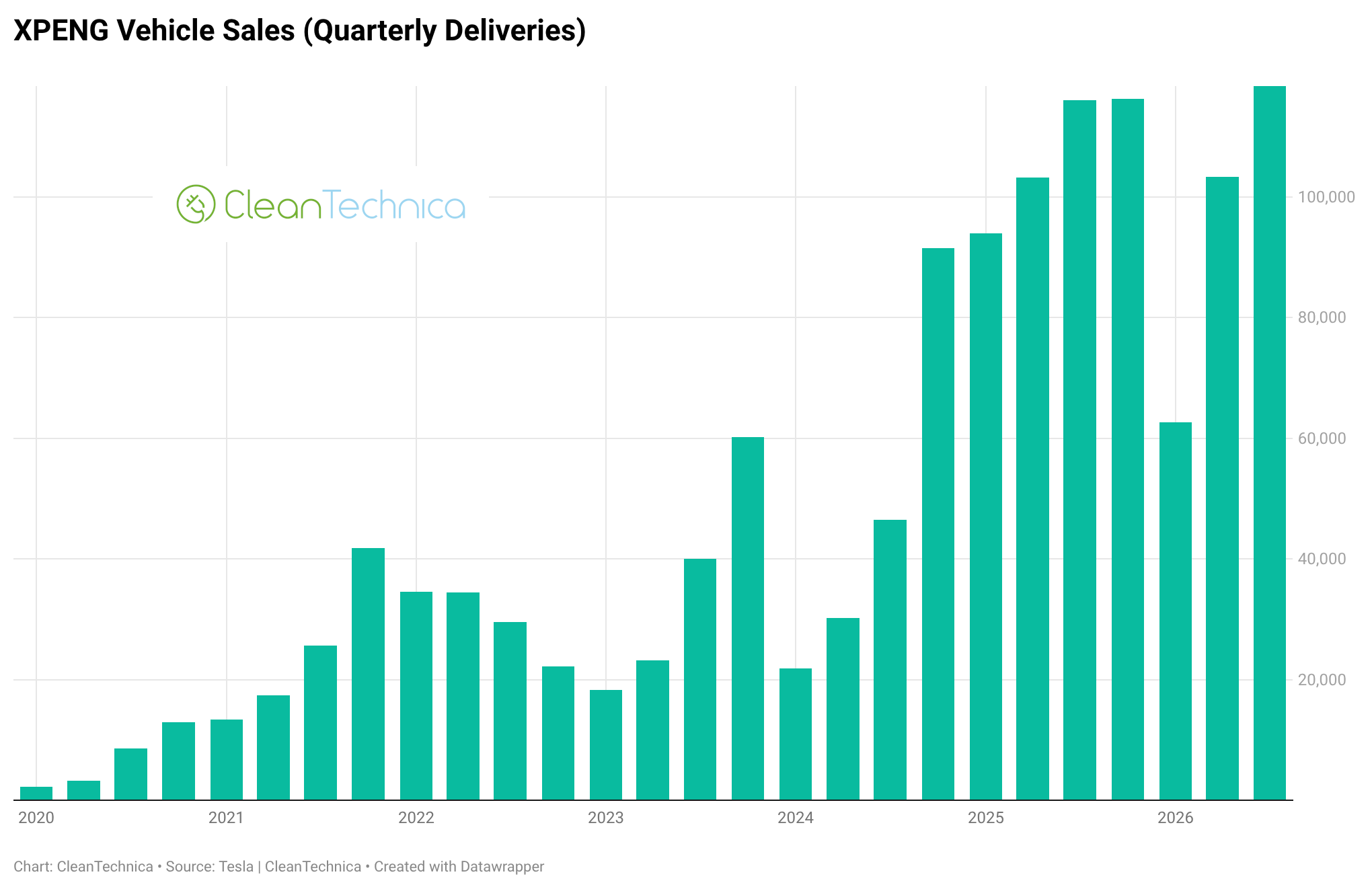
- Quarter-over-Quarter Growth: Up 15% compared to Q2 2026.
- Year-over-Year Growth: Up 2% compared to Q3 2025.
Although a sluggish first quarter caused cumulative year-to-date sales for the first nine months of 2026 to sit down 9.2% relative to the previous year, the aggressive acceleration witnessed through the summer and early autumn suggests that XPENG has successfully course-corrected. The company’s latest operational data highlights not only a bounce-back in vehicle sales but also a profound scaling of its energy ecosystem—including the deployment of cutting-edge megawatt ultra-fast chargers—and a measurable contribution to global greenhouse gas reduction.
Chronology of Recovery: From a Slow Start to a Q3 Surge
To fully understand XPENG’s position in late 2026, it is necessary to examine the temporal arc of the company’s performance over the past twelve months.
Q1 2026: The Slow-Start Challenge
Like several legacy and new-energy vehicle (NEV) competitors in the hyper-competitive Chinese market, XPENG faced a turbulent opening to 2026. Price wars initiated across the domestic market, combined with shifting consumer preferences and localized supply chain adjustments, created a difficult baseline. January and February saw subdued delivery figures, dragging down the brand’s cumulative nine-month performance and raising questions among automotive analysts regarding market share retention against domestic giants like BYD and rising threats from traditional automakers pivoting to EVs.
Q2 2026: The Stabilization Phase
By the second quarter, XPENG began deploying targeted marketing strategies, refreshing its vehicle lineups, and optimizing production efficiencies. The market responded favorably. The stabilization of manufacturing output allowed the company to meet rising domestic and international demand. Month-over-month figures began to creep upward, setting the operational foundation for an aggressive summer push.
Q3 2026: Record Deliveries and Strategic Milestones
The third quarter served as the vindication of XPENG’s 2026 strategy. July and August laid down steady blocks of growth, culminating in September’s robust 41,256-unit delivery milestone.
- September 15, 2026: A landmark moment for the company’s infrastructure wing as XPENG officially opened its very first X-Energy megawatt ultra-fast charging station in Hong Kong, signaling its intent to dominate both vehicle sales and high-speed energy supply chains in key metropolitan corridors.
- September 30, 2026: By the close of the third quarter, XPENG’s self-operated charging network spanned over 430 cities across China, encompassing more than 4,000 active stations.
Supporting Data & Ecosystem Expansion
XPENG’s Q3 report extends far beyond vehicle delivery numbers. The automaker is increasingly positioning itself as an integrated energy ecosystem provider, marrying vehicle sales with high-speed charging infrastructure and quantified environmental benefits.
Infrastructure Growth Breakdown
Range anxiety remains one of the primary psychological barriers to mass EV adoption globally. XPENG has systematically tackled this barrier by investing heavily in its proprietary charging infrastructure. As of the end of September 2026, the company’s network statistics include:
- Geographic Reach: Presence in over 430 cities.
- Total Stations: More than 4,000 operational charging stations.
- Ultra-Fast Capabilities: Over 3,510 designated ultra-fast charging stations.
- Total Charging Piles: More than 22,200 individual charging piles deployed.
The introduction of the X-Energy megawatt ultra-fast charging station in Hong Kong on September 15 represents a technological leap forward. Megawatt-level charging speeds drastically reduce replenishment times for passenger vehicles and lay the technical groundwork for future commercial and heavy-duty applications within the brand’s broader ecosystem.

Quantified Environmental Impact
In tandem with its financial and operational metrics, XPENG released detailed lifecycle emissions data for the first three quarters of 2026. According to the company’s corporate sustainability metrics, the electric vehicles delivered between January and September 2026 are projected to reduce lifecycle greenhouse gas (GHG) emissions by more than 4.14 million tons when compared to equivalent internal combustion engine (ICE) vehicles.
To put this astronomical figure into perspective, XPENG notes that this carbon reduction is ecologically equivalent to the amount of carbon dioxide absorbed by 68.53 million young trees over a 10-year growth period.
Official Responses & Corporate Insights
Industry analysts and company executives have weighed in heavily on what these Q3 numbers mean for XPENG’s medium- and long-term viability.
Market observers note that the 15% quarter-over-quarter growth proves XPENG’s vehicle architecture and pricing models remain deeply attractive to modern consumers, particularly tech-savvy buyers prioritizing advanced driver-assistance systems (ADAS) and smart-cabin integration.

While company leadership acknowledged the drag created by the slower initial months of the year, corporate statements released at the close of September emphasize an unyielding commitment to scale. Management pointed directly to the synergy between vehicle deployments and infrastructure expansion as the primary catalyst for the late-year resurgence. By controlling both the vehicle sale and the refueling experience—highlighted by the rollout of the Hong Kong X-Energy megawatt station—XPENG is building a vertically integrated moat that insulates it from pure price-war volatility.
Furthermore, environmental advocacy groups and sustainable transport analysts have praised the quantifiable metrics surrounding the 4.14 million tons of avoided GHG emissions. As regulatory frameworks globally tighten around corporate carbon footprints, manufacturers capable of producing concrete, verified environmental offsets stand to benefit immensely from regulatory credits and consumer goodwill.
Implications for the Global EV Market
XPENG’s Q3 2026 performance carries profound implications for the broader clean energy and automotive landscapes:
1. Resilience in Hyper-Competitive Markets
The Chinese EV market is arguably the most fiercely contested automotive battlefield in history. XPENG’s ability to bounce back from a 9.2% year-to-date deficit in the first nine months to post a record-breaking Q3 demonstrates remarkable corporate agility. It proves that emerging automakers with strong technological differentiation can weather cyclical downturns and aggressive pricing wars.
2. The Shift Toward Infrastructure-Led Competitiveness
Selling an electric car is no longer just about the vehicle itself; it is about the surrounding ecosystem. XPENG’s massive network of over 4,000 stations and 22,200 piles—anchored by new megawatt-class technology—creates a powerful consumer lock-in effect. Buyers are increasingly choosing brands that guarantee seamless, ultra-fast long-distance travel capabilities.
3. International Ambitions and Regional Hubs
The strategic placement of the first X-Energy megawatt station in Hong Kong highlights XPENG’s sophisticated approach to regional expansion. Hong Kong serves as a critical gateway market, testing ground, and showcase for international consumers. Success in high-density urban environments validates the company’s hardware and software readiness for broader global deployment.
4. Environmental Accountability
As greenwashing scrutiny intensifies across all industrial sectors, XPENG’s transparent reporting of lifecycle emissions—backed by equivalent metrics like the 68.53 million young trees—sets a high standard for corporate environmental reporting. It reinforces the core mission of the clean technology movement: verifiable, scalable decarbonization.
Conclusion
As XPENG looks ahead to the final quarter of 2026 and beyond, the clouds of the early-year slowdown have thoroughly parted. With record quarterly deliveries, a rapidly modernizing ultra-fast charging network, and an expanding international footprint, the Guangzhou-based automaker has proven its resilience and reasserted its role as a premier driver of the global electric vehicle revolution.
