

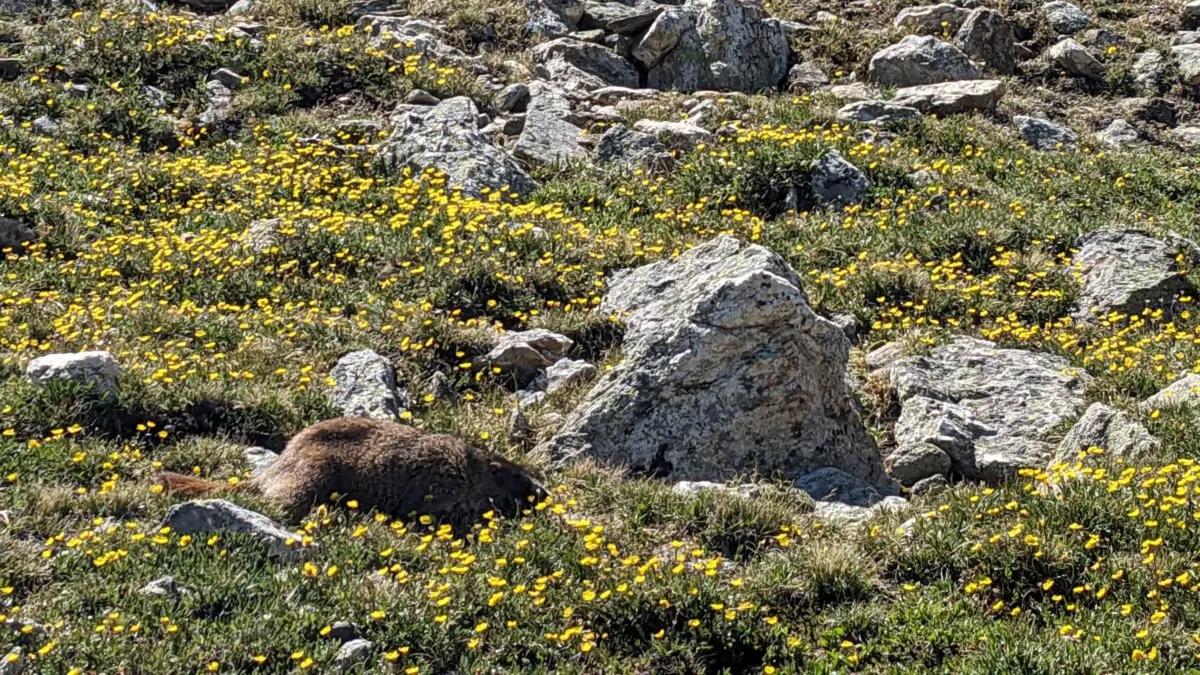
DENVER, Colo. — Move over, Katmai brown bears; Colorado’s alpine rodents are stepping into the national spotlight. Following one of the most catastrophic winters in recorded scientific history for the state’s wildlife, the Rocky Mountain Biological Laboratory (RMBL) has officially launched Colorado’s inaugural Fat Marmot Week.
Modeled after Alaska’s wildly popular Fat Bear Week—where online audiences vote for the heftiest brown bears padding through Katmai National Park—this new conservation-meets-culture campaign invites the public to vote for one of eight exceptionally plump yellow-bellied marmots. While the premise is undeniably adorable, the underlying impetus is a deadly serious alarm bell regarding the rapid, compounding effects of climate change on high-altitude ecosystems.
Main Facts: High Stakes for High-Altitude Rodents
At its core, Fat Marmot Week is a high-stakes public engagement and fundraising campaign designed to save Colorado’s yellow-bellied marmots from a creeping ecological crisis. Beginning today and culminating in a winner’s crown on August 29, participants can log online to cast their votes for local alpine legends.
Among the top contenders vying for the coveted title is Dan’s Hat, affectionately known as the "cool aunt" of the colony, who notably opted out of breeding this year to focus entirely on personal wellness and caloric intake. Other heavyweights include Open Kite, Citroen, and Dawn—a prolific patriarch who has contributed to numerous litters over the past five years and faithfully checks in on his families each season.
While the competition uses internet humor to draw eyes to the mammals, the biology behind it is a matter of life and death. Like their ursine counterparts, yellow-bellied marmots must roughly double their body weight during the brief summer months. This massive accumulation of fat is not merely for aesthetic purposes; it is the sole physiological mechanism that fuels their survival through a grueling, subterranean hibernation that can last up to eight months.
However, a changing climate is upending this ancient evolutionary rhythm. Shorter, warmer summers might theoretically offer a longer window for foraging, but they are increasingly paired with dangerously erratic, snow-starved winters. Without a thick, insulating blanket of snowpack to trap geothermal heat, underground burrows experience plummeting temperatures. To survive the bitter cold in uninsulated earth, hibernating marmots are forced to burn through their precious fat reserves at an accelerated rate, often waking up and starving to death long before spring arrives.
Chronology of a Crisis: From Snow Drought to Survival Measures
The urgency driving the creation of Fat Marmot Week is rooted in a devastating timeline of environmental degradation and institutional adaptation over the past year.
- April 1, 2026: The Colorado Climate Center releases a startling seasonal report. Statewide snowpack stands at an abysmal 22 percent of the 1991–2020 median. While winter recreationists bemoan a historic bust for the ski season and hikers celebrate early trail openings, field scientists recognize an impending ecological disaster.
- Spring/Summer 2026: Researchers with the decades-long RMBL Marmot Project complete their annual census and tally the grim toll of the winter. Out of 160 closely monitored marmots, only 60 survive, marking the largest single-season die-off in the study’s 60-year history.
- Mid-2026: Facing severe funding shortages that threaten the continuation of their vital research, the RMBL Marmot Project pivots to creative digital fundraising. They launch OnlyMarms, a PG-rated, tongue-in-cheek account that leverages internet culture to generate $6,000 in initial support.
- August 2026: Grassroots crypto-enthusiasts take notice, launching a marmot-themed cryptocurrency (
$OnlyMarms) that funnels approximately $100,000 in outside donations back into the research program. - Late August 2026: Building on this momentum, RMBL officially rolls out Fat Marmot Week. Voting opens to the public on August 24, runs through August 28, and promises a coronation celebration on August 29.
Supporting Data: Numbers That Paint a Grim Picture
To understand why scientists are pulling out all the stops—from crypto tokens to beauty pageants for rodents—one must examine the hard data collected by the Rocky Mountain Biological Laboratory.
- 60 out of 160: The survival rate recorded by RMBL researchers following the winter of 2025–2026. This translates to a staggering mortality rate of over 62% in a single season.
- 60 Years: The duration of the RMBL Marmot Project, making it one of the longest-running continuous studies of a wild mammal population in North America. This historic baseline is what allowed scientists to definitively classify the recent die-off as unprecedented.
- 22 Percent: The percentage of the median snowpack recorded across Colorado on April 1, 2026—a deficit so extreme it fundamentally compromised the thermal insulation of sub-surface alpine habitats.
- 100,000 Dollars: The approximate financial injection provided to the Marmot Project via the community-driven
$OnlyMarmscryptocurrency initiative, demonstrating the immense power of digital mobilization for wildlife conservation. - 8 Contenders: The elite roster of exceptionally rotund yellow-bellied marmots selected for the inaugural Fat Marmot Week bracket.
Official Responses: "The Rules? Simple. The Stakes? Enormous."
The scientific community and conservation advocates have embraced the levity of Fat Marmot Week as an essential bridge to public education. RMBL researchers emphasize that public empathy is the first step toward broader environmental advocacy.
In an official statement released via Instagram to announce the launch of the competition, the laboratory encapsulated the dual nature of the event:
"This summer the marmots of RMBL will be foraging their hearts out to decide on who will be crowned the fattest of them all, and more importantly who will survive the winter ahead. The rules? Simple. The stakes? Enormous."
Dr. Daniel Blumstein, a leading behavioral ecologist associated with marmot research, has repeatedly pointed out that alpine species are classic sentinels of climate change. Because they live at high elevations where warming trends are happening at nearly twice the global average, they experience the impacts of shifting weather patterns long before lowland species do. By gamifying the marmot’s frantic race to pack on pounds, organizers hope to translate abstract climate data into a visceral, relatable narrative that inspires direct financial support and long-term political will.
Implications: What the Fat Marmot Tells Us About the Future of the Alps
The plight of Colorado’s yellow-bellied marmots is not an isolated tragedy; it is a flashing warning light for the entire southern Rocky Mountain alpine ecosystem.
As global greenhouse gas emissions continue to alter weather systems, low-snow winters are projected to transition from statistical anomalies into the grim baseline normal. For species adapted to the deep, stable snowpacks of the historic past, this creates an evolutionary bottleneck. Animals that rely on predictable seasonal transitions—such as pikas, bighorn sheep, and marmots—are finding themselves caught between shorter, hotter summers that fail to provide adequate forage and winters that lack the thermal blankets necessary for survival.
Furthermore, the cascading ecological impacts of a marmot population collapse are profound. Marmots are a critical keystone species within the alpine food web. They serve as primary prey for apex predators such as coyotes, golden eagles, badgers, and the occasional black bear or mountain lion. Their extensive burrowing habits also aerate alpine soils, altering local plant communities and creating micro-habitats utilized by numerous other small mammals and invertebrates. When the marmots suffer, the entire high-altitude community feels the shockwave.
Yet, the creative survival strategies deployed by RMBL—ranging from humorous social media campaigns to public voting brackets—demonstrate a new frontier in modern conservation. By transforming passive nature lovers into active, invested participants, initiatives like Fat Marmot Week prove that public affection can be successfully harnessed to fund vital field science in an era of tightening institutional budgets.
Where to Spot Colorado’s Contenders
Unlike the Alaskan brown bears of Katmai, which require expensive floatplane charters to observe safely, Colorado’s chubby ground squirrels (yes, biologically speaking, marmots are giant ground squirrels) are remarkably accessible—provided you are willing to lace up your hiking boots and head for the high country.
If you want to catch a glimpse of these alpine athletes foraging furiously above treeline before the snows return, Backpacker Editor-in-Chief Adam Roy recommends three world-class, life-list day hikes across the Centennial State:
1. Longs Peak (Rocky Mountain National Park)
You do not necessarily need to brave the dizzying, technical summit push to see marmots here. Hikers frequently report spotting some of the largest, most impressively rotund marmots in the state right in the Boulder Field, situated just below the final ascent. For those seeking a full-value alpine excursion, the legendary Keyhole Route offers roughly 15 rugged, exposed miles round-trip through prime marmot territory.
2. Quandary Peak (Tenmile Range)
For hikers looking for a slightly more approachable Fourteener, Quandary Peak provides a classic, highly visible route that hugs the ridge for a 6.7-mile round trip. Head to the broad shoulder just below the final summit push; here, marmots are frequently spotted sunning themselves on the rocks alongside other native alpine wildlife, including mountain goats.
3. Grays and Torreys Peaks (Front Range)
Why bag one Fourteener when you can check off two in a single morning? This 17.7-mile point-to-point route takes trekkers over the highest point on the entire Continental Divide Trail—the wind-swept summit of 14,278-foot Grays Peak. Keep your eyes locked on the surrounding talus slopes and boulder fields, where busy marmots spend their fleeting summer days foraging at the literal top of the world.
