

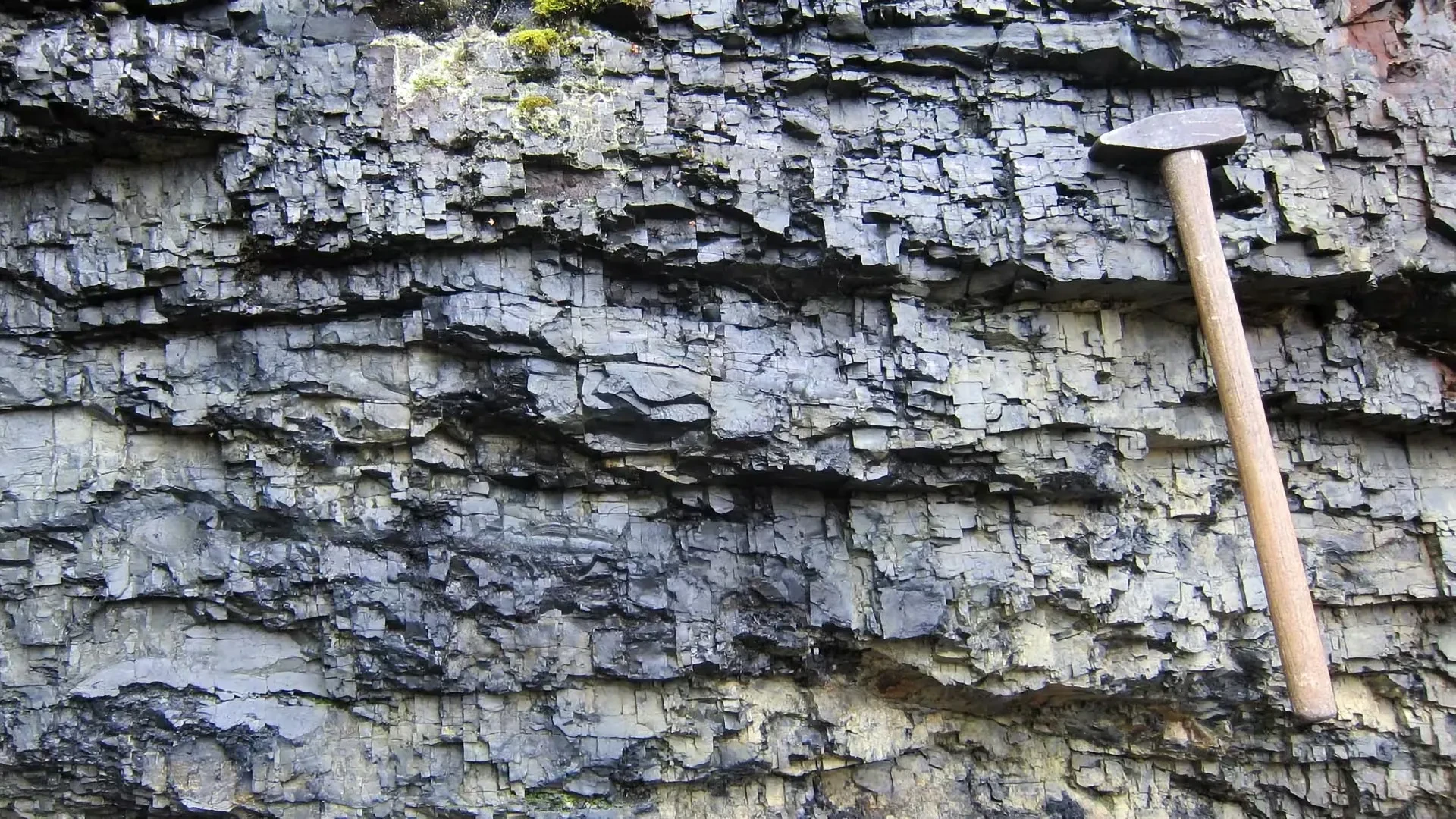
PASCO, WASHINGTON — Around 2.5 to 2 billion years ago, planet Earth experienced the most radical and consequential chemical transformation in its surface history. Oxygen, once a trace gas, began accumulating in the atmosphere in earnest. This sweeping atmospheric shift set in motion a protracted chain of biochemical and environmental developments that ultimately cleared the evolutionary runway for complex multicellular life, including the rise of plants and animals roughly half a billion years ago.
Yet, untangling the exact sequence and scale of events during this formative Paleoproterozoic era has proven notoriously difficult. As oxygen levels first ticked upward, enormous volumes of microbial detritus were buried beneath ancient seafloors. This massive burial trapped organic carbon in subterranean rock layers and left behind an unusual isotopic signature that scientists have studied for decades. Traditionally, geochemists and paleoclimatologists interpreted this chemical footprint as smoking-gun evidence that Earth’s global carbon cycle had been thrown wildly out of balance on a planetary scale.
Now, a groundbreaking study led by researchers at the California Institute of Technology (Caltech) is turning that long-held consensus on its head. By analyzing gases trapped in microscopic pockets within ancient Russian rocks, the research team has demonstrated that one of the premier physical pieces of evidence for a global catastrophe might actually be the result of localized volcanic plumbing and microbial activity. The findings suggest that textbook models of early Earth history may need a significant rewrite.
Main Facts: The Challenge to a Paleoproterozoic Paradigm
At the heart of the new study, published recently in the journal Geology, is a critical reassessment of the geologic record. For generations, scientists studying the emergence of atmospheric oxygen have relied on drill cores—long, cylindrical samples of solid rock hauled up from deep underground—to reconstruct ancient environments. Two sites in particular have served as the bedrock of modern understanding regarding this era: the Zaonega Formation in Karelia, Russia, and the Francevillian Basin in Gabon, West Africa.
Rocks from both locations exhibit a bizarre, highly distinctive carbon-isotope signal known to geoscientists as the Shunga-Francevillian event. Because this anomalous chemical signature appears in marine sediments separated by thousands of miles, researchers have long assumed it captured a synchronized, planetwide disruption of the carbon cycle.
However, the Caltech-led team suggests that the signature preserved in the Russian rocks was driven not by a global crisis, but by localized phenomena restricted to a several-hundred-square-kilometer sedimentary basin.
- The Core Discovery: By extracting and analyzing ancient gases sealed inside microscopic fluid inclusions within pyrobitumen-rich rocks from Karelia, researchers found that the carbon-isotope signal can be fully accounted for by subsurface heating, thermogenic hydrocarbon generation, and methane-consuming microbes.
- The Location: The Zaonega Formation in Karelia, Russia, stands as one of the oldest known fossil oil fields on Earth.
- The Mechanism: A massive sheet of magma forced its way through organic-rich marine sediments, baking the material, releasing methane and propane, and fueling localized microbial communities whose biological activity mimicked the signature of a global event.
- The Implications: Because the Russian Zaonega Formation serves as a primary reference site for the global Shunga-Francevillian event, the study casts doubt on whether the anomaly truly represents a worldwide environmental disruption.
Chronology: Unlocking a Two-Billion-Year-Old Time Capsule
The story behind this scientific pivot is as much a tale of modern technological convergence as it is of ancient geology. It bridges a decades-long pursuit of Earth’s deep history with contemporary analytical breakthroughs in gas geochemistry.
The Deep-Time Setup (2 Billion Years Ago)
During the Paleoproterozoic era, the Zaonega Formation lay beneath a prehistoric ocean as a thriving marine sedimentary basin. As atmospheric oxygen levels flickered upward for the first time, unprecedented amounts of organic matter rained down onto the seafloor and were buried. Over time, layers of mud, organic carbon, and mineral sediment piled high, entombing ancient crude oil precursors and kerogen deep underground.
At some point during this subterranean burial, an immense sheet of molten magma forced its way laterally through the sedimentary layers. The searing heat of the magma cooked the surrounding organic-rich shale, initiating thermogenic hydrocarbon generation. The resulting gases—chiefly methane and propane—migrated upward through the sediment column, eventually reaching oxygen-depleted zones near the ancient seafloor where specialized microbes metabolized the methane. The biomass generated by these microbes carried a distinct light carbon-isotope signature, which was locked away as the sediments lithified into rock, remaining undisturbed for two billion years.
The Modern Investigation (2012–Present)
- 2012: Nivedita Thiagarajan completed her Ph.D. at Caltech, laying foundational groundwork in isotope geochemistry.
- Mid-2010s: Concurrently, Thiagarajan and Caltech professor John Eiler advanced new techniques for measuring isotope ratios in natural gases to better understand how hydrocarbon reservoirs form today.
- The Sabbatical Collaboration: Aivo Lepland, a senior researcher at the Geological Survey of Norway (NGU) in Trondheim, arrived at Caltech on a sabbatical. He brought with him a fresh suite of isotope measurements derived from gases trapped inside Zaonega rocks—data that had stubbornly resisted straightforward interpretation.
- The Breakthrough: When Lepland’s data on the Zaonega gas inclusions met the analytical framework developed by Thiagarajan and Eiler for modern natural gas systems, the pieces fell into place. The chemical anomalies in the ancient Russian rocks were nearly identical to signatures seen in modern oil and gas basins undergoing thermal alteration.
- Recent Publication: The team published their findings in Geology, setting off a new wave of debate regarding how paleoclimatologists interpret carbon isotopes.
Supporting Data: Reading the Geochemical Fingerprints
To understand why scientists were so easily led to a global interpretation, one must understand how carbon isotopes work. Carbon exists in multiple forms, or isotopes, which differ in weight due to varying numbers of neutrons. Biological processes—like photosynthesis or microbial consumption—tend to prefer lighter carbon isotopes over heavier ones.
By measuring the relative ratios of these isotopes within drill cores, geochemists can track shifts in the ancient biosphere, functioning much like a dendrochronologist reading the growth rings of an ancient tree.
In the case of the Zaonega Formation, the isotope ratios were profoundly skewed, pointing toward an overwhelming abundance of light carbon. For decades, researchers assumed this global shift reflected widespread changes in ocean chemistry and organic carbon burial. But the Caltech team tested this assumption by looking inside the rocks rather than just analyzing the bulk rock matrix.
[Magma Intrusion (~350°C)]
       │
       ▼ (Thermal Cooking of Organic Sediments)
[Generation of Methane & Propane]
       │
       ▼ (Upward Migration Through Sediments)
[Seafloor Microbes Consume Methane]
       │
       ▼ (Production of Biomass with Light Carbon Isotope Signature)
[Preservation in Zaonega Formation Rocks (~72°C)]
The researchers focused on microscopic fluid inclusions—tiny bubbles of ancient pore fluids trapped inside solid minerals during crystallization. Within samples rich in pyrobitumen (an insoluble, carbon-dense residue left behind when buried crude oil or kerogen is subjected to intense subsurface heat), these fluid inclusions offered an unaltered chemical window into the past.
Furthermore, the team established a robust thermal gradient that supported their magma-intrusion model. They documented temperatures reaching roughly 350 degrees Celsius immediately adjacent to the ancient magma sheet, which tapered down to a much cooler 72 degrees Celsius roughly 300 meters higher, near an ancient seafloor asphalt spill. This thermal drop-off provided the exact physical engine needed to drive thermogenic hydrocarbon production and subsequent microbial methane cycling within a restricted basin.
Official Responses and Perspectives
The scientific community has received the study with a mixture of cautious re-evaluation and excitement, as it highlights how localized geological processes can masquerade as planetary-scale events.
"One major debate centers on an unusual carbon-isotope signal that has often been interpreted as evidence of a worldwide environmental change," says Nivedita Thiagarajan, the study’s lead author and senior scientific researcher at Caltech. "We studied gases trapped in microscopic pockets within rocks from the Zaonega Formation in Karelia, Russia, one of the world’s oldest known fossil oil fields, and found that the carbon-isotope signal at this key site can be explained by local phenomena that occurred in a several-hundred-square-kilometer sedimentary basin rather than across the entire globe."
Co-author Aivo Lepland of the Geological Survey of Norway emphasizes the chaotic nature of the era while defending the empirical approach required to study it.
"Earth, in a way, went crazy during that time interval when oxygen appeared in the atmosphere," Lepland notes. "What we are trying to assess are the causes and consequences of Earth oxygenation. This information is archived in the rocks, so, in order to study what happened, you have to study rocks."
While acknowledging that other minor contributing factors cannot be entirely dismissed, the researchers maintain that local basinal dynamics—not global disruptions—were the primary architect of the Zaonega anomaly.
"Because Zaonega is a reference site for the Shunga-Francevillian event, our findings raise important questions about whether it should be considered a worldwide event," Thiagarajan adds.
Implications: The Road Ahead in Gabon and Beyond
The ripple effects of the Caltech study extend far beyond the boreal forests of Russian Karelia. If the anomalous carbon isotope signature at Zaonega is proven to be a local artifact of magmatic heating and microbial methane processing rather than a global marker, geochemists must re-evaluate other key pillars of Paleoproterozoic chronostratigraphy.
The immediate testing ground for this hypothesis lies thousands of miles away in the Francevillian Basin of Gabon, where remarkably similar carbon isotope signals have long been cited as twin evidence of the Shunga-Francevillian global event.
To determine whether the same local geological and biological processes operated in Gabon, an international team is mobilizing. The research relies on pristine core samples harvested through the GOE-DEEP project, a major scientific drilling initiative co-funded by the International Continental Scientific Drilling Program (ICDP).
In the summer of 2025, NGU researcher Aivo Lepland spent four grueling months in Gabon coordinating a massive drilling campaign. The newly recovered cores successfully arrived at NGU facilities in February, and preparations are underway for comprehensive sampling later this year by an interdisciplinary, multinational research team representing 18 countries.
"Now we can really put things together by doing a similar type of study on the Gabonese rocks to compare the two sites," Lepland says, highlighting the iterative, self-correcting nature of empirical science. "This is how science moves forward."
As researchers prepare to peer inside the fluid inclusions of the Gabonese drill cores, the geological community waits on standby. Whether the signature of early Earth’s oxygenation turns out to be globally synchronized or locally orchestrated, the quest to decode our planet’s volatile youth has entered a sharper, more rigorous new phase—proving that even two billion years into the past, Earth still has plenty of surprises left to reveal.
Additional contributors to the published study, titled "Paleoproterozoic thermogenic hydrocarbon generation, Zaonega Formation, Russia," include Florian Eichinger of Hydroisotop GmbH, a specialized natural isotope analysis laboratory in Germany, and Anthony Prave of the University of St. Andrews in Scotland.
