

Main Facts
Nestled off the northwest tip of Bird’s Head Peninsula in West Papua, Indonesia, the Raja Ampat archipelago stands undisputed as the crown jewel of global scuba diving and underwater photography. Often revered as “The Last Paradise,” this sprawling expanse comprises over 1,500 jungle-crowned limestone islands, cays, and shoals encircling its four primary landmasses: Waigeo, Batanta, Salawati, and Misool.
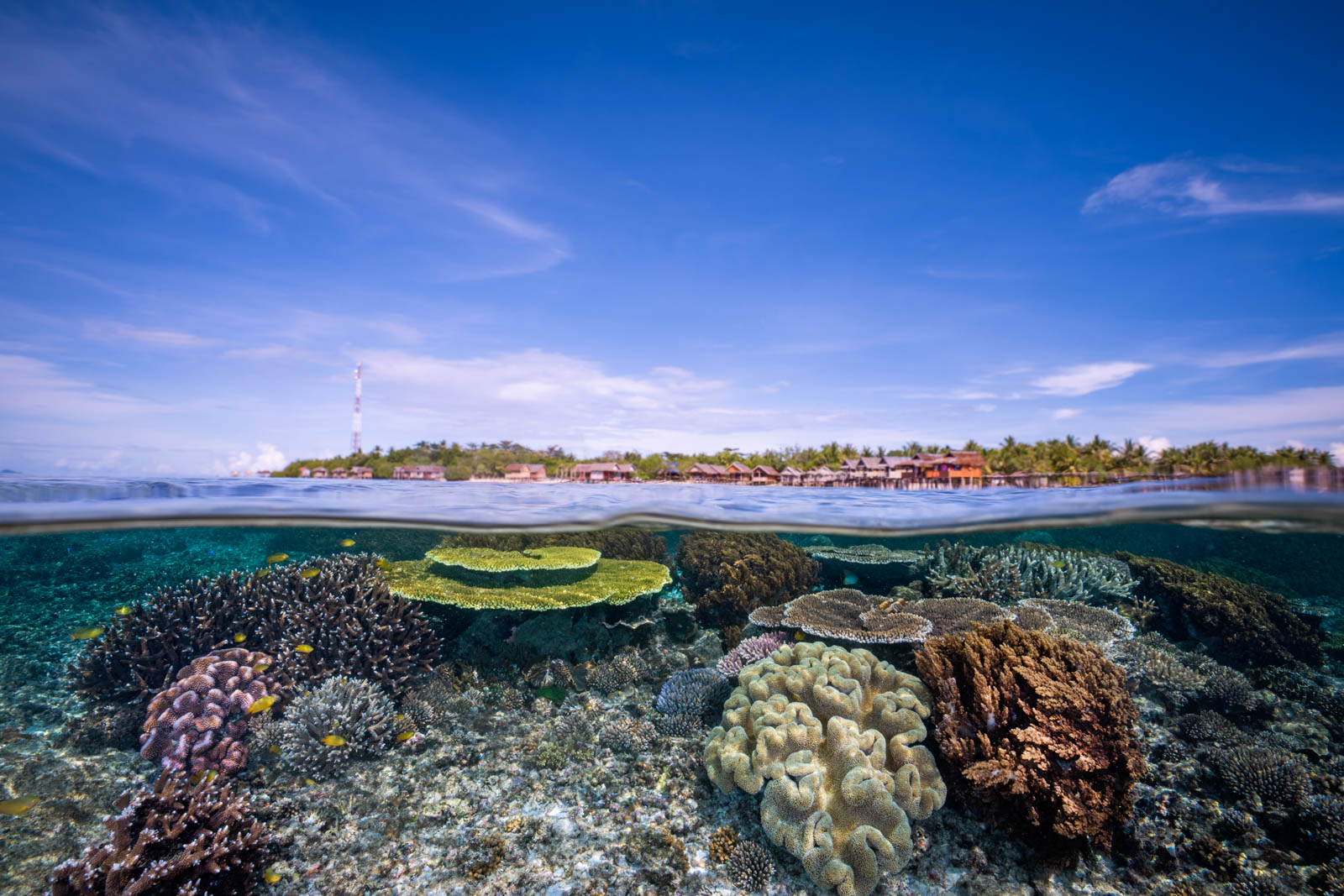
Centrally positioned within the globally renowned Coral Triangle—the epicenter of marine biodiversity—Raja Ampat hosts an astonishing ecological inventory. Marine biologists estimate that the region houses roughly 75% of all known coral species on Earth. Beneath its turquoise and sapphire surface lies an aquatic metropolis supporting over 1,000 species of fish, 540 variations of stony and soft corals, 700 species of mollusks, alongside resident populations of dugongs, saltwater crocodiles, and schooling oceanic manta rays.

For underwater photographers, the destination presents a double-edged sword of boundless creative opportunity and formidable environmental challenges. Characterized by high-energy currents, nutrient-rich upwellings, and variable visibility, Raja Ampat demands meticulous logistical planning, advanced diving competency, and specialized camera rigging. Whether capturing expansive, cathedral-like reefscapes or hunting for minuscule, camouflaged macro critters tucked within gorgonian fans, photographers journeying to this remote frontier are entering one of the planet’s most visually arresting natural studios.

Chronology: Navigating the Journey to "The Last Paradise"
Planning an expedition to an ecosystem as pristine and geographically isolated as Raja Ampat requires a well-structured timeline, from initial transit logistics to underwater execution.

Phase 1: The Long-Haul Transit and Arrival
Reaching the jumping-off point of Waisai is an endurance test for international travelers. For globetrotters originating from Australia or Western hubs, the route typically involves multiple commercial flights with lengthy layovers, followed by a domestic flight into Sorong, West Papua. From Sorong, visitors must board a slow, humid two-hour ferry across the Dampier Strait, concluding with a rugged, pothole-peppered vehicle transfer to the port or resort staging grounds.

Phase 2: Choosing Your Vessel or Basecamp
Once ashore, photographers must decide between two primary modes of operation:

- Liveaboards: Highly recommended for serious image-makers, liveaboard vessels allow divers to cover vast geographic distances across the archipelago. Securing a berth on a boat that includes Misool in its itinerary offers access to an ecosystem that is bucking the global trend by actually improving in biodiversity.
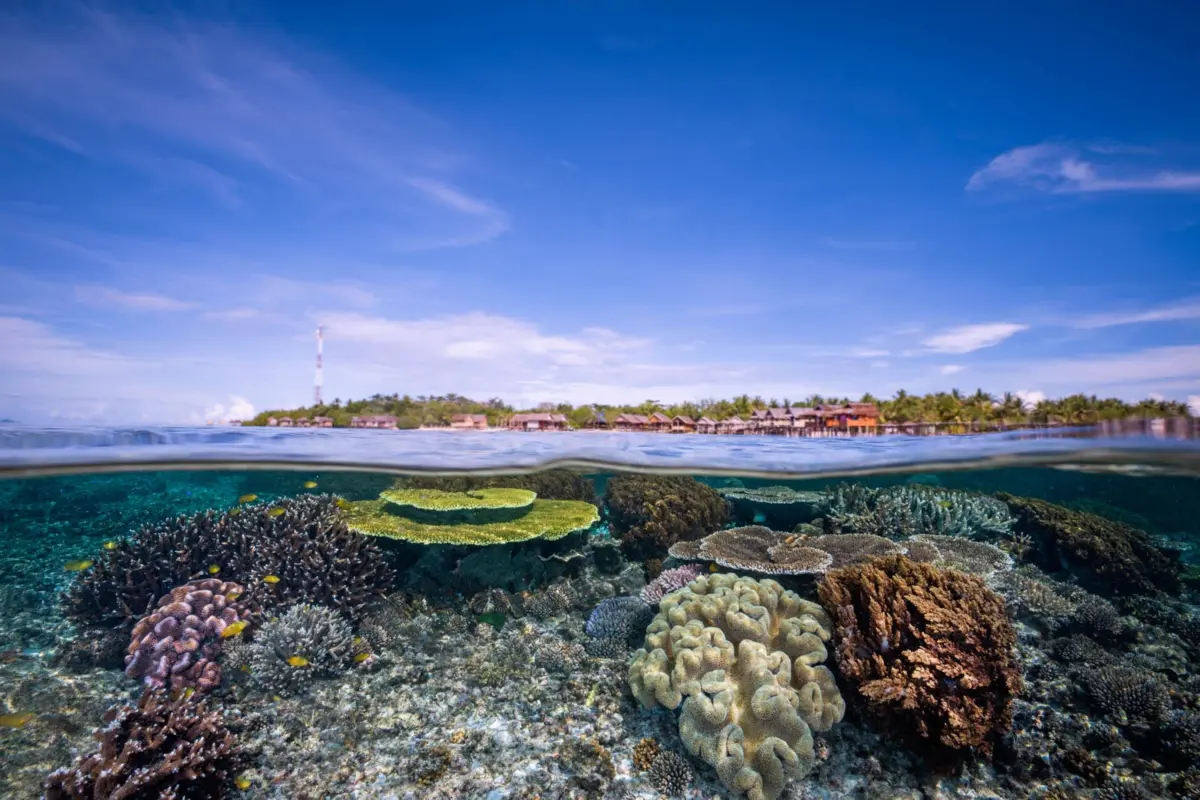
- Island Homestays and Resorts: For those wishing to decompress, booking a stay at an eco-resort with a pristine "house reef" provides 24-hour access to shallow water environments, maximizing opportunities for split-shots and ambient-light photography during golden hours.
Phase 3: The Dive Execution and Gear Configuration
A standard daily itinerary involves three boat-based or shore-accessed dives, supplemented by night dives. Because Raja Ampat demands specialized imaging gear—ranging from ultra-wide 16–35mm rectilinear lenses to macro setups featuring 90mm or 120mm focal lengths paired with external diopters—rig preparation must happen meticulously between surface intervals. Photographers must coordinate with local dive guides prior to every entry to determine whether the site calls for wide-angle grandeur or macro detective work, as switching mid-dive is virtually impossible.

Supporting Data: Biodiversity Metrics and Technical Diving Conditions
To understand why Raja Ampat remains a premier destination for visual storytellers, one must examine the quantitative metrics defining its marine wealth alongside the physical parameters governing underwater image capture.

Ecological Density Metrics
- Coral Diversity: Over 540 distinct species, representing nearly all hard coral genera known to science.
- Fish Populations: More than 1,000 documented species, creating dense, swirling walls of pelagics and reef fish.
- Mega-Fauna and Critters: Frequent sightings of reef sharks, wobbegongs (Hemiscylliidae), green sea turtles, pygmy seahorses (Hippocampus denise), ghost pipefish, and blue-ringed octopuses.
Environmental Challenges and Equipment Considerations
| Challenge Factor | Environmental Cause | Photographic Implication | Mitigation Strategy |
|---|---|---|---|
| Nutrient-Rich Murkiness | Strong planktonic upwellings fueling the food web. | Reduced visibility can scatter light and cause backscatter in wide-angle shots. | Master precise strobe positioning, keep strobes pulled back, and utilize snoots or close-focus wide-angle (CFWA) techniques. |
| High-Velocity Currents | Water movement forced through narrow channels like the Dampier Strait. | Equipment acts like a sail; divers must cling to boulders, leaving only one hand free. | Leave heavy camera setups behind on "strong current" dives, or secure rigs tightly with lanyards and comprehensive insurance policies. |
| Variable Light Conditions | Overcast tropical skies alternating with glaring equatorial sun. | Exposure adjustments must be rapid; high dynamic range between shallow reefs and deep blue drop-offs. | Shoot in RAW format, master manual exposure settings, and leverage natural light during shallow water safety stops. |
Official Recommendations: Top Dive Sites for Underwater Photography
Seasoned underwater photographers frequently highlight specific locations across the archipelago that offer exceptional aesthetic value and subject diversity.

1. Melissa’s Garden
Located near the Fam Islands, Melissa’s Garden is a mandatory pilgrimage for wide-angle enthusiasts. Dropping onto this site plunges the photographer into an endless topography of manicured coral plates stretching toward the horizon. The structured, undulating architecture provides a vivid canvas for framing schooling batfish, barracuda, snappers, and reef sharks against an infinite blue backdrop.

2. Batu Rufus
A hidden sanctuary defined by a crystal-clear emerald lagoon encircled by towering limestone karst formations. Photographers can swim through a coral-encrusted portal into a shallow, 5-meter natural pool characterized by startling visibility. This site serves as an ideal location for freediving photography, natural-light split shots (over-under images), and ambient-light framing without the encumbrance of scuba tanks.

3. Cape Kri
Holding historical significance for recording one of the highest numbers of fish species ever documented on a single dive, Cape Kri is a microcosm of Raja Ampat’s abundance. Sloping reefs plummeting to 40 meters host both pelagic action and macro treasures. Because of its size and topographical complexity, photographers should dedicate multiple dives here—reserving one tank for a 16–35mm wide-angle setup targeting schooling jacks and reef sharks, and a second tank for a dedicated macro rig scanning the Muricella gorgonian fans for elusive pygmy seahorses.

4. Manta Ridge
Positioned between Mansuar and Airborei Islands, Manta Ridge is a dynamic cleaning station where oceanic mantas congregate. While the site can occasionally yield zero sightings if oceanographic conditions misalign, a successful dive places the photographer directly in the path of cruising giants. Photographers must balance framing sweeping wing-spans with maintaining a secure physical position against the aggressive currents sweeping across the ridge.

5. Citrus Ridge
Situated near the Gam Islands, Citrus Ridge earns its name from the vibrant, neon-hued soft corals and crinoids blanketing its T-shaped topography. While wide-angle abstract compositions are tempting here, the true draw lies in its dense macro life. Peering into the intricate crevices of the reef reveals an array of benthic organisms, making it an exceptional location to blend macro subjects with colorful, saturated coral backdrops.

Implications: Conservation, Ecotourism, and the Future of Underwater Imaging
The global acclaim of Raja Ampat as an underwater photography mecca carries profound implications for marine conservation, local economies, and the sustainable management of fragile tropical ecosystems.

The Success of Community-Based Marine Management
Unlike many coral reef systems worldwide experiencing catastrophic bleaching and degradation due to climate change and overfishing, several areas within Raja Ampat—most notably around Misool—are showing measurable ecological recovery. This turnaround is largely attributed to forward-thinking marine protected areas (MPAs), no-take zones, and community-led conservation initiatives supported by tourism revenue. When underwater photographers and eco-tourists pay park entry fees and patronize eco-resorts, they directly fund the patrols that deter illegal shark-finning and destructive dynamite fishing.

Ethical Photography and Ecosystem Preservation
As the popularity of underwater macro photography surges, ethical considerations surrounding interaction with marine life have come to the forefront. The pursuit of the "perfect shot" can occasionally lead to irresponsible behaviors, such as touching delicate hard corals, manipulating shy cephalopods, or stressing rare macro subjects like pygmy seahorses and blue-ringed octopuses with continuous strobe fire or physical prodding.

Industry leaders and conservation organizations emphasize that photographers bear a professional responsibility to practice peak buoyancy control, respect animal behavior, and prioritize reef health over frame acquisition. Maintaining a sustainable balance between promoting Raja Ampat as a visual masterpiece and protecting its delicate biological machinery ensures that "The Last Paradise" will continue to inspire generations of ocean advocates and image-makers for decades to come.
