

By Global Outdoors News Desk
Updated August 6, 2026
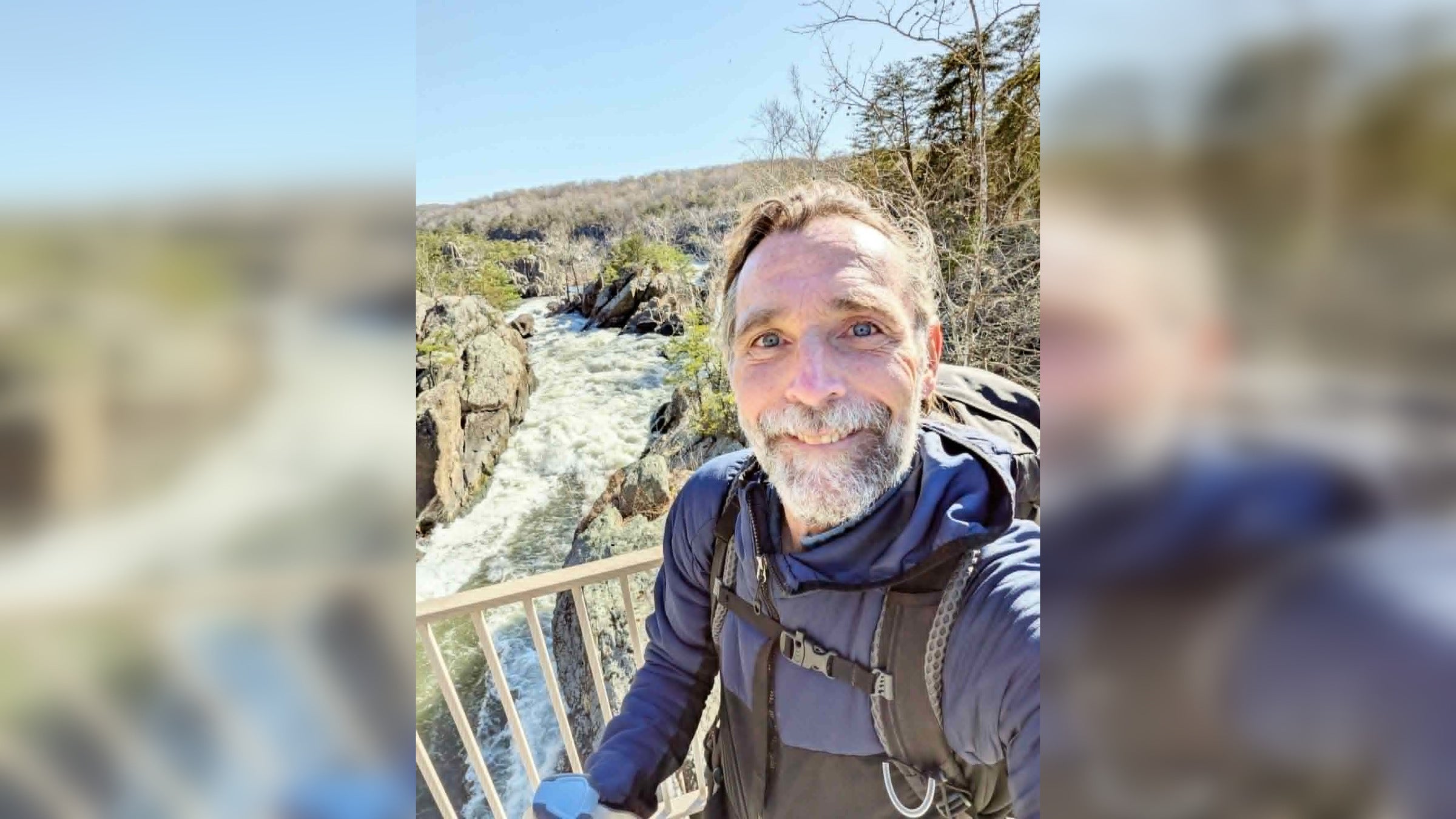
WASHINGTON, D.C. / LA PUSH, Wash. — In March, Bernie Krausse stood by the tranquil waters of the U.S. Capitol Reflecting Pool as a hopeful visionary, staring down an asphalt and dirt labyrinth stretching across the North American continent. Exactly 130 days later, in August, the Bay Area native dove triumphantly into the crashing waves of the Pacific Ocean at La Push, Washington, etching his name into the annals of outdoor endurance history.
On August 4, 2026, Krausse completed a staggering feat of human propulsion, becoming the first known person to thru-hike the behemoth Great American Rail-Trail entirely on foot. While thousands of miles of the ambitious 3,700-plus-mile corridor have been successfully traversed by cyclists since the trail’s public launch, Krausse stands alone as the pioneer who proved that the transcontinental pathway "goes on foot."
His historic journey serves as a watershed moment for American long-distance trekking, bridging the gap between urban bike paths and remote backcountry tracks while laying the groundwork for a new generation of pedestrian explorers.
Main Facts: The Historic 130-Day Transcontinental Trek
Spanning more than 3,700 miles from the nation’s capital to the rugged Washington coast, the Great American Rail-Trail is designed to be the crown jewel of the U.S. greenway system. However, unlike established pedestrian paths like the Appalachian Trail (AT) or the Pacific Crest Trail (PCT), the Great American Rail-Trail is a mosaic of connected rail-to-trail segments, local multi-use paths, sidewalks, and temporary road walks.
Because the corridor is only an estimated 56% complete, continuity is far from guaranteed. While previous end-to-end completers have tackled the route on two wheels, leaning on the smooth surfaces of completed railbeds, Krausse’s journey required an entirely different level of logistical wizardry and physical sacrifice.
Over the course of 130 days, Krausse maintained a blistering, relentless pace of 25 to 35 miles per day. More than just a physical traveler, he functioned as a de facto cartographer for the outdoor community. Along the way, he logged an estimated 10,000 GPS waypoints, creating a comprehensive, downloadable mapping resource now hosted by Hiking America to aid future hikers attempting to conquer the route.
Chronology of the Journey: From the Capital to the Coast
Krausse’s expedition was a masterclass in adaptability, requiring him to shift mental gears continuously as the landscape morphed beneath his boots.
Phase 1: The Eastern Launch and Unexpected Detours
Setting off from Washington, D.C. in March, Krausse immediately encountered the unpredictable nature of an unfinished transcontinental route. Early in the trek, a sudden and unexpected bridge closure across the Ohio River threatened to derail his tightly managed schedule. Unwilling to fall behind, Krausse improvised on the fly, charting a grueling, multi-state detour through West Virginia.
The detour highlighted the complex administrative and geographical jigsaw puzzle of the trail: within a single seven-hour window, Krausse found himself crossing through Pennsylvania, West Virginia, and Ohio, navigating the fluid boundaries of the American rust belt on foot.
Phase 2: Fire, Prairie, and the Midwest
As the trail wound its way through the Midwestern states and toward the Great Plains, environmental hazards escalated. In early June, while taking a scheduled "zero day" to rest in northwest Nebraska, a sudden wildfire broke out nearby. The blaze aggressively chewed through 28,000 acres, cutting directly across the path of the trail and forcing Krausse to recalibrate his logistics to safely bypass the inferno.
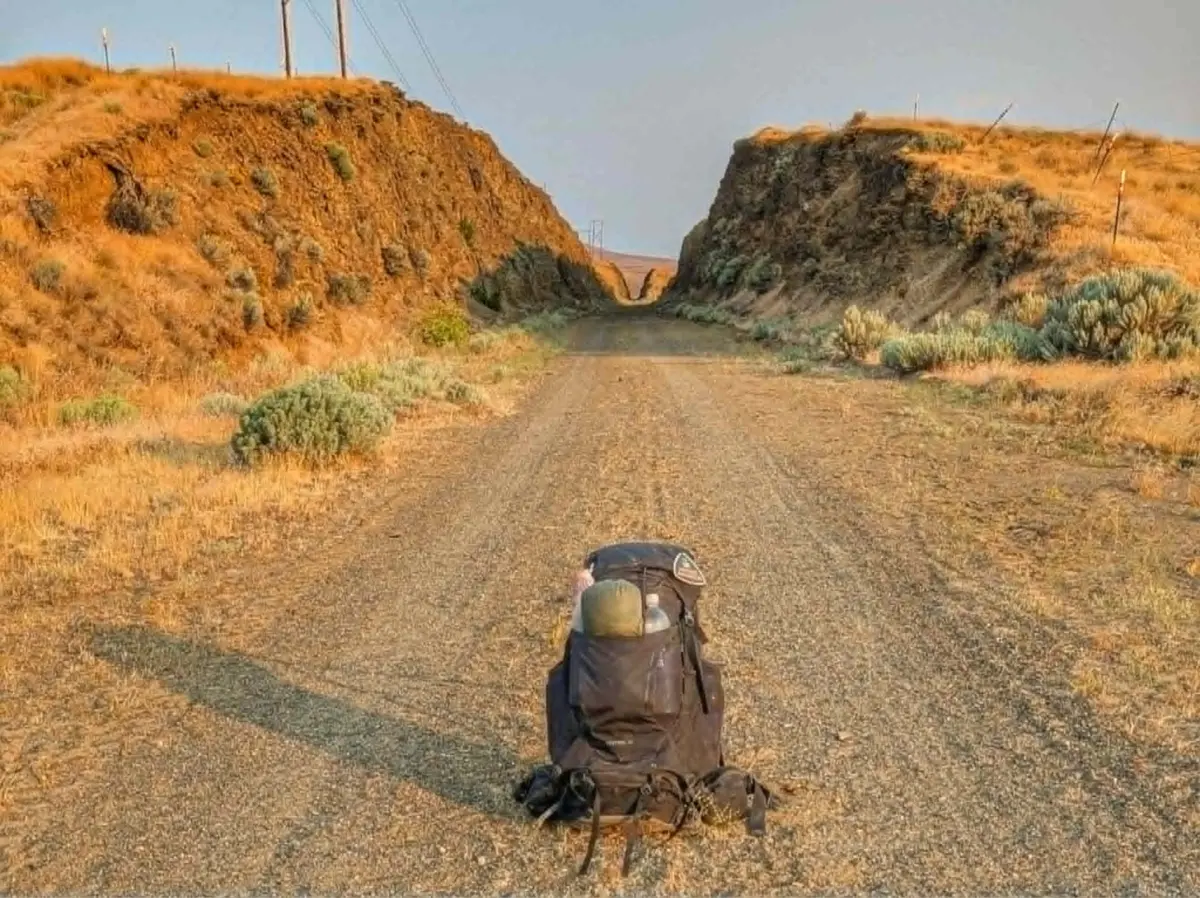
Beyond fire, the central corridor presented unique logistical tests: punishing stretches requiring 40-mile days with zero known water access sources, and intricate navigation markers that required threading the needle across active U.S. Army live-fire ranges.
Phase 3: The Pacific Seaboard and Philosophical Reflection
As the plains gave way to the jagged peaks of the Rocky Mountains near Yellowstone and eventually descended toward the Pacific Northwest, Krausse’s physical fatigue was matched only by a deep, introspective mindfulness.
His trail journals, shared publicly on Facebook, oscillated between practical event logs and enigmatic, philosophical musings. On Day 129, just one day shy of his journey’s conclusion, Krausse wrote:
"After a 39 mile day of catching the flow, I dispersed-camped on DNR State Land. In the morning I will have only twenty more miles to hike to reach the Pacific Ocean at La Push [Washington]. Is this the end or merely a series of perpetual beginnings?"
On August 4, those twenty miles melted away, and Krausse’s boots finally met the Pacific surf.
Supporting Data and Pedigree: A World-Class Resume
Krausse’s unprecedented success on the Great American Rail-Trail was not the product of beginner’s luck, but rather the culmination of a lifetime dedicated to extreme endurance hiking.
A veteran of the global outdoors community, Krausse estimates that he has logged roughly 60,000 miles in his hiking boots since turning 30. His résumé includes completing the grueling "Triple Crown" of American hiking—the Appalachian Trail, the Pacific Crest Trail, and the Continental Divide Trail—not just once, but twice, earning him the prestigious and rare distinction of a double Triple Crown.
This wealth of world-class experience allowed him to approach the Rail-Trail with a unique perspective, blending veteran route-finding instincts with a deeply spiritual appreciation for the journey.
"It’s like everything I’ve ever learned converged into this one experience on this one trail," Krausse shared in a voice message with Backpacker magazine. "I got to see it with new eyes, I got to be present. And now I’ve got all the time in the world—I’m not walking [across the U.S.] anymore."
Official Responses and Industry Impact
The Rails-to-Trails Conservancy (RTC), the national non-profit organization spearheading the monumental effort to convert abandoned rail corridors into public multi-use trails, has watched Krausse’s journey with immense excitement.
Kevin Belle, Project Manager for the Great American Rail-Trail, noted that the concept of a coast-to-coast path has been central to the Conservancy’s mission since its founding 40 years ago.
"The idea is as old as the Conservancy, but we didn’t want the announcement to get out ahead of the development," Belle explained. "Once we had solid analysis showing it was over 50% complete, we launched publicly in 2019."
According to Belle, milestones like Krausse’s thru-hike validate decades of advocacy, planning, and local community investment. "We’re not just measuring progress in miles," Belle said. "We’re measuring it in communities touched, people who are out on the trail. It’s really great to have somebody with Bernie’s positivity and energy doing something like a thru-hike. It makes the light bulb go on in people’s heads."
Because the majority of trail users currently interact only with localized segments near their homes, Belle believes that high-profile thru-hikers help ignite regional connectivity. "Somebody like Bernie can make them go, ‘Oh, if we just build this next 10-mile section, we can now connect to the next town.’ It starts to have a snowball effect in the best way possible."
John Wesley Brett, founder of the cross-country navigation platform Hiking America, worked closely with Krausse to help plan the ambitious logistics of the route. Brett emphasized just how uncharted this territory was for the pedestrian community.
"Until now, the Great American belonged to cyclists," Brett noted. "The trip reports are cyclists. The planning resources assume a bike underneath you. For four months, the people Bernie passed were almost all on wheels, and more than a few of them asked what he was doing out there walking. Long-distance hikers have not had this route on their list, because nobody had established that it goes on foot."
Implications: Opening a New Frontier for Long-Distance Backpackers
Bernie Krausse’s successful thru-hike marks a literal and figurative paradigm shift for American trails. By proving that the Great American Rail-Trail can be navigated end-to-end on foot, Krausse has effectively inaugurated a brand-new category of long-distance backpacking.
For years, endurance hikers looking for cross-country challenges were limited to rugged mountain corridors like the CDT and PCT, or wilderness pathways like the AT. The Great American Rail-Trail offers an entirely different flavor of adventure—one that weaves through the heart of small-town America, historic industrial corridors, agricultural heartlands, and wild public lands alike.
Furthermore, by publishing his meticulously logged GPS waypoints and route adjustments online, Krausse has removed the friction of route-finding for those who wish to follow in his footsteps. The Hiking America GPX resource ensures that future thru-hikers will not have to guess their way around closed bridges, wildfire zones, or ambiguous road walks.
As communities along the 3,700-mile corridor continue to secure funding, pave new segments, and bridge critical infrastructure gaps, they do so knowing that the trail is no longer just a blueprint for cyclists, but a fully realized, transcontinental footpath.
Bernie Krausse walked away from the U.S. Capitol Reflecting Pool as a hopeful explorer chasing an untested dream. He arrived at the Pacific Ocean as a trailblazer—the man who proved that the Great American Rail-Trail truly goes on foot.
