

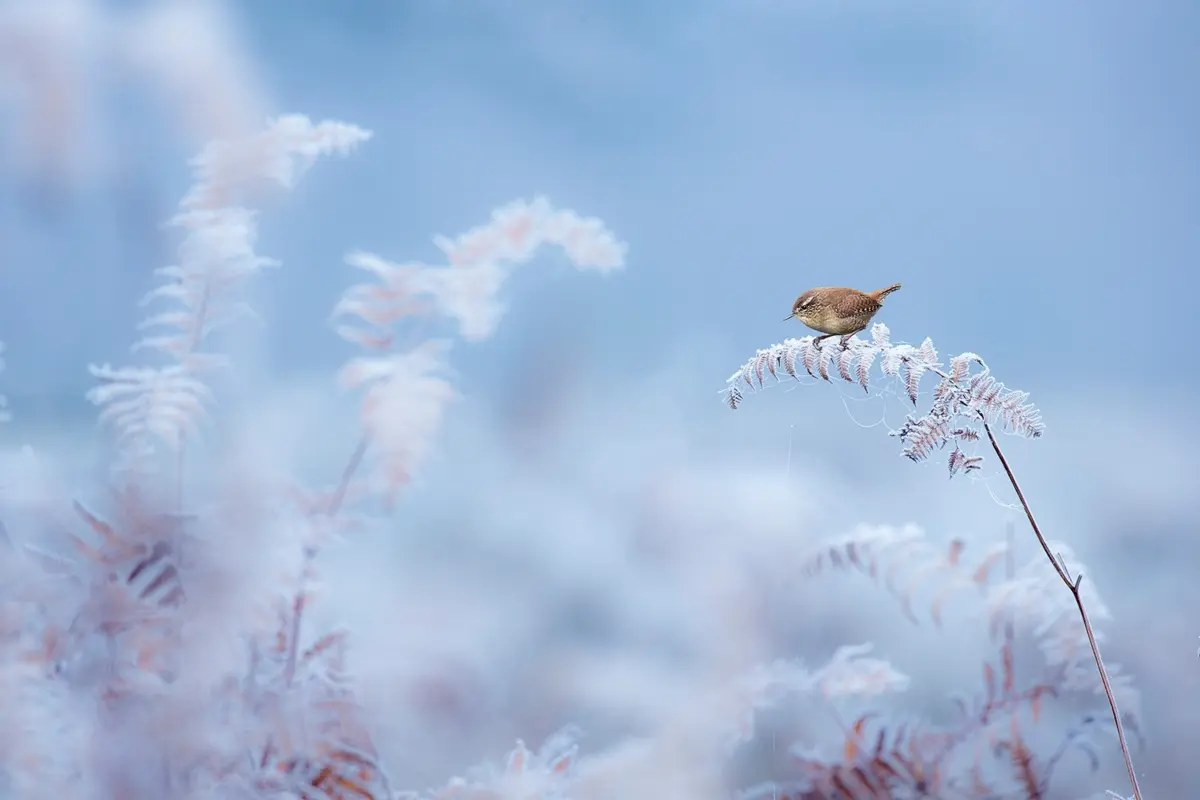
Main Facts
Passerine birds, scientifically classified within the order Passeriformes, represent the largest and most diverse group of avian species on Earth, encompassing more than half of all known birds. Commonly referred to as perching birds or songbirds, these agile creatures are easily recognized by a distinct anatomical feature: a specialized toe arrangement consisting of three digits pointing forward and one facing backward. This adaptation grants them an exceptional grip, allowing them to perch effortlessly on slender branches, reeds, and artificial structures.

Ranging from the brilliant goldfinch to the ubiquitous garden robin, passerines include familiar families such as sparrows, tits, finches, warblers, and swallows. While their sheer ubiquity across global gardens, woodlands, and open fields makes them accessible to photographers of all skill levels, their diminutive size, high metabolic rates, and rapid, erratic movements present formidable technical challenges. Yet, for wildlife photographers willing to invest time in fieldcraft, patience, and technical precision, passerine photography offers some of the most rewarding and visually striking opportunities in nature imaging.

Chronology of the Craft: Evolution of Backyard Bird Photography
The methodology of capturing passerines has evolved dramatically alongside photographic technology. Understanding this developmental timeline provides context for modern best practices:

- The Early Era (Late 19th to Mid 20th Century): Photography of small perching birds was severely limited by heavy glass plate cameras, slow film speeds, and fixed focal lengths. Photographers relied almost entirely on stationary nest photography, which often caused significant stress to breeding pairs.
- The Telephoto Revolution (1970s–1990s): The mass availability of affordable 300mm and 400mm telephoto lenses allowed photographers to step back, reducing human disturbance. Concurrently, the popularization of backyard feeding stations shifted the paradigm from hunting birds in the wild to bringing them into controlled, predictable environments.
- The Digital & Autofocus Age (2000s–2010s): The transition to digital sensors eliminated the recurring cost of film, enabling high-volume burst shooting. Autofocus systems became sophisticated enough to track erratic flight paths, while improved high-ISO performance made low-light morning and evening shoots viable.
- The Mirrorless & AI Epoch (Present Day): Modern mirrorless camera bodies equipped with advanced subject-detection algorithms and AI-driven eye-tracking have revolutionized passerine photography. Photographers can now lock focus onto the pinpoint eye of a rapidly moving tit or finch with unprecedented reliability, shifting the primary creative challenge from technical execution to artistic composition.
Supporting Data and Technical Metrics
To successfully freeze the motion of a bird whose heart rate can exceed 500 beats per minute, photographers must rely on precise technical parameters. Field data collected from professional wildlife educators underscores the following optimal settings and environmental configurations:

- Shutter Speed Thresholds: A minimum shutter speed of $1/1000texts$ is required to freeze a perching passerine’s subtle head tilts and feather adjustments. For dynamic actions such as takeoff, landing, or aerial combat over food sources, shutter speeds must be elevated to $1/2500texts$ or faster.
- Aperture and Depth of Field: Working at close quarters with telephoto lenses naturally compresses depth of field. Maintaining an aperture range between $f/2.8$ and $f/5.6$ isolates the subject against a smoothly blurred background (bokeh). However, frame-filling portraits often require stopping down to $f/8$ to ensure both the eye and chest plumage remain tack-sharp.
- ISO Management: In low-light woodland settings or overcast winter days, pushing ISO into higher brackets is strongly advised. Modern sensor technology renders visible digital noise preferable to motion-blurred images lacking critical sharpness.
- Nutritional Appeal: Feeding stations utilizing high-energy, high-lipid foods—specifically black oil sunflower seeds, nyjer seeds, suet blocks, and live mealworms—reliably attract the greatest diversity of passerine species, particularly during resource-scarce winter months.
Environmental Design and Ethical Considerations
Professional wildlife photographers emphasize that stellar images are rarely born from pure luck; they are engineered through careful environmental control. Creating an ethical, functional feeding and bathing station in a backyard or controlled reserve is the cornerstone of consistent passerine portfolio development.

Designing the Feeding and Reflection Station
Feeders should never be placed in exposed, wide-open areas where skittish passerines feel vulnerable to avian predators like hawks. Instead, position feeders near dense foliage or shrubbery that offers immediate safety. Natural light direction is paramount; orienting the setup to capture front-lighting in the morning and warm, golden-hour backlighting in the evening creates dramatic visual depth.

Furthermore, integrating a shallow freshwater reflection pool transforms a basic feeding station into an artistic studio. Using a rectangular planting tray lined with dark stones or a natural log yields clean, muted reflections of surrounding tree foliage rather than blown-out, overexposed patches of bright sky.

Sourcing and Positioning Natural Perches
The background and foreground elements of an image define its authenticity. Prudent photographers collect natural perches—such as lichen-encrusted branches, weathered twigs, or seasonal spring blossoms—during hikes, mounting them near feeders. The perch must accurately reflect the bird’s natural habitat to avoid a contrived, sterile aesthetic. Backgrounds should be positioned at a substantial distance behind the perch; combined with a long focal length and a wide aperture, this distance renders the background into an abstract wash of harmonious color.

Ethical Guidelines for Photographers
As advanced equipment makes capturing intimate moments easier, adherence to strict ethical standards is vital. Photographers must avoid nest photography during critical breeding phases, as excessive human presence can alert predators or cause parents to abandon eggs and helpless chicks. Feeding stations must be rigorously maintained; washing feeders regularly with a mild bleach solution prevents the transmission of fatal avian diseases such as trichomoniasis and salmonellosis.

Implications for Conservation and Citizen Science
Beyond the artistic pursuit of a compelling portfolio, the growing popularity of passerine photography carries profound ecological and scientific implications.

As urban sprawl encroaches upon natural habitats, suburban and rural gardens increasingly serve as critical ecological stepping stones for migratory and resident songbirds. Backyard photographers, equipped with high-resolution telephoto gear and keen observational skills, frequently act as front-line citizen scientists. Photographic logs submitted to ornithological databases help researchers monitor population shifts, track the arrival dates of migratory species, and document the localized impacts of climate change on breeding cycles.

Moreover, the intimate connection forged through photographing these small birds fosters a grassroots appreciation for local biodiversity. When individuals invest time in understanding avian behavior, vocalizations, and habitat requirements, they are significantly more likely to support local conservation initiatives, plant native flora, and advocate for pesticide-free green spaces.

Conclusion
Passerine photography is an intricate discipline that bridges technical mastery with deep ecological awareness. While the diminutive size and blistering speed of species like finches, tits, and warblers present initial hurdles, they ultimately push photographers to refine their craft. By understanding avian behavior, thoughtfully constructing feeding and perching environments, and dialing in precise camera settings, enthusiasts can unlock a captivating microcosm of wildlife art. Grab your telephoto lens, step into the quiet focus of nature, and discover the extraordinary world of the perching bird.
