

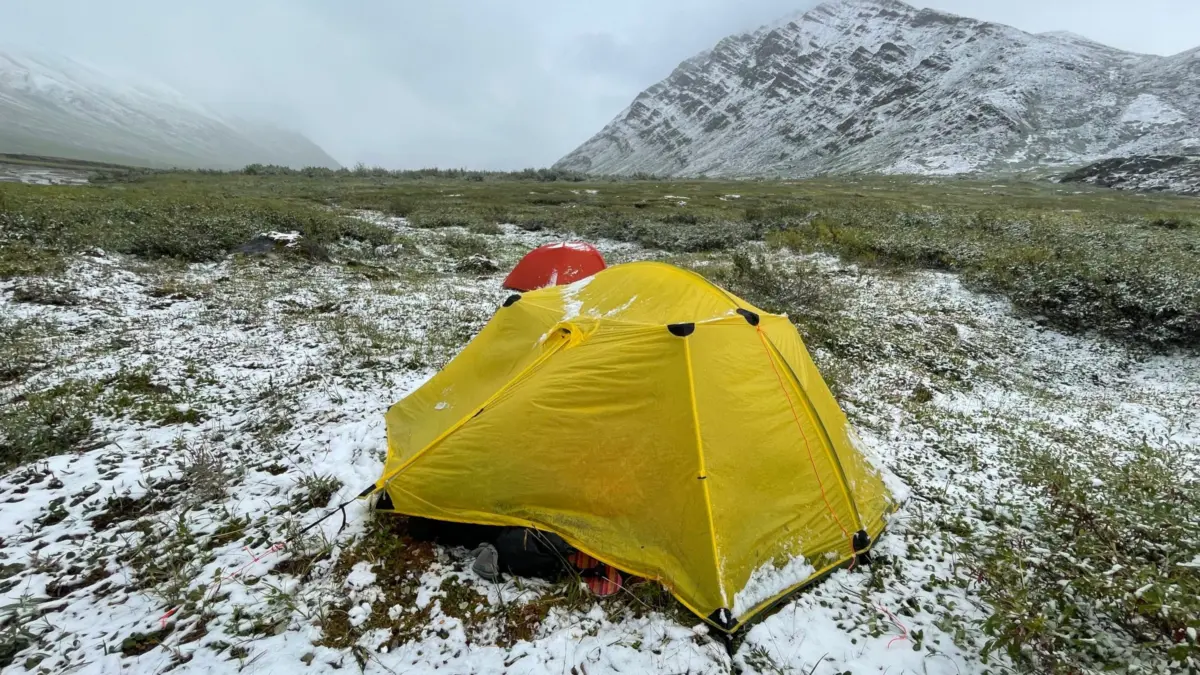
Published: October 1, 2026
Author: Outdoor Gear & Field Science Desk
For seasoned backpackers and casual weekend wanderers alike, the middle of autumn represents the absolute zenith of the camping season. The suffocating humidity and relentless insect swarms of mid-summer have long since dispersed, replaced by crisp, invigorating daytime temperatures that make grueling ascents feel effortless. The visual landscape, too, reaches a breathtaking crescendo: a high-contrast tapestry of electric blue skies, blazing amber and crimson fall foliage, and the stark, pristine beauty of freshly snow-dusted high-elevation peaks.
Yet, this seasonal transition demands a recalibration of backcountry strategy. While the rewards are unmatched, autumn introduces severe meteorological and thermodynamic challenges—foremost among them being plunging nighttime temperatures.
While the instinctual response to a freezing autumn forecast is to simply upgrade your gear locker with a higher-rated sleeping bag, a heavier insulated pad, and a barrage of thermal layers, seasoned mountaineers know that gear is only half the battle. Long before you unpack your down quilt, the single most impactful decision you will make regarding your overnight comfort happens hours earlier: campsite selection.
Understanding the micro-topography of the backcountry can mean the difference between a restorative night of deep sleep and a shivering, miserable ordeal. Here are the five hidden reasons you aren’t sleeping well on fall backpacking trips, backed by atmospheric science, and how to fix them.
Main Facts: The Thermodynamics of Autumn Camping
As autumn progresses toward winter, daylight hours dwindle rapidly, and the angle of the sun drastically reduces solar radiation absorption. Consequently, the ambient environment undergoes rapid temperature swings—often exceeding 40 degrees Fahrenheit between peak afternoon warmth and pre-dawn lows.
When establishing a camp in the fall, backpackers frequently rely on summer heuristics: seeking flat ground near water, pitching in low-lying depressions out of the wind, or seeking completely unobstructed views of the night sky. In autumn, however, these very choices weaponize the local microclimate against the camper.
Atmospheric physics, thermal conductivity, and relative humidity play active roles in nocturnal cooling. By shifting your approach to site selection, you can harness natural topography to insulate your tent, block biting winds, and mitigate destructive moisture buildup.
Chronology: A Standard Fall Backpacking Day and Its Thermal Traps
To understand why a campsite fails you in the dark, it helps to trace the thermal timeline of a typical October day in the mountains:
- 14:00 (Peak Heat): You arrive at a scenic valley floor near a river. The sun is warm, the ground feels manageable, and the location looks idyllic. You decide to pitch your tent right there.
- 17:30 (Dusk): The sun dips below the ridgeline. Because the sky is clear, radiant heat immediately begins escaping the earth’s surface unchecked, streaming back out into the upper atmosphere.
- 20:00 (Early Night): Cold, dense air on the surrounding slopes begins to cool rapidly. Gravity pulls this heavier, frigid air down the mountainsides, where it pools directly into the valley bottom—your campsite—creating a local temperature inversion.
- 02:00 (Deep Night): The relative humidity near the nearby river spikes as the air cools. Moisture condenses on the cold ground and coats your single-wall or double-wall tent in a heavy sheen of dew, which quickly wicks away your body heat.
- 06:00 (Pre-Dawn Minimum): Temperatures bottom out. The hard, compacted earth beneath your tent—having high thermal conductivity—has sucked the remaining warmth straight out of your sleeping pad. You wake up shivering, exhausted, and wondering where your warmth went.
Supporting Data & Micro-Topography: 5 Mistakes and Solutions
1. You Pitched Your Tent at the Bottom of the Valley
While common sense dictates that lower elevations are universally warmer, autumn mountain environments frequently defy this rule via temperature inversions, often colloquially referred to as "cold sinks."
During long, clear autumn nights, air in contact with high-elevation slopes cools down, becomes dense, and flows downward under the influence of gravity. This frigid air collects and settles in the lowest topographic features—draws, basins, and valley floors. Because autumn nights are significantly longer, colder, and clearer than summer nights, this pooling effect is vastly more pronounced.
- The Fix: Avoid pitching your tent in the dead-center of a valley floor or natural basin. Instead, seek out a slight rise, bench, or saddle—ideally establishing your shelter roughly 50 feet above the valley floor where you can successfully escape this subterranean river of ice-cold air.
2. The Wind is Ignoring Your Shelter’s Strengths
Autumn weather systems are notoriously volatile, frequently unleashing bitter, biting gales. When pitching a tent in high winds, backpackers often focus solely on the ease of entry, ignoring the aerodynamic and thermal consequences of their orientation.
- The Fix: Always research prevailing seasonal wind directions for the region. Position the main vestibule door facing away from the prevailing wind. This prevents the wind from directly battering you during entries and exits, and stops icy drafts from forcing their way through zippers and open mesh panels. Furthermore, orienting the narrower profile of your tent into the wind creates a streamlined, aerodynamic pitch that eliminates that disruptive, sail-like flapping. Whenever possible, tuck your shelter behind natural windbreaks like dense boulder fields or thick clusters of conifers.
3. Your Campsite Surface Has High Thermal Conductivity
Leave-No-Trace principles rightly mandate camping on durable, established, or sustainable surfaces. However, when presented with a choice, the geological composition of the ground beneath your tent matters intensely.
Hard, compacted earth and exposed rock ledges possess a high thermal conductivity rate. Not only do they retain the day’s cold far longer than loose organic matter, but they actively draw residual warmth directly out of your body via conduction. Furthermore, wet ground conducts heat away from the human body up to 25 times faster than dry ground.
- The Fix: Opt for soft, dry organic duff—such as a thick layer of pine needles or dry soil—whenever available. If you are forced onto hard or suspect ground, manufacture your own insulation: gently rake or shuffle fallen leaves, pine needles, or dead foliage into a soft, uniform layer underneath your tent footprint. This organic carpet traps millions of tiny air pockets, creating a natural thermal break between your sleep system and the freezing earth.
4. You Are Camped Too Close to a Body of Water
Rivers, lakes, and alpine tarns are magnificent visual anchors for a campsite, but in autumn, they are moisture traps. The immediate microclimate surrounding water sources features significantly higher relative humidity and localized ground condensation.
When air saturated with moisture cools overnight, it deposits heavy condensation on and inside your shelter. A damp sleeping bag loses its loft, and damp air drastically increases thermal conductivity, making you feel chilled to the bone.
- The Fix: Adhere strictly to the golden rule of backcountry conservation: camp at least 200 feet away from all lakes, streams, and water sources. Moving uphill and further from water not only protects delicate riparian ecosystems from human impact, but it also places you in drier, better-circulated air that drastically reduces tent condensation.
5. You Camped Under an Open, Starry Sky
A pristine, unobstructed view of the Milky Way is one of the premier perks of sleeping in the backcountry. Unfortunately, it is also a thermal liability.
On crystal-clear nights, the Earth’s surface radiates heat directly into the upper atmosphere without interference. Without cloud cover to act as a thermal blanket, the temperature plummets rapidly and severely.
- The Fix: Seek out campsites nestled beneath a canopy of tall trees. While trees provide a secondary benefit as windbreaks, their overhead branches act as a physical buffer, trapping radiant heat close to the ground and mitigating the dramatic temperature drops associated with wide-open, exposed alpine meadows.
Official Responses and Expert Insights
Wilderness guides and search-and-rescue (SAR) personnel frequently field calls from poorly prepared campers experiencing early-stage hypothermia during the shoulder seasons.
"The most common misconception we encounter is that backpackers believe hypothermia only happens when it’s actively snowing or raining," notes emergency management and outdoor safety liaison Marcus Vance. "In reality, autumn weather catches people off guard because the days are deceptive. A 65-degree afternoon can easily plummet to 22 degrees by 4:00 AM. When you combine that drop with a damp valley floor and a poorly placed tent, a recreational trip can quickly transition into a survival situation."
Geomorphologists and outdoor educators emphasize that gear ratings—such as ISO/EN temperature ratings for sleeping bags—are tested in controlled laboratory environments that assume proper ground insulation and wind mitigation.
"An expensive sleeping bag cannot overcome basic thermodynamic errors," explains senior outdoor educator Dr. Elena Rostova. "If you set up camp in a cold sink on bare rock near a river under an open sky, physics dictates that you will freeze, regardless of how much money you spent on your gear. Campsite selection is your primary, zero-cost survival tool."
Implications for the Modern Backpacker
As the outdoor recreation community continues to grow, the impact of strategic camping knowledge extends far beyond personal comfort.
By understanding the micro-meteorology of autumn landscapes, backpackers can make more sustainable choices. Knowing why certain areas collect moisture or experience severe inversions helps campers avoid fragile riparian zones, protect delicate alpine flora, and disperse their impact across more resilient, durable surfaces.
Ultimately, mastering the art of the autumn campsite transforms a grueling, sleepless endurance test into an awe-inspiring communion with the wilderness. When you wake up rested, warm, and ready to tackle the crisp mountain air, you realize that thriving in the backcountry isn’t just about what is inside your pack—it’s about understanding how to live in harmony with the environment around you.
