

Introduction: The Serendipity of the Trail
One of the great beauties of backpacking is the serendipity of unexpected discoveries. You round a rocky bend in the trail to spot a silent herd of bighorn sheep grazing against a sheer red-rock cliff. You stumble upon a hidden, off-trail swimming hole on a sweltering afternoon, its cool waters offering immediate relief from the desert heat. A shooting star blazes brilliantly across the Milky Way when you wake up in the middle of the night during the (aptly named) wee hours.
Or, as one seasoned backpacker experienced recently, a shuttle driver named Buttons simply offers you a few packets of an obscure trail butter to try.
Such was the good fortune for a seasoned outdoorsman, his nephew, and his niece as they unloaded their gear from the back of Buttons’ pickup truck. Buttons had just ferried them north from the long-term parking lot at Lees Ferry, Arizona, kicking off a grueling and remote five-day trek through Utah’s notoriously rugged Buckskin Gulch and Paria Canyon.
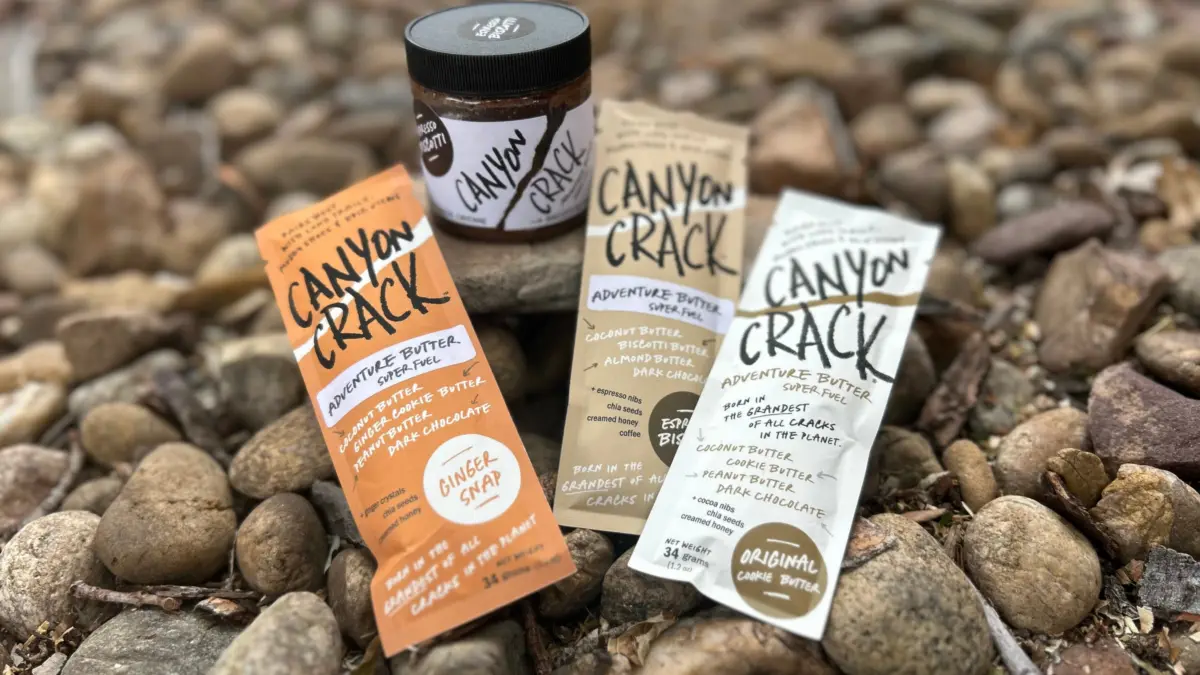
“My boss makes these,” Buttons said casually, handing over a half-dozen slender sleeves of a peanut-butter-based concoction branded as Canyon Crack. “I think you might like them.”
Boy, did they ever. Over a combined 35 years of backpacking, grueling adventure racing, and ironman triathlons, this particular outdoorsman had consumed more than 7,000 packaged backcountry snacks—an endless rotation of sticky energy gels, handfuls of gorp, heavy beef jerky, and an overwhelming surplus of bland, chalky nutrition bars. Few, if any, had ever excited his palate quite like Canyon Crack. The trio fought over their severely limited supply during the remainder of that Utah expedition, and the author quickly placed an order for more the moment he returned to civilization. Months later, the obsession remains entirely intact.
Main Facts: What is Canyon Crack?
At its core, Canyon Crack is an artisanal, calorie-dense nut butter engineered specifically for the demands of long-distance trekking, endurance sports, and outdoor adventuring. Unlike standard commercial peanut butters or ultra-processed energy gels, Canyon Crack leans heavily into complex textures and gourmet flavor profiles.
The product currently comes in four distinct flagship varieties:
- Original Biscoff
- Dark Chocolate Oreo
- Espresso Biscotti
- Ginger Snap
In addition to these sweet variations, the company has announced that two savory flavors are currently in development, aiming to capture a wider segment of the endurance-snacking market.
The standout formulation for many testers has been the Ginger Snap flavor. It features a rich, deliberate, and deeply satisfying mix of coconut butter, traditional peanut butter, and dark chocolate, intermingled with genuine, cookie-like bits of crystallized ginger. Every single flavor is built around a foundation of all-natural ingredients and honest-to-goodness real spices, eschewing artificial preservatives in favor of wholesome, calorie-rich inputs.
Crucially, every flavor introduces its own unique "crunchy surprise." This deliberate textural variation dramatically livens up the eating experience, offering a satisfying mouthfeel that breaks the monotonous sensory deprivation often experienced during multi-day endurance events.
Chronology: The 15-Year Evolution of a Trail Staple
The creation of Canyon Crack did not happen overnight in a corporate boardroom or a modern food science laboratory. Instead, it is the result of a fifteen-year labor of love born out of pure backcountry necessity.
Phase 1: The Frustration (Early 2010s)
Long before it was a commercial product, Canyon Crack was merely an amateur kitchen experiment. Owner and founder Tom Richman, a veteran Grand Canyon backpacking guide and shuttle operator based in northern Arizona, grew increasingly frustrated with the commercial food options available to endurance athletes and wilderness guides.
“I was looking for something with chocolate, but less sugary than Nutella,” Richman explains regarding the genesis of his recipe. Standard chocolate-hazelnut spreads offered a quick sugar spike, but they lacked the sustained, slow-burning caloric density required for grueling days on the trail. Furthermore, mainstream energy bars often turned to stone in freezing canyon temperatures or melted into an unpalatable sludge during searing desert heatwaves.
Phase 2: Perfecting the Blend (Mid-2010s to 2020)
For years, Richman fine-tuned his formulations in his own kitchen. He experimented with varying ratios of fats, proteins, and natural inclusions—testing how different nut bases reacted to crushed cookies, spices, and ginger. He needed a spread that could withstand the extreme temperature fluctuations of the American Southwest while remaining viscous, calorie-dense, and deeply comforting after a ten-mile march through deep sand and canyon narrows.
Phase 3: The Ultimate Field Test (2021)
The recipe received its ultimate stress test in 2021, when Tom Richman and his brother undertook a demanding thru-hike of the entire Grand Canyon. Throughout the expedition, the brothers consumed a large jar of Richman’s homemade nut butter every single week.
This rigorous field test proved that the high calorie-to-weight ratio was not just a luxury, but a strategic survival and performance advantage. When planning meticulous backcountry food caches and multi-day resupplies, every single ounce matters. Richman’s custom butter provided the exact macro-nutrient balance the brothers needed to sustain high-output physical labor without suffering from metabolic bonks or flavor fatigue.
Phase 4: Commercialization and Local Growth (2023–Present)
Encouraged by clients, fellow guides, and shuttle drivers like Buttons, Richman finally formalized the operation. What started as a personal backcountry hack evolved into a localized commercial brand. Today, Canyon Crack is distributed through select regional channels and its official e-commerce platform, slowly building a cult following among thru-hikers, mountain bikers, and backcountry skiers who demand more from their trail rations.
Supporting Data: Nutritional Breakdown and Product Formats
For endurance athletes, nutrition is ultimately a game of numbers. Canyon Crack performs exceptionally well when stacked against traditional backcountry energy supplements.
Nutritional Profile (Per Single Serving)
- Caloric Density: 185 to 190 calories per single serving. This represents an approximate 20% to 35% caloric boost over standard commercial energy gels.
- Fats: 16 to 17 grams, providing long-lasting, slow-release energy ideal for endurance efforts.
- Carbohydrates: 13 to 14 grams, offering an accessible immediate energy source.
- Protein: 3 to 4 grams, aiding in muscle recovery and satiation.
Note: As is standard with virtually all high-fat nut butters, consuming Canyon Crack requires adequate hydration. Users will need a few large swigs of water to wash down the dense, satisfying paste.
Packaging and Pricing Options
Canyon Crack is sold in four distinct sizes to accommodate various outdoor activities and duration lengths:
- Single Sleeves ($3.20 for 1.2 oz.): These individual packets slip effortlessly into the pocket of a running vest, cycling jersey, or hiking shorts for quick, on-the-go fueling. However, user feedback notes that the thicker, crunchier texture means these sleeves do not empty quite as easily as standard, highly processed liquid gel packets, occasionally leaving a small amount of goodness behind.
- Squeeze Pouches ($12 for 6 oz.): An intermediate size designed for day hikes or shorter weekend trips.
- Small Jars ($16 for 12 oz.): A practical option for basecamps or shorter vehicle-supported camping trips.
- Large Jars ($20 for 16.9 oz.): The gold standard for multi-day backpacking trips and thru-hikes. While slightly heavier than single-serve packets, jars eliminate waste, are easily scoopable, and double as a versatile spread for camp-kitchen sandwiches or dried fruit snacks.
Official Responses and Perspectives
The rise of Canyon Crack highlights a broader consumer shift within the outdoor recreation market: a growing rebellion against ultra-processed, chemically engineered endurance foods in favor of artisanal, honest, and nutrient-dense alternatives.
Tom Richman reflects on the philosophy driving his product’s development with a pragmatic, guide-tested perspective:
“I wanted more fat for extended energy endurance. When you have to pay close attention to every food decision when planning caches and re-supplies, the high calorie-to-weight ratio really pays off.”
Backcountry consumers have echoed this sentiment enthusiastically. Reviewers and long-distance hikers note that the psychological boost of eating real food—complete with genuine spices, chocolate, and cookie crumbles—is just as important for morale on day four of a grueling trek as the physical macros are for leg muscles.
Knowing that these delicious snacks originate from a hardworking, career backpacker who spent a decade and a half sweating over kitchen counters to perfect a recipe makes the product resonate all the more deeply with the outdoor community.
Implications: The Future of Backcountry Nutrition
The success of small-batch operations like Canyon Crack signals a clear warning to legacy sports-nutrition giants: modern outdoor enthusiasts are prioritizing quality, flavor complexity, and clean ingredient lists over sterile chemical formulations.
1. The Death of Flavor Fatigue
For decades, endurance athletes have suffered through "flavor fatigue"—a psychological and physiological rejection of overly sweet, artificial gels and blocks after days of continuous exertion. By introducing savory elements, complex spices, and textural surprises like crystallized ginger and crunchy cookie bits, brands like Canyon Crack prove that trail food can be an active highlight of an expedition rather than a chore to be endured.
2. The Micro-Brand Economy in the Outdoors
Richman’s journey from river guide and shuttle operator to niche food entrepreneur underscores the viability of the micro-brand economy within the outdoor sector. By solving a hyper-specific problem experienced by fellow professionals and enthusiasts, local creators can leverage authentic grassroots marketing—such as shuttle drivers handing out samples at trailheads—to build fiercely loyal, nationwide followings without multi-million-dollar advertising budgets.
3. Sustainability and Functional Packaging
As the brand scales, consumer feedback regarding packaging will likely dictate its next evolution. While single-serve sleeves are convenient for trail runners, the outdoor community’s increasing focus on Leave No Trace principles and waste reduction makes multi-use jars and packable, zero-waste squeeze pouches the more sustainable long-term choice for serious backpackers.
Ultimately, whether you are traversing the dizzying depths of the Grand Canyon, navigating the slot canyons of Utah, or simply seeking a superior energy boost on a local weekend trail run, the evolution of trail butter proves one enduring truth: sometimes, the best discoveries are the ones handed to you unexpectedly at the edge of the wilderness.
