

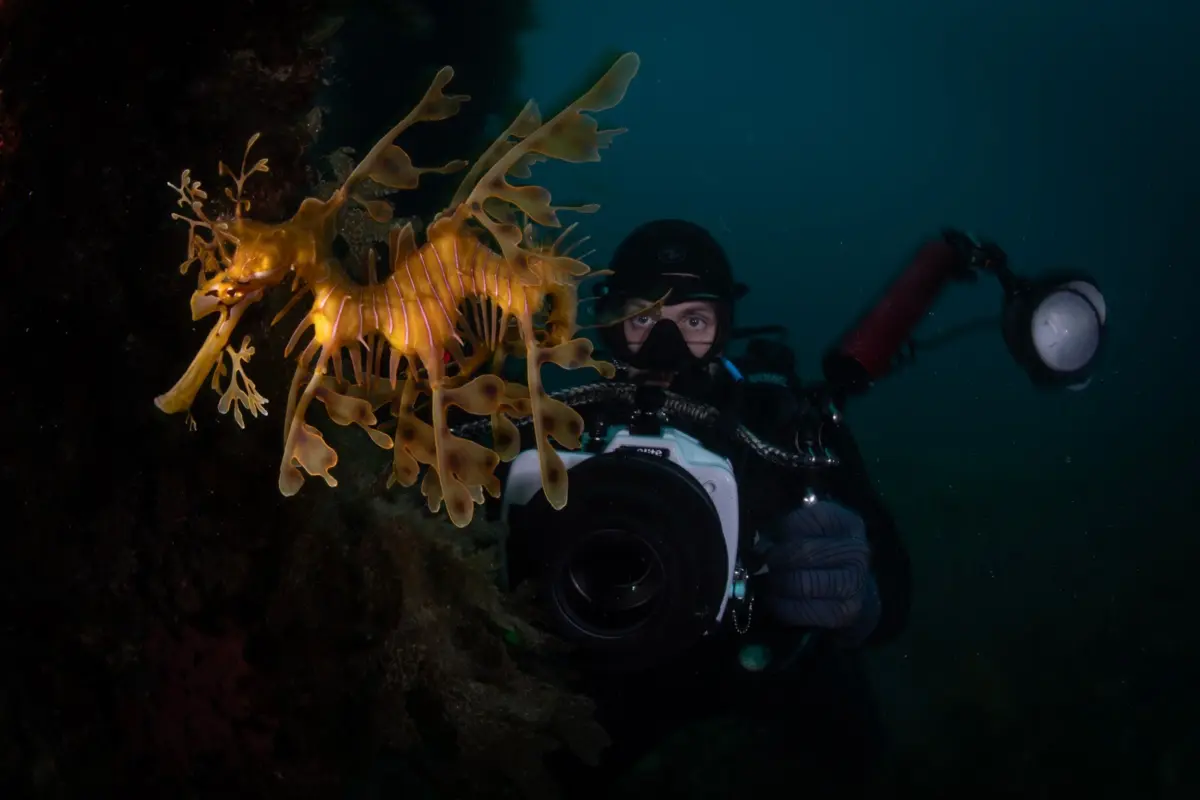
In the fast-paced and hyper-visual digital age, wildlife photography has become an accessible medium, yet true mastery remains a rare pursuit. Nature TTL’s ongoing interview series, "From Amateur to Professional," bridges this gap by sitting down with established nature photographers to examine how their practices, technical proficiency, and artistic visions have developed over time.
In this installment, the spotlight falls on award-winning underwater photographer Rowan Dear. Tracing a remarkable geographic and personal trajectory—from a childhood chasing badgers across rural Wales to diving the deep blue waters off Sydney and capturing prize-winning marine behavior—Dear’s journey is a masterclass in overcoming personal fears, developing technical discipline, and turning an organic passion into an international career.

Main Facts: The Anatomy of a Marine Career
Rowan Dear’s transition from a curious kid with a disposable camera to a celebrated professional underwater photographer is built on a foundation of rigorous preparation, deep ecological understanding, and patience.
- The Subject Matter: Dear specializes in wide-angle and macro underwater photography, frequently documenting complex marine behaviors, including the dramatic mating rituals of giant cuttlefish and the elusive nocturnal habits of leafy seadragons.
- Key Locations: His most notable work is anchored in Australian waters, including Whyalla (South Australia), Byron Bay, and Heron Island on the Great Barrier Reef, alongside international expeditions such as photographing southern right whales in Argentina.
- The Philosophy: Dear advocates for minimal post-processing, arguing that true technical skill is measured by getting the image right inside the camera. He emphasizes that editing should take minutes, not hours, to preserve the natural light and authentic colors of the underwater environment.
- The Accolades: After pivoting to underwater photography in 2020, Dear quickly accumulated major international competition wins, validating his artistic vision and cementing his status among industry peers.
Chronology: From Disposable Cameras to Professional Dives
Roots in Rural Wales
Dear’s affinity for the natural world began long before he ever strapped an oxygen tank to his back. Growing up on a farm in Wales, his formative years were spent exploring fields, tracking badgers, foxes, and hedgehogs, and observing local birdlife. Like generations of wildlife enthusiasts, his worldview was profoundly shaped by BBC nature documentaries narrated by David Attenborough.

Armed with a cheap disposable camera as a child, Dear attempted to photograph domestic pets and elusive wild animals alike. At the time, however, professional wildlife photography felt entirely out of reach—a pursuit reserved for the privileged few with substantial financial resources.
Confronting the Deep: Sydney, 2017
A major psychological turning point occurred in 2017. Having harbored a lifelong fear of water, Dear made a conscious decision to confront it head-on. He enrolled in dive courses in Sydney, Australia, taking his first tentative steps into a submerged universe that had long lived only in his imagination.

By 2020, this newfound comfort in the water evolved into a dedicated pursuit of underwater photography. Moving past basic action-cam footage, he invested in professional-grade dive camera systems, dedicating himself entirely to capturing the hidden drama of the ocean floor.
Supporting Data: Understanding Marine Habitats and Technical Evolution
Dear’s portfolio reveals a distinct evolution in technique. Reflecting on his earliest professional attempts—such as a flat, color-muted shot of a giant cuttlefish near Sydney—he notes the stark contrast between amateur optimism and professional execution. While social media "likes" initially validated his early efforts, comparing his work to established masters quickly revealed the need for rigorous technical development.

The Importance of Habitat Mastery
According to Dear, capturing compelling wildlife imagery requires intimate knowledge of an animal’s biology, habitat, and behavioral patterns. Rather than chasing fleeting trends, he repeatedly returns to specific ecosystems to master them:
- Whyalla, South Australia: Home to an annual gathering of over 10,000 giant cuttlefish. Operating in shallow waters (approximately 5 meters deep) accessed directly from the shore, Dear utilizes diverse optics—ranging from ultra-wide fisheye lenses to macro setups—to document complex interactions, such as male cuttlefish battling for mating dominance.
- Byron Bay: Visited during summer for large aggregations of leopard sharks. This location allows Dear to experiment with contrasting compositions, from intimate, shallow-water shots pierced by dramatic sunrays to top-down perspectives capturing sharks at varying depths.
- Heron Island (Great Barrier Reef): A prime location for freediving during turtle hatching season (February to April). By timing his dives around peak tidal shifts, Dear spends hours documenting newly hatched turtles alongside resident lemon sharks, rays, and adult sea turtles.
Modern Workflow and Technical Discipline
A defining characteristic of Dear’s maturation as a professional is his post-production philosophy. In his early days, significant time was spent masking errors like overexposure or underwater backscatter (particles illuminated by artificial strobe light).

Today, his workflow is remarkably streamlined. "If a photo takes too long to edit, you just need to go back out and take a better one," Dear asserts. By prioritizing precise in-camera lighting and natural color balance, he restricts his editing process to mere minutes per frame, ensuring the resulting images remain faithful to the raw, unadulterated reality of the ocean.
Official Perspectives: Navigating the Realities of Nature Photography
When asked about the turning points in his career, Dear emphasizes that professional validation did not come from social media algorithms, but from peer recognition through major competition victories.

"It’s easy to get carried away when people are telling you that you should sell images or take photography up full time, especially in the era of social media, where likes and follows can give you a warped perspective of where you are and how good you are."
The Unpredictability of the Wild
Despite meticulous planning—coordinating weather windows, seasonal migrations, and local tides—Dear stresses that wildlife photography is ultimately governed by forces beyond human control. He recounts expeditions to photograph minke whales plagued by severe weather and zero sightings, proving that preparation does not guarantee a successful yield.

Similarly, a recent permitted expedition to photograph southern right whales in Argentina presented immense challenges due to heavy winds and poor underwater visibility. Yet, rather than lamenting suboptimal conditions, Dear’s evolved perspective allows him to find satisfaction in squeezing the absolute best possible result out of adverse circumstances.
Implications: Advice for the Next Generation
Reflecting on his journey from a hesitant amateur to an established professional, Dear offers candid advice to photographers striving to break into the industry. He admits that a lack of early confidence occasionally acted as a double-edged sword: while it fueled his desire to learn and self-correct, it also created hesitation when pursuing high-level commissions.

For aspiring nature photographers, Dear’s blueprint is clear:
- Define Your Path: Identify the genres and subjects that genuinely inspire you, rather than chasing commercial trends.
- Hone Your Craft: Study the work of established masters, but trust your instincts to develop a distinct, personal visual style.
- Embrace Self-Criticism: Never become completely content with your current skill level. Maintain rigorous standards, but learn to trust your creative process and value the work you produce.
As Rowan Dear continues his underwater expeditions, his journey serves as a powerful reminder that turning an amateur passion into a professional career requires more than expensive equipment—it demands resilience, ecological respect, and an unyielding commitment to continuous improvement.
