

Published August 25, 2026
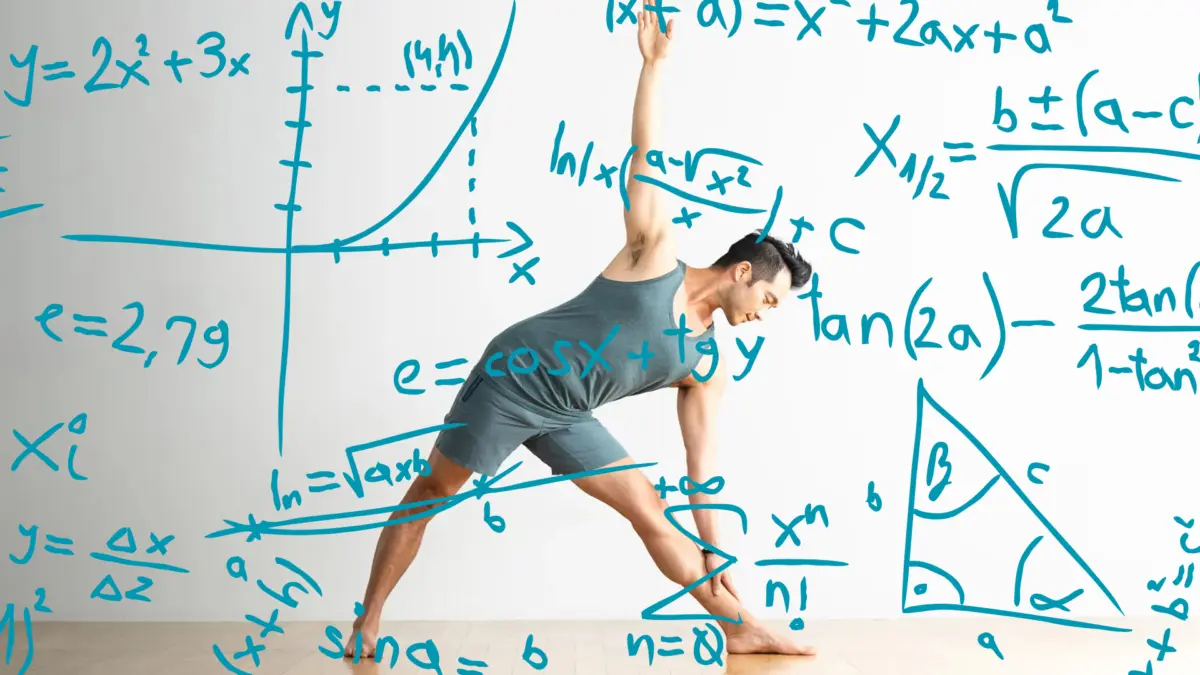
Step into a contemporary yoga studio, and you are likely to experience one of two extremes. In one class, the instructor acts as a meticulous architect, cueing every minute detail of your physical posture: the precise millimeter-level angle of your back heel, the micro-activation of your fingertips, and the exact vector of your gaze. In another, the studio is dim, the instruction is poetic, and the teacher offers little more than a loose suggestion of an intended shape, leaving so many options on the table that the original pose dissolves entirely.
This striking dichotomy naturally invites a fundamental question that has perplexed practitioners for decades: Does alignment in a yoga pose actually matter?
The answer, much like the practice of yoga itself, is nuanced. It depends entirely on context, anatomy, experience, and intention. To unpack this, we must examine the anatomy of the practice, the evolution of teaching methodologies, and the shifting paradigms of modern biomechanics.
Main Facts: The Great Alignment Debate
The debate over alignment sits at the heart of modern postural yoga. On one side are the rigid, lineage-based traditions that prioritize geometric precision, arguing that precise shapes protect the body, maximize energetic flow, and build structural integrity. On the other side is a growing movement of functional movement specialists, physical therapists, and progressive yoga educators who argue that human anatomical diversity renders blanket "textbook" alignment not only obsolete, but potentially harmful.
Key facts emerging from this ongoing pedagogical evolution include:
- Anatomical Diversity: Skeletal variations—such as the depth of hip sockets, femoral neck angles, and spinal curvatures—mean that two practitioners standing side-by-side cannot, and should not, look the same in the same pose.
- The Safety Spectrum: While gross misalignments rarely cause injury under normal body-weight loads, novel weight-bearing scenarios (such as arm balances or inversions) demand higher precision.
- The Rote Teaching Trap: Many standard alignment cues are passed down through teacher trainings via rote memorization rather than modern biomechanical validation.
Chronology: How Yoga Teaching Evolved From Rigidity to Reason
To understand where yoga alignment stands today, it is helpful to look at how instructional styles have transformed over the last century.
- Early-to-Mid 20th Century (The Lineage Era): As modern postural yoga was systematized and exported from India to the West—largely through influential teachers like T. Krishnamacharya and his prominent students—the focus shifted heavily toward standardized asana forms. These systems often emphasized strict, uniform parameters to instill discipline and build a standardized framework.
- Late 20th Century (The Alignment Boom): The 1980s and 1990s saw the birth of hyper-detailed alignment systems in the West. Props, walls, straps, and microscopic physical adjustments became the gold standard. The goal was often to make every student’s pose match an idealized aesthetic blueprint.
- Early 21st Century (The Anatomical Awakening): With the rise of sports science, physical therapy integration, and functional movement education, teachers began pushing back against the "one-size-fits-all" model. Pioneers in functional yoga highlighted the reality of variable anatomy—demonstrating, for instance, that hip socket structures dictate how wide a practitioner can squat or how far their toes can point in a lunge.
- Present Day (The Contextual Paradigm): Today, the conversation has matured. Rather than abandoning alignment entirely or enforcing it blindly, the modern consensus views alignment as a tool rather than a religion. It is applied selectively based on individual need, experience level, and functional goals.
Supporting Data and Anatomy: When Alignment Matters
Though ancient yogis viewed asana primarily through a subtle, meditative lens, biomechanics proves that how you position your body does matter in specific scenarios.
+-----------------------------------------------------------------+
|              SCENARIOS WHERE ALIGNMENT MATTERS                  |
+-----------------------------------------------------------------+
| 1. Beginners learning foundational blueprints                   |
| 2. Novel weight-bearing scenarios (inversions, arm balances)   |
| 3. Uncovering habitual everyday postural tendencies             |
| 4. Achieving targeted muscular engagement                       |
+-----------------------------------------------------------------+
1. You’re New to Yoga
At its foundational level, learning traditional alignment provides a spatial blueprint. It tells novices where to place their hands and feet, how to stack joints, and how to orient the spine. It establishes a vocabulary, illuminating the distinct geometric differences between Warrior I and Warrior II, High Plank and Chaturanga Dandasana, or Extended Triangle and Extended Side Angle.
There is a saying commonly attributed to Pablo Picasso: "Learn the rules like a pro, so you can break them like an artist." This applies on the yoga mat as much as on the canvas. A solid structural foundation is necessary before you can intelligently deconstruct or modify the details.
2. You’re Using Your Body Weight in a Novel Way
In traditional strength training, heavy external loads (like a barbell squat or deadlift) demand strict biomechanical alignment to prevent acute injury. In yoga, practitioners typically work exclusively with their own body weight—the same weight they carry through everyday life. For most standard movements, slight variations in foot angle or knee bend carry negligible risk.
However, textbook alignment becomes critical when you position your weight in a novel way, such as in an arm balance or Headstand. In these inversions, small mechanical adjustments have an outsized impact on joints, connective tissue, and bones. Just as an athlete trains with lighter weights before attempting a maximal lift, fine-tuning alignment in foundational positions is vital before committing your full body weight to complex balances.
3. It Informs You About Your Postural Habits
Alignment serves as an internal mirror. When you encounter the same structural resistance across multiple poses, your practice exposes your default somatic habits.
For instance, if it feels unnatural to draw your front ribs down in Warrior II or Chair Pose, you may realize you carry that exact rib-flaring posture into your standing posture outside the studio. If your shoulders chronically round in Mountain Pose (Tadasana) and even Savasana, that neuromuscular pattern is likely your default state during long hours at a desk.
This self-awareness is not about policing your posture 24/7; rather, it allows you to understand why your lower back or neck aches after a long workday, empowering you to consciously interrupt those habits.
4. You Have a Specific Objective
Different joint arrangements shift muscular recruitment. In Chair Pose (Utkatasana), if you arch your back and reach your arms overhead, you isolate and activate spinal extensors. If you hinge forward and drop your chest toward your thighs, you immediately shift the load into your glutes and hamstrings. Depending on your physiological goals, one alignment strategy is more functional than another.
When Alignment Doesn’t Matter in Yoga
Conversely, decades of observation reveal that precise alignment does not always serve the practitioner. Textbook cues can—and often should—be superseded by individual proportions, comfort levels, and lived experience.
+-----------------------------------------------------------------+
|            SCENARIOS WHERE ALIGNMENT DOES NOT MATTER            |
+-----------------------------------------------------------------+
| 1. When posture triggers pain or structural discomfort          |
| 2. When teachers rely on unthinking, rote cues                  |
| 3. When the biomechanical "why" cannot be explained             |
| 4. When the practice prioritizes somatic freedom over shape     |
+-----------------------------------------------------------------+
1. You Experience Discomfort or Pain
Textbook alignment creates an idealized shape, but if that shape generates sharp or persistent pain, the textbook must be set aside.
Standard alignment in a standing warrior pose, for example, dictates that the front thigh should be parallel to the floor (a 90-degree angle). For many practitioners, this depth places excessive shear stress on the hip joint or patellar tendon. By shortening the stance and angling the front thigh downward rather than parallel, the student can still reap the strengthening benefits of the posture without joint strain. Pain is a complex neurological signal; it should never be ignored in pursuit of aesthetic perfection.
2. When Cued by Rote
Teacher training programs drill foundational alignment cues into instructors. However, when those instructions are rattled off like a checklist—ignoring what is actually happening in the bodies of the students in the room—they become irrelevant or counterproductive.
For instance, commanding an entire room of students to "lengthen the sacrum" in Mountain Pose can backfire if a student is already in a posterior pelvic tilt, driving them into an unhealthy tuck of the tailbone. Similarly, the ubiquitous cue to "step your foot clean between your hands" from Downward-Facing Dog is structurally impossible for many people due to pelvic width and femur-to-torso proportions. Anatomical variance means universal cues do not have universal applications.
3. When the Teacher Can’t Explain Why It Matters
Valid alignment cues usually serve clear purposes: drawing in around the waist in Plank provides core stability; tracking feet hip-width apart in a High Lunge prevents balance loss. Other cues are deliberately subtle, such as softening the muscles around the eyes to trigger parasympathetic nervous response.
However, if a teacher offers vague justifications—such as a blanket warning to "protect your knees"—without explaining how or why, the cue warrants critical examination. For example, the common instruction to flex the front foot in One-Leg Pigeon Pose is often taught to protect the knee, but for many bodies, a pointed foot is significantly more comfortable and prevents unnatural rotational torque in the knee joint. If a cue does not land well, students should feel empowered to ask instructors for clarification before or after class.
4. When Your Practice Is About More Than the Details
The ultimate goal of yoga has rarely been the perfection of geometric shapes. Practitioners step onto their mats for myriad reasons: to find freedom in movement, process stress, connect with their breath, cultivate mindfulness, or surrender to stillness.
Recognizing that alignment is not absolute brings profound liberation. While paying meticulous attention to detail can be a wonderful tool for sensory grounding, letting go of hyper-vigilance allows practitioners to move with the rhythm of their breath, embrace personal expression, and focus on internal energetic shifts rather than external aesthetic forms.
Official Responses and Expert Perspectives
The shift toward functional alignment has sparked robust dialogue across the global yoga and physical therapy communities.
- The Orthopedic Perspective: Sports medicine specialists increasingly support the "functional movement" approach in yoga. Dr. Sarah Jenkins, a physical therapist specializing in yoga-related injuries, notes: "For years, we treated yoga injuries caused by dogmatic alignment rules—people forcing their bodies into shapes that violated their skeletal architecture. Modern instruction that prioritizes individual joint health over aesthetic purity is a massive step forward."
- The Traditionalist Perspective: Senior lineage instructors offer a balancing view, arguing that strict alignment acts as a concentration anchor. Master yoga teacher Rajesh Kumar emphasizes: "Form creates focus. When a student struggles to hold a precise alignment, the mind stops wandering. The container of the shape is what transforms physical exercise into a meditative discipline."
- Educational Standards: Major yoga governance bodies, including Yoga Alliance, have progressively updated their educational standards to mandate deeper foundational training in functional anatomy, biomechanics, and human variability, signaling a permanent cultural shift away from dogmatic teaching styles.
Implications: The Future of the Mat
What does this mean for the everyday practitioner? The evolution of the alignment debate heralds a more compassionate, individualized approach to movement.
By stripping away the pressure to achieve an idealized Instagram-ready posture, yoga is returning to its roots as a deeply personal, somatic practice. Alignment is no longer viewed as a moral imperative or a test to be passed, but rather as an evolving toolkit. Sometimes you need the precision of the blueprint to build stability, challenge your balance, or map your postural habits. At other times, you need the freedom to let the blueprint go, listen to your body, and move simply for the joy of being alive.
