

Published August 25, 2026 (Archival feature revisiting the November-December 1979 issue of Yoga Journal)
Main Facts: The Enduring Symbol of Yoga
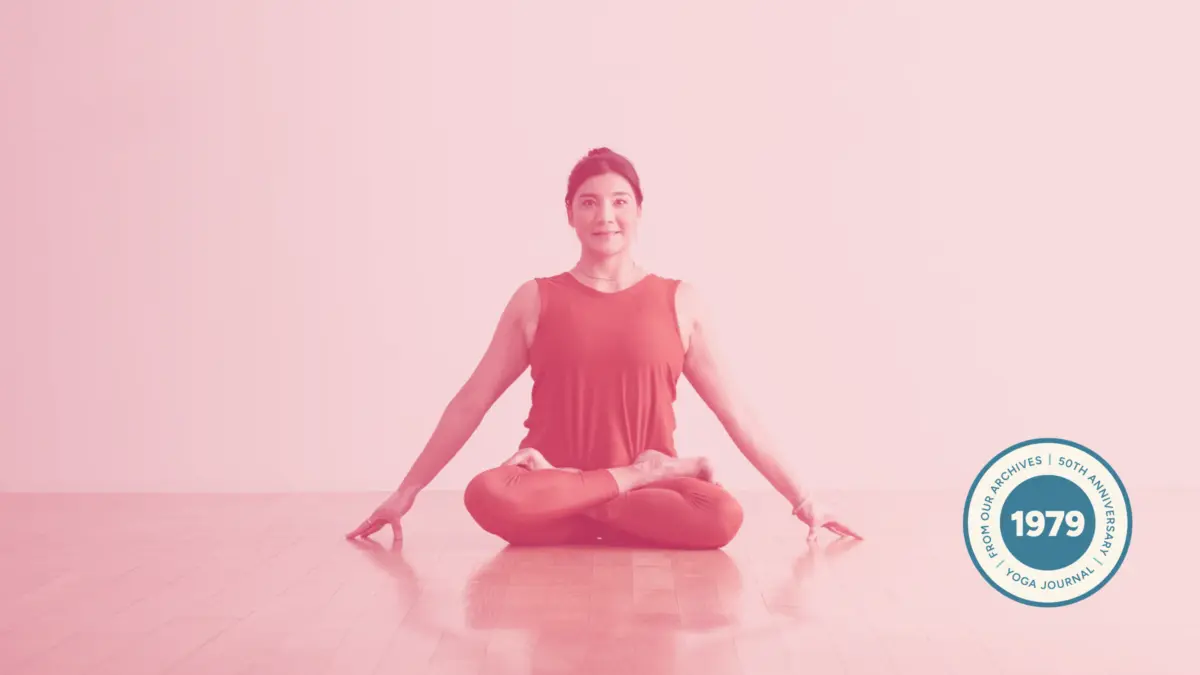
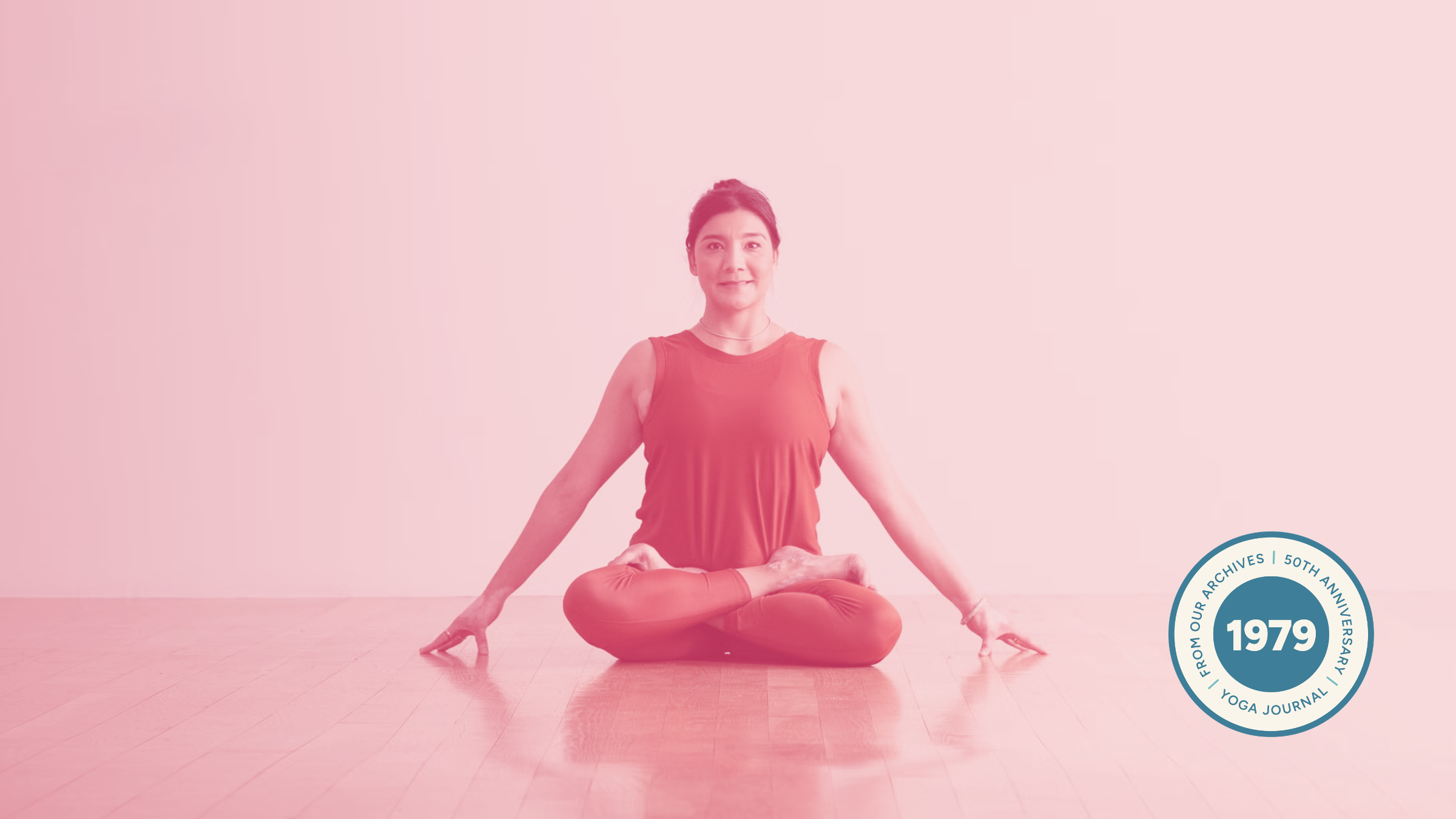
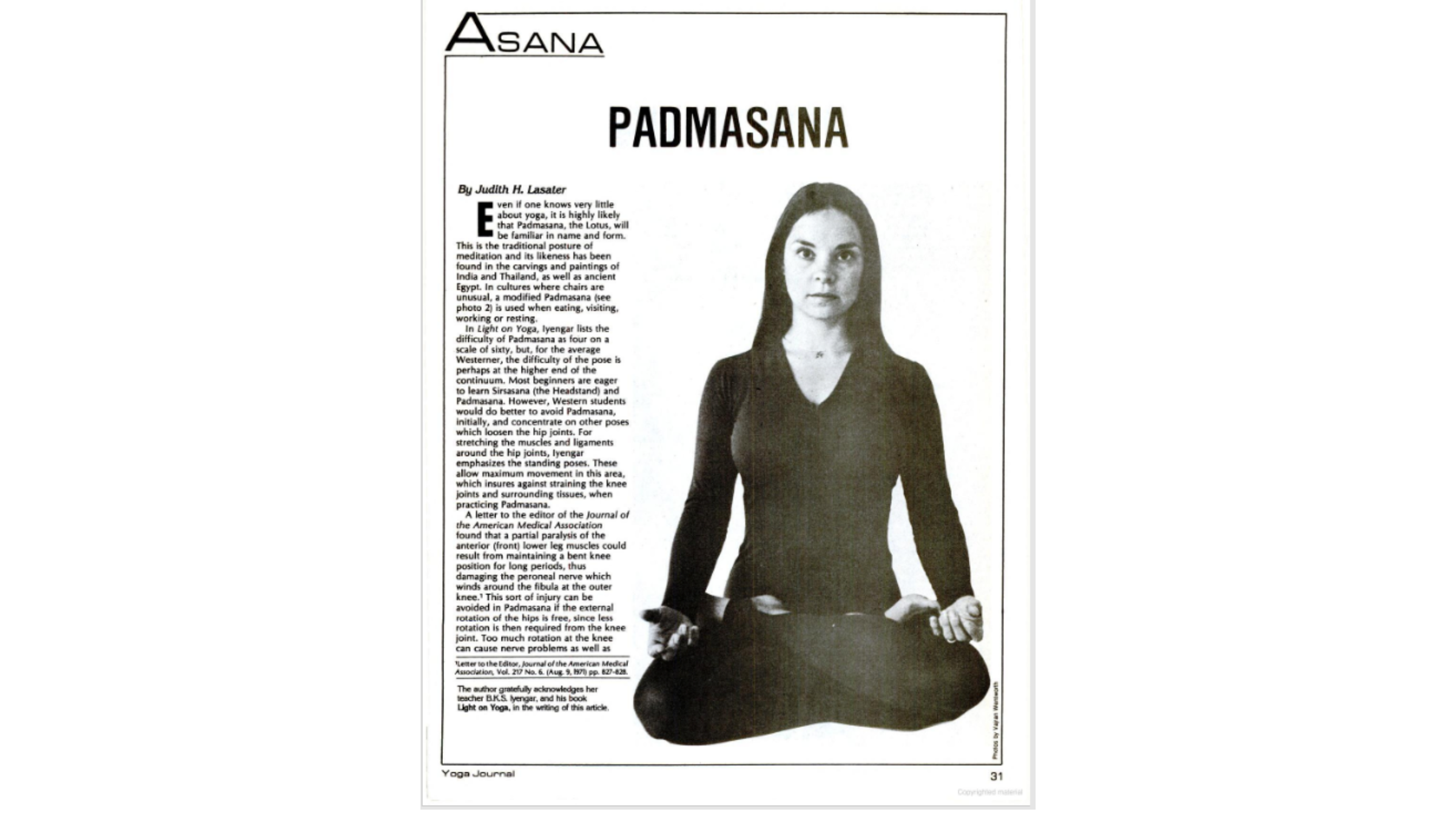
Even to those entirely uninitiated in the world of yoga, Padmasana—universally known as the Lotus Pose—is instantly recognizable. Its distinct form, characterized by crossed legs with the feet resting atop the opposite thighs, serves as the quintessential silhouette of meditation and spiritual awakening. Found etched into ancient carvings, painted on temple walls across India and Thailand, and documented in the historical artifacts of ancient Egypt, Padmasana transcends boundaries of time and culture. In societies where traditional elevated seating like chairs remains uncommon, modified variations of this seated posture serve as a natural baseline for resting, eating, working, and communal socializing.
Yet, despite its widespread cultural familiarity, the posture demands a high degree of physical and physiological preparation. In B.K.S. Iyengar’s seminal 1966 text, Light on Yoga, the pose is assigned a difficulty rating of four on a scale of sixty. For the average contemporary Western practitioner, however, that difficulty level often feels significantly higher. While eager beginners frequently rush toward high-visibility milestones like Sirsasana (the Headstand) and Padmasana, seasoned instructors caution that forcing the body into the full Lotus prematurely can lead to severe joint trauma.
Instead of jumping straight into Padmasana, experts advise developing baseline flexibility through foundational hip-opening movements. Iyengar specifically emphasizes the utility of standing poses to stretch the tight muscles and ligaments surrounding the hip joints safely. Cultivating maximum external rotation in the hips is the primary mechanism that protects the delicate knee joints and their surrounding tissues from absorbing the strain of the Lotus posture.
Chronology: From Ancient Roots to Modern Western Adaptation
- Ancient Eras to Antiquity: Historical evidence of Padmasana appears globally in artistic and architectural records across India, Thailand, and Egypt, serving as the default posture for deep contemplation, prayer, and rest.
- 1966: B.K.S. Iyengar publishes Light on Yoga, establishing a structured framework for asana practice, categorizing Padmasana, and laying the groundwork for modern alignment-based instruction in the West.
- August 1971: A pivotal letter published in the Journal of the American Medical Association (Vol. 217, No. 6) alerts the medical and yoga communities to potential neurological hazards—specifically peroneal nerve compression—associated with prolonged, improper knee-bending postures.
- November–December 1979: Yoga Journal publishes its definitive deep-dive guide on Padmasana, bridging traditional yogic philosophy, physiological safety, and precise alignment guidelines for Western practitioners.
- Present Day (2026): Through its Archives series, Yoga Journal resurfaces these foundational teachings, offering modern practitioners a historical perspective on how yoga instruction has evolved while retaining its core anatomical and spiritual wisdom.
Supporting Data: Anatomical Risks and Physiological Mechanics
The structural integrity of Padmasana relies heavily on where the rotation of the lower body originates. Medical literature underscores the risks of mismanaged biomechanics in seated postures. A notable letter published in the Journal of the American Medical Association (1971) revealed that maintaining a sharply bent knee position for extended durations can induce partial paralysis of the anterior (front) lower leg muscles. This occurs by damaging the peroneal nerve, which wraps closely around the fibula bone at the outer aspect of the knee.
Avoiding Nerve and Cartilage Damage
To prevent such injuries during Padmasana, the external rotation of the legs must originate primarily in the hip joints. If the hips lack sufficient openness, the body compensates by forcing excessive rotation into the knee joints—a joint structurally designed primarily for hinge-like flexion and extension rather than twisting. Over-rotation at the knee jeopardizes both the peroneal nerve and the internal knee cartilage. Consequently, beginners are encouraged to utilize modified variations of Padmasana, reserving the full, completed pose for intermediate and advanced practitioners whose hip mobility is fully developed.
The Physiology of Breath and Meditation
Beyond physical alignment, Padmasana has historically been celebrated as the supreme position for pranayama (the conscious regulation of breath) and meditation. Physiologically, an erect, uncompromised spinal column allows the lungs to expand freely and completely, a prerequisite for advanced breathwork.
From a yogic perspective, an upright spine is equally vital for directing the subtle psycho-spiritual energies (nadis) believed to course through the human body. A straight spine mirrors an equable nervous system. When the brain and nervous system achieve a state of physical stillness and quiet, the practitioner naturally drifts into spontaneous meditative states.
Furthermore, physical and mental stability form the bedrock of successful meditation. Padmasana inherently provides this stability through a dual-triangular support system:
- The Lower Triangle: Formed by the base of the buttocks, thighs, and knees, establishing a grounded center of gravity.
- The Upper Triangle: Formed by the alignment of the head and knees, mirroring energetic pathways through the body’s subtle anatomy.
Common Missteps and Corrective Adjustments
Achieving the proper alignment in Padmasana requires constant vigilance against postural fatigue and habitual tension. Practitioners frequently fall into one of several common traps:
1. Spinal Slumping vs. Over-Tension
- The Slump: Permitting the spine to round forward—often exacerbated by turning the palms downward or dangling the wrists limply over the knees—projects dullness and induces mental lethargy.
- The Over-Correction: Conversely, attempting to force rigidity by over-straightening creates acute tension, particularly in the neck, which triggers an over-active, restless brain.
- The Balanced Center: True alignment occurs when the spine is neutrally balanced directly above the pelvis, with the neck acting as a natural, relaxed extension of the spinal column, facilitating deep, effortless meditation.
2. Side-Dominant Practice
Intermediate practitioners often fall into the habit of entering the pose identically every single session—such as consistently lifting and placing the right foot first. Because crossing the legs shifts the pelvis and asymmetricalizes the spinal column, alternating the starting leg ensures a more balanced engagement of both brain hemispheres during meditation and equal lung capacity utilization during pranayama.
3. Gradual Progression and Props
Once the hips are adequately prepped through standing poses and seated postures like Baddha Konasana (Bound Angle Pose), practitioners should approach Padmasana systematically:
- Elevate the buttocks using a folded blanket, bolster, or meditation mat to tilt the pelvis forward.
- Support a higher knee with a yoga block or thick book if necessary.
- Ensure mobility stems from the hip sockets rather than straining the delicate outer ankle ligaments.
- Ultimately, the feet should rotate upward so that the soles face the sky, mimicking the open petals of a blooming lotus flower.
Official Recommendations: How to Practice Padmasana Safely
For those ready to explore the posture, the following step-by-step methodology outlines the traditional approach while prioritizing anatomical safety:
- Foundation: Sit tall on the floor with both legs extended straight in front of you. Extend your spine upward out of the pelvis to maximize length.
- First Leg Placement: Exhale slowly, bend your right knee, and draw the lower leg toward your navel. Turn your right shin downward while keeping your right ankle fully extended. Ensure the movement originates deep within the right hip joint.
- Resting the Heel: Carefully place the heel of the right foot high on the left thigh, resting closely against the inside of the left hip bone.
- Second Leg Placement: Reach underneath your left calf and bring the left leg up and over the right one, maintaining the downward rotation of the left shinbone (tibia).
- Alignment Check: The lower legs should cross near the body’s midline, with the knees drawn as close together as anatomically comfortable. Keep the spine erect. If your knees hover significantly higher than your hips, place a mat or blanket beneath your buttocks to alleviate joint strain.
- Hand Posture and Balance: Rest your hands open, palms facing upward, on your thighs to maintain spinal openness and shoulder relaxation. Sense the even distribution of weight across both sitting bones. If you notice an imbalance, slip a thin folded blanket beneath the lighter side.
- Reversal: Practice holding the pose for an equal duration with the opposite leg on top. Never force the knees; ease into the posture gradually over months and years of consistent, mindful practice.
Implications: Philosophy and Modern Application
Asana practice has always functioned as more than mere physical conditioning; it serves as a living expression of yogic philosophy. The symbolism of the lotus flower runs deep: it rises pristine and beautiful out of stagnant, muddy waters.
In the same vein, the modern yogi navigates an imperfect, often chaotic world. By stepping onto the mat and practicing Padmasana alongside other foundational asanas, practitioners cultivate inner grace, resilience, and vitality. The posture stands as a timeless reminder of yoga’s ultimate promise—the conscious transformation of the ordinary into the exquisite.
Footnotes & Author Notes
- 1. Letter to the Editor, Journal of the American Medical Association, Vol. 217, No. 6 (Aug. 9, 1971), pp. 827–828.
- 2. B.K.S. Iyengar, Light on Yoga (New York: Schocken Books, 1966); Svatmarama, Hatha Yoga Pradipika, with commentary by Brahmananda (Theosophical Society, Madras, India, 1972).
- 3. Sir John Woodroffe, The Serpent Power (Madras, India: Ganesh & Co., 1973).
The author gratefully acknowledges her teacher, B.K.S. Iyengar, and his foundational work in Light on Yoga for their profound influence on the composition of this text.
