

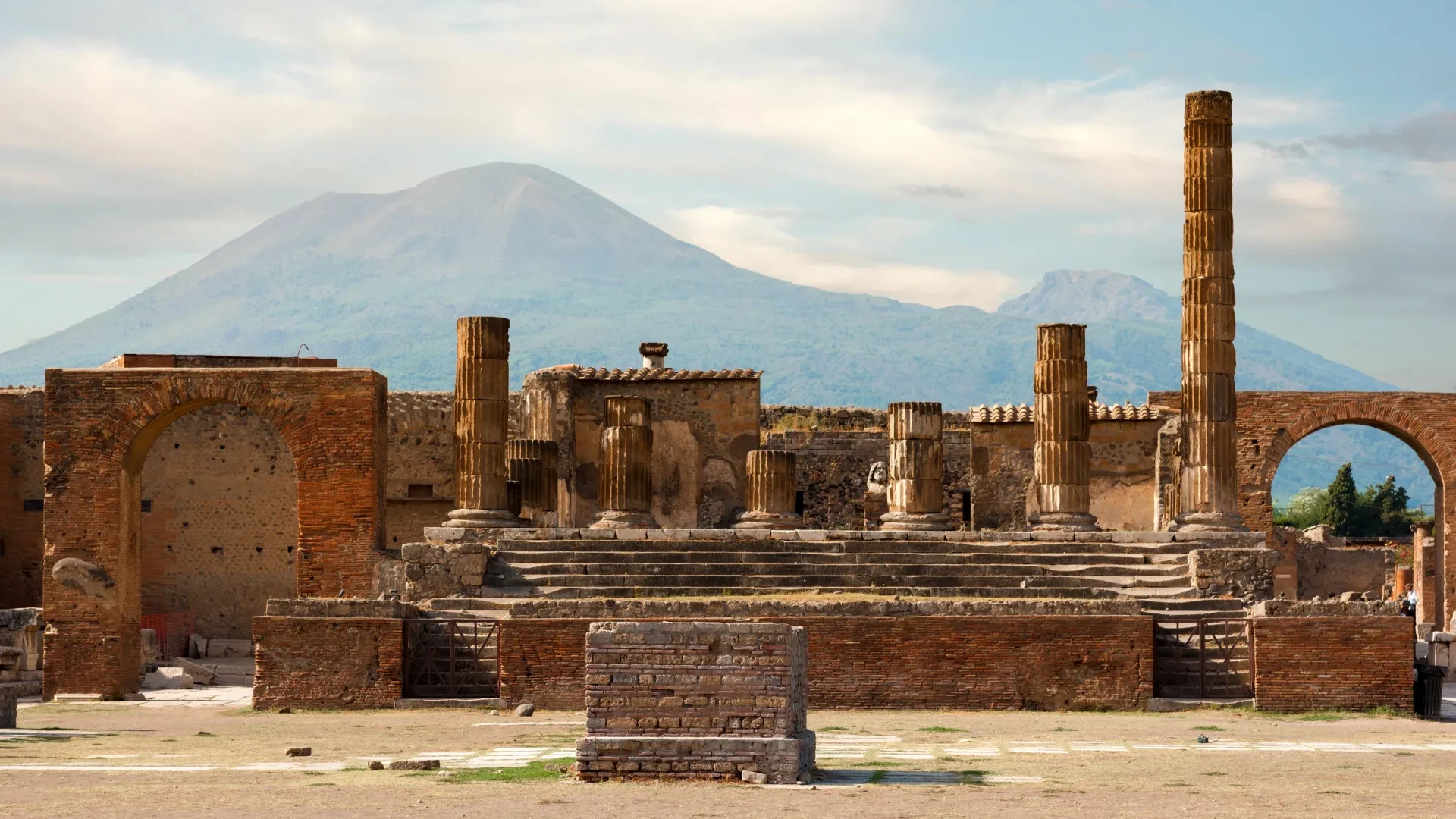
Nearly two millennia ago, the brilliant Roman author and administrator Pliny the Younger watched in horror from across the Bay of Naples as Mount Vesuvius violently came to life. His detailed, eyewitness dispatches—written to preserve the memory of his uncle, the famed scholar Pliny the Elder, who perished during the disaster—did much more than capture one of antiquity’s most terrifying natural catastrophes. Today, those same historical letters have provided modern geochronologists with an invaluable, highly precise historical anchor.
By leveraging the exact timeline of the August 79 CE eruption, an international team of researchers has dramatically refined argon-argon dating. Published in the journal Science Advances, the breakthrough merges classical historical scholarship with cutting-edge mass spectrometry, yielding a radioactive clock that is twice as precise as previous standards. The achievement bridges the gap between written history and deep geological time, offering profound implications for archaeology, paleontology, and our understanding of Earth’s most catastrophic ancient events.
Main Facts
At the core of the breakthrough is a multi-institutional collaboration involving researchers from the Berkeley Geochronology Center, the University of California, Berkeley, and the University of Padua in Italy. The team successfully recalibrated the argon-argon dating method—one of geology’s most trusted tools for determining the age of rocks and volcanic events—using the Vesuvius eruption of 79 CE as a definitive, unmoving historical benchmark.
The refined technique achieves an astonishing level of resolution. When examining potassium-containing volcanic minerals (sanidine) from Vesuvius, the updated argon-argon measurements placed the eruption at 1,938 years (plus or minus 13 years) before the minerals were analyzed in 2025. Measured against the historically inferred age of 1,946 years, this corresponds to an exceptional precision of 0.7% and an accuracy of 0.4%.
Crucially, this calibration allowed researchers to cut the uncertainty of the half-life governing the radioactive decay of potassium-40 into argon-40 in half. The newly revised half-life stands at 12.044 billion years, give or take 0.088 billion years. This enhanced precision allows scientists to peer into Earth’s history with a clarity previously thought impossible for events within the historical realm.
Chronology of a Scientific Breakthrough
To understand how a nearly 2,000-year-old volcanic blast was transformed into a state-of-the-art calibration tool, one must trace a timeline spanning decades of detective work, sample preservation, and advanced statistical modeling:
- August 79 CE: Mount Vesuvius erupts catastrophically, burying the Roman cities of Pompeii, Herculaneum, and Oplontis under meters of ash and pumice. Pliny the Younger documents the cataclysm.
- 1997: Paul Renne and his colleagues first test argon-argon dating using sanidine crystals extracted from Vesuvius pumice, predicting that future technological advancements could eventually reduce dating uncertainty to less than 1%.
- 1998: Co-author Andrea Marzoli of the University of Padua collects fresh, highly potassium-rich pumice samples from Oplontis—material expelled during the earliest phase of the 79 CE eruption. These samples are placed into storage and remain unanalyzed for nearly three decades.
- The 2010s: Renne applies argon-argon dating to establish a precise temporal link between a massive meteor impact, continental-scale volcanic eruptions in India, and the extinction of the dinosaurs at the Cretaceous-Paleogene boundary some 66 million years ago, reinforcing the "one-two punch" extinction theory.
- Recent Years: A new generation of Berkeley graduate students—including Caroline Hasler, Anthony Fuentes, and Andy Tholt, alongside postdoctoral fellow Jack Carter—revisits Marzoli’s long-forgotten 1998 Oplontis pumice samples.
- 2025: The research team publishes a novel Bayesian framework designed to reconcile inconsistencies between argon-argon and uranium-lead dating methods. Shortly thereafter, their definitive Science Advances study utilizes the Vesuvius benchmark to finalize the doubled precision of the potassium-40 half-life.
Supporting Data and Methodology
The success of the new study relies heavily on a convergence of superior geological samples, advanced laboratory equipment, and rigorous historical analysis.
The Physics of Argon-Argon Dating
Argon-argon dating is predicated on the natural, steady radioactive decay of potassium-40 into argon-40 within volcanic rocks. Because argon gas escapes molten magma, virtually no argon-40 is present in minerals at the exact moment of an eruption. As the mineral solidifies and cools, the newly formed argon-40 becomes trapped.
In the laboratory, scientists expose rock samples to a nuclear reactor, converting a stable, non-radioactive potassium isotope (potassium-39) into argon-39. By utilizing a mass spectrometer to measure the precise ratio of radiogenic argon-40 to neutron-induced argon-39, researchers can calculate how long the mineral has been cooling. A higher proportion of argon-40 indicates an older sample.
Why Oplontis Pumice Changed the Game
Stratovolcanoes like Vesuvius do not possess homogenous magma chambers. Instead, magma separates into layers over time. Denser, iron- and magnesium-rich elements tend to settle near the bottom of the chamber, while more soluble elements—such as potassium—concentrate near the top.
Consequently, potassium-rich magma is typically expelled during the initial, explosive opening moments of an eruption, meaning it settles at the very bottom of the resulting ash and pumice fallout layers. The Oplontis pumice collected by Andrea Marzoli in 1998 captured precisely this early-stage, highly potassium-rich material. When paired with modern mass spectrometers and updated neutron irradiation techniques, these vintage samples provided the pristine data needed to shatter previous margins of error.
Official Responses and Expert Insights
The implications of the study have drawn high praise from within the geochronological community, with researchers emphasizing how the work unifies disparate dating frameworks.
"If you want to put together the eruptive history of a volcano in relatively recent time, precision and accuracy really count," said study leader Paul Renne, a professor in residence of earth and planetary science at UC Berkeley and director of the Berkeley Geochronology Center. "The study shows that you can achieve that kind of highly useful precision and accuracy into the historical realm."
Renne underscored how tighter geochronological constraints fundamentally alter our understanding of Earth’s history, noting that it "lets us more precisely infer causality between events in the geologic record, for example a meteor impact structure and a mass extinction."
Addressing the historical debates surrounding the exact day of the Vesuvius catastrophe, graduate student Caroline Hasler played a critical role in validating the timeline. While some historians have argued for a later autumn eruption based on the discovery of a coin minted in September of 79 CE, Hasler compared the artifact to other period-appropriate Roman currency. She concluded that the coin likely circulated prior to September, validating Pliny’s late-summer date to within a two-month window—a margin wide enough to satisfy historical debates while remaining tight enough to lock in the radioactive half-life calculations.
Co-author Bill Cassata was also credited by Renne for his instrumental role in developing the complex analytical strategies and data interpretation that brought the project to fruition.
Broader Implications for Earth Science
The successful recalibration of argon-argon dating is far more than an academic exercise regarding a single historical volcano; it represents a major milestone in cross-calibrating Earth’s entire geological toolkit.
Verifying Deep Time and Recent Epochs
By establishing a reliable decadal accuracy for historical eruptions, scientists now possess a gold-standard reference point that can ripple outward. The improved half-life of potassium-40 helps anchor argon-argon dating as a sturdy scaffold. Furthermore, Renne and his team are actively working to harmonize this technique with carbon-14 dating (used for organic materials younger than 55,000 years) and uranium-lead dating (used to date rocks that formed billions of years ago during Earth’s infancy).
"We’re hoping to really unify as many geologic dating methods as we can by using the same mathematics, the same Bayesian approach, and just bringing more data, more raw observations into that mix," Renne explained. "But argon-argon dating is always going to be a standard—it’s going to be an important calibrant in that sense."
Protecting Modern Populations
Beyond deciphering deep planetary history, the refined methodology has urgent, real-world applications for disaster preparedness. Active stratovolcanoes continue to loom over heavily populated modern megacities and regions, including the vicinity of Mexico City, the densely inhabited slopes surrounding Naples, and the volcanic zones of Yogyakarta, Indonesia.
To accurately forecast how and when these dangerous giants might erupt next, volcanologists must reconstruct their complete, high-resolution eruption histories. By providing a sharper, more reliable radioactive clock, Pliny the Younger’s ancient observations—preserved across two millennia of ink and parchment—may ultimately help save modern lives.
