

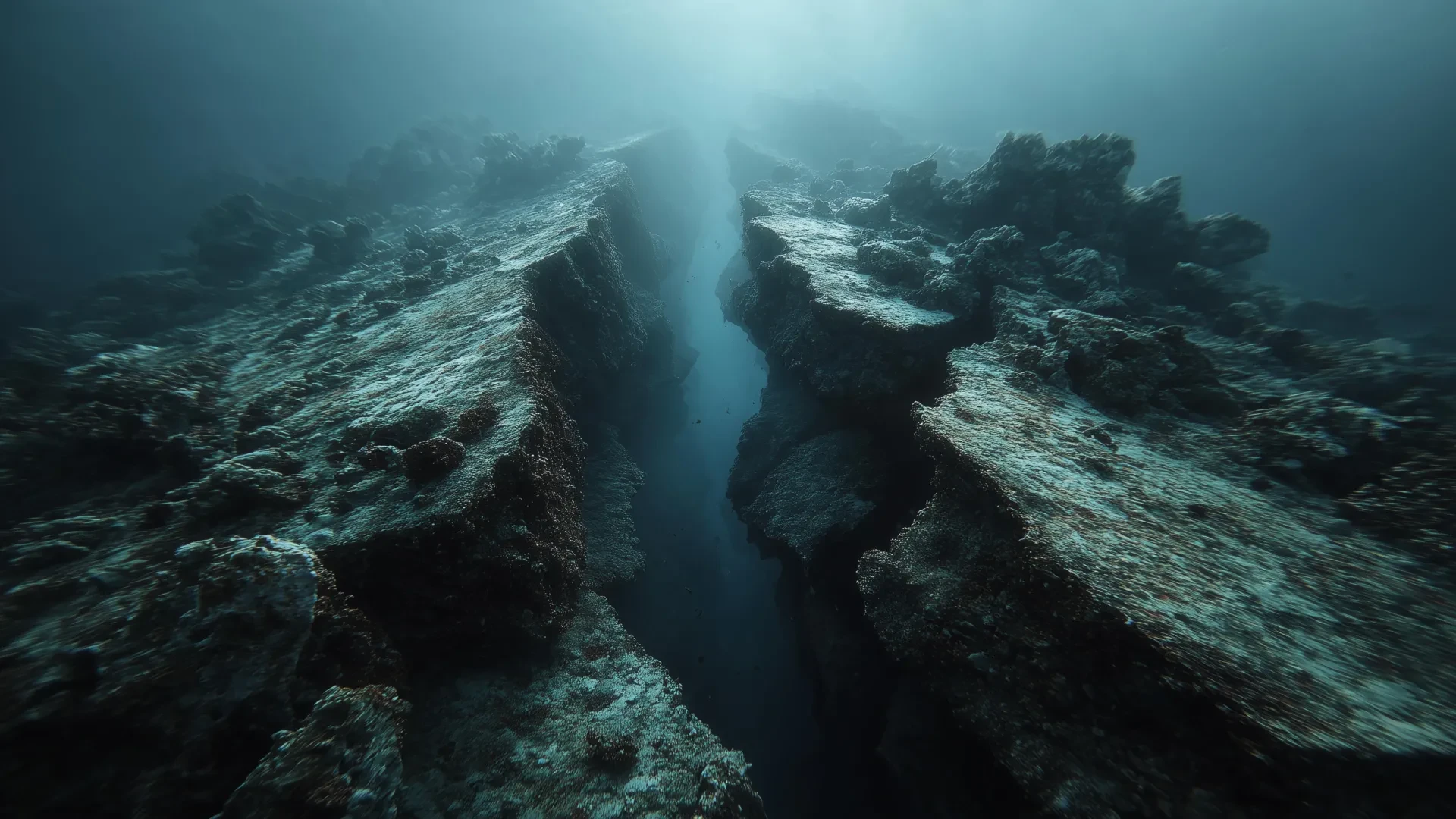
PACIFIC NORTHWEST — In a milestone achievement for deep-Earth geophysics, researchers have captured an exceptionally detailed glimpse of a major tectonic system in the process of coming apart. The discovery, published in the journal Science Advances, offers scientists their first clear, modern look at a subduction zone actively breaking into pieces, providing a rare window into the terminal stages of one of the planet’s most powerful geological engines.
Subduction zones are colossal tectonic boundaries where one dense oceanic plate is forced downward beneath a lighter continental or oceanic plate, plunging deep into the Earth’s mantle. These regions are the crucible of planetary geology, responsible for generating Earth’s most devastating megathrust earthquakes, powering explosive volcanic arcs, and dictating the long-term evolution of continents and ocean basins.
Yet, despite their vital role in shaping the planet’s surface, how these enormous systems reach the end of their lifecycle has remained largely theoretical. Until now, geologists have had few opportunities to observe a mature subduction zone in its death throes. The new findings from the Pacific Northwest suggest that rather than shutting down in a single catastrophic collapse, these systems unravel slowly, piece by piece, over millions of years.
Main Facts
The groundbreaking study centers on the Cascadia subduction zone, a vast tectonic boundary stretching along the Pacific Northwest where the Juan de Fuca and Explorer plates are slowly being subducted beneath the North American plate off the coast of Vancouver Island.
Using high-resolution seismic imaging akin to a medical ultrasound, researchers mapped the architecture of the seafloor and the sinking slab below. The resulting data revealed a startling reality: the oceanic plate is not descending smoothly. Instead, it is heavily fractured by massive faults, with segments actively snapping apart and dropping by kilometers.
Key findings of the research include:
- The Piecewise Death of a Plate: Subduction zones do not typically shut down all at once. The Cascadia data shows a "step-by-step" or episodic termination, with individual segments of the plate tearing away at different times.
- Massive Structural Offsets: Researchers identified a sprawling 75-kilometer-long tear system cutting through the sinking plate, featuring dramatic vertical offsets where parts of the slab have dropped by roughly five kilometers.
- Microplate Formation: As transformative faults slice across the plate like geological scissors, they isolate individual fragments, creating newly forming microplates that move independently from the broader tectonic framework.
- Slab Windows and Volcanic Shifts: The physical separation of sinking plates creates gaps, known as "slab windows," which allow superheated mantle material to upwell, potentially driving shifts in regional volcanic activity.
Chronology of Discovery
The path to capturing this seismic snapshot represents a fusion of modern oceanographic data collection and decades of inquiry into Earth’s historical rock record.
The 2021 Cascadia Seismic Imaging Experiment (CASIE21)
The observational foundation of this discovery was laid during the 2021 Cascadia Seismic Imaging Experiment (CASIE21). Funded by the National Science Foundation (NSF), a team of geoscientists embarked aboard a research vessel to probe the deep structure of the Cascadia margin.
Using an advanced methodology, the ship generated controlled sound waves that penetrated deep into the ocean floor. As these acoustic waves bounced back from various underground strata, they were captured by a massive, 15-kilometer-long underwater listening instrument known as a streamer. By meticulously analyzing the echoes, the research team rendered unprecedented cross-sectional images of structures hidden kilometers beneath the seabed, revealing the severe fracturing of the descending slab.
Reconciling the Ancient Rock Record
For years, geologists studying ancient systems—such as the massive, long-vanished Farallon plate off Baja California—found fossilized microplates and strange, out-of-sequence volcanic rocks. These anomalies hinted that ancient subduction zones had broken apart before dying, but direct, contemporary evidence of the mechanism remained elusive.
The new Cascadia observations finally bridge the gap between ancient geological puzzles and modern plate tectonics. By watching the Juan de Fuca-Explorer system unravel in real-time, scientists have confirmed that the fragmented microplates seen in locations like Baja California are the physical fingerprints of a subduction zone slowly dismantling itself.
Supporting Data and Geophysical Evidence
To understand how a subduction zone dies, geologists often rely on mechanical metaphors. Brandon Shuck, a geologist at Louisiana State University and lead author of the study, contrasts the initiation of a subduction zone with its conclusion.
"Getting a subduction zone started is like trying to push a train uphill—it takes a huge effort," Shuck explained. "But once it’s moving, it’s like the train is racing downhill, impossible to stop. Ending it requires something dramatic—basically, a train wreck."
However, the Cascadia data indicates that the "train wreck" is not a sudden, singular derailment. Instead, it is a slow, progressive dismantling of the system.
Earthquake Signatures and Seismic Silences
Seismic activity provided a critical analytical tool for mapping the 75-kilometer tear system. Earthquakes occur when locked blocks of rock accumulate tectonic stress and suddenly slip along a fault line.
Along the newly identified tears, researchers observed a striking dichotomy: some segments continue to rattle with micro-earthquakes, while others have fallen completely silent. According to the research team, this seismic quietude indicates that sections of the plate have already completely detached from the surrounding rock matrix. Without physical connection or frictional resistance, those isolated fragments no longer accumulate stress or produce earthquakes, signaling that the separation process is actively expanding.
The Role of Transform Boundaries
Transform faults—where crustal sections slide horizontally past one another—act as critical agents in this process. In the Cascadia system, these faults operate much like geological scissors, slicing across the rigid oceanic plate and isolating distinct blocks. Once severed, these blocks can evolve into independent microplates. As more pieces break away, the main plate loses the critical downward gravitational pull (known as "slab pull") that drives subduction. Shuck compares this to removing cars from a runaway train until the remaining mass is insufficient to sustain the motion.
Official Responses and Expert Insights
The scientific community has met the findings with widespread enthusiasm, viewing the study as a major leap forward in understanding the lifecycle of tectonic plates.
Dr. Shuck and his co-authors emphasize that capturing these structural failures provides an invaluable baseline for interpreting global geology. Rather than viewing plate tectonics as a system of rigid, indestructible plates interacting only at their edges, geologists must now account for the internal deformation, fracturing, and dying gasps of plates as they reach maturity.
Furthermore, researchers note that the step-by-step breakdown observed off the coast of Vancouver Island aligns remarkably well with geochemical anomalies found globally. When subducting plates tear, the resulting thermal anomalies and slab windows alter the chemistry of the mantle, generating volcanic episodes that march systematically forward or backward in time—a pattern long recorded in ancient continental volcanic arcs.
Implications for the Pacific Northwest and Beyond
While the discovery offers profound theoretical insights into Earth’s internal machinery, it naturally raises questions regarding regional safety and seismic hazard assessment in the Pacific Northwest.
Does This Change Earthquake Hazards?
Geologists and emergency management officials have been quick to reassure the public: the newly discovered oceanic tears do not significantly alter the immediate earthquake hazard for human populations.
The Cascadia subduction zone remains fully capable of generating catastrophic megathrust earthquakes and transoceanic tsunamis. However, the timescale of the observed plate breakup is vastly different from human history. While a Cascadia megathrust event can unfold in minutes, the ongoing tearing and fracturing of the Juan de Fuca and Explorer plates is a protracted geological process taking millions of years to complete.
Refining Future Seismic Models
Despite the vast difference in timescales, the discovery holds long-term value for seismology. Researchers are eager to determine whether these newly mapped internal faults and structural tears could influence how future earthquake ruptures propagate.
A rupture’s path, speed, and overall energy release depend heavily on the geological obstacles it encounters along a fault zone. Incorporating these detailed crustal structures into next-generation seismic hazard models will help scientists refine simulations of how future large-scale ruptures might behave across the Pacific Northwest margin.
A Rare Geological Window
For the broader scientific community, the value of the Cascadia discovery lies in its rarity. Earth is billions of years old, yet observing a fundamental planetary process in the exact moment of its execution is exceedingly rare. As researchers continue to analyze the CASIE21 data and model the fate of the Juan de Fuca plate, Cascadia is providing humanity with a front-row seat to watch one of the planet’s great tectonic systems slowly dismantle itself, piece by piece.
